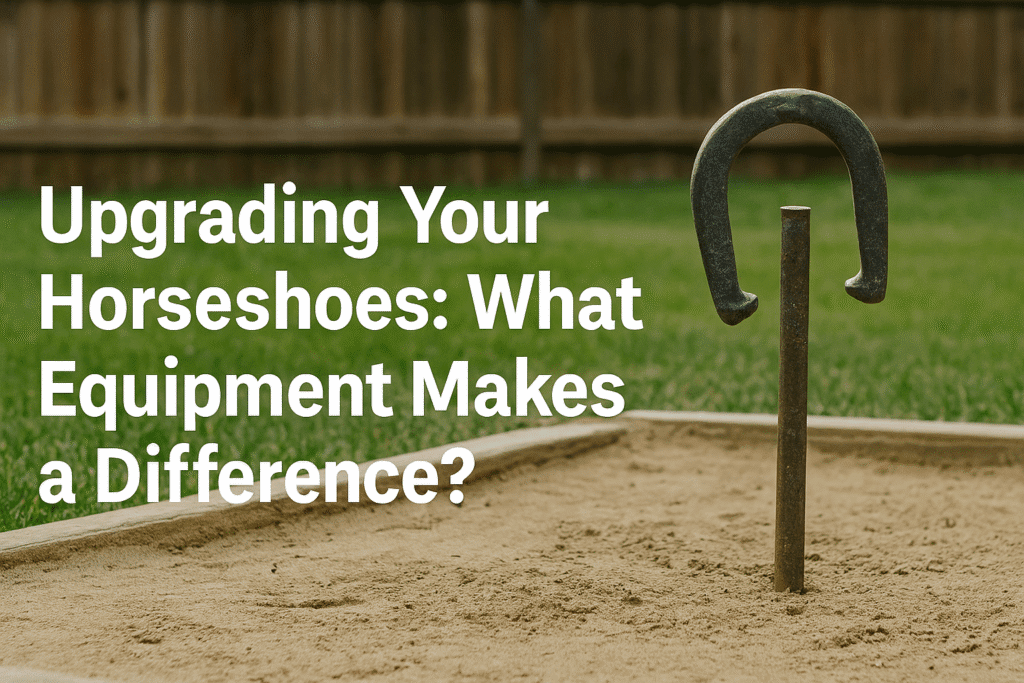
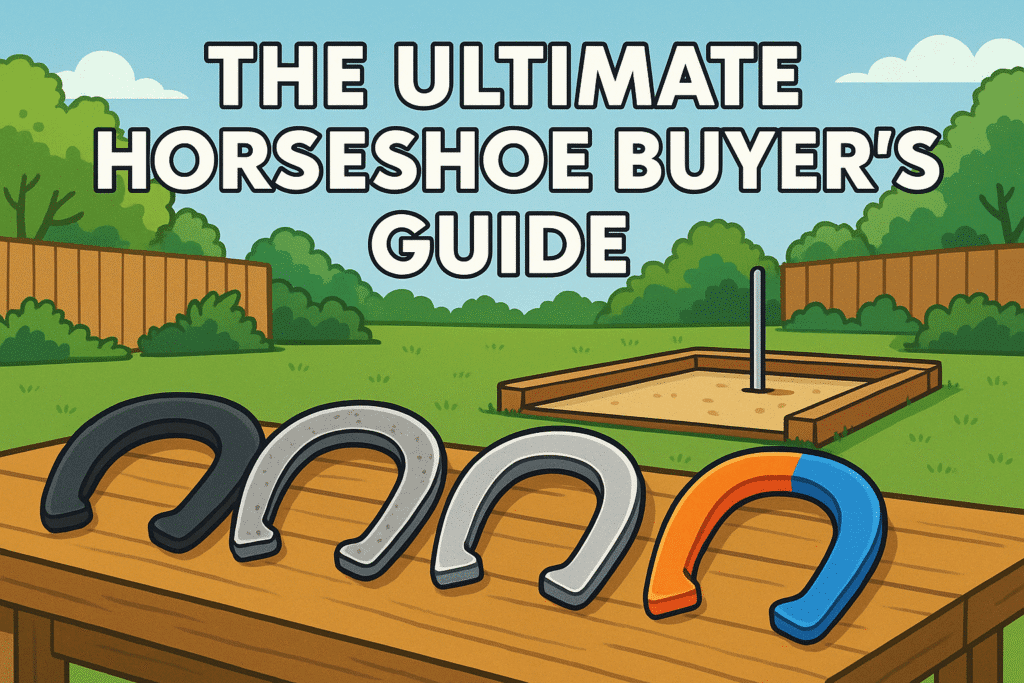
Essential Horseshoe Throwing Equipment: What You Really Need to Play
So you’ve built your horseshoe pit or picked the perfect spot—now it’s time to gear up. But what exactly do you need to play horseshoes at home?
Don’t worry, this guide has your back. Whether you’re setting up a casual backyard game or trying to replicate tournament conditions, the right equipment can make or break the experience. From horseshoes and stakes to optional gear that takes your setup to the next level, we’re covering it all right here.
🎯 What You Need to Play Horseshoes
At its core, horseshoe throwing is one of the simplest games around. That’s part of its charm. You only need three things:
- Two stakes, firmly planted in the ground
- Four horseshoes, with two per player or team
- An open space—ideally a backyard pit with soft landing zones
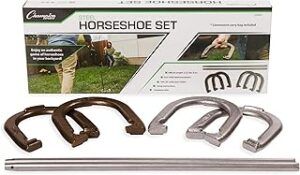
Horseshoe Game Set
That’s it! But within that simplicity lies plenty of room to fine-tune your setup for better play and more enjoyment.
🐎 Horseshoes: Different Types and How to Choose the Right Ones
Let’s start with the stars of the show—the horseshoes themselves.
Now, we’re not talking about the kind you’d nail onto a horse’s hoof. Game horseshoes are specially designed for throwing, with features like weight balance, gripping ridges, and widened openings.
✅ Types of Horseshoes:
1. Regulation Horseshoes
These are the real deal. Designed to meet National Horseshoe Pitchers Association (NHPA) standards, they’re forged from steel or iron and weigh around 2.5 to 2.8 pounds each. They’re built to last, feel great in hand, and offer a consistent throwing experience.
Best for: Intermediate to advanced players, or anyone wanting to simulate tournament play at home.
2. Recreational Horseshoes
Recreational sets are often lighter, sometimes made from alloy metals or painted cast iron. They’re still solid but may vary slightly in shape or weight from the official specs.
Best for: Backyard players, beginners, and families who just want to have fun without worrying about the rules too much.
3. Rubber or Plastic Horseshoes
These are the safest options and are made for kids or indoor use. They’re soft, colorful, and super lightweight—perfect for learning the basics without any risk of injury or property damage.
Best for: Young children, indoor play, or low-risk environments like senior centers or patios.
🔩 Horseshoe Stakes: What to Use and How to Set Them Up
The stakes are your targets. They don’t just need to stay upright—they need to take a pounding.
✅ Stake Guidelines:
- Material: Cold-rolled steel or galvanized steel is best. You want something that won’t bend or rust easily.
- Length: Standard stakes are 36 inches long and should be driven into the ground so that 15 inches are above the surface.
- Angle: Stakes should lean back about 12 to 15 degrees. This helps catch the horseshoe more effectively during play.
- Diameter: Regulation diameter is 1 inch.
If you’re setting up in soft soil, consider anchoring your stakes in concrete or using a PVC sleeve to give extra support and easy removability.
You can either buy stakes separately or as part of a full horseshoe set. If you’re more hands-on, you can also make your own using hardware store steel rods.
🧰 Optional Horseshoe Gear That Elevates Your Setup
While horseshoes and stakes are all you technically need, there are a few extras that make the game better, especially for regular play or hosting gatherings.
➕ Foul Line Markers
Use ropes, painted lines, or even bricks to clearly show where players should stand. This keeps things fair and consistent.
➕ Pit Backboards
Install wooden or rubber backboards behind your pits to stop wild throws from damaging fences, windows, or flowerbeds. It also makes cleanup easier.
➕ Scoreboards
Tracking points with a simple chalkboard, whiteboard, or flip-style scoreboard adds structure and excitement—especially for mini tournaments.
➕ Carrying Case or Gear Bag
Protect your horseshoes and make transport easier, especially if you’re storing them in a garage or shed.
➕ Covers for Pits
Protect your pit from rain, wind, or critters with a fitted tarp or DIY cover. This small addition can significantly extend the life of your pit.
🛍 Best Horseshoe Sets for Different Needs
Not sure what to buy? Here’s a quick breakdown of top-rated options depending on your needs.
🟢 Beginner-Friendly Set:
Franklin Sports Horseshoe Set
Affordable, comes with horseshoes and stakes, easy to set up and store. Ideal for families and first-time players.
🔵 Mid-Level Set:
St. Pierre American Professional Horseshoe Set
NHPA-approved, durable forged steel, excellent balance. A favorite among backyard players who want a tournament feel.
🟡 Indoor/Kid-Safe Set:
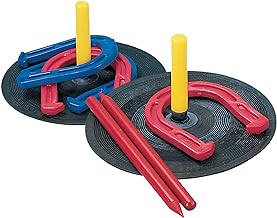
Champion Sports Rubber Horseshoe Set
Bright colors, soft material, and includes safety stakes. Great for indoor events or teaching kids how to throw.
🛠 Pro Tip: If you’re buying online, check reviews and photos. Durability and finish can vary a lot between brands, especially at lower price points.
💰 Cost Breakdown: What You Might Spend
You don’t have to spend a fortune to start enjoying horseshoe throwing. Here’s a realistic idea of how much different components might cost:
For a basic recreational horseshoe set, expect to spend between $30 and $60. These sets often include four horseshoes and two stakes, and they’re perfect for weekend games with friends and family.
If you want to upgrade to a regulation or professional-grade set, you’re looking at a price range of around $80 to $150. These sets are made from high-quality forged steel, usually NHPA-approved, and offer a consistent throwing experience.
Prefer to build your setup piece by piece? Individual regulation horseshoes can run between $20 and $50 each, depending on the brand and design. Steel stakes can be purchased separately for about $20 to $40 per pair at hardware stores or online.
If you plan to enhance your setup with accessories like scoreboards, foul lines, pit backboards, or carrying cases, you can expect to add an additional $10 to $50, depending on how elaborate you go.
Overall, you can build a casual, enjoyable backyard setup for under $100, or invest in a serious, tournament-ready pit for $200 to $300 total.
⚙ Tips for Taking Care of Your Gear
A good set of horseshoes can last a lifetime—if you treat them right. Here’s how to keep your equipment in top shape:
- Clean off dirt or sand after each use. A quick wipe with a towel will prevent buildup.
- Store indoors or in a dry container to prevent rust, especially if your horseshoes are made of cast iron or untreated metal.
- Inspect stakes for movement or wobble after heavy use or rainfall. Re-anchor as needed.
- Touch up paint or coatings to protect the surface and keep things looking fresh.
🏁 Final Thoughts: Start With What You Need—Grow as You Go
One of the best things about horseshoe throwing is how easy it is to get started. You don’t need fancy equipment to have fun—just the right gear to match your space and style of play.
Start simple. If you’re playing with family or friends on a sunny afternoon, a basic set does the job perfectly. As your skills grow and your passion for the game deepens, you can upgrade to pro-level horseshoes, fine-tune your stake setup, and even host a backyard tournament.
The key is to get out there, toss a few shoes, and enjoy the experience. The gear is just the beginning—the memories, laughs, and friendly competition are what it’s really all about.
⏭ Up Next: How to Play Horseshoes – Rules, Scoring & Strategy
Now that you’ve got the gear, it’s time to dive into the gameplay. In the next post, we’ll walk you through how to play horseshoes like a pro, including:
- How to score
- Throwing techniques
- Game variations
- Backyard rule adaptations
You’re just one post away from becoming the go-to horseshoe expert on your block.
💬 Have a favorite horseshoe set or gear tip? Drop it in the comments—we’d love to hear from you!
Hi there, and thanks for stopping by! My name is Larry, and I’m the voice behind PlayingHorseshoes.com. I love the game and have been playing since I was a kid. I started this blog because I am passionate about the sport, and with all the technology, I hope the sport doesn’t die. I plan to do my part to keep it going for me and my brother’s sake. Thanks for stopping by. Feel free to subscribe and comment. Thank You!