Fix Your Focus: Why You Throw Worse After a Bad Pitch (And How to Reset Fast)
Every horseshoe player has been there. You throw a bad pitch — not close, not unlucky, just wrong — and before you can even shake it off, the next shoe goes bad too. Suddenly, your rhythm feels off, your confidence dips, and you start wondering what changed.
What changed wasn’t your skill. It was your focus.
Focus is one of the most overlooked parts of horseshoe pitching, yet it’s often the difference between a player who stays steady and one who lets a single bad throw turn into a bad frame. The good news is that focus isn’t some mysterious talent. It’s a habit — and it can be fixed.
1. Focus Isn’t About Concentrating Harder
Most players think focus means locking in harder or staring at the stake longer. In reality, that usually makes things worse. True focus in horseshoes is about what happens between throws, not during them.
Good focus means you mentally finish one pitch before starting the next. Players who do this well don’t carry mistakes forward. Each throw gets a clean start, regardless of what just happened.
If you’ve ever watched a steady player miss a shoe and then calmly throw a solid next pitch, you’ve seen good focus in action.

2. Why One Bad Pitch Often Leads to Another
After a miss, your brain immediately tries to fix the problem. It replays the throw, searches for a correction, and pushes you to get the next shoe out quickly. The problem is that this mental reaction overlaps with your next pitch.
Instead of stepping into the pit relaxed and ready, you step in already reacting. Tempo speeds up, muscles tighten, and the swing loses its natural flow. Even though nothing feels dramatically wrong, accuracy disappears.
That second bad pitch usually isn’t mechanical. It’s mental.
3. Frustration Quietly Changes Your Mechanics
Frustration doesn’t have to look dramatic to hurt your game. Often it shows up in small ways — a slightly tighter grip, a quicker step into the pit, or a shortened follow-through.
Each of those changes might feel minor, but together they alter the throw just enough to cause misses. Focus problems don’t announce themselves loudly. They sneak in quietly and compound.
The goal isn’t to eliminate frustration. It’s to keep frustration from changing how you throw.
4. Rushing Is the Most Common Focus Mistake
After a bad pitch, many players rush the next one. They want to “get it back” quickly, thinking speed will fix the mistake. Instead, rushing compresses the motion and forces the release.
Good focus slows the mind, not the arm. The throwing motion should stay the same every time. When players look calm, it’s usually because they aren’t reacting emotionally — not because they’re throwing slower.
5. Overthinking Mechanics Mid-Game Makes Things Worse
Another common focus breakdown is trying to fix too many things at once. Players start adjusting grip, stance, swing, and release all in the span of a few seconds.
That never works.
Mechanical adjustments belong in practice, not in the middle of a game. During play, your job is to trust a familiar motion and keep the rhythm intact. When focus slips, overthinking takes over — and consistency disappears.
6. Why Watching the Stake Too Long Hurts Focus
It sounds counterintuitive, but staring at the stake throughout the entire motion often creates tension. The arm starts trying to guide the shoe instead of letting the swing unfold naturally.
Strong focus means picking the target early, committing to it, and then trusting the motion. The eyes help aim, but rhythm delivers accuracy.
7. Focus Misses vs. Mechanical Misses
One easy way to diagnose a focus problem is by looking at your miss patterns. Mechanical issues tend to cause repeatable misses — same direction, same distance.
Focus issues create scattered misses. One pitch is short, the next is long, the next is wide. When misses don’t repeat, mechanics usually aren’t the real issue.
That’s when players start chasing adjustments they don’t need.
8. Simple Reset Habits That Keep Focus Steady
Resetting focus doesn’t require a long routine. It requires consistency. A single deep breath before each pitch helps release tension. A small physical habit — wiping your hand, tapping the shoe, setting your feet the same way — signals that the previous throw is finished.
Using one simple focus cue, like “smooth” or “same tempo,” also helps. The key is keeping it simple. Too many thoughts create hesitation.
9. Equipment Consistency Supports Better Focus
Inconsistent equipment can quietly hurt focus. When shoes feel different from throw to throw, your brain starts compensating, often by changing tempo or forcing the release.
Using a matched set, such as a Franklin horseshoe set, removes that distraction. When each shoe feels the same, your mind stays calmer, and your focus stays on rhythm instead of adjustment.
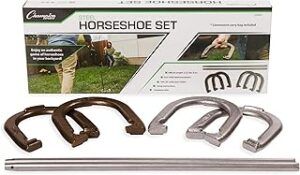
Horseshoe Game Sets
10. Why Focus Breaks Faster in Matches Than Practice
In practice, misses feel harmless. In matches, they feel expensive. That emotional difference is why focus collapses more quickly under pressure.
Players who train focus in practice — resetting after every miss instead of rushing the next throw — are the ones who stay steady when the score matters.
11. Knowing When to Stop Adjusting
Here’s a simple rule that saves a lot of frustration: if you miss twice in two different ways, stop adjusting mechanics. Different misses usually signal a focus issue, not a physical one.
Reset rhythm first. Adjust mechanics later.

12. How Focus Ties Into the Rest of Your Game
Focus protects everything else you work on. Grip, release, stance, follow-through, and tempo all depend on focus staying intact. When focus slips, mechanics follow. When focus holds, even imperfect mechanics can still work.
That’s why fixing focus matters just as much as any physical change you make.
Frequently Asked Questions
Why do I throw worse after one bad pitch?
Because your focus shifts backward instead of resetting forward. The next throw starts while you’re still reacting to the last one.
Is focus more important than mechanics?
No, but focus determines whether your mechanics hold up under pressure.
Should I adjust my grip or stance after a miss?
Only if misses are consistent. Scattered misses usually mean a focus reset is needed first.
How can I practice better focus?
Treat every practice pitch like it matters. Reset fully between throws instead of rushing the next shoe.
Focus isn’t something you either have or don’t have. It’s something you manage pitch by pitch.
The players who stay consistent aren’t the ones who never miss — they’re the ones who don’t let misses linger. They reset faster, trust their motion, and keep their rhythm intact even when things don’t go their way. That’s what allows their grip, stance, release, and follow-through to keep working under pressure.
If you’ve already put time into fixing your mechanics, learning how to control your focus is what allows all that work to finally show up when it matters. One bad pitch doesn’t have to turn into a bad frame — but only if you’re willing to reset instead of react.
Horseshoe Gifts and More!
This shop is my clubhouse for fellow players. You’ll find mugs, shirts, and pit gear to keep games fair, trash talk fun, and ringers flying — whether you’re building your first court or running a league.