Fix Your Follow-Through: Why You’re Letting Good Throws Die Early
Most horseshoe players believe the throw is over the moment the shoe leaves their hand.
That belief quietly sabotages more games than bad grip or poor aim ever will.
Follow-through isn’t something you add to a throw. It’s something that reveals whether everything before it worked together. When follow-through breaks down, accuracy doesn’t fail all at once — it erodes. Misses get closer. Results feel random. Confidence fades faster than skill.
If your throws feel good but don’t finish the way you expect, your follow-through is probably quitting before the job is done.
Let’s fix that.
What Follow-Through Really Is (And What It Isn’t)
Follow-through does not guide the horseshoe in mid-air.
Once the shoe leaves your hand, physics takes over. You can’t steer it, correct it, or save it. What follow-through does is confirm that your throw happened in the right sequence, at the right speed, with the right balance.
A good follow-through tells you:
- The release timing was clean
- The arm stayed on path
- The body remained balanced
- The throw wasn’t rushed or forced
A poor follow-through tells you something broke earlier — even if you didn’t feel it.
Think of follow-through as the receipt. It doesn’t cause the purchase, but it proves what happened.
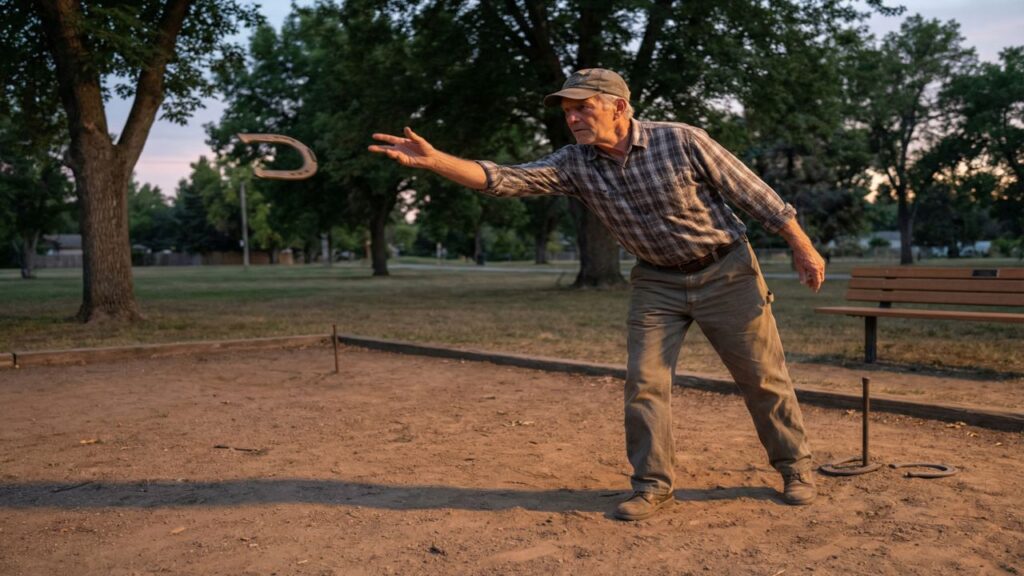
Why Follow-Through Gets Ignored by Most Players
Players ignore follow-through because it’s inconvenient.
You can’t consciously fix it during a throw. You can’t adjust it halfway through a pitch. And it happens after the part everyone focuses on — grip, stance, and release.
Follow-through also exposes mistakes players would rather blame on luck:
- “That one just slipped.”
- “It felt good coming out.”
- “I don’t know why that missed.”
But follow-through always knows why.
The Silent Cost of Poor Follow-Through
Bad follow-through doesn’t always look dramatic.
It usually shows up as:
- Good throws that miss by inches
- Shoes that flatten unexpectedly
- Ring attempts that fall off late
- Accuracy that disappears under pressure
The frustrating part is that nothing feels obviously wrong. That’s why players chase fixes everywhere else first.
The Most Common Follow-Through Problems (In Detail)
1. Decelerating the Arm Too Early
This is the most common follow-through issue in horseshoes.
Players slow their arm subconsciously right before release, often out of fear of overthrowing or missing long.
What it causes:
- Flat shoes
- Short misses
- Inconsistent rotation
- “Dead” feeling throws
Your arm must finish its path naturally. When it slows early, the shoe never gets a clean exit.
2. Forcing the Wrist at the End
Some players try to add spin manually.
They snap the wrist, flick the fingers, or “help” the shoe rotate.
This usually results in:
- Erratic rotation
- Late releases
- Wild misses that feel uncontrollable
Rotation should be a product of grip and timing, not a last-second wrist action.
3. Pulling the Arm Across the Body
This problem often comes from tension or imbalance.
Instead of finishing straight through, the arm cuts inward across the torso.
Results include:
- Left/right misses
- Crooked flight paths
- Shoes that drift late
A relaxed arm finishes forward. A tense arm pulls sideways.
4. Body Collapse After Release
If your body is moving, your follow-through won’t be stable.
Signs include:
- Stepping forward unintentionally
- Leaning heavily toward the pit
- Needing to “catch” yourself after release
This almost always traces back to stance or balance issues earlier in the throw.
5. Quitting the Throw With Your Eyes
Players who look up too early rush the end of the motion.
This causes:
- Incomplete extension
- Early deceleration
- Timing breakdowns
Your eyes should stay down through the finish. The arm finishes first. The eyes follow.
What a Correct Follow-Through Looks Like
A good follow-through is not dramatic.
It’s:
- Smooth
- Relaxed
- Unforced
Key characteristics:
- Arm continues upward on the same swing path
- Hand finishes open and relaxed
- Shoulder and torso remain quiet
- Feet stay planted and balanced
If you can hold your finish without wobbling, your follow-through is likely working.
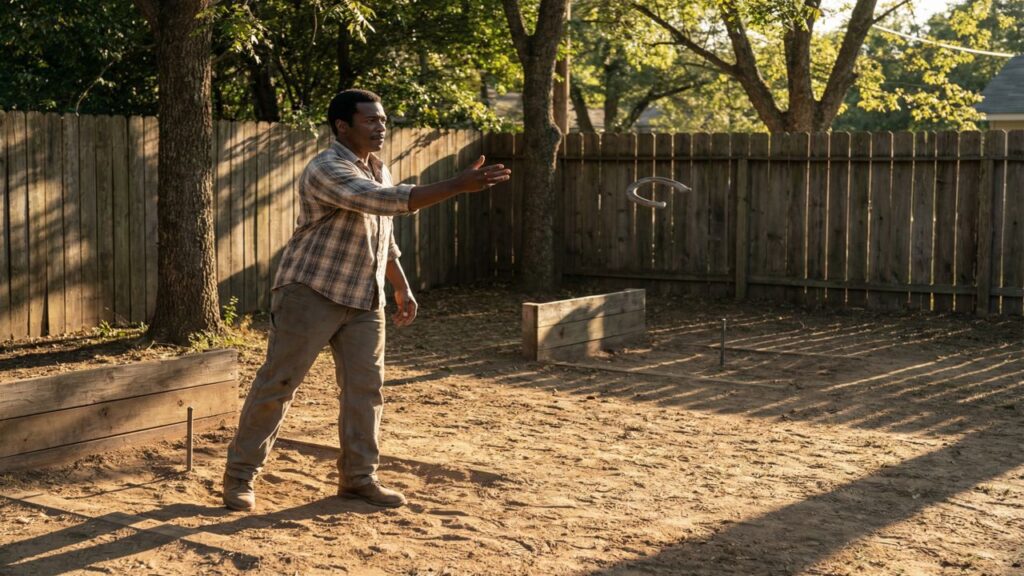
Why You Can’t Fix Follow-Through by “Trying Harder”
This is where many players go wrong.
They attempt to:
- Hold their arm up longer
- Pose their finish
- Force extension
That creates tension, not consistency.
Follow-through must happen naturally. If you’re thinking about it during the throw, the sequence is already broken.
Follow-Through Is the Result, Not the Fix
Here’s the critical truth:
You don’t fix follow-through at the end.
You fix:
- Balance
- Tempo
- Release timing
When those improve, follow-through improves automatically.
Trying to fix follow-through directly is like trying to fix a shadow instead of the object creating it.
How Your Horseshoes Affect Follow-Through More Than You Realize
Follow-through problems aren’t always mechanical. Sometimes they’re equipment-driven.
If your horseshoes:
- Feel unbalanced
- Vary slightly in weight
- Leave the hand inconsistently
Your body compensates — usually by slowing the arm or tightening at release.
That’s why practicing with a matched, evenly weighted horseshoe set matters. A consistent option many backyard and casual league players rely on is a Champion Sports horseshoe set, which provides a uniform feel and predictable release from shoe to shoe.
When the shoe leaves your hand cleanly, the arm naturally continues. When it doesn’t, follow-through shuts down early.
This isn’t about brand loyalty. It’s about removing unnecessary variables so your mechanics can settle.
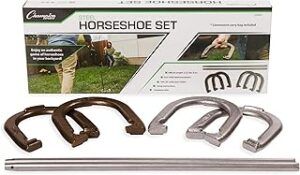
Horseshoe Game Set
Diagnosing Follow-Through Problems the Right Way
The Freeze Test
After release, freeze your body.
If you:
- Can’t hold balance
- Feel pulled forward
- Need to step
Your follow-through isn’t supported by your stance.
The Empty-Hand Test
Practice throwing without a horseshoe.
If your arm:
- Stops early
- Feels awkward
- Cuts inward
Your natural follow-through needs smoothing.
The Consistency Test
Watch your misses.
If they change direction or distance unpredictably, your follow-through is probably breaking down inconsistently.
Follow-Through Drills That Actually Work
Drill 1: Half-Speed Throws
Throw at reduced speed.
This removes force and exposes timing issues while encouraging smooth continuation.
Drill 2: Finish Hold
After release, hold your finish for a count of two.
If balance is difficult, something earlier needs fixing.
Drill 3: Eyes-Down Finish
Keep your eyes on the pit until the arm completes its motion.
This prevents rushed finishes and early deceleration.
How Follow-Through Changes Under Pressure
Pressure doesn’t ruin skill — it shortens motion.
As nerves rise:
- Muscles tense
- Arm paths shorten
- Follow-through disappears
That’s why players who throw great in practice struggle late in games.
A relaxed follow-through is often the first casualty of pressure.
When NOT to Change Your Follow-Through
Do not change follow-through:
- Mid-match
- After one bad frame
- Based on spectator advice
- Without fixing balance or tempo first
Follow-through is a symptom. Fix the cause, not the symptom.
What Miss Patterns Reveal About Follow-Through
- Short misses → early deceleration
- Flat shoes → arm stopping
- Side misses → arm pulling across
- Late-game collapse → tension buildup
Your misses are messages. Learn to read them.
Frequently Asked Questions
Should follow-through feel exaggerated?
No. Smooth and natural beats are exaggerated every time.
Do I need to point at the stake?
No. Let the arm finish where it naturally goes.
Can follow-through fix bad grip or stance?
No, but it will expose them immediately.
Why does my follow-through disappear when I miss?
Because tension rises when confidence drops.
How long does it take to improve follow-through?
Once balance and timing improve, results often come quickly.
Finish the Throw — Don’t Abandon It
Follow-through isn’t decoration.
It’s confirmation.
When your stance is solid, your grip is clean, and your release is timed right, follow-through becomes effortless. And when it’s effortless, consistency follows.
Fix your follow-through — and your throws stop feeling rushed, fragile, and unpredictable.
Horseshoe Gifts and More!
This shop is my clubhouse for fellow players. You’ll find mugs, shirts, and pit gear to keep games fair, trash talk fun, and ringers flying — whether you’re building your first court or running a league.