Fix Your Release: Why the Shoe Leaves Your Hand Wrong (Even When It Feels Right)
Most horseshoe players believe their release is fine.
They’re wrong — and the reason they don’t realize it is simple: a bad release often feels normal.
You don’t see your release. You don’t consciously control it. You only see the result after the shoe leaves your hand, and by then it’s too late to fix anything. That’s why release problems are some of the most stubborn issues in horseshoes. Players keep adjusting everything except the real cause.
If you’ve ever said:
- “That felt good, but the shoe did something weird”
- “Some pitches rotate perfectly, others don’t”
- “I can’t figure out why my misses aren’t consistent”
You’re almost certainly dealing with a release problem — not a grip problem, not a stance problem, not bad luck.
Let’s fix it.
What the Release Is Actually Responsible For
The release controls three critical things:
- Timing – when the shoe leaves your hand
- Rotation – how cleanly the shoe turns in flight
- Direction – whether the shoe stays on line or drifts
Once the shoe leaves your hand, nothing else matters. You can have perfect form up to that moment, and a poor release will undo all of it.
A good release is:
- Smooth
- Unforced
- Repeatable
A bad release is usually:
- Rushed
- Tense
- Slightly different every time

Why Release Problems Are So Hard to Diagnose
Release issues hide because:
- You can’t see them clearly
- They happen in a split second
- They feel the same whether they’re right or wrong
That’s why players often chase symptoms instead of causes. They adjust stance, arc, or aim when the real issue is happening at the fingertips.
If your misses don’t follow a clear pattern, the release is usually the problem.
The Most Common Release Mistakes Players Make
1. Late Release
The shoe hangs on too long.
This usually causes:
- Long misses
- Flat shoes
- Over-rotation
Late release often comes from tension — especially gripping too tightly or trying to “place” the shoe.
2. Early Release
The shoe leaves the hand too soon.
Common results:
- Short shoes
- Low arc
- Inconsistent rotation
Early release is often caused by rushing the throw or losing confidence mid-motion.
3. Forced Release
This happens when players consciously try to make the shoe spin.
Instead of letting rotation happen naturally, they flick the wrist or fingers. This creates wobble, side roll, and unpredictable results.
If you’re trying to spin the shoe, you’re already in trouble.
4. Side Roll at Release
The shoe comes off the hand tilted instead of flat.
Side roll often comes from:
- Thumb pressure
- Uneven finger release
- Steering instead of swinging
Even a small tilt at release becomes a big miss downrange.
What a Clean Release Actually Looks Like
A good release doesn’t look dramatic.
It looks:
- Relaxed
- Effortless
- Almost boring
The shoe leaves your hand because your arm reaches the natural end of its swing — not because you force it out.
Your fingers should open naturally. Your wrist should stay neutral. The motion should feel like letting go, not throwing harder.

The Relationship Between Grip and Release
Grip and release are inseparable.
If your grip is too tight, your release will be late.
If your grip shifts, your release timing shifts.
If your grip changes under pressure, your release follows.
That’s why fixing grip comes first — and why this article builds directly on it.
Simple Release Tests That Reveal Problems Fast
The Sound Test
Listen to the shoe.
A clean release produces a consistent sound off the hand. A forced or uneven release often sounds different pitch to pitch.
The Rotation Watch
Don’t watch the stake — watch the shoe.
If rotation changes from pitch to pitch without any mechanical changes, your release is inconsistent.
Release Drills That Actually Work
Drill 1: Half-Speed Pitching
Throw at 50% effort.
This exposes forced releases immediately. If rotation improves when you slow down, your normal release is rushed.
Drill 2: One-Focus Drill
Forget aim. Forget score.
Focus only on how the shoe leaves your hand. Where does it feel clean? Where does it feel forced?
Drill 3: Freeze the Follow-Through
After release, freeze your arm position.
If your arm stops abruptly or jerks, you’re forcing the release instead of letting it happen.
Why You Shouldn’t “Fix” Your Release Mid-Game
Release adjustments during matches almost always make things worse.
Why?
- Pressure increases tension
- Tension changes timing
- Timing ruins rotation
During games, the goal is trust, not correction. Fix release issues in practice, not under scoreboard pressure.
Release Fatigue Late in Games
As games wear on:
- Arms tire
- Hands tighten
- Release timing drifts
Most late-game slumps come from subtle release changes caused by fatigue. The fix isn’t more effort — it’s relaxation.
If your release falls apart late, you’re probably gripping harder without realizing it.
How Release Problems Show Up in Miss Patterns
- Long, flat misses → late release
- Short shoes → early release
- Leaners instead of ringers → uneven release
- Random misses → inconsistent release timing
These patterns will matter even more when we get to Fix Your Miss, where everything ties together.
When Not to Change Your Release
Don’t change your release:
- After one bad pitch
- When you’re frustrated
- When copying another player
- When the problem is mental, not mechanical
Release fixes take time. Rushed changes create new problems.
A Gear Choice That Reinforces
Practicing with a regulation-weight steel set like the Champion Sports Official Steel Horseshoe Set reinforces patience and control because the weight demands a smooth swing and clean release. Rushed throws and sloppy mechanics show up immediately, while consistent form gets rewarded.
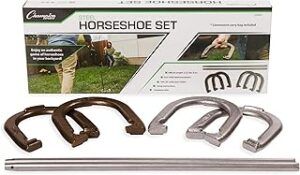
Horseshoe Game Sets
Frequently Asked Questions
Should I consciously control my release?
No. You should train it, then trust it.
Can release issues cause side roll?
Yes — especially when the shoe comes off unevenly.
Why does my release feel different under pressure?
Tension changes timing, even when you don’t notice it.
How long does it take to fix a release problem?
Several weeks of focused practice, not one session.
Should I change my arc to fix release issues?
No. Arc is a result, not a fix.
Release Is About Trust, Not Force
A clean release doesn’t come from trying harder.
It comes from:
- Relaxation
- Repetition
- Letting the motion finish naturally
If your release feels forced, rushed, or unpredictable, that’s not bad luck — that’s information. Learn to read it instead of fighting it.
Grip sets the foundation.
Release reveals the truth.
The more you stick with it, the more your body starts syncing the motions naturally, leading you to that repeatable release you’ve been gunning for. Embrace the grind, and soon enough, your improved method will start making those ringers rain down.
Horseshoe Gifts and More!
This shop is my clubhouse for fellow players. You’ll find mugs, shirts, and pit gear to keep games fair, trash talk fun, and ringers flying — whether you’re building your first court or running a league.