Why Horseshoes Feel Fair Even When You Lose
Horseshoes is one of those classic games that never really fades away. Picture this: a sunny afternoon with a group of friends, a couple of metal stakes driven into the ground, and the satisfying clang of iron meeting iron. It’s a scene many know and love. While tossing a horseshoe might seem simple, there’s an intriguing mix of skill, luck, and tradition that makes it captivating.
There’s something unusual about losing in horseshoes.
You can walk off the court after a close game, shake hands, and still feel… steady. Not frustrated. Not cheated. Just aware that the other player executed a little better that day.
That feeling isn’t common in modern games.
In many sports and backyard competitions, losses feel random. A bad bounce. A lucky deflection. A momentum swing you couldn’t control. You play well and still walk away wondering what just happened.
Horseshoes rarely leave that question hanging.
Even when you lose, the result usually makes sense.
That’s because Horseshoes is built around transparency. The game shows you exactly what happened and why. And when outcomes feel connected to performance, even losses feel fair.
1. The Target Never Moves — So the Blame Doesn’t Shift
In games where outcomes feel unfair, the environment often plays a hidden role.
Uneven surfaces, wind, rebounds, and rolling objects — all introduce variables that can override skill. When those elements decide the outcome, players leave feeling disconnected from the result.
Horseshoes remove that ambiguity.
The stake stays put.
The distance remains constant.
The pit behaves predictably.
Because the target doesn’t move, outcomes trace directly back to execution. If a shoe lands wide, it was wide. If it lands short, the release or tempo was off. The game doesn’t hide mistakes behind chaos.
That clarity builds trust in the result.

2. Scoring Is Visible and Immediate
Some games rely on complicated scoring systems or delayed outcomes. Players don’t always know where they stand until later, and that uncertainty can feel unsettling.
Horseshoes are transparent.
You see:
- How close the shoe landed
- Whether it scored a point
- How the frame shifted the match
There’s no mystery.
The score reflects what happened in real time. That visibility reduces doubt. Even when you fall behind, you understand how it happened.
Fairness thrives when nothing is hidden.
3. Good Play Is Obvious — Even to the Opponent
One of the most underrated aspects of horseshoes is mutual recognition.
When someone throws a clean ringer, both players know it immediately. There’s no debate about whether it was earned. The execution is clear.
That shared understanding matters.
In games driven by speed or reaction, it’s easy to feel like you were beaten by circumstance. In horseshoes, you’re beaten by precision. And precision commands respect.
Respect softens the sting of losing.
4. Misses Are Understandable, Not Random
Losing feels unfair when mistakes seem arbitrary.
In horseshoes, misses follow patterns.
Too much right.
A little long.
Flat rotation.
Players can usually explain their misses without inventing excuses. That predictability keeps frustration from spiraling. Instead of blaming luck, players look inward.
When losses feel instructional rather than arbitrary, they’re easier to accept.
5. There’s Time to Compete — No Momentum Whiplash
Fast-paced games often swing wildly. A sudden burst of scoring can erase careful play. Those momentum shifts feel destabilizing.
Horseshoes move differently.
The pace is steady. Each pitch stands on its own. There are no surprise reversals caused by speed alone. Even when the score changes quickly, it does so through visible execution.
That steady rhythm makes comebacks possible without feeling chaotic. It also means when someone builds a lead, it’s because they consistently performed better — not because the game spiraled.
Consistency reinforces fairness.
6. Experience Matters — and That Feels Honest
Games feel unfair when experience stops mattering.
In horseshoes, experience compounds. Players who have refined their tempo, release, and adjustments tend to perform more steadily over time. When you lose to someone more experienced, the reason is usually clear.
They read misses better.
They adjusted faster.
They stayed calm longer.
Something is reassuring about losing to skill instead of randomness.
7. Equipment Reflects Execution, Not Luck
The type of horseshoes used also reinforces fairness.
Regulation-weight, balanced shoes respond predictably to clean throws and reveal inconsistencies honestly. A solid example is Baden Champions Series Horseshoes.
Well-made, regulation-style shoes:
- Hold consistent weight
- Rotate predictably in flight
- Land in ways that reflect release quality
They don’t “help” or “hurt” randomly. They mirror execution. That reliability strengthens trust in outcomes.
When equipment behaves honestly, players do too.
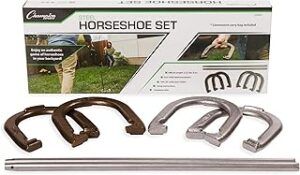
Horseshoe Game Sets
8. The Pace Allows Emotional Reset
Another reason horseshoes feel fair is the built-in space between pitches.
There’s time to breathe.
Time to think.
Time to reset.
That space prevents emotional escalation. Instead of rushing into the next attempt, players can recalibrate. Losing a point doesn’t force panic. It invites adjustment.
Games that allow reflection reduce resentment.
9. The Community Culture Supports Respect
Over time, horseshoes has developed a culture that values sportsmanship.
Handshakes.
Friendly competition.
Mutual acknowledgment of good throws.
Because the game is transparent, players tend to credit good performance openly. That tone reduces bitterness.
Even competitive matches often feel collaborative — two players trying to out-execute each other rather than out-chaos each other.
10. Losses Often Lead to Clear Improvement
Perhaps the strongest sign of fairness is what happens after a loss.
In horseshoes, players usually leave knowing what to work on. The path forward is visible.
Maybe the arc drifted.
Maybe the tempo broke under pressure.
Maybe releases tightened late in the game.
Whatever the cause, it’s identifiable.
When improvement feels possible and specific, losing doesn’t feel permanent. It feels productive.

Frequently Asked Questions
Why does losing in horseshoes feel less frustrating?
Because outcomes are tied directly to execution rather than unpredictable variables.
Is horseshoes mostly skill-based?
Yes. While no game eliminates luck, horseshoes heavily rewards consistent mechanics and controlled pacing.
Do beginners feel this fairness too?
Often yes. Even early on, players can see why they scored or missed.
Does equipment affect fairness?
High-quality, regulation-weight horseshoes improve consistency and reduce unpredictable outcomes.
Why is sportsmanship strong in horseshoes?
Because the game’s transparency encourages mutual respect for good execution.
Why Fairness Is What Keeps Players Coming Back
Horseshoes don’t need chaos to stay interesting. It builds engagement through clarity.
You see what happened.
You understand why.
You know what to adjust.
That honesty creates a rare feeling in competition — trust.
And when players trust the game, even losses feel earned rather than inflicted.
That’s why horseshoes continues to draw players back to the pit. Not because it’s loud or flashy, but because it’s fair.
The future of this beloved game is bright, with a continually growing community and interest. While new trends and games emerge, horseshoes hold a charm that keeps them relevant in our modern world. Its enduring appeal lies in the balance of skill, simplicity, and the relationships it fosters.
As you continue to toss those horseshoes, remember why you play. It’s not always about being the best; it’s about finding that joyful moment when the shoe lands just right, surrounded by friends who appreciate the same. Whether you hit a ringer or it falls short, it’s the laughter and the community you take with you beyond the playing field that truly matter.