Advanced Horseshoe Scoring: Handicaps, Round Robins, and Playoff Formats
If you’ve been pitching horseshoes for a while, you know how it goes: one or two players dominate, everyone else is just trying to keep up, and before long the casual players start finding excuses not to play. The result? Your court goes quiet — and that’s the last thing we want.
The good news is there’s a solution. With a few tweaks to your scoring system, you can transform your backyard into a competitive, fair, and fun environment where everyone feels like they have a shot at winning.
In this guide, we’ll explore:
- Handicap systems that level the playing field
- Round robin formats that keep everyone pitching
- Playoff brackets that create drama and bragging rights
These methods are simple to set up, work for groups of all sizes, and can turn an ordinary night of horseshoes into something your friends talk about all week.
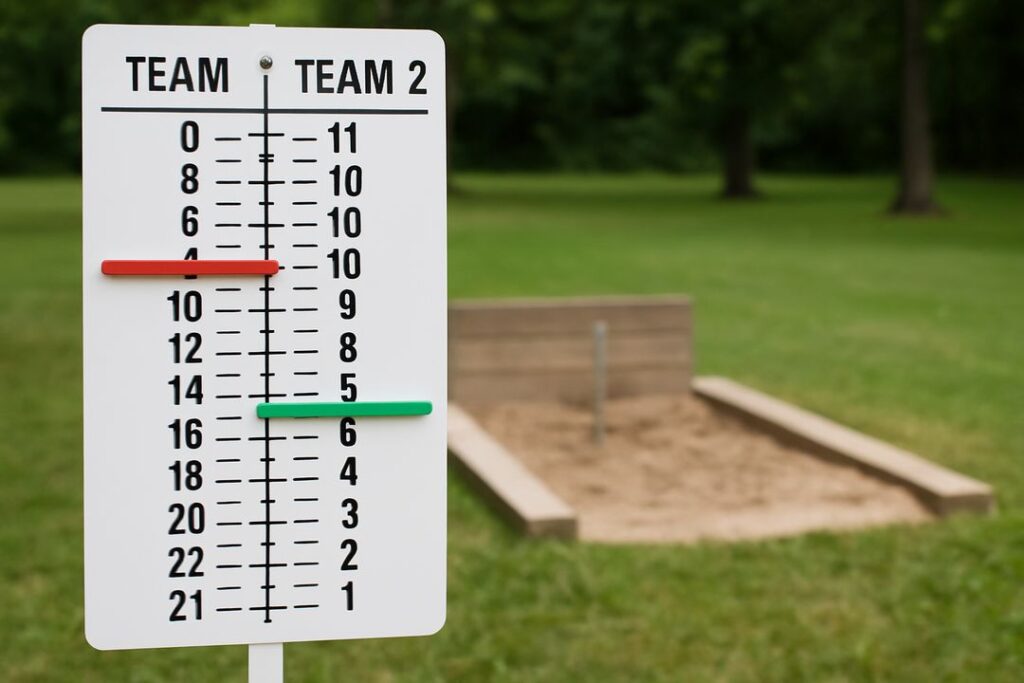
Why Advanced Scoring Matters
Horseshoes isn’t just about pitching ringers — it’s about connection, friendly competition, and having fun. When the same player wins every time, it gets boring fast. Advanced scoring solves that problem by creating a sense of balance and anticipation.
Benefits of using advanced scoring formats:
- Keeps new players engaged: A beginner can compete with veterans thanks to handicaps.
- Creates variety: Different matchups and formats keep games from feeling repetitive.
- Increases participation: More players stay interested when they have a fair shot.
- Builds excitement: Playoffs and finals nights create memorable moments.
If you want to keep neighbors, friends, and family showing up week after week, learning how to implement these systems is the next step in your horseshoe journey.
Handicap Systems: Leveling the Playing Field
A handicap system is the simplest, most powerful tool you can add to your backyard game. Think of it like golf — it gives each player a fair chance based on skill level.
Step 1: Track Player Averages
Start by playing a series of regular games (5–10 is ideal) and record each player’s total score. Once you have enough data, calculate each player’s average score per game.
| Player | Average Score per Game |
|---|---|
| Mike | 24 |
| Sarah | 18 |
| Jake | 14 |
In this example, Mike is the strongest player, Sarah is in the middle, and Jake is the underdog.
Step 2: Determine the Benchmark
Use the highest average as your baseline — in this case, Mike’s 24 points per game.
Step 3: Calculate Handicaps
Subtract each player’s average from the highest average:
- Mike: 24 – 24 = 0 handicap
- Sarah: 24 – 18 = +6 handicap
- Jake: 24 – 14 = +10 handicap
Step 4: Apply the Handicaps
At the start of each game, Sarah begins with 6 points, Jake with 10 points, and Mike with none. Suddenly, everyone has a reason to play hard — the game feels competitive from the first pitch.
Pro Tip: Recalculate averages every few weeks to keep the system fair as players improve.
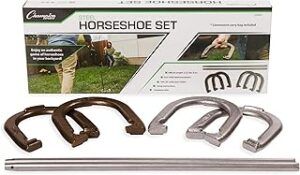
Horseshoe Game Set
Round Robin Formats: Perfect for Larger Groups
Round robins are a lifesaver when you have more than four players. Instead of leaving people waiting for the “next game,” you rotate players so everyone gets equal time in the pits.
How to Run a Round Robin
- Write Down All Players: Make a list of everyone pitching that day.
- Create Matchups: Use a round robin generator online or pair them manually so everyone faces everyone else.
- Set Scoring Rules: Decide if you’re playing to 21 points, 15 points, or using cancellation scoring.
- Track Wins and Losses: Keep score on paper, a whiteboard, or better yet — a dedicated scoreboard.
Example with six players (A, B, C, D, E, F):
- Round 1: A vs. B, C vs. D, E vs. F
- Round 2: A vs. C, B vs. E, D vs. F
- Round 3: A vs. D, B vs. F, C vs. E
- …and so on until all matchups are complete.
At the end, tally up wins. The player with the most wins is your “Round Robin Champion.”
Why It Works:
- Nobody feels left out.
- Games stay short and fun.
- New players get experience against multiple opponents in one night.

Playoff Formats: Bring the Drama
After a few weeks of round robins, turn it into a backyard league playoff night. This is where the energy skyrockets — everyone loves a bracket.
Single-Elimination
Players are seeded based on their win-loss record. Lose once and you’re out, win and you advance.
- Pros: Quick and exciting.
- Cons: Tough for players who lose early — they’re done for the night.
Double-Elimination
This gives everyone a second chance. If you lose, you drop into the “loser’s bracket” and can still fight your way back to the finals.
- Pros: Fairer and more forgiving.
- Cons: Takes longer to finish, so best for Saturday tournaments or parties.
Championship Match
Crown your winner with a best-of-three series. It feels official, builds tension, and gives the top two players a chance to show off their skills.
Scorekeeping Made Simple
Keeping track of wins, losses, and points can get messy if you’re just using scrap paper. That’s why a dedicated scoreboard can completely upgrade your setup.
Product Spotlight: ScoreTower Combo Set – Scoreboard & Drinkholders for Horseshoes
If you’re serious about running round robins or playoffs, the ScoreTower Combo Set is a game changer.
- Weatherproof construction stands up to backyard conditions.
- Clear, visible scoreboard keeps everyone honest.
- Built-in drink holders keep beverages close (and safe from being knocked over!).
- Portable design makes it easy to set up and take down after game night.
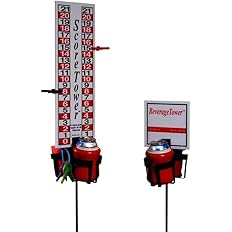
This single piece of gear adds a professional touch and takes scorekeeping stress off your plate so you can focus on pitching.
Pro Tips for Running Smooth Tournaments
- Keep Games Moving: Limit warm-up pitches so everyone gets their turn.
- Rotate Pits: If you have multiple pits, rotate players for fairness.
- Celebrate Wins: Give out small prizes — even dollar-store medals make it feel like a big deal.
- Post Results: Take a photo of the final bracket and share it with your group chat.
Call-to-Action
Ready to take your backyard horseshoe games from casual to competitive? Try a handicap system this week or run your first mini round robin with friends. Better yet, plan a playoff night with brackets and crown a Backyard Champion — trust me, people will talk about it until the next one.
Set up your court, grab the ScoreTower Combo Set, and turn your next game night into something special.
Frequently Asked Questions
Q: Won’t handicaps feel unfair to the best players?
A: Not if done correctly. They just make games more competitive. The best player still has to perform to win.
Q: How do you handle ties in round robin formats?
A: Use total points scored as a tiebreaker or run a quick one-inning playoff match.
Q: How long does a full round robin take?
A: It depends on the number of players and your point limit. For 6 players playing to 15 points, plan for about 90 minutes.
Q: What if someone can’t stay the whole night?
A: Just mark them as a forfeit in remaining games — or let a substitute play their remaining matchups.
Final Thoughts
The beauty of horseshoes is that it’s simple to start, but endlessly customizable. By adding handicaps, round robins, and playoffs, you turn an ordinary backyard activity into an event that challenges everyone and keeps them coming back.
Don’t wait for the next big holiday or family reunion — make your backyard the place where everyone wants to pitch. Grab that scoreboard, invite some friends, and start keeping stats. Who knows? You might just launch the next neighborhood league.
Hi there, and thanks for stopping by! My name is Larry, and I’m the voice behind PlayingHorseshoes.com. I love the game and have been playing since I was a kid. I started this blog because I am passionate about the sport, and with all the technology, I hope the sport doesn’t die. I plan to do my part to keep it going for my brother and my sake. Thank you for stopping by. Feel free to subscribe and comment. Thank You!