
Fix Your Stance: Why Your Feet Are Sabotaging Good Throws
Most horseshoe players think stance is a “set it and forget it” part of the game.
Pick a spot, stand there, throw the shoe.
That works — until it doesn’t.
If you’ve ever felt like your throw is solid but the results don’t match, your stance is often the hidden problem. A bad stance doesn’t always cause dramatic misses. Instead, it quietly introduces inconsistency. Your release changes slightly. Your balance shifts. Your timing drifts.
And you’re left wondering why the same throw doesn’t repeat.
Let’s fix that.
What Your Stance Actually Controls
Your stance affects more than just where you stand.
It directly influences:
- Balance
- Arm swing path
- Release timing
- Consistency under pressure
A good stance makes repeatable throws easier.
A bad stance forces constant micro-adjustments — even when you don’t realize it.
If your body isn’t stable, your throw can’t be consistent.
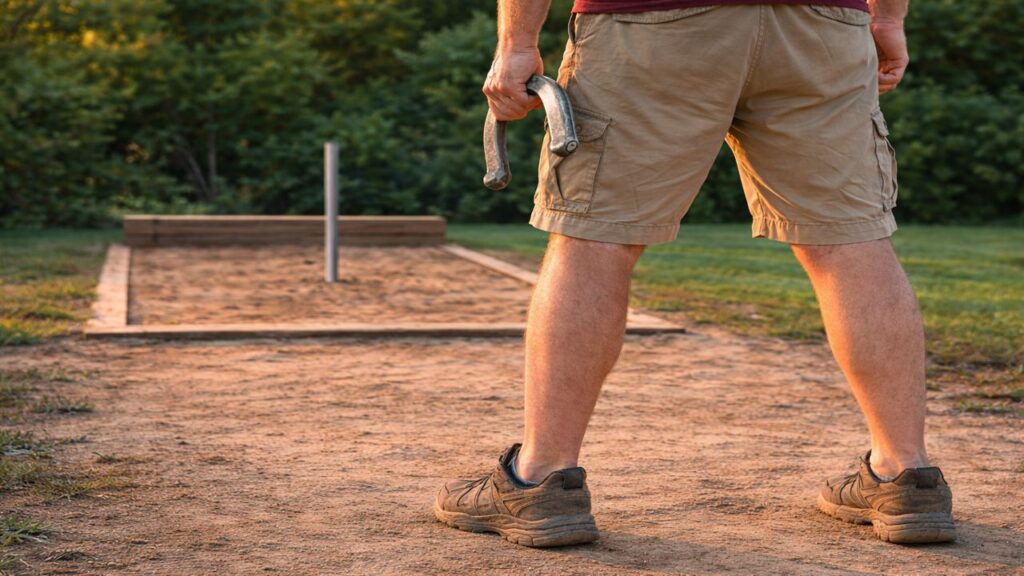
Why Stance Problems Are Easy to Miss
Stance issues hide because:
- They feel normal once you get used to them
- They don’t always cause the same miss twice
- Players focus on the arm instead of the body
Most stance problems develop slowly. A foot creeps forward. Weight shifts slightly. Alignment changes over time. Nothing feels “wrong” — until performance stalls.
The Most Common Stance Mistakes in Horseshoes
1. Standing Too Narrow
Feet too close together limit balance.
This often causes:
- Wobble during the swing
- Rushed releases
- Inconsistent follow-through
A narrow stance feels controlled — but it actually makes you unstable.
2. Standing Too Wide
Feet spread too far apart, lock the hips.
This leads to:
- Forced arm swings
- Reduced rhythm
- Difficulty repeating timing
Wide stances often come from trying to feel “solid,” but they restrict natural motion.
3. Weight Too Far Forward
Leaning toward the pit feels aggressive.
It usually causes:
- Late releases
- Flat shoes
- Falling out of the throw
Forward lean adds tension and speeds up the arm unintentionally.
4. Weight Too Far Back
Leaning away from the pit creates hesitation.
Common results:
- Short shoes
- Early release
- Lack of confidence at release
Your body hesitates, and the shoe follows.
5. Drifting Feet Between Pitches
Your stance changes without you noticing.
This creates:
- Different arm paths
- Changing release points
- Inconsistent misses
If your feet aren’t in the same place every time, nothing else will be either.
What a Good Horseshoe Stance Looks Like
A solid stance is:
- Comfortable
- Balanced
- Repeatable
Your feet should be:
- Roughly shoulder-width apart
- Stable without locking your knees
- Positioned so your arm can swing freely
You should feel planted, not rigid.
If you feel like you have to “hold” your stance, it’s probably wrong.
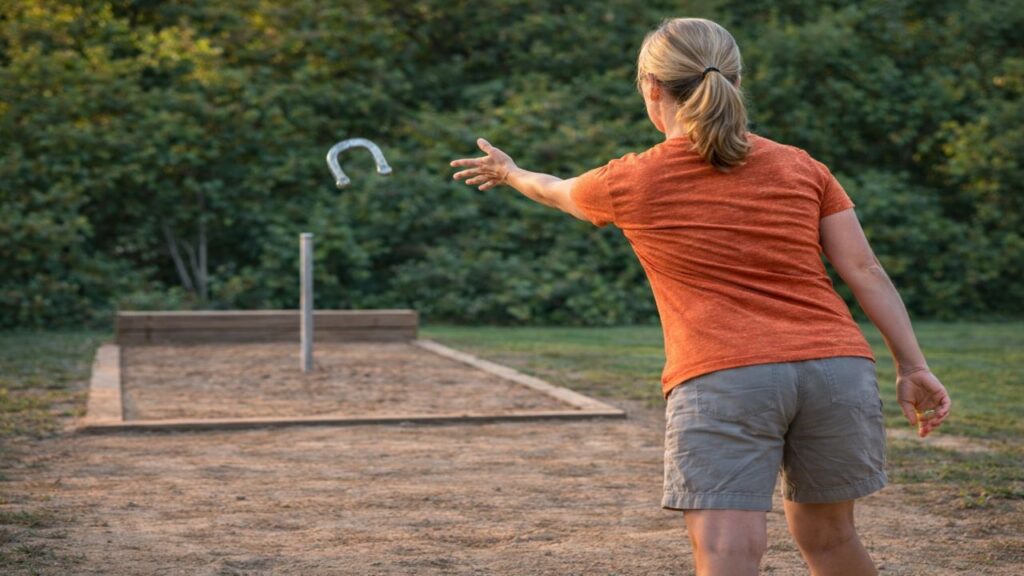
Closed vs Open Stance (And Why It Confuses Players)
Some players stand more square. Others open their stance slightly.
Both can work — if they’re consistent.
Problems arise when players:
- Switch between closed and open unintentionally
- Change stance based on pressure
- Copy another player’s stance mid-season
Pick what feels natural and repeatable. Consistency matters more than style.
Why Your Horseshoe Set Can Affect Stance More Than You Think
Most players don’t connect stance problems with equipment — but they should.
If your horseshoes vary in weight, balance, or feel, your body subconsciously adjusts. That often shows up first in your feet and balance, not your arms.
This is why practicing with a matched, balanced horseshoe set matters. A solid option for backyard and casual league players is a Franklin horseshoe set, which provides consistent weight and feel from shoe to shoe.
Using the same, balanced shoes every session helps your stance settle naturally because your body isn’t compensating for uneven weight or mismatched equipment. It’s not about brand loyalty — it’s about removing variables so your stance can repeat.
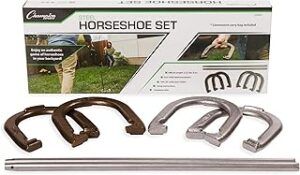
Horseshoe Game Sets
Simple Tests to Check Your Stance
The Balance Check
After your release, freeze.
If you’re:
- Falling forward
- Rocking backward
- Stepping unintentionally
Your stance isn’t stable.
The Repeatability Test
Pay attention to where your feet land before each pitch.
If you notice yourself re-adjusting constantly, your stance hasn’t locked in yet.
Stance Drills That Actually Help
Drill 1: No-Shoe Dry Swings
Practice your arm swing without a horseshoe.
If balance feels off without weight in your hand, your stance needs work.
Drill 2: Same-Spot Setup
Set your feet deliberately before every pitch.
This builds awareness and stops unconscious drifting.
Drill 3: Slow-Tempo Throws
Throw at reduced speed.
If balance improves, your normal stance may be rushing your motion.
How Stance Affects Pressure Situations
Under pressure:
- Players tense up
- Feet shift
- Weight creeps forward
That’s why many players throw well early and struggle late.
A reliable stance becomes your anchor when nerves kick in. It keeps your body doing the same thing even when your mind isn’t calm.
When Not to Change Your Stance
Do not change your stance:
- During a match
- After one bad frame
- Because someone else suggests it mid-game
- When the issue is grip or release
Stance changes take time. Make them in practice, not competition.
How Stance Problems Show Up in Miss Patterns
- Long misses → leaning forward
- Short misses → weight too far back
- Random misses → drifting stance
- Late-game collapse → stance breaking down under fatigue
Stance issues don’t always scream. They whisper.
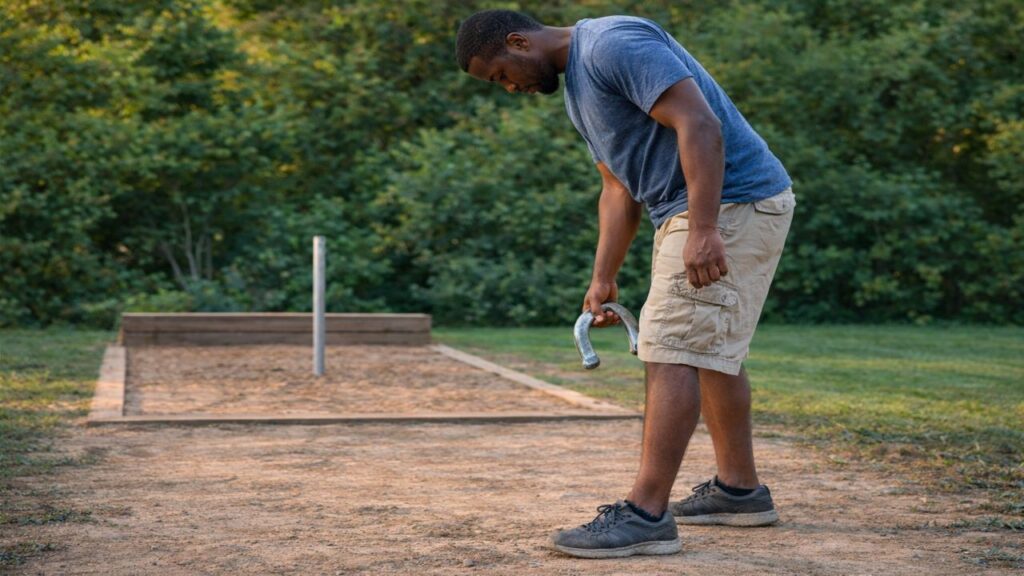
Frequently Asked Questions
Should I copy another player’s stance?
No. Body types and throwing styles differ.
Is stance more important than grip or release?
It supports them. A bad stance makes both harder.
Can stance changes fix accuracy?
Yes — when inconsistency is the real problem.
How long does it take to adjust a stance?
Several weeks of mindful practice.
Should my stance feel rigid?
No. Stable and relaxed beats rigid every time.
Stance Is Your Foundation
Your stance doesn’t win games by itself.
But if it’s wrong, nothing else works the way it should.
A solid stance gives your throw room to repeat. It reduces tension. It supports your grip and release instead of fighting them.
Fix your stance, and the rest of your game gets quieter — and quieter is where consistency lives.
This shop is my clubhouse for fellow players. You’ll find mugs, shirts, and pit gear to keep games fair, trash talk fun, and ringers flying — whether you’re building your first court or running a league.


