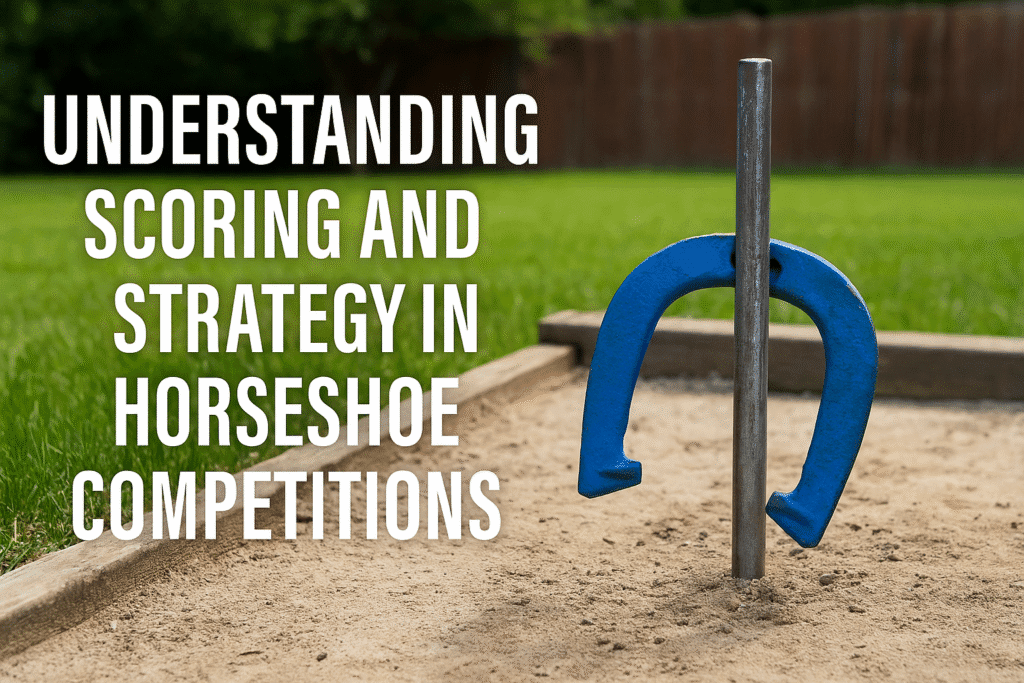
Horseshoe Pitching Strategies: Playing Smart to Win More Games
Introduction: Outsmarting Your Opponent
In horseshoes, the scoreboard doesn’t care who has the strongest arm — it cares who plays the smartest game. Many beginners think winning is all about throwing harder or chasing ringers every pitch. But the truth is, the players who win consistently are the ones who understand strategy: when to aim for ringers, when to settle for safe points, and how to use scoring rules to their advantage.
If you’ve got the basics of grip, stance, and release down, it’s time to take the next step. This guide is all about horseshoe pitching strategy — how to make smarter choices inning after inning so you’re not just playing, you’re winning.
Step 1: Know Your Strengths and Limitations
The first part of any good strategy is self-awareness.
- If you’re steady but not flashy: Aim for consistent close shoes. One or two points per inning add up fast.
- If you’re already accurate with the turn grip: Build your strategy around going for ringers, since your style gives you that advantage.
- If your stamina isn’t great: Don’t waste energy on wild throws. Play controlled and save your best shots for when they count.
🎯 Pro Tip: Don’t switch grips mid-game. Stick with what feels natural. Strategy is about predictability, and you can’t build that if you’re constantly changing styles.

Step 2: Start Strong — Opening Inning Strategies
The first inning can set the tone for the whole game.
- Safe Start: Instead of gambling for a ringer, go for close, easy points. Scoring 1–2 points early forces your opponent to chase.
- Aggressive Start: If you’re confident and practiced, aim for the ringer right away. Landing 3 points in the first inning can shake an opponent’s confidence.
👉 The smart move depends on who you’re playing. Against beginners, safe starts usually win. Against competitive players, a bold start can be the edge you need.
Step 3: Play the Percentages
Think of horseshoes like poker — it’s about playing the odds.
- Consistent Points: Going for safe, close shoes often leads to 2 points per inning. It might not be exciting, but after 10 innings that’s 20 points — enough to win most backyard games.
- Ringer Chasing: Going for ringers every time leads to bigger scores, but also more empty innings where your opponent racks up points.
Example:
- Player A goes for ringers, lands 1 in 10 tries = 3 points.
- Player B plays close shoes, earns 2 points in 6 of 10 innings = 12 points.
Guess who wins? The steady player.
Step 4: Learn to Read Your Opponent
Winning isn’t just about your throws — it’s about responding to your opponent.
- If they go for ringers every time: Play safe. Cancel their ringers when possible, and collect steady points while they miss.
- If they struggle with distance: Keep your throws consistent. Let them beat themselves.
- If they tire quickly: Maintain your rhythm. Their form will break down first.
🎯 Strategy in Action: If your opponent misses the pit on both throws, don’t chase ringers. Just land one close shoe and take the free point.
Step 5: Control the Mental Game
Your mindset is as important as your mechanics.
- Don’t panic if you fall behind. Horseshoes is a game of runs. A single double-ringer inning (6 points) can flip the game.
- Stay calm when you’re ahead. Many players get sloppy with a lead. Keep the same focus you had at the start.
- Focus on one pitch at a time. Don’t let past misses or the current score distract you.
A calm, focused player forces their opponent to make mistakes.
Horseshoe Game Set
Step 6: Use Cancellation Scoring to Your Advantage
In official rules, ringers cancel ringers. Knowing when to cancel and when to chase is a huge strategic edge.
Example:
- Opponent throws a ringer.
- Instead of panicking, you throw one too. Both cancel — no points for them.
That single cancel can be the difference between trailing and staying even.
👉 Smart pitchers don’t just aim for points — they aim to deny their opponent’s score.
Step 7: Practice Strategy, Not Just Throwing
Most players practice only mechanics. Smart players practice scenarios.
- Play Situational Games: Pretend you’re down 18–15 and need a comeback. How do you pitch?
- Pressure Drills: Keep score during practice to simulate game nerves.
- Consistency Goals: Don’t stop until you’ve thrown 10 shoes in a row within 6 inches of the stake.
Strategic practice builds decision-making muscles, not just throwing accuracy.
Advanced Strategic Tips
If you’re ready for league or tournament play, these strategies matter even more:
- Score Awareness: When you’re 3–4 points from winning, play safe and force your opponent into risky throws.
- Weather Strategy: On windy days, throw lower arcs with heavier shoes. On damp ground, aim for flatter landings to avoid bounce.
- Opponent Tempo: If they rush, slow down. If they stall, keep your own steady pace. The calmer rhythm usually wins.
The Right Gear for Smart Play
If you want consistency, you need shoes that support it. That’s where Mustang Pitching Horseshoes shine.
- They’re designed with a balanced weight that helps players place shoes accurately near the stake.
- Slightly lighter feel makes them excellent for steady point-scoring strategies.
- Tough enough for both backyard fun and league play, so you can grow with them as your strategy improves.
👉 If your goal is to outthink and outlast your opponent, Mustang gives you the control and consistency you need.

Common Strategy Mistakes (And Fixes)
- Chasing ringers when steady points would win. Fix: Focus on close shoes when you’re ahead.
- Forgetting to track the score. Fix: Call scores aloud each inning and play accordingly.
- Switching grips mid-game. Fix: Commit to one style per match.
- Losing focus after mistakes. Fix: Reset every throw—don’t carry frustration to the next pitch.
FAQs
Q: Should I always go for ringers?
A: Not unless you’re very consistent. Points win games just as often as ringers.
Q: How do I beat someone with more power?
A: Play smarter. Cancel their ringers and rack up steady points.
Q: What’s the safest way to play when I’m ahead?
A: Stick to steady point shots. Force your opponent to take the risks.
Q: What if I’m behind late in the game?
A: That’s the time to get aggressive. Go for ringers and big innings to catch up.
Q: Do pros use strategy or just aim for ringers?
A: Both. Pros build their whole game plan around percentages and smart decision-making.
Final Thoughts: Outsmart, Don’t Outmuscle
The best horseshoe players know it’s not about brute force. It’s about strategy, patience, and mental toughness.
- Play to your strengths.
- Use cancellation scoring to neutralize your opponent.
- Stay calm under pressure.
- And above all, practice scenarios that make you think, not just throw.
👉 If you’re serious about upping your game, grab a set of Mustang Pitching Horseshoes, head to the pit, and start practicing smarter—not harder. Once you combine good mechanics with sharp strategy, you’ll find yourself winning more games, no matter who’s standing across from you.
Hi there, and thanks for stopping by! My name is Larry, and I’m the voice behind PlayingHorseshoes.com. I love the game and have been playing since I was a kid. I started this blog because I am passionate about the sport, and with all the technology, I hope the sport doesn’t die. I plan to do my part to keep it going for my brother and my sake. Thank you for stopping by. Feel free to subscribe and comment. Thank You!