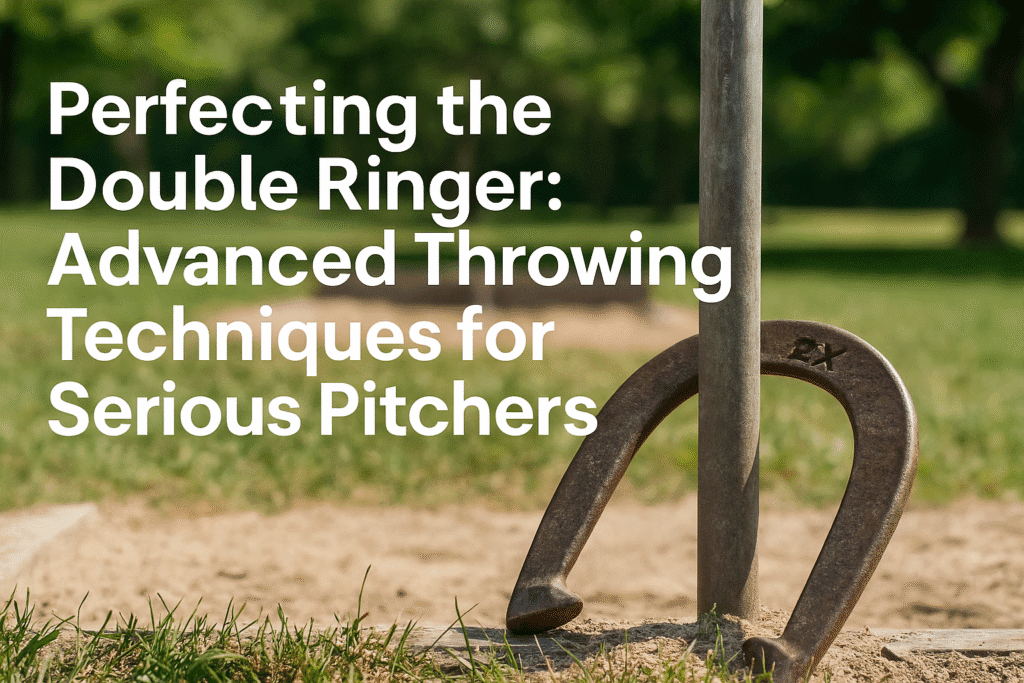
Understanding Scoring and Strategy in Horseshoe Competitions
If you’ve ever stepped into a competitive horseshoe pit and felt the pressure of playing for points—not just pride—you already know: horseshoe competitions are a different game. Beyond casual backyard tosses, organized matches come with precise scoring rules, strategic play, and mental toughness that separates casual throwers from true competitors.
In this in-depth guide, we’ll break down everything you need to know about scoring and strategy in horseshoe competitions. Whether you’re entering your first league or aiming to dominate the local tournament circuit, this article will help you pitch smarter, not just harder.

🎯 The Basics: How Scoring Works in Horseshoe Competition
Before you master strategy, you have to know the scoring system inside and out. Competitive play follows National Horseshoe Pitchers Association (NHPA) rules—or close adaptations.
🧮 Standard Scoring:
- Ringer (horseshoe completely encircles the stake): 3 points
- Closest horseshoe within 6 inches of the stake (if no ringer): 1 point
- Leaner (shoe touching the stake but not a ringer): may be 1 point, depending on house rules
- Only the best throw(s) count per inning
- Maximum score per inning: 6 points (two ringers)
🆚 Cancellation Scoring (Most Common in Competitions):
- Players alternate pitching two horseshoes.
- Only the player with the superior throws in that inning scores.
- Matching ringers cancel each other out.
- Example: Player A throws one ringer, Player B throws one ringer → no points awarded.
- If Player A has two ringers and Player B has one, Player A scores 3 points.
🧠 Strategic Takeaway:
It’s not just about landing ringers—it’s about outscoring your opponent each inning. You’re not just playing the stake—you’re playing the player.
⚖️ Game Formats in Competitive Horseshoes
There are a few common formats depending on your league or event:
🏆 Point Games
- First to 40 (standard NHPA rule)
- Must win by at least 2 points
- All points scored, including non-cancelled ones
⌛ Shoe Count Games
- Played to a set number of total pitched shoes (e.g., 40, 50, or 60)
- Winner is determined by total score at the end
📈 Ringer Percentage Competitions
- Focuses on accuracy rather than score
- Players track the percentage of ringers thrown vs. total horseshoes
- Common in leagues and advanced brackets

🎯 Key Strategy #1: Master Cancellation Scoring
You could land more ringers than your opponent and still lose if they land theirs at just the right moment to cancel yours out.
How to Play It Smart:
- Watch your opponent’s first shoe: If they miss, you may shift to a more aggressive throw.
- Land the first ringer: It puts pressure on them to respond.
- If they cancel, aim for positioning instead of another ringer (i.e., throw it closest without risking a wild miss).
🧠 Key Strategy #2: Practice Defensive Throwing
It’s not just about hitting the stake—it’s also about denying your opponent points.
Defensive Moves:
- Aim for a blocker shoe: Land a shoe slightly in front of the stake to interfere with your opponent’s throw.
- Use a low arc throw to stay close and tight to the pit
- Practice tossing at angles that are harder to cancel or beat
🎯 Key Strategy #3: Control Your Landing
In competitive play, bouncing, flipping, or rolling shoes can cost you the game. One inch off target might be the difference between 1 point and 3—or 0.
Improve Landing Consistency:
- Switch to shoes with textured grips or powder coating
- Use balanced, regulation-weight shoes for smooth flight
- Keep pit surfaces well-leveled and moist if clay (bounce control!)
⚙️ Gear That Gives You the Competitive Edge
In serious play, your equipment matters. Competitive players often upgrade to precision-balanced, forged horseshoes and custom pits for a reason—it gives them control.
🔧 Recommended Gear for Competitions
Gordon Pro Series Horseshoes
- Forged for competitive balance
- Built for 1 ¼ and ¾ turn accuracy
- Trusted by league players
Mustang Tournament Set
- Great weight distribution
- Powder-coated for superior grip
- Designed for precise landings in clay pits
Franklin Sports Elite Series
- Reinforced design for durability under pressure
- Textured shank for consistent grip
- Affordable but tournament-ready
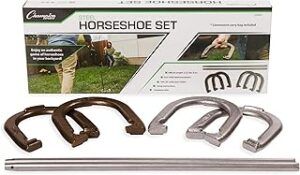
Horseshoe Game Set
🧱 Court Setup Matters Too
Even in league play, conditions vary. A smart player adjusts to the court.
Scoring Strategy by Pit Type:
- Clay pits: Predictable landings but need maintenance; better for “slide-in” ringers
- Sand pits: Softer bounce, shoes tend to “plant” upon landing
- Dry/uneven pits: Opt for lower arcs and skip-style throws
💪 Mental Strategy in Competitive Horseshoes
🎯 Focus Like a Pro:
- Treat each throw as its own game
- Don’t get distracted by previous results—reset each pitch mentally
- Stick to your routine (grip, step, swing, release) every time
🧘♂️ Stay Calm Under Pressure:
- Breathe before each throw
- Use visualization: see the arc, the landing, the ringer
- Don’t change your throw just to “match” your opponent—stay consistent
🔄 Practice Routines for Competitive Play
🔁 1. Ringer Isolation Drill
Throw 20 shoes. Track how many land within 6 inches. Then aim for 10 straight ringers.
🔁 2. Cancel Game Simulation
Have a friend throw their best two. You play to cancel them out, mimicking tournament pressure.
🔁 3. Alternating Grip Drill
Practice with both flip and turn throws, so you’re ready for different pit conditions or strategy shifts.

🙋 Frequently Asked Questions
Q: What’s the highest possible score per inning?
A: 6 points (two ringers that aren’t cancelled out by your opponent).
Q: Are there time limits in horseshoe competitions?
A: Yes, many leagues impose pitching time limits to keep the game moving (typically 30 seconds per throw).
Q: Can I throw from a different distance?
A: Yes. Junior players, women, and senior divisions may pitch from 30 feet instead of 40, depending on league rules.
Q: What happens if both players have equal ringers?
A: In cancellation scoring, they cancel each other out. Only unmatched ringers or the closest horseshoe scores.
✅ Final Thoughts: Compete Smarter, Score Better
Winning a horseshoe competition takes more than just power or precision—it’s a blend of smart scoring, strategic play, and mental composure. Learn the rules. Practice under pressure. Upgrade your gear. And most of all, play to out-think your opponent, not just out-throw them.
🎯 Call to Action
Ready to raise your game?
👉 Equip yourself with the right gear, master scoring strategy, and step into your next horseshoe competition with confidence. Victory isn’t luck—it’s learned.
Hi there, and thanks for stopping by! My name is Larry, and I’m the voice behind PlayingHorseshoes.com I love the game and have been playing since I was a kid. I started this blog because I am passionate about the sport, and with all the technology, I hope the sport don’t die. I plan to do my part to keep it going for me and my brother’s sake. Thanks for stopping by, feel free to subscribe and comment. Thank You!