How Horseshoes Builds Consistency When Other Games Feel Random
Almost everyone has played a game where the result didn’t seem to match the effort. You line everything up, make a solid move, and still walk away wondering how things went sideways. A bad bounce, a lucky deflection, or one unpredictable moment wipes out what felt like good play.
That disconnect is what makes many games feel random over time.
Horseshoes rarely create that feeling.
Players who stick with the game begin to notice something different: outcomes start to make sense. Good pitches produce good results. Misses follow patterns. Improvement feels earned instead of accidental. That sense of reliability is why so many players — especially those who value skill, patience, and fairness — gravitate toward horseshoes and stay with it for decades.
This isn’t an accident. Horseshoes is structurally built to reward consistency in ways other backyard and casual games simply aren’t.
1. Fixed Targets Remove a Major Source of Randomness
One of the biggest contributors to randomness in games is a moving or unstable target. Balls roll, boards bounce, wind shifts trajectories, and surfaces introduce unpredictable reactions. Even when your execution is solid, the environment can undo it.
Horseshoes eliminates much of that chaos from the start.
The stake never moves.
The distance never changes.
The pit behaves the same way pitch after pitch.
Because the target is fixed, the game places responsibility squarely on the player instead of the environment. Over time, this creates a clear connection between cause and effect. When a shoe lands clean, it’s because the pitch was clean. When it misses, there’s usually a mechanical reason — not a fluke.
That stability is the foundation on which consistency is built.
2. The Underhand Motion Encourages Repeatable Mechanics
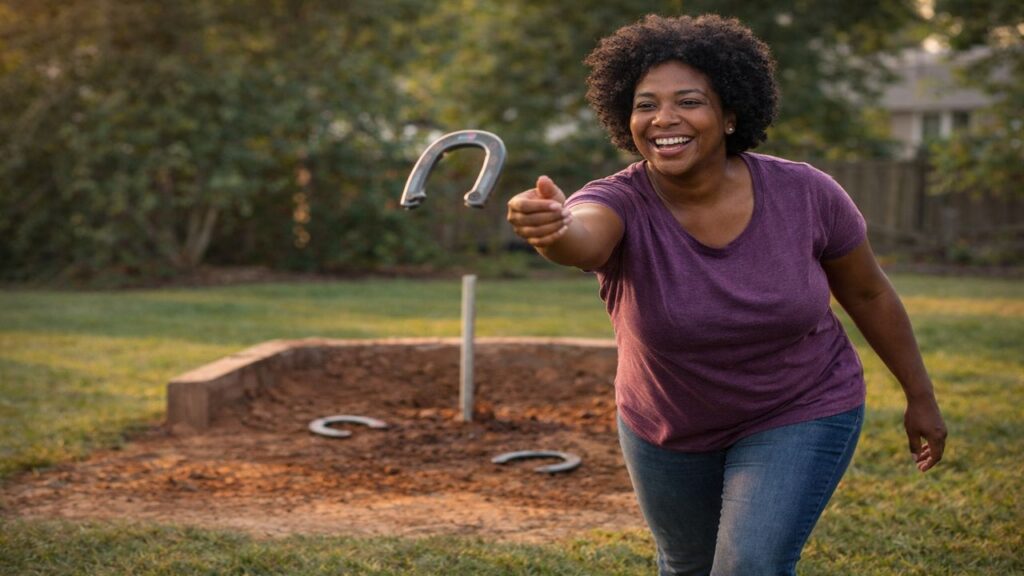
Another reason horseshoes feel reliable is the throwing motion itself. The underhand pitch is naturally smooth, joint-friendly, and easy to control. Unlike overhand throws or reaction-based swings, it doesn’t demand explosive force or split-second timing.
Instead, it rewards rhythm.
Players can slow down, settle into a routine, and repeat the same motion with minimal strain. The arm swing, release point, and follow-through all lend themselves to consistency because they’re easy to feel and easy to replicate.
This matters more than most people realize. A motion that can be repeated calmly under the same conditions is far easier to refine than one that relies on speed, reflexes, or reacting to an opponent.
Horseshoes allows players to build a motion they can trust — and then rely on it without fighting their own mechanics.
3. Feedback Is Immediate and Honest
In many games, it’s hard to know whether a good outcome came from good execution or pure luck. That uncertainty slows improvement because players don’t know what to repeat and what to ignore.
Horseshoes provides immediate and honest feedback.
Experienced players often know the quality of a pitch the moment it leaves their hand. The arc, rotation, and line communicate instantly whether the shoe is likely to land well or drift off. Even beginners start to recognize these cues quickly.
This feedback loop shortens the learning curve. Players don’t guess why something happened — they observe it. Over time, they build awareness of their own mechanics instead of relying on chance outcomes.
Consistency thrives when feedback is clear.
4. Misses Follow Patterns Instead of Feeling Random
One of the most important ways horseshoes builds consistency is how it handles mistakes.
In random-feeling games, misses often feel chaotic. A shot fails, but the reason isn’t obvious. Players adjust blindly, hoping the next attempt goes better.
Horseshoes don’t work that way.
Misses tend to repeat themselves:
- Long or short
- Left or right
- Flat or over-rotated
These patterns appear quickly, even for newer players. Once patterns are visible, they become correctable. A small stance adjustment, a release tweak, or a tempo change often resolves the issue.
Instead of frustration, mistakes become information. That mindset shift is critical. Players stop chasing lucky outcomes and start refining repeatable execution.
5. Pressure Doesn’t Force Speed or Reaction
Pressure exposes randomness in many games because it speeds players up. Decisions get rushed. Mechanics break down. Reaction time becomes the deciding factor.
Horseshoes resist that effect.
There’s no clock forcing a decision. No opponent charging in. No ball flying at you unexpectedly. Players control when they step up and when they pitch.
That control stabilizes performance under pressure. The same routine used in casual play applies in close games and tournament settings. The motion doesn’t change just because the score does.
This is why experienced players often appear calm late in games. The structure of horseshoes allows composure to translate directly into consistent execution.
6. Muscle Memory Develops Quickly and Stays Reliable
Because the throwing motion is simple and repeatable, muscle memory develops faster in horseshoes than in many other games. Repetition builds familiarity, and familiarity builds confidence.
That’s why beginners often feel noticeable improvement early on. It’s also why players can step away for months — or even years — and return with much of their skill intact.
Horseshoes don’t depend on razor-thin timing windows or fast reactions that fade quickly. It depends on form, rhythm, and awareness. Those qualities age well.
Consistency becomes something players carry with them instead of something they constantly have to rebuild.
7. Experience Outweighs Raw Athleticism
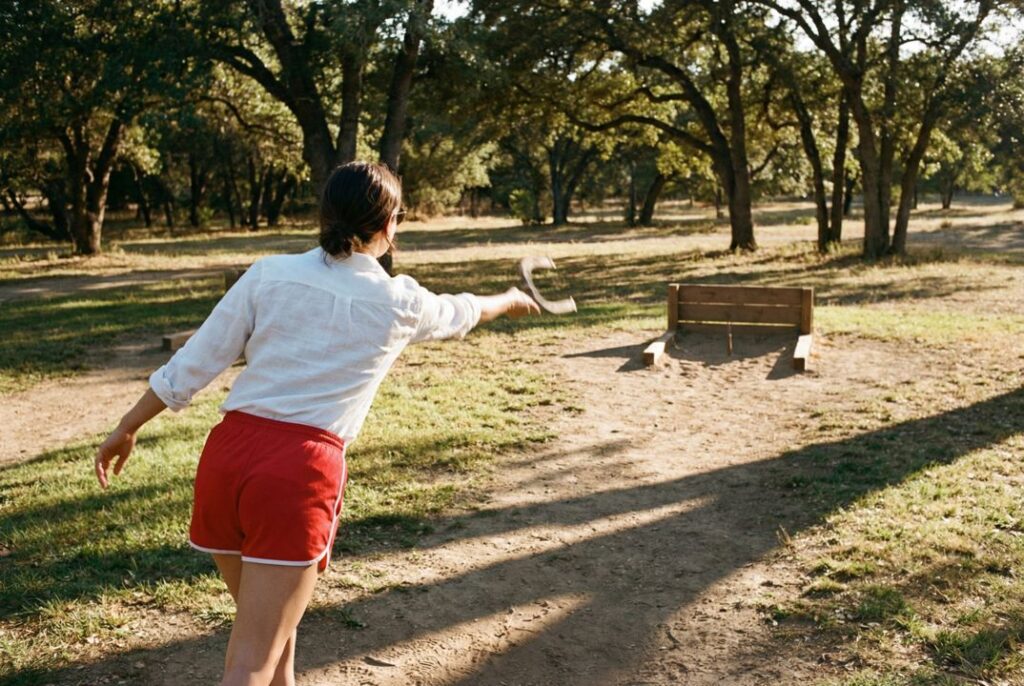
As players age, many games begin to feel less fair. Speed and reflexes matter more, while experience matters less. That shift makes outcomes feel increasingly random, especially for older players.
Horseshoes move in the opposite direction.
Experience enhances performance:
- Better tempo control
- Cleaner releases
- Smarter adjustments
That’s why it’s common to see older players consistently outperform younger ones who rely on strength or aggression. Horseshoes reward patience, observation, and repetition — skills that improve with time.
Consistency isn’t lost with age in this game. It’s refined.
8. Practice Directly Transfers to Game Performance
One reason horseshoes feels honest is the direct connection between practice and competition.
The conditions don’t change:
- Same distance
- Same target
- Same motion
What you practice is exactly what you perform. There’s no gap between drills and real play. Players don’t wonder whether their practice will “translate.” They see the results immediately.
That transfer builds trust. Trust reduces hesitation. Reduced hesitation leads to smoother, more consistent execution.
A Regulation Set That Supports Consistent Play
Equipment plays a larger role in consistency than many casual players realize. Lightweight or poorly balanced horseshoes can exaggerate mistakes or introduce unpredictable behavior that has nothing to do with skill.
A regulation-style set removes those variables.
A well-known example is St. Pierre Sports American Professional Horseshoes.
These are designed for players who want feedback they can trust:
- Balanced weight encourages a smooth, stable arc
- Consistent rotation reinforces proper release mechanics
- Predictable reactions on misses make adjustments easier
- Heavier feel rewards clean execution instead of masking errors
When equipment behaves consistently, improvement becomes measurable. Players can identify what’s working and what isn’t without guessing.
Horseshoe Game Set
9. The Score Usually Tells the Truth
In horseshoes, results tend to align with performance.
The steadier the pitcher scores more scores.
The cleaner release produces better outcomes.
The player with better rhythm usually wins.
That alignment builds confidence in the game itself. Players feel respected by the scoring, even in losses, because the outcome reflects execution rather than luck.
Over time, that fairness is what keeps people playing.
10. Why Horseshoes Stop Feeling Random Over Time
At first, horseshoes can feel deceptively simple. But as players spend more time at the pit, something changes. Patterns emerge. Mechanics settle. Results stabilize.
Players realize:
- Good pitches can be repeated
- Misses make sense
- Practice actually matters
That realization is powerful. It turns horseshoes from a casual pastime into a skill-based pursuit that rewards attention and patience.
Frequently Asked Questions
Are horseshoes really less random than other backyard games?
Yes. Fixed targets, stable surfaces, and repeatable mechanics reduce luck-based outcomes.
Why does consistency improve faster in horseshoes?
Because feedback is immediate and mistakes follow clear, correctable patterns.
Does strength matter more than technique?
No. Smooth mechanics and rhythm consistently outperform raw power.
Why do experienced players stay competitive for so long?
Because horseshoes reward control, focus, and repetition rather than speed and reflexes.
Can horseshoes improve focus and mental discipline?
Yes. The slow pace and structured routine naturally support calm concentration.
Why This Game Keeps Earning Loyalty
Horseshoes don’t promise excitement through chaos. It earns loyalty by rewarding effort, attention, and repetition. Over time, players stop feeling at the mercy of chance and start trusting their own mechanics.
That trust is what makes the game satisfying long after novelty fades.
Step up, pitch clean, adjust thoughtfully — and the results follow.
Horseshoes stop feeling random and start feeling reliable — a skill-based game where consistency grows with every pitch. And that’s exactly why, long after other games lose their appeal, players are still stepping up to the stake and trusting their motion.