League vs. Backyard Play: What’s the Difference in Rules, Culture & Competition?
Introduction: Two Worlds of Horseshoes 🎯
Horseshoe pitching is one of those timeless games that can feel casual and competitive all at once. You might toss shoes in the backyard with friends during a BBQ, or you might suit up for league night where the stakes—and the accuracy—are much higher. But here’s the big question: what really separates backyard play from league competition?
In this article, we’ll break it all down—rules, culture, gear, competition style, and even the mindset required. Whether you’re a casual player looking to tighten up your throws, or you’re curious about stepping into league play, this guide will help you understand the key differences.
1. Rules: Casual Flexibility vs. Formal Structure
Backyard Rules
Backyard horseshoes usually start with “house rules”—a flexible mix of scoring shortcuts, loose distance standards, and maybe even a few creative twists. Common backyard differences include:
- Playing shorter distances (often 30 ft. or even less if kids are involved).
- Scoring by “closest to the stake” instead of official point systems.
- Allowing “leaners” and “gimme points” more generously.
- No official foul lines—players might stand wherever feels comfortable.
It’s relaxed, fun, and perfect for mixed skill levels.
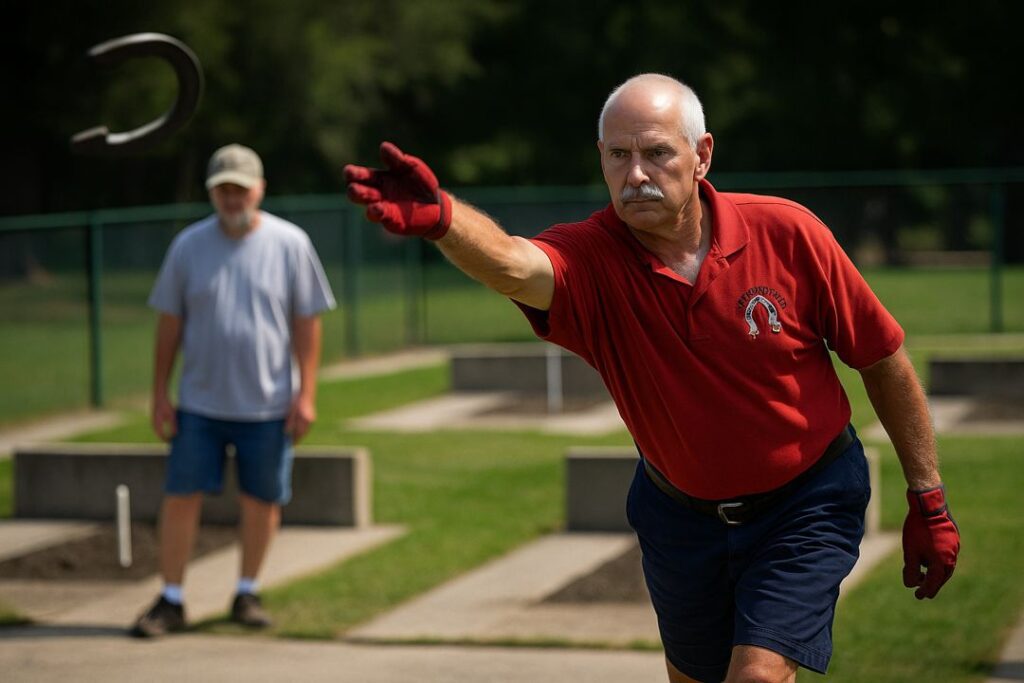
League Rules
Leagues, on the other hand, follow sanctioned standards from organizations like the NHPA (National Horseshoe Pitchers Association). These include:
- Regulation distances (40 ft. for men, 30 ft. for women and juniors).
- Strict scoring system: ringers = 3 points, leaners = 1 point, cancellation rules apply.
- Defined foul lines and penalties if crossed.
- Official pits and clay/sand boxes are required.
In short: in the backyard, rules bend. In the league, rules define the game.
2. Culture: Social Gathering vs. Competitive Community
Backyard Vibes 🍔
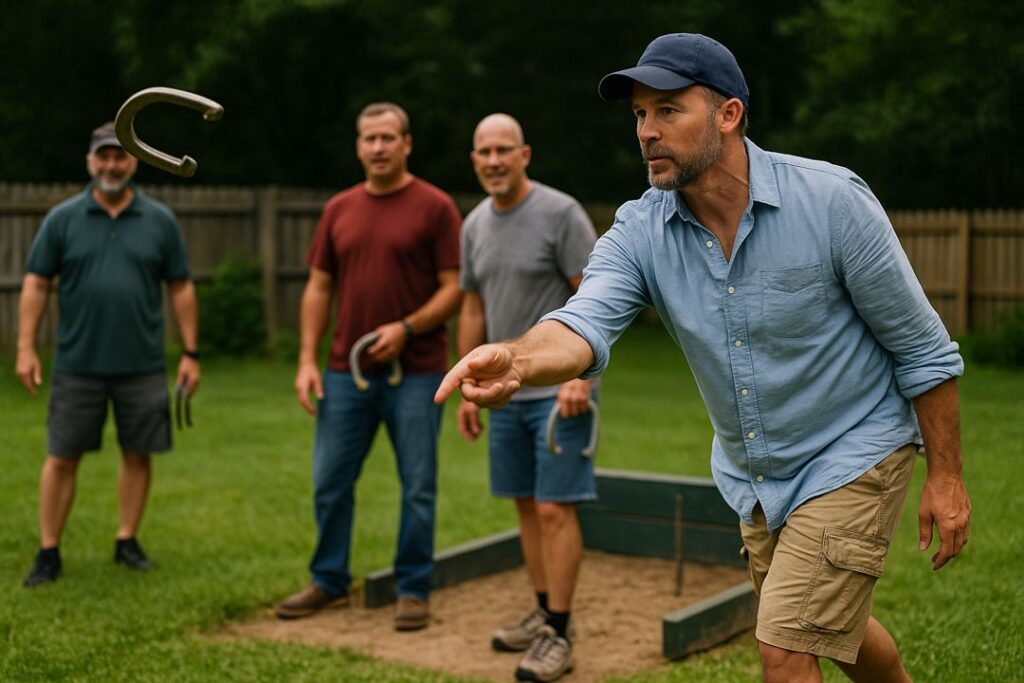
Backyard horseshoes is often about atmosphere as much as gameplay:
- Burgers on the grill, music playing, kids running around.
- Players of all ages and skill levels are welcome.
- Trash talk is lighthearted, and nobody’s keeping strict score.
- The game stops when dinner’s ready or people get tired.
Backyard culture is about fun, bonding, and introducing the game to newcomers.
League Culture 🏆
In league play, the vibe shifts toward structure and camaraderie built on competition:
- Regular schedules (weekly or bi-weekly matches).
- Player rankings and win/loss records tracked.
- Respectful competition—handshakes before and after matches.
- Friendships built over seasons of play, with a community of die-hard pitchers.
It’s less about the grill, more about the grind.
3. Equipment: Simple Sets vs. Tournament-Grade Gear
When it comes to choosing the right horseshoe set, your decision depends on whether you’re just having fun in the backyard or aiming for competitive precision in league play.
- Backyard Fun & Casual Games
- Franklin Sports Horseshoe Set – A reliable starter set that’s portable, sturdy, and perfect for family cookouts, reunions, and neighborhood games.
- Triumph Forged Horseshoe Set – Steel horseshoes with a traditional weight and feel, ideal for casual games where you still want a touch of authenticity.
- League & Competitive Play
- St. Pierre American Professional Horseshoe Set – NHPA-approved, carefully balanced, and designed for serious pitchers who want consistency and control.
- Gordon Professional Horseshoe Set – Tournament-grade horseshoes crafted for advanced players who value performance above all else.
👉 Whether you’re tossing for bragging rights in the backyard or chasing ringers on the tournament circuit, the right set makes all the difference. Pick your lane, grab your set, and get pitching! 🎯
4. Competition: Fun Challenges vs. Skill Mastery
Backyard Competition
- Often played in teams with rotating partners.
- Scorekeeping is loose; sometimes no one even remembers who won.
- Great for family bragging rights but rarely for trophies.
League Competition
- Matches can run several innings with scores officially recorded.
- Precision counts—just one bad toss can shift a game.
- Rankings, playoffs, and championships keep players motivated.
- High emphasis on consistency, mental focus, and endurance.
Leagues bring out the competitive athlete in pitchers.
5. The Mental Game 🧠
In the backyard, your “mental game” is simply about having fun. In leagues, it’s about mastering:
- Focus under pressure (especially in tournaments).
- Consistency of form over dozens of throws.
- Sportsmanship, win or lose.
Backyard players rarely feel nerves, but in leagues—spotlights and competition can rattle even seasoned pitchers.
6. Transitioning from Backyard to League
If you’ve mastered backyard play and feel the itch for something more, here’s how to prepare for league play:
- Start with an NHPA-approved set like the St. Pierre or Gordon.
- Practice at regulation distances to adjust to league conditions.
- Focus on consistent release technique instead of just power.
- Attend local tournaments as a spectator to absorb the vibe.
Leagues welcome newcomers, and most players love mentoring fresh talent.
7. Which One is Right for You?
- Choose Backyard Play if you want casual, fun-filled games with friends and family.
- Choose League Play if you’re competitive, love structured rules, and want to improve consistently.
The best part? You don’t have to pick one. Many players enjoy both—casual fun at home and serious play in the league.
Product Spotlight: Horseshoe Sets for Every Style
- For Backyard Fun: Franklin Sports Horseshoe Set.
- For League Play: St. Pierre American Professional Horseshoe Set or Gordon Professional Horseshoe Set.
👉 Pick the right set for your style and start pitching like a pro!
FAQs ❓
Q: Can I use a backyard set in league play?
A: Not usually. Leagues require NHPA-approved sets.
Q: Do leagues cost money to join?
A: Yes, most leagues have entry fees, but they’re often affordable and cover facility use and prizes.
Q: Are kids allowed in leagues?
A: Absolutely! Many leagues have junior divisions.
Q: Do I need to build a clay pit to practice for league?
A: Not at first. You can practice on sand or dirt, but eventually you’ll want regulation pits for consistency.
Final Thoughts 💭
Horseshoe pitching is one of the rare games that fits both casual fun and serious competition. Backyard play keeps it light, social, and accessible, while league play takes it to the next level with structure, precision, and community.
No matter which path you choose—or if you enjoy both—you’ll find that horseshoes isn’t just about tossing steel at a stake. It’s about connection, competition, and the simple joy of hearing that satisfying clink of a ringer.
👉 Ready to level up? Grab a quality horseshoe set, gather some friends, and see if your backyard fun could lead you to league greatness.

Larry Mac
Hi there, and thanks for stopping by! My name is Larry, and I’m the voice behind PlayingHorseshoes.com. I love the game and have been playing since I was a kid. I started this blog because I am passionate about the sport, and with all the technology, I hope the sport doesn’t die. I plan to do my part to keep it going for me and my brother’s sake. Thanks for stopping by, feel free to subscribe and comment. Thank You!