Perfecting the Follow-Through: How to Finish Your Horseshoe Throw for Accuracy
Introduction: The Overlooked Secret of Great Horseshoe Pitching
Most people think horseshoe pitching is all about the release—the moment the shoe leaves your hand. And while that’s important, here’s the truth: your throw is only as good as your follow-through. The way you finish the motion sets the tone for accuracy, consistency, and power. Ignore it, and you’ll find yourself missing stakes by inches. Master it, and suddenly those ringers come a whole lot easier.
In this article, we’ll break down why follow-through matters, how to improve it, and what drills you can use to make it second nature. If you’ve ever felt like you’re “almost there” but can’t quite land ringers, chances are your follow-through is the missing piece.
Why Follow-Through Matters in Horseshoe Pitching
Think about any sport—baseball, golf, basketball. In every one of them, follow-through is crucial. Horseshoe pitching is no different. Here’s why:
- Momentum Carry-Over: The shoe doesn’t magically stop the moment it leaves your hand. The motion of your arm and wrist directly influences spin and trajectory.
- Accuracy Anchor: A proper follow-through locks in your release angle and ensures your shoe stays on the intended path.
- Consistency Builder: Without a follow-through routine, your throws will vary wildly. Consistency is everything in horseshoes.
- Injury Prevention: Cutting your motion short puts strain on the wrist, elbow, and shoulder. A fluid follow-through is easier on your body.
When you study great players, you’ll notice they all have smooth, repeatable finishes. That’s not an accident—it’s the backbone of their accuracy.
Breaking Down the Mechanics of a Good Follow-Through
To improve your follow-through, let’s dissect what it actually looks like.
1. Arm Motion
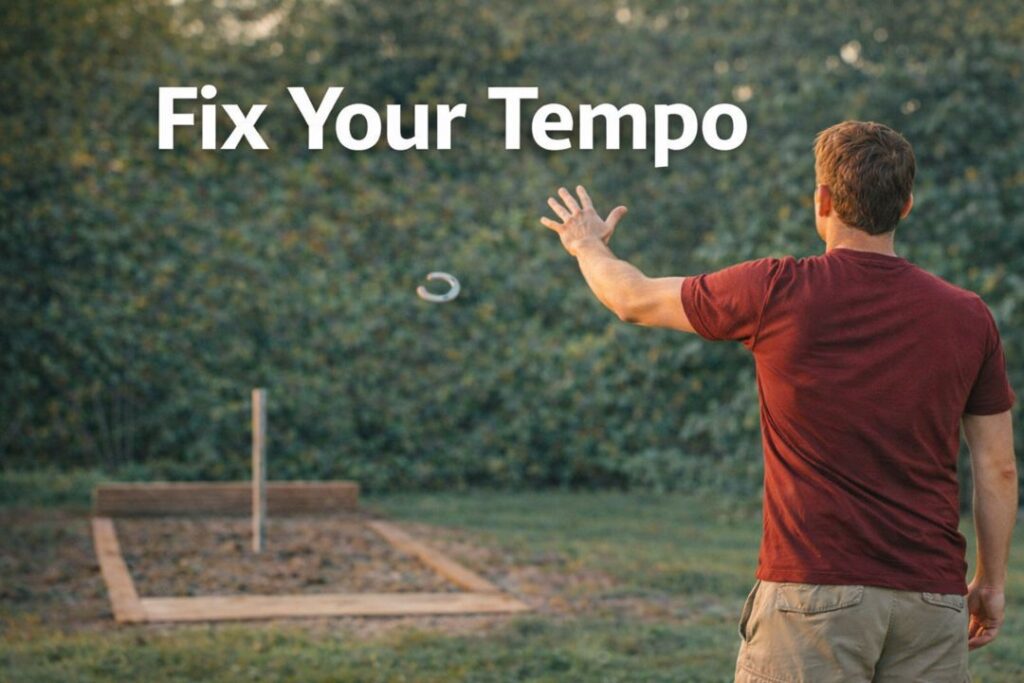
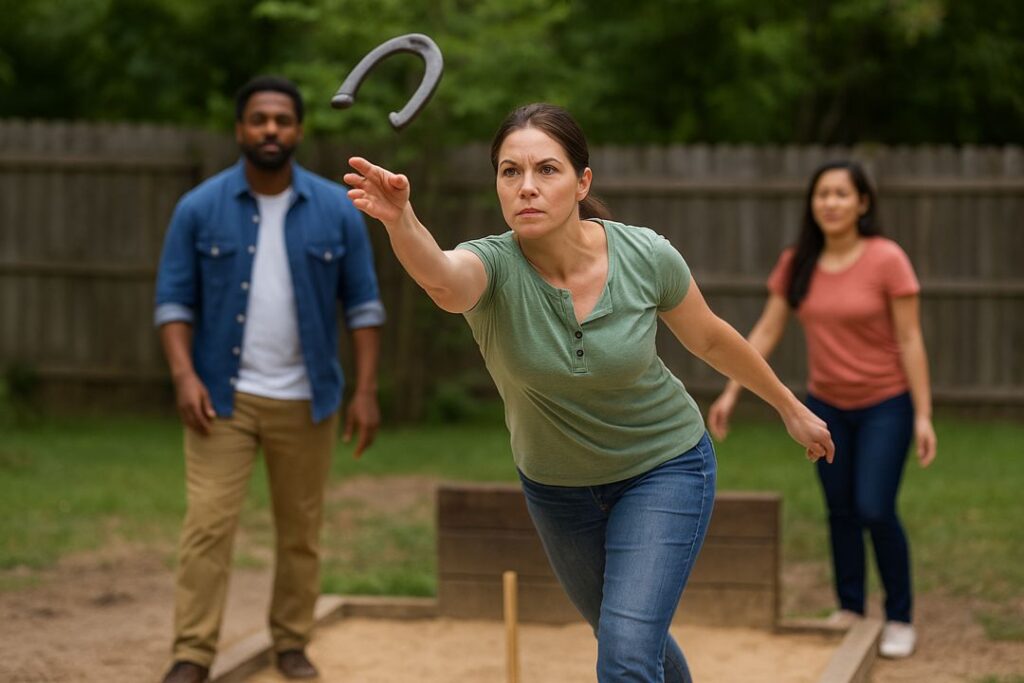
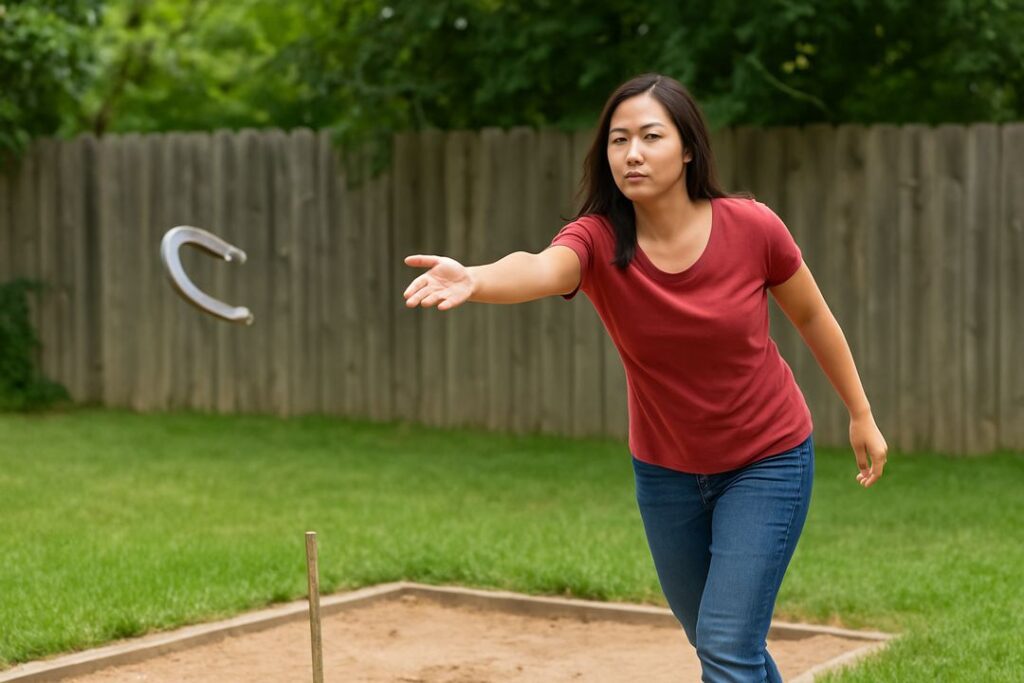
Your arm should swing naturally toward the stake. After release, keep your arm extended, pointing directly at your target. If your hand veers left or right, your shoe probably will too.
2. Wrist and Fingers
The wrist should stay loose, with fingers finishing in the direction of the stake. Avoid “snapping” or cutting off your motion early.
3. Shoulder Rotation
Let your shoulder roll smoothly through the motion. A locked or jerky shoulder often leads to off-balance throws.
4. Balance and Footwork
Your weight should shift naturally onto your front foot. If you’re wobbling or leaning back, your follow-through isn’t grounded.
5. Head and Eyes
Keep your eyes locked on the stake through the finish. Dropping your head too soon can pull your whole motion off-line.
Common Follow-Through Mistakes (And How to Fix Them)
Even experienced pitchers fall into bad habits. Here are a few common issues:
- Cut-Off Arm Swing: Stopping the motion early. Fix: Consciously extend your arm until it naturally slows.
- Cross-Body Finish: Arm drifts across your torso. Fix: Practice keeping your hand pointed toward the stake at the end.
- Jerky Release: Overthinking the let-go. Fix: Relax your grip and trust the motion.
- Off-Balance Finish: Feet or body shift mid-throw. Fix: Work on smooth weight transfer and plant your feet.
Drills to Improve Your Follow-Through
Practice doesn’t make perfect—perfect practice does. Here are drills to lock in a solid follow-through:
1. Target Arm Drill
Stand without a horseshoe. Go through your throwing motion and freeze at the end. Is your hand pointing straight at the stake? Repeat until it feels natural.
2. Slow-Motion Pitches
Throw in slow motion, exaggerating the follow-through. This helps your body memorize the movement.
3. Mirror Work
Practice in front of a mirror or record yourself. Seeing your finish makes it easier to spot mistakes.
4. Consistency Challenge
Pitch 10 shoes with the same exact finish. Don’t worry about ringers—just nail the follow-through. Accuracy will come once the motion is consistent.
How to Build a Repeatable Routine
Consistency comes from repetition. Develop a simple pre-throw and follow-through checklist:
- Grip the shoe properly.
- Take your stance.
- Focus on the stake.
- Throw with smooth motion.
- Finish with your arm extended toward the stake.
The more you repeat this process, the more your body builds muscle memory. Soon, follow-through will feel automatic.
Pro Tip: Use the Right Gear
If you’re serious about improving, having quality equipment helps. One excellent choice is the Mustang Pitching Horseshoes, designed for balance and reliable grip. Practicing with consistent shoes makes it easier to fine-tune your mechanics.
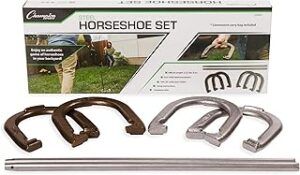
Horseshoe Game Set
👉 Investing in a solid set isn’t about spending more money—it’s about removing variables that hold back your accuracy.
Mindset Matters: The Mental Side of Follow-Through
Don’t underestimate the mental game. If you get distracted or lose focus, your follow-through is usually the first thing to break down.
- Stay Calm: Take a deep breath before pitching.
- Visualize: Picture the shoe’s path ending in a ringer.
- Routine: Stick to the same rhythm every throw.
Following through mentally is just as important as physically.
FAQs About Horseshoe Follow-Through
Q: How do I know if my follow-through is good?
A: Your hand should naturally point at the stake, your body should stay balanced, and your shoe should fly on a straight path.
Q: Can poor follow-through cause injuries?
A: Yes—cutting your motion short or jerking your arm increases strain on the elbow and shoulder. Smooth follow-through keeps you healthier.
Q: Should beginners focus on follow-through first?
A: Yes. It’s one of the easiest fundamentals to master early and sets the foundation for accuracy later.
Q: How long should the arm swing last?
A: Let it continue until it slows naturally—don’t force it to stop right after release.
Final Thoughts: Finish Strong, Play Strong
Follow-through is the bridge between effort and results. You can have the perfect grip, stance, and release, but if you quit on the motion too soon, accuracy suffers. By focusing on smooth, consistent finishes, you’ll add control, prevent injuries, and finally start seeing those ringers stack up.
So the next time you step on the court, remember: don’t just throw—finish the throw.
👉 Grab yourself a set of Pitching Horseshoes, hit the pit, and practice finishing strong. Your follow-through could be the difference between “close” and “dead-on.”
Hi there, and thanks for stopping by! My name is Larry, and I’m the voice behind PlayingHorseshoes.com. I love the game and have been playing since I was a kid. I started this blog because I am passionate about the sport, and with all the technology, I hope the sport doesn’t die. I plan to do my part to keep it going for me and my brother’s sake. Thanks for stopping by, feel free to subscribe and comment. Thank You!