Perfecting the Grip: How to Hold Horseshoes for Maximum Accuracy
There’s nothing more frustrating than throwing a horseshoe, watching it wobble in the air, and missing the stake by a mile. On the flip side, there’s nothing more satisfying than hearing that clank when your shoe hooks perfectly around the stake for a ringer.
What makes the difference? More often than not, it’s the grip.
Sure, stance, swing, and follow-through all matter, but if you don’t start with the right hold, you’re setting yourself up for inconsistency. In fact, ask any seasoned league player and they’ll tell you: mastering the grip is step one on the road to accuracy.
In this article, we’ll break down the mechanics of a proper grip, the different styles you can try, how to practice, and even a few pro-level drills that will help you tighten up your game. By the end, you’ll have the tools to walk into the pit with confidence.
Why the Grip Is the Foundation of Accuracy
Your grip does three critical things:
- Controls Rotation – The way you hold the shoe determines whether it flips, turns, or spins out of control.
- Affects Release Point – A clean release equals a smooth trajectory. A sloppy release equals chaos.
- Builds Muscle Memory – The goal is repeatability. Every shoe, every throw, the same motion.
Think about it like baseball pitching. A fastball and a curveball use nearly identical mechanics — the difference is in the grip. Horseshoes are the same way.

The Main Horseshoe Grips (Explained in Depth)
1. The 1 ¼ Turn Grip (The Gold Standard)
- How to Hold: Place your thumb centered along the shank, fingers wrapped underneath. Release so the shoe makes just over one rotation before reaching the stake.
- Why It Works: Balanced spin + steady arc = consistent accuracy.
- When to Use: This is the go-to grip for most competitive players.
Pro Note: If you’re serious about leagues or tournaments, start here and stick with it until it feels natural.
2. The 1 ¾ Turn Grip (More Spin, More Challenge)
- How to Hold: Similar to the 1 ¼, but you allow slightly more roll at release. The shoe makes almost two rotations in flight.
- Why It Works: Extra spin can stabilize the shoe, but it requires precise timing.
- When to Use: For players who already have control and want more bite on the stake.
3. The Flip Grip (Simple and Beginner-Friendly)
- How to Hold: Grab the shoe by the shank and throw it like a pancake so it flips end-over-end.
- Why It Works: Easy to learn, especially for kids. Less focus on spin, more on aim.
- When to Use: Backyard games, teaching beginners, or casual fun.
4. The Reverse Grip (Rare but Flashy)
- How to Hold: Open end of the shoe faces forward; you throw it so it spins backward toward the stake.
- Why It Works: Honestly? It’s more of a novelty. Some old-school players swear by it, but it’s tough to master.
- When to Use: Fun trick shots or if you naturally find this motion more comfortable.
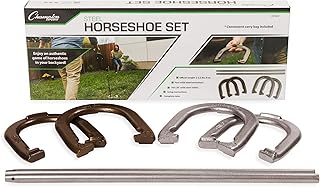
Horseshoe Game Set
Biomechanics: How Finger Placement Shapes Your Throw
Let’s get a little nerdy. The horseshoe doesn’t care about luck — it cares about physics.
- Thumb Pressure: Too much = sticky release. Too little = wobbly flight. Keep your thumb balanced dead center.
- Finger Spread: Bunched fingers cause jerky rotation. Space them evenly under the shank for smoother spin.
- Wrist Action: A subtle wrist roll helps rotation. Over-flicking creates chaos.
- Grip Strength: Squeeze too hard and you’ll tense your whole arm. Hold it firm but relaxed, like a handshake.
If you’ve ever seen your shoe helicopter sideways or nose-dive into the dirt, chances are your grip mechanics are off.
Step-by-Step: Training Your Grip
- Dry Run Grip Practice – Hold the shoe 20–30 times in your chosen grip without throwing. Build muscle memory.
- Short Tosses – Stand at 15–20 feet and focus purely on rotation, not accuracy.
- One Grip, One Week – Don’t bounce between grips daily. Stick with one for at least a week.
- Film Your Throws – A slow-motion video reveals exactly how the shoe rotates.
- Micro Adjustments – Move your thumb a quarter inch, adjust finger spread — tiny changes make big differences.

Drills to Perfect Your Grip
- Bucket Toss Drill: Place a 5-gallon bucket halfway between you and the stake. Practice tossing the shoe so it clears the bucket consistently. This forces smooth release.
- 10 Ringers in a Row: Set a goal of 10 clean ringers with your chosen grip. If you miss, reset the count. Builds consistency under pressure.
- One-Handed Balance Drill: Hold the shoe in your grip with arm extended, no throw. If it wobbles or tilts, adjust until it feels naturally balanced.
- Blind Release Drill: Throw 10 shoes with eyes closed after your backswing (safely, of course). This sharpens muscle memory and grip feel.
Adjusting for Different Players
- Kids: Start them on the flip grip with lighter shoes. Keep it fun first.
- Seniors: Arthritis or reduced grip strength? Use gloves or powder to reduce slipping. Stick with 1 ¼ turn but don’t over-squeeze.
- Small Hands: Shorten the grip by tucking the little finger or adjusting thumb placement.
- Competitive Players: Work toward 1 ¼ or 1 ¾ turn for long-term consistency.
Common Grip Mistakes (and Fixes)
- Mistake: Shoe spins sideways like a helicopter.
- Fix: Thumb is probably off-center. Adjust it to the middle of the shank.
- Mistake: Shoes nosedive before reaching the stake.
- Fix: Over-gripping and releasing late. Relax and release earlier.
- Mistake: Inconsistent spin every throw.
- Fix: Fingers not evenly placed under the shank. Spread them naturally.
- Mistake: Pain or strain after pitching.
- Fix: You’re gripping way too tight. Loosen up and let the shoe roll.
Grip + Stance = Winning Combination
Even the best grip won’t save you if your stance is crooked. Line your toes toward the stake, keep your shoulders square, and let your arm swing naturally like a pendulum. The grip starts the motion, but stance keeps everything consistent.
Product Spotlight: Franklin Sports Horseshoe Set
If you’re trying to master your grip, don’t handicap yourself with a cheap, unbalanced set. The Franklin Sports Horseshoe Set gives you regulation-weight forged steel shoes that feel right in the hand and let you practice the way league players do.
With quality shoes, your grip feels secure, the balance stays consistent, and your throws improve faster.
👉 Upgrade your set, practice your grip daily, and watch your ringer count climb.
FAQs About Horseshoe Grips
Q: What’s the easiest grip for beginners?
A: The flip grip is the simplest to learn, but the 1 ¼ turn is the best long-term investment.
Q: Should I wear gloves when pitching?
A: Some players do, especially if they sweat a lot or have arthritis. It can help maintain a secure grip.
Q: How do I stop my shoes from wobbling mid-air?
A: Focus on thumb placement. Center it and keep pressure balanced.
Q: Can I switch grips mid-game?
A: You can, but it’s not ideal. Consistency wins games. Stick to one grip.
Q: Does grip change with weather?
A: Absolutely. Hot, humid days may require chalk or powder. Cold weather can stiffen your fingers, so warm up first.
Q: How long does it take to master a grip?
A: Expect 2–4 weeks of regular practice before it feels automatic.
Q: Are women’s grips different?
A: Not really — but lighter shoes often help with comfort and consistency.
Q: What about children?
A: Start them light and fun. Flip grip first, then work toward turn grips as they grow.
Q: Should I aim for more spin or less?
A: Start with controlled, consistent spin. More spin comes naturally with practice.
Q: Is it okay if my grip feels “weird” at first?
A: Yes! Most players need time before a grip feels natural. Stick with it.

Final Thoughts
At the end of the day, horseshoe pitching isn’t about strength or luck — it’s about repeatable mechanics, and the grip is where it all begins. Nail the grip, and everything else — stance, swing, release — falls into place.
So whether you’re throwing in a backyard BBQ game or stepping up to a league pit, take the time to master your hold. Try different grips, stick with the one that works, and practice it until it feels like second nature.
And don’t forget — a quality set like the Franklin Sports Horseshoe Set can make the process smoother and more consistent.
Because when that shoe spins just right and slides onto the stake, you’ll know it wasn’t luck. It was your grip.
Hi there, and thanks for stopping by! My name is Larry, and I’m the voice behind PlayingHorseshoes.com. I love the game and have been playing since I was a kid. I started this blog because I am passionate about the sport, and with all the technology, I hope the sport doesn’t die. I plan to do my part to keep it going for my brother and my sake. Thank you for stopping by. Feel free to subscribe and comment. Thank You!