The 5 Most Common Practice Mistakes Holding Horseshoe Players Back
Many horseshoe players struggle to improve, not because of talent or equipment, but because common practice mistakes quietly reinforce bad habits, limit consistency, and prevent real progress on the horseshoe court.
Most horseshoe players practice more than they think — and improve less than they expect.
They spend time at the pit, throw dozens of shoes, and walk away feeling like they put in work. But weeks later, accuracy hasn’t improved. Misses still show up in the same spots. Confidence comes and goes.
The issue usually isn’t effort.
It’s how practice is approached.
Horseshoes is a game that rewards awareness, not volume. Repeating poor habits doesn’t lead to improvement — it leads to frustration. Below are the five most common practice mistakes that quietly hold players back, from beginners to long-time backyard veterans.
1. Practicing Without a Clear Purpose
This is the most common mistake — and the root of many others.
Many players step up to the pit and start throwing with no plan. They’re “practicing,” but there’s no specific goal guiding the session. The throws are random. The results are random. The improvement is random.
Unfocused practice feels productive because shoes are flying, but it rarely produces lasting change.
Effective practice always answers one question:
What am I working on today?
That focus might be:
- Arc consistency
- Foot alignment
- Smoother release
- Follow-through balance
- Resetting after misses
You don’t need a complicated drill list. One clear objective per session is enough. Without purpose, practice turns into repetition without learning — and repetition without learning builds bad habits faster than good ones.
2. Practicing Faster Than You Play
This mistake sneaks up on players because it feels efficient.
In practice, players often throw faster than they would in a real game. They grab a shoe, throw, grab the next one, and fire again — skipping resets, posture checks, and mental preparation.
The problem is simple:
Practice trains habits.
If you practice rushing, you train rushed mechanics. If you skip your routine in practice, your routine collapses under pressure during games.
Horseshoes is slow by design. That pace forces control, focus, and consistency. When practice speeds up, those qualities disappear.
Good practice mirrors game conditions:
- Same stance
- Same routine
- Same pace
- Same mental reset
Slowing practice down may feel uncomfortable at first — but it’s one of the fastest ways to improve.
3. Ignoring Miss Patterns Instead of Learning From Them
Most players know that they missed.
Few know why.
Misses are information. When practice sessions ignore patterns, players lose their best self-coaching tool.
Common patterns include:
- Consistently missing left or right
- Shoes landing long or short
- Shoes tipping instead of landing flat
- Misses increasing late in sessions
Each pattern points to a specific issue — alignment, timing, release angle, or fatigue.
Bad practice treats every miss the same.
Good practice treats misses as feedback.
Players who improve consistently don’t just throw again after a miss. They pause, notice, and adjust. That awareness is what separates stagnant players from improving ones.
4. Practicing Only When Things Feel Good
This mistake feels reasonable — but it’s damaging.
Many players end practice sessions early once frustration sets in. Misses stack up, confidence dips, and they decide it’s “not their day.”
The problem is that real games don’t stop when things go bad.
Pressure moments, cold streaks, and fatigue decide outcomes. Practice that avoids discomfort never prepares players for those situations.
Productive practice includes:
- Throwing through bad stretches calmly
- Practicing emotional resets
- Learning how to slow down under frustration
- Finishing sessions with control, not emotion
You don’t need to grind endlessly — but quitting every time things go wrong trains avoidance instead of resilience.
5. Letting Equipment Hide Your Mistakes
Not all practice gear tells the truth.
Some sets are forgiving. They soften bad releases and make sloppy throws look acceptable. That might feel good in the moment — but it creates a false sense of consistency.
When conditions change, pressure increases, or competition tightens, those hidden flaws show up fast.
Practice equipment should reveal problems, not cover them up.
A Practice Gear Choice That Encourages Improvement
Practicing with a regulation-weight steel set like the Champion Sports Official Steel Horseshoe Set forces better mechanics because the added weight demands control, balance, and smooth release. Rushed throws, poor alignment, and sloppy follow-through show up immediately, while calm, consistent form gets rewarded. This kind of honest feedback makes practice more effective and prevents bad habits from becoming ingrained.
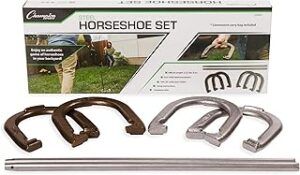
Horseshoe Game Set
Why These Practice Mistakes Are So Common
These mistakes don’t come from laziness. They come from familiarity.
Backyard horseshoes feels casual, so practice becomes casual too. Players rely on repetition instead of intention, comfort instead of correction.
The problem isn’t that players don’t care.
It’s that they don’t realize what practice is actually teaching them.
Every throw trains something — good or bad.
How to Fix All Five Mistakes at Once
You don’t need more practice time. You need a better structure.
Here’s a simple reset that works for most players:
- Choose one focus per session
- Match practice pace to game pace
- Observe miss patterns deliberately
- Practice emotional resets
- Use equipment that provides honest feedback
That single shift turns practice into training.
What Smart Practice Actually Looks Like
Smart practice isn’t flashy. It doesn’t involve complex drills or long sessions.
It looks like:
- Fewer throws with more focus
- Slower pace with better control
- Awareness instead of autopilot
- Calm corrections instead of frustration
Players who practice this way often improve faster — even with less total time at the pit.
Frequently Asked Questions
How long should a horseshoe practice session be?
Quality matters more than length. Twenty to thirty focused minutes often produce better results than an hour of unfocused throwing.
Is it bad to practice every day?
Not necessarily. Daily practice works if the mechanics stay clean. Fatigue can create sloppy habits, so rest days help.
Why do I sometimes play better in games than in practice?
Games force routine, pace, and focus that casual practice often skips.
Should beginners practice differently from experienced players?
Beginners benefit most from routine and consistency. Experienced players should focus more on refinement and correction.
Can bad practice actually make you worse?
Yes. Repeating rushed or sloppy mechanics builds muscle memory that’s difficult to undo.
Where Real Improvement Comes From
Horseshoes don’t demand perfection. It demands awareness.
The players who improve aren’t throwing the hardest or practicing the longest. They’re the ones who slow down, pay attention, and train with purpose.
Fix these five practice mistakes, and improvement stops feeling random. It becomes predictable — and that’s when horseshoes start to feel less frustrating and a lot more satisfying.