Timing Over Strength: The Secret to Smooth Releases
In horseshoes, timing matters more than strength, because smooth, well-timed releases create accuracy, consistency, and control that brute force never can.
If strength won games, the biggest arms would dominate every horseshoe court.
They don’t.
What separates consistent players from frustrated ones isn’t muscle — it’s timing. The quiet coordination between stance, arm swing, release, and follow-through. When timing clicks, the shoe feels like it leaves your hand on its own. When it doesn’t, no amount of effort fixes it.
Horseshoes is one of those rare games where less force and better timing almost always win.
1. Why Strength Fails in Horseshoes
New players almost always make the same assumption: throw harder to throw better.
It’s an instinct. When a shoe comes up short, they add power. When accuracy drops, they push harder. The result is usually the opposite of what they want.
Strength introduces problems:
- Tension in the arm and shoulder
- Inconsistent release points
- Poor arc control
- Wild bounces and misses
Horseshoes aren’t designed for force. The underhand motion, the arc of the throw, and the weight of the shoe all reward smoothness. When strength takes over, timing falls apart.
That’s why strong players often struggle early — and smaller, smoother throwers quietly outperform them.
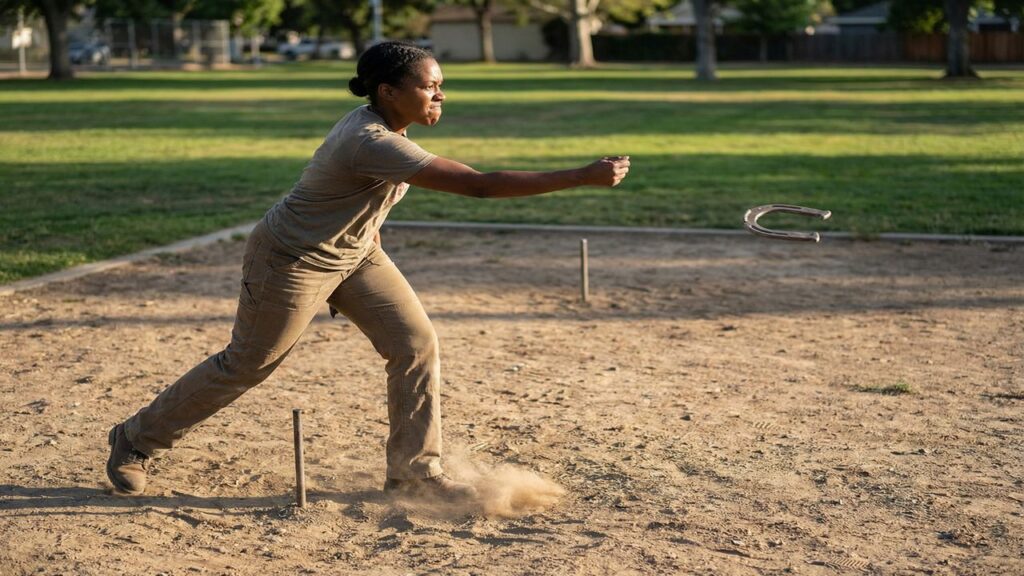
2. What “Timing” Actually Means in Horseshoes
Timing isn’t speed. It isn’t rushing. And it isn’t throwing soft.
Timing is coordination.
It’s when:
- Your feet are set before your arm moves
- Your arm swing matches your body rhythm
- The release happens at the same point every time
- The follow-through completes naturally
Good timing feels effortless because nothing is fighting itself. Bad timing feels forced because everything is slightly out of sync.
In horseshoes, timing turns separate movements into one smooth motion.
3. The Smooth Release Explained
A smooth release doesn’t happen at the hand — it happens before the hand.
When timing is right:
- The arm swings freely
- The wrist stays relaxed
- The shoe leaves cleanly
- The arc stays predictable
When timing is off:
- The grip tightens
- The wrist flicks late
- The shoe wobbles
- Accuracy disappears
Smooth releases aren’t about “letting go” — they’re about letting the motion finish.
The shoe doesn’t need help. It needs permission.
4. Why Tension Kills Timing
Strength creates tension. Tension kills timing.
A tight grip delays release. A stiff arm shortens the arc. A tense shoulder pulls the shoe off line. These problems compound quickly.
Many players don’t realize how tight they are until they intentionally slow down.
Relaxed muscles move predictably. Tense muscles react unpredictably.
That’s why experienced players often look calm, almost casual — not because they don’t care, but because they’ve learned tension works against them.
5. Timing Starts With the Feet
Most players focus on the arm. That’s a mistake.
Timing starts at the ground.
If your stance isn’t settled before the swing begins, everything above it has to compensate. That compensation shows up as late releases, forced arcs, and inconsistent follow-throughs.
Good timing requires:
- Stable foot placement
- Balanced weight distribution
- Stillness before movement
Once the base is set, the arm can move freely. Without that base, strength takes over to “fix” instability — and timing disappears.
6. Why Smooth Players Look Effortless
Watch consistent horseshoe players closely.
They don’t rush.
They don’t force.
They don’t muscle the throw.
Their rhythm is steady. Their motion repeats. Their release point barely changes.
That effortlessness is timing at work. The body isn’t fighting itself, so energy transfers cleanly from stance to swing to release.
It’s not that they’re throwing softer — they’re throwing smarter.
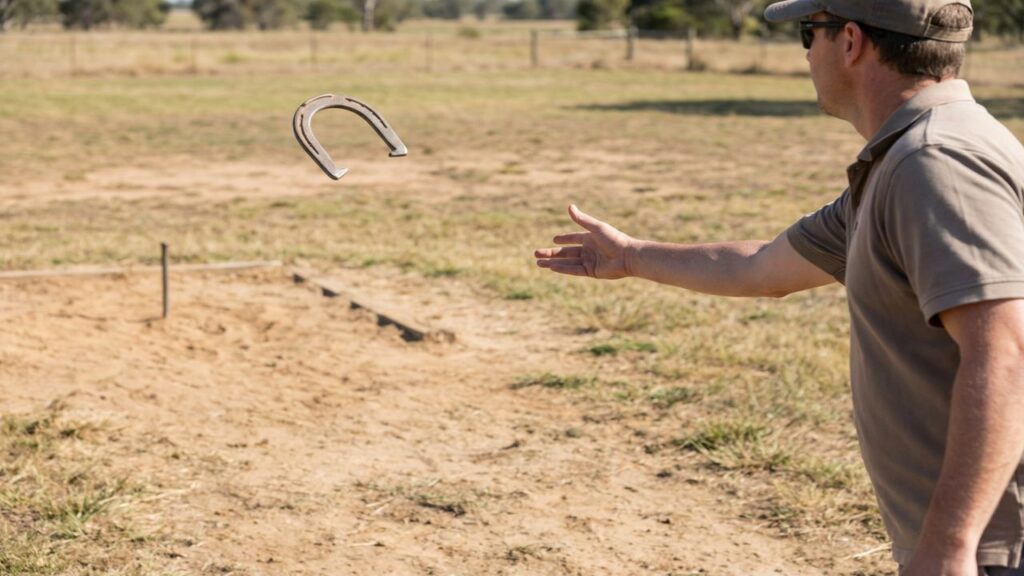
7. How Rushing Destroys Timing
Timing requires patience. Rushing kills both.
When players rush:
- The stance isn’t fully set
- The arm swing shortens
- The release point shifts
- The follow-through collapses
Many rushed throws still “feel” strong — but they land unpredictably.
Horseshoes reward rhythm. Every rushed throw breaks that rhythm and trains bad habits.
Slowing down feels uncomfortable at first, but it’s the fastest way to clean up timing problems.
8. Practice Strength Makes Timing Worse
Here’s a tough truth: practicing with strength reinforces bad timing.
If practice sessions involve throwing hard, throwing fast, or throwing through fatigue, timing suffers. The body adapts by muscling the throw instead of coordinating it.
Better practice focuses on:
- Slower, deliberate swings
- Repeatable release points
- Consistent arc height
- Smooth follow-through
Timing improves when the body is allowed to move correctly — not when it’s forced to perform.
9. A Gear Choice That Encourages Smooth Releases
Practicing with a regulation-weight steel set like the Champion Sports Official Steel Horseshoe Set naturally discourages muscling the throw because the weight demands balance and smooth timing. When the timing is right, the shoe flies clean and controlled. When strength takes over, releases feel late, and arcs flatten. This kind of honest feedback helps players develop smooth releases instead of forcing results.
Horseshoe Game Set
10. How to Feel Timing Instead of Thinking About It
Timing can’t be forced mentally. It has to be felt physically.
One of the best ways to find timing is to:
- Slow the arm swing intentionally
- Focus on finishing the motion
- Ignore distance and focus on feel
- Let the shoe leave naturally
When timing clicks, players often describe it the same way: “I didn’t do anything special — it just felt right.”
That’s the goal.
11. Why Timing Holds Up Under Pressure
Strength disappears under pressure. Timing survives.
When nerves hit, muscles tighten. Strength-based throws fall apart quickly. Timing-based throws hold together because they rely on rhythm, not force.
That’s why experienced players often improve late in games — not because they try harder, but because they trust timing.
Timing gives you something stable to fall back on when emotions rise.
12. Strength Has a Place — But Not at Release
Strength isn’t useless in horseshoes. It just belongs earlier in the chain.
Strength helps with:
- Stability
- Endurance
- Balance
But at release, strength should be invisible.
The best releases look gentle because all the work already happened before the hand opened.
Frequently Asked Questions
Should I throw softer to improve timing?
Not exactly. You should throw smoother. Softer often happens naturally once timing improves.
Why do my best throws feel effortless?
Because timing allows the motion to work without resistance.
Can timing be practiced intentionally?
Yes — by slowing down, focusing on rhythm, and removing force from practice throws.
Why does timing fall apart when I’m tired?
Fatigue increases tension, which disrupts coordination and release consistency.
Is timing more important than grip or stance?
Timing ties everything together. Grip and stance support it, but timing makes them work.
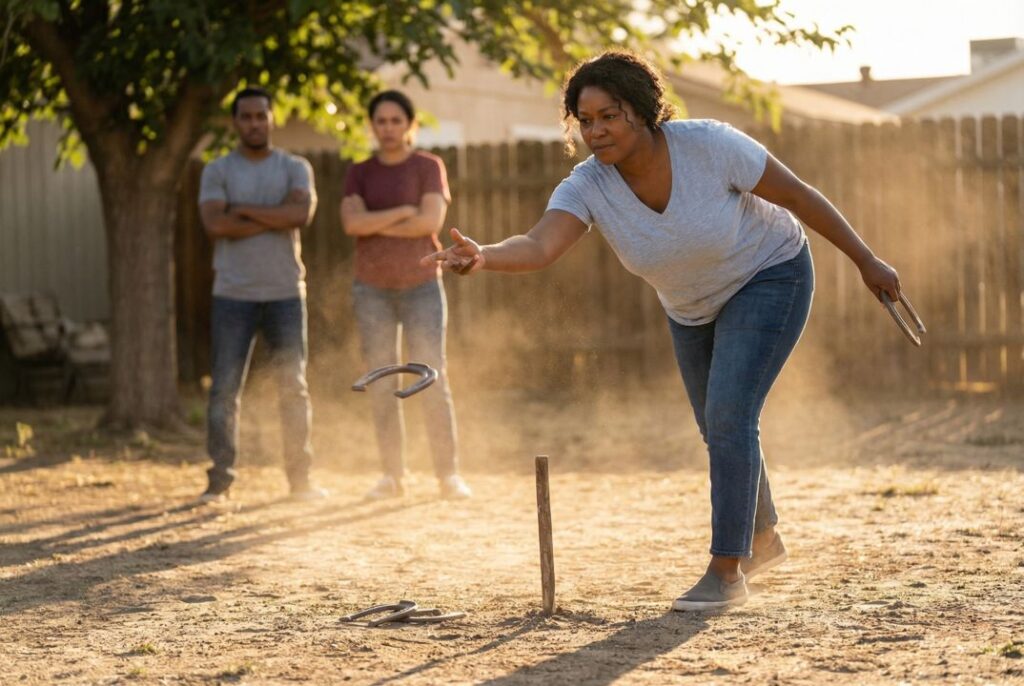
Where Smoothness Really Comes From
Horseshoes don’t reward strength. It rewards coordination.
Players who chase power fight the game. Players who trust timing work with it. Smooth releases aren’t accidental — they’re the result of patience, rhythm, and letting the motion complete.
When timing takes over, strength becomes unnecessary.
That’s when horseshoes start feeling easier — and your results start proving it.
Horseshoe Gifts and More!
This shop is my clubhouse for fellow players. You’ll find mugs, shirts, and pit gear to keep games fair, trash talk fun, and ringers flying — whether you’re building your first court or running a league.