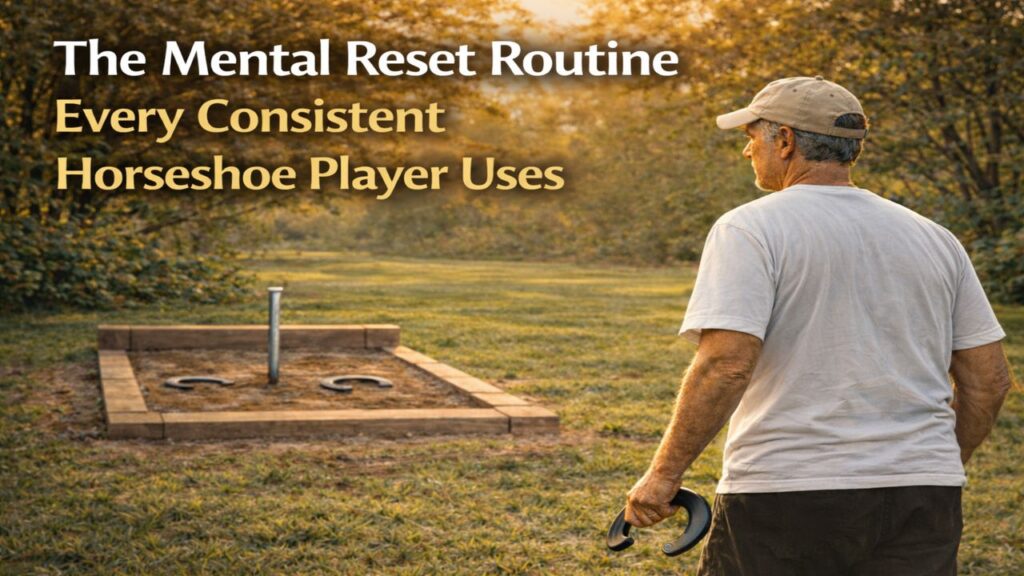
What Is a Good Ringer Percentage in Horseshoes? A Realistic Breakdown by Skill Level
If you play horseshoes long enough, the question always shows up.
Sometimes it comes after a hot streak. Sometimes, after watching someone quietly drop ringers like it’s routine. And sometimes it comes after you realize your backyard dominance doesn’t quite translate when you step into league play.
“What’s actually considered a good ringer percentage?”
The honest answer? It depends entirely on where you are in your development.
A beginner hitting 15% is progressing well. A league player at 45% is competitive. A tournament player at 65% is operating in rare air. The numbers mean different things at different stages.
First, What Does Ringer Percentage Really Measure?
Ringer percentage is one of the simplest statistics in horseshoes — but it’s also one of the most revealing.
It’s calculated like this:
(Number of ringers thrown ÷ Total shoes thrown) × 100
If you throw 100 shoes and hit 32 ringers, you’re sitting at 32%.
That number doesn’t lie. It tells you how repeatable your mechanics are over time. Not how good one round felt. Not how impressive your last streak looked. It reflects consistency — and consistency is what separates casual tossing from controlled pitching.
But before you start judging your number, you need context.

Beginner Level: 0%–20%
Everyone starts somewhere.
When you’re learning the game, everything is new — grip placement, arc control, release timing, foot positioning. Your body is still figuring out what feels natural.
At this stage:
- 5% is normal.
- 10% shows you’re starting to connect.
- 15–20% means you’re building a real foundation.
The biggest mistake beginners make is comparing themselves to experienced players too early. Muscle memory takes time. Smooth release takes repetition. And controlling the flip consistently doesn’t happen overnight.
If you’re under 20% but steadily improving, you’re right on track.
Casual Backyard Player: 20%–40%
This is where most recreational players live.
Once you cross into the 20–30% range, you’re no longer guessing. Your grip is more consistent. Your stance feels stable. You’re starting to understand how small adjustments affect results.
At 30%, you’re competitive in most backyard settings. You can string ringers together. You can respond to pressure from friends who suddenly realize you’re not just lucky.
When someone consistently throws 35–40%, they’re entering serious territory for non-league play. Their throw is repeatable. Their release is controlled. Their arc has intention.
But here’s something important — the climb from 20% to 35% is much easier than the climb from 40% to 55%. As your mechanics tighten, improvement becomes incremental instead of dramatic.
That’s normal. That’s growth.
League-Level Competitor: 40%–60%
Now we’re talking about consistency that wins matches.
A player hovering between 40% and 50% in league play has refined mechanics. They understand pit conditions. They recognize how clay reacts differently from packed dirt. They can adjust when needed without rebuilding their throw mid-game.
Crossing into the 50% range is significant. At that point, you’re applying constant pressure. Opponents can’t relax. Every frame matters.
But this is also where mental discipline becomes just as important as mechanics. Players at this level learn to:
- Avoid over-adjusting after a miss
- Control tempo
- Reset emotionally
- Recognize when to throw aggressively versus strategically
The percentage at this stage reflects experience, not just skill.
Tournament & Elite Level: 60%+
Sustaining 60% and above is rare.
Players performing at this level are operating with refined mechanics that have been shaped by thousands of throws. Their grip doesn’t drift. Their arc isn’t accidental. Their release point is repeatable under pressure.
You may hear about players hitting 70% or even higher during peak tournament runs. Understand that those performances are built on years of disciplined repetition and emotional control.
Elite performance is not flashy. It’s stable.
And that stability is earned.
Why Ringer Percentage Matters — And Why It Doesn’t Tell the Whole Story
Ringer percentage measures consistency. It does not measure intelligence.
You can throw 45% and still lose if you:
- Ignore blockers
- Rush throws
- Panic under pressure
- Misread the pit
Meanwhile, a disciplined 35% player with a strong strategy can win consistently.
The best competitors combine mechanical precision with smart decision-making. They know when to chase a ringer and when to play defense.
Percentage is a foundation — not the entire house.
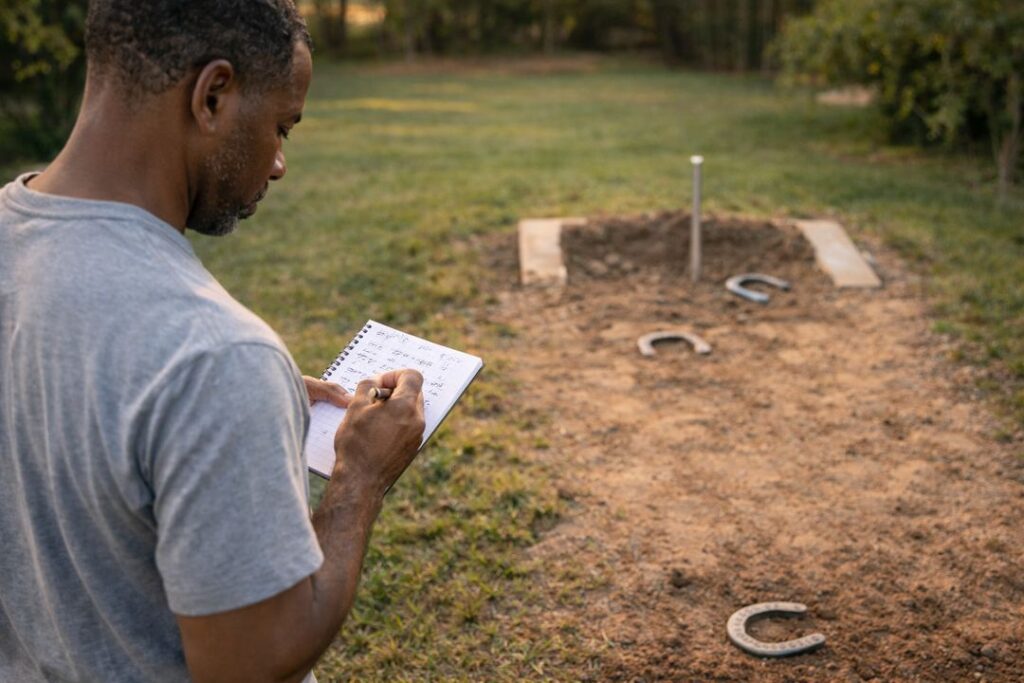
How to Accurately Track Your Percentage
If you want honest feedback, you need volume.
Small samples lie. Throwing 4 ringers out of 8 shoes sounds impressive, but it doesn’t represent your true average.
The cleanest method is this:
Throw 100 shoes.
Count ringers only.
Divide. Multiply by 100.
One hundred throws eliminates illusions and gives you a real benchmark.
Track conditions as well:
- Surface type
- Weather
- Distance
- Fatigue
Patterns will reveal themselves quickly.
The Equipment Factor (It Matters More Than People Admit)
Mechanics are king — but equipment consistency supports mechanics.
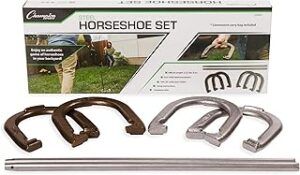
If you’re serious about improving your percentage, you need shoes that respond predictably. Balanced weight, proper design, and durable forged steel construction allow your muscle memory to develop without unpredictable feedback.
A strong example is the St. Pierre American Professional Series Horseshoe Set. These are forged, NHPA-style shoes with balanced geometry and reliable rotation characteristics. They’re widely respected among league players for durability and consistent feel.
You don’t need elite shoes to start. But once you’re tracking percentage and practicing intentionally, predictable equipment removes one major variable.
Inconsistent gear slows progress. Consistent gear accelerates it.
Horseshoe Game Sets
What Actually Raises Ringer Percentage?
More throwing doesn’t automatically equal improvement. Intentional throwing does.
One of the most effective approaches is slowing your tempo. Reset fully between throws. Focus on repeating the same grip and release point. Film your throw occasionally — video reveals subtle inconsistencies that feel invisible in real time.
Improvement often comes from fixing one flaw, not adding new techniques.
And remember — fatigue affects numbers. Late-session drops in percentage are normal. Conditioning and pacing matter more than most players realize.
How Long Does It Take to Improve?
Expect steady progress — not instant leaps.
A 5% improvement is noticeable.
A 10% jump is significant.
A 20% increase usually requires mechanical correction.
With focused practice two to three times per week, meaningful improvement can happen within a few months. But sustainable gains are built slowly.
Horseshoes reward patience.
Frequently Asked Questions
What is the average horseshoe ringer percentage?
Most recreational players fall between 20% and 40%.
Is 30% a good ringer percentage?
Yes. That’s competitive in most backyard settings and respectable in casual leagues.
What is considered elite?
Sustained performance above 60% places you in serious competitive territory.
Does equipment affect the percentage?
Yes. Balanced, regulation-weight forged shoes provide predictable rotation and improve consistency.
Should beginners track percentage?
Absolutely. Tracking accelerates awareness and improvement.
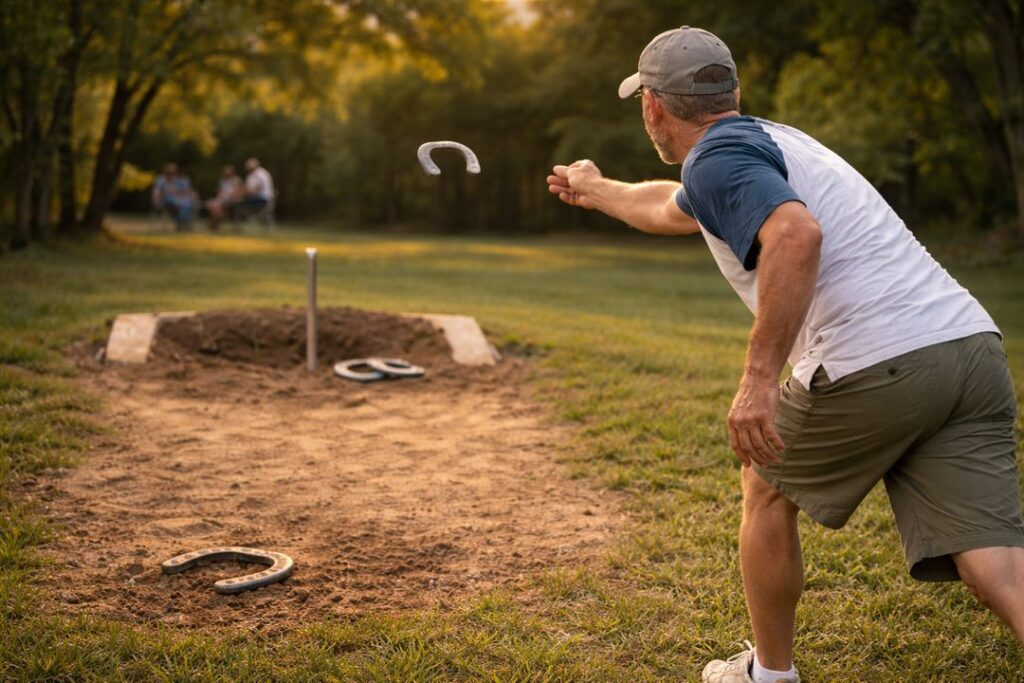
The Bigger Picture
Remember, it’s not all about the numbers. Enjoy the process of getting better and the camaraderie that comes with playing. The joy lies in both the challenge and the progress, but the best part? Celebrating every ringer like it’s your first.
Keep those shoes ready, stay curious, and throw with heart. As your skills sharpen and confidence builds, your ringer percentage is bound to follow suit, paving the path for a rewarding, ongoing love for the game.
But here’s what matters most.
The stake doesn’t reward hype. It doesn’t care about last week’s hot streak. It responds only to repetition — to a grip that doesn’t change, a stance that doesn’t drift, and a release that stays calm under pressure.
If you’re at 15%, build your foundation.
If you’re at 30%, refine your repetition.
If you’re at 50%, sharpen your strategy and mental control.
And if you’re chasing 60% and beyond, understand this — you’re not chasing perfection. You’re chasing consistency.
That’s how percentages climb.
Not from luck. Not from hype.
From control.