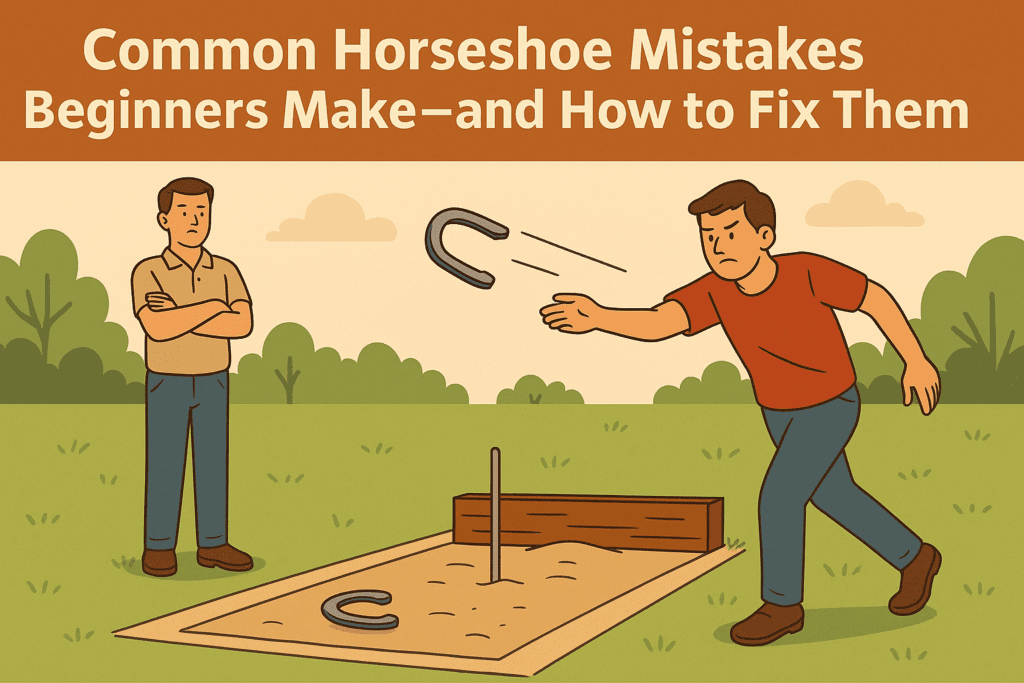
Why Horseshoes Keep People Hooked Long After Other Backyard Games Fade
Some backyard games are trendy. They show up for a summer, maybe two, then quietly disappear when the novelty wears off.
Horseshoes aren’t one of them.
I’ve watched it stick around through generations, changing backyards, changing players, and changing lifestyles — but never losing its pull. And the more I’ve played, the more I’ve realized something important:
Horseshoes work because it gives people exactly what they’re missing — without trying to.
No hype. No gimmicks. Just a stake, a pair of shoes, and a reason to slow down and focus.
Let me explain why this game keeps pulling people back in when so many others don’t.
1. The Simplicity Is the Secret
Horseshoes doesn’t overwhelm people right out of the gate. That’s rare.
You don’t need:
- A rulebook the size of a magazine
- Perfect athletic ability
- Expensive gear or a massive setup
You step up.
You throw.
You learn.
That low barrier is powerful. It makes people feel comfortable trying — and comfort leads to repetition. Repetition is how games become habits instead of one-off activities.
I’ve seen people who “weren’t athletic” fall in love with horseshoes simply because they weren’t embarrassed to start.
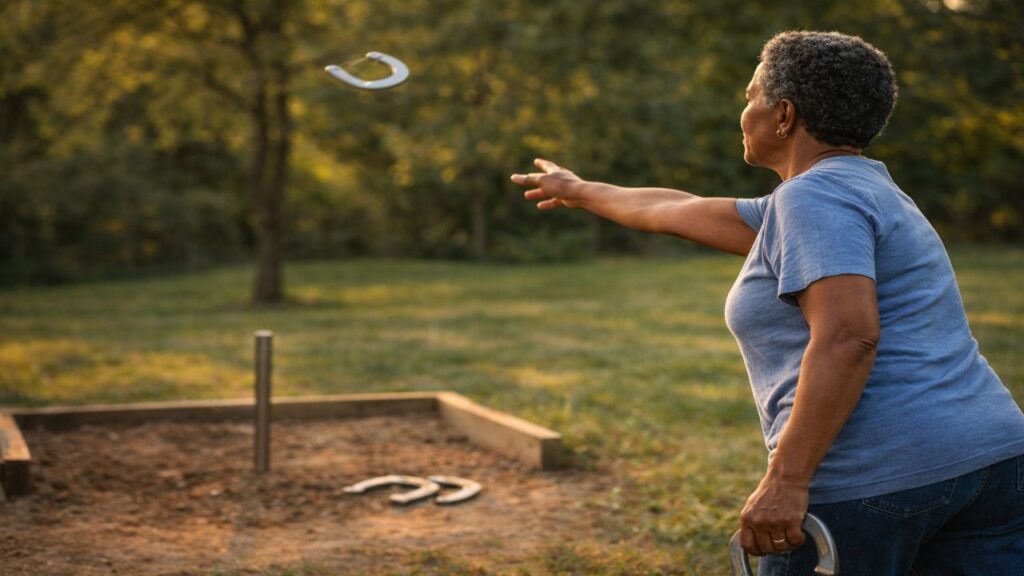
2. Horseshoes Forces Focus Without Demanding It
Here’s what sneaks up on people.
You can’t casually throw a horseshoe while mentally somewhere else. The shoe tells the truth every time.
If you rush, it shows.
If you overthink, it shows.
If your grip slips, it shows.
But unlike loud, high-energy games, horseshoes doesn’t punish you for losing focus — it simply gives you feedback.
That’s why so many players describe horseshoes as “relaxing,” even when they’re competing. It pulls your attention into the moment without stress.
I’ve had days where my first few throws were awful — not because my mechanics disappeared, but because my head wasn’t there yet. By the fifth or sixth pitch, everything settled down.
That mental reset is baked into the game.
3. Why the Pace Actually Makes It More Competitive
People often assume faster games are more competitive. Horseshoes prove the opposite.
The slower pace:
- Gives players time to think
- Builds anticipation
- Makes each throw matter more
You’re not reacting — you’re executing.
That creates a different kind of competition. One where composure matters just as much as skill. Miss a throw, and you’ve got time to sit with it. Make a good one, and everyone notices.
It’s competitive without chaos — and that’s why players of all ages can share the same pit.
4. Backyard Horseshoes Builds Confidence Quietly
Backyard play is where horseshoes really shine.
No scoreboards.
No pressure.
No spectators who don’t belong there.
Just reps.
This is where people:
- Develop a natural rhythm
- Experiment with grip and stance
- Learn what works for them
I’ve seen backyard throwers step into leagues already comfortable because they weren’t learning under pressure — they were learning through familiarity.
Confidence doesn’t come from perfection. It comes from repetition in a safe environment. Horseshoes provide that almost automatically.
5. One Game, Many Personalities
Another reason horseshoes last is that they adapt to the player, not the other way around.
You can be:
- Quiet and focused
- Competitive and intense
- Social and laid-back
And still enjoy the game.
Some players barely talk between throws. Others joke nonstop. Both fit. Horseshoes don’t force a personality — they accommodate it.
That flexibility is why it works so well at:
- Family gatherings
- Senior communities
- Neighborhood cookouts
- Small leagues
Few games manage that without friction.
6. The Gear Matters — But Only to a Point
Let’s talk equipment honestly.
You don’t need top-tier gear to enjoy horseshoes, but cheap or poorly balanced shoes absolutely affect the experience.
A solid, reliable option for players who want something they can grow with is the St. Pierre American Professional Horseshoes. They’re well-balanced, durable, and feel consistent in the hand, which matters more than people think.
Good shoes don’t make you great, but they remove excuses. And removing excuses helps players focus on improvement instead of frustration.
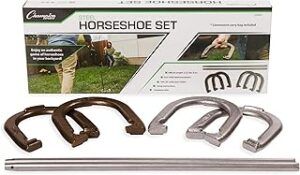
Horseshoe Game Set
7. Why Horseshoes Sticks When Other Games Burn Out
Most backyard games rely on novelty. Horseshoes relies on progression.
You don’t “beat” horseshoes.
You grow into it.
There’s always:
- A smoother release to chase
- A tighter arc to aim for
- A bad habit to clean up
That long runway keeps players engaged. It’s the same reason people stick with golf or bowling — there’s always room to improve, but no pressure to master everything.
8. What New Players Usually Get Wrong (At First)
Almost everyone makes the same mistakes early on.
They:
- Throw too hard
- Change techniques every pitch
- Focus on ringers instead of consistency
Horseshoes reward patience. The players who stick with it are the ones who stop trying to force results and start letting the game teach them.
Once that shift happens, improvement speeds up — and enjoyment goes way up.
9. Why Horseshoes Work Across Generations
It’s rare to find a game where:
- Kids can play with adults
- Seniors can compete comfortably
- Skill matters more than speed
Horseshoes checks all those boxes.
I’ve seen grandparents throw alongside teenagers with zero awkwardness. That doesn’t happen by accident. The game naturally levels the field.
Everyone throws from the same distance.
Everyone waits for their turn.
Everyone respects the pit.
That structure creates shared ground — literally and figuratively.
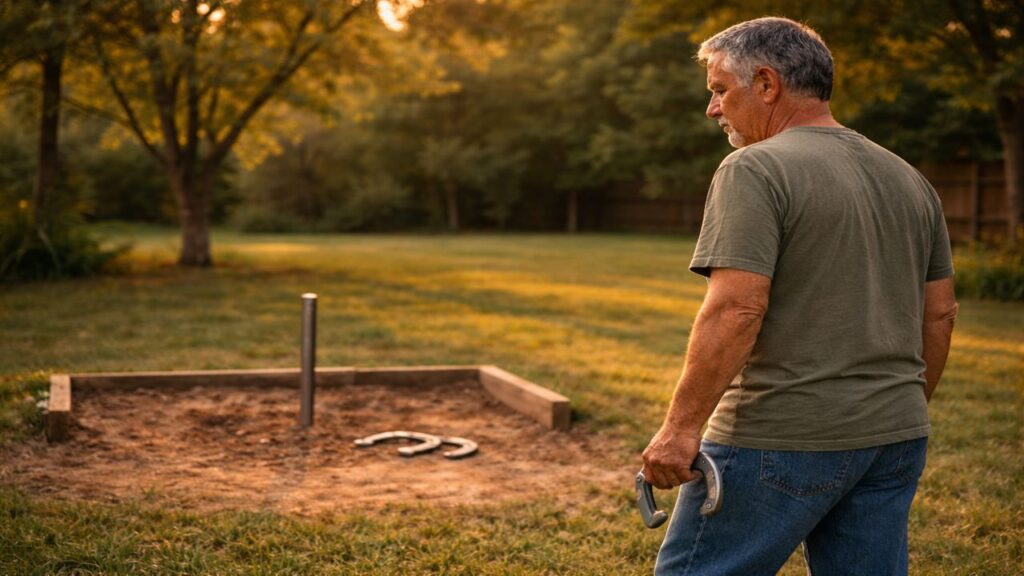
10. The Mental Reset Most People Don’t Expect
This part surprises people.
Horseshoes become a form of stress relief not because it’s passive, but because it’s intentional.
You focus on:
- Your stance
- Your grip
- Your release
Everything else fades out.
After a few rounds, your breathing slows. Your shoulders drop. Your mind clears. You don’t try to relax — it just happens.
That’s why so many players describe horseshoes as part of their routine, not just a game.
Common Questions Players Ask
Is horseshoes hard to learn?
No. The basics come quickly. Mastery takes time, but enjoyment doesn’t.
Do I need a regulation court?
Not to start. Plenty of great players learned in backyards with simple setups.
Can horseshoes help with coordination?
Yes. Repetition improves hand-eye coordination, balance, and control naturally.
Is it better solo or with others?
Both. Solo practice builds skill. Group play builds enjoyment.
How often should I play to improve?
Even short, regular sessions beat occasional long ones.
Why Horseshoes Still Belong in Modern Backyards
This global appeal has earned Horseshoe fans all over the world. The game’s simplicity and ease of access have transcended borders, allowing it to be adopted and loved by diverse groups everywhere. Each region adds its unique twist, enriching the cultural tapestry around this age-old pastime.
As we look to the future, Horseshoes remains committed to its core values of straightforward fun and community connection. Even as modern entertainment evolves, this game holds onto its charm, reassuring us that the simplest pleasures — like a game of horseshoes on a sunny day — can keep us grounded and connected, touching people’s lives all over.
In a world obsessed with speed, noise, and constant stimulation, horseshoes offers something rare.
It gives you:
- Focus without pressure
- Competition without chaos
- Progress without burnout
That’s why it’s still here. And that’s why it keeps finding new players, even now.
If you’ve been thinking about setting up a pit, dusting off an old set, or just throwing again after years away — don’t overthink it.
Step up.
Throw.
Let the game do the rest.
This shop is my clubhouse for fellow players. You’ll find mugs, shirts, and pit gear to keep games fair, trash talk fun, and ringers flying — whether you’re building your first court or running a league.