Essential Gear Every Horseshoe Player Needs in Their Arsenal
Whether you’re tossing shoes in a competitive league or playing a few backyard games with friends, the right gear can elevate your horseshoe experience from casual to confident. While horseshoes and stakes are the obvious essentials, serious players know that success on the court often comes down to preparation, accessories, and having the right tools at your side.
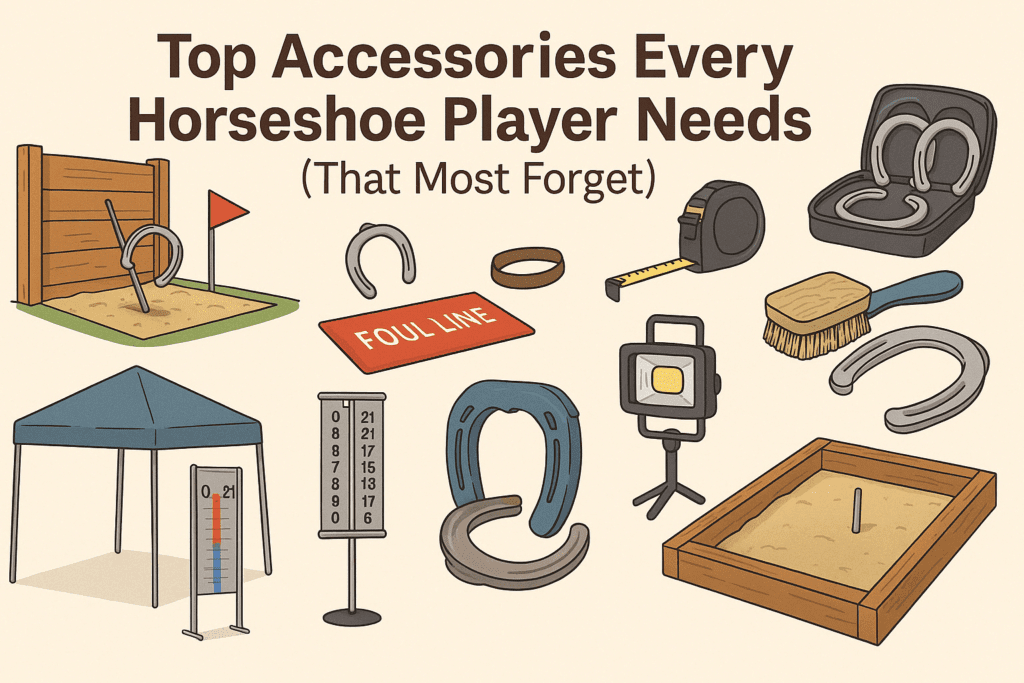
In this comprehensive guide, we’re going beyond the basics to explore all the essential gear every horseshoe player should consider owning. From NHPA-approved horseshoes to measuring devices, storage, court setup gear, and protective accessories, this list will help you build a complete horseshoe pitching kit that supports your growth and enhances your performance.
Why Gear Matters in Horseshoe Pitching
Many players start off thinking all you need are two horseshoes and a couple of stakes. And technically, that’s enough to play a casual game. But as your skill improves and your love for the sport grows, you’ll quickly realize how proper gear impacts everything from throw accuracy to comfort, court consistency, and even safety.
Investing in high-quality, well-suited equipment:
- Improves consistency and technique.
- Reduces injury risk from repetitive motion.
- Saves money by lasting longer.
- Prepares you for competition-level play.
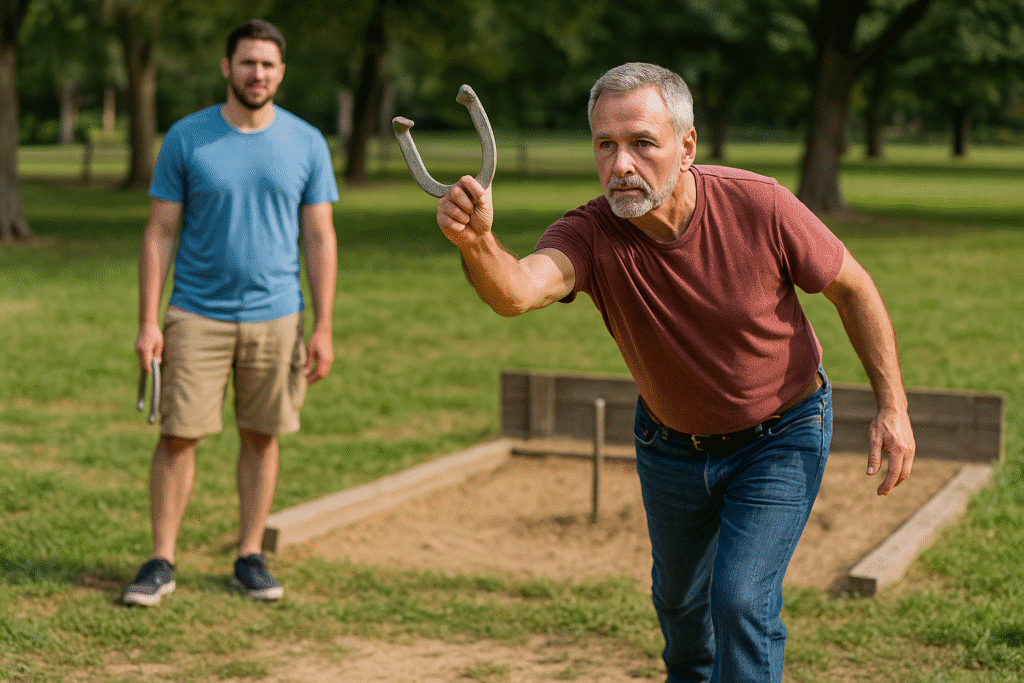
1. NHPA-Approved Horseshoes
Let’s start with the foundation—your horseshoes. If you’re serious about improving your game or ever plan to play in a league or tournament, you’ll need NHPA-approved horseshoes.
What to Look For:
- Weight: 2 pounds 8 ounces to 2 pounds 10 ounces (about 2.5–2.6 lbs).
- Material: Drop-forged steel is ideal; alloy steel is another good option.
- Style: Open-heel designs are popular among players seeking more hooks, while closed-heel shoes are better for precision players.
Horseshoe Game Set
Top Brands:
If you’re using non-regulation horseshoes, your practice throws might not translate well to formal play. Gear up with what the pros use—your accuracy and confidence will improve.
2. Regulation Stakes
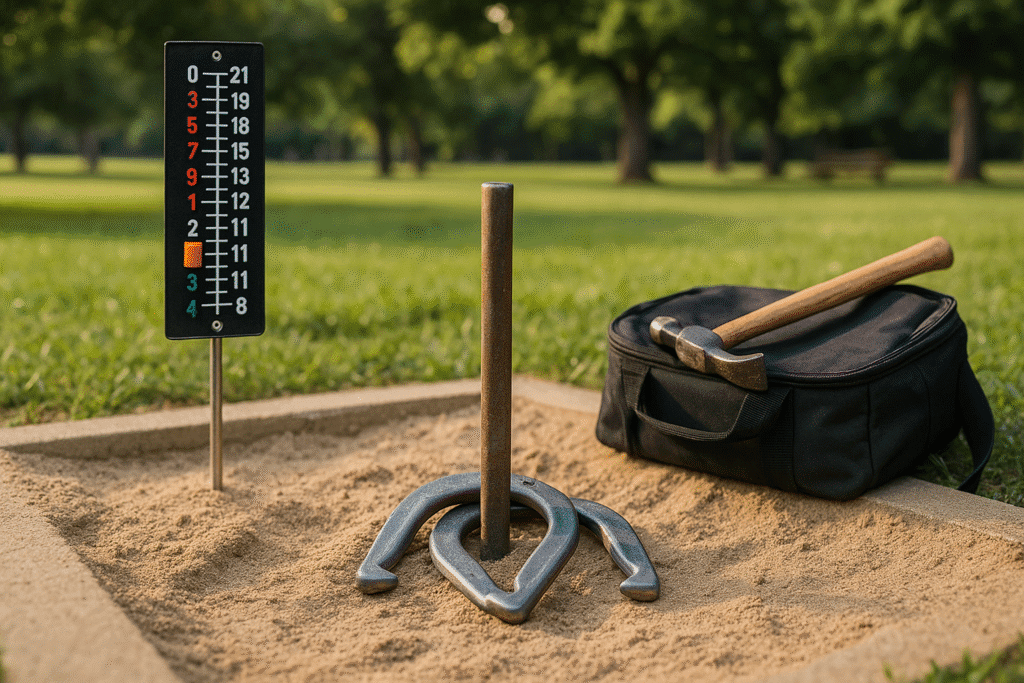
Your targets matter just as much as your tools. Horseshoe stakes should be made of steel and firmly anchored to prevent movement.
Key Features:
- Height: 15 inches above the ground.
- Diameter: Typically 1 inch.
- Angle: Stakes should be tilted forward at a 12-degree angle.
Stake Tips:
- Use galvanized or powder-coated steel to prevent rust.
- Consider removable or anchor-mount stakes for portability.
- Reinforce backyard installations with concrete or deep soil anchoring.
Poorly installed stakes wobble, fall over, or cause frustration by failing to hold ringers securely.
3. Quality Pitching Pit Setup
While not a handheld item, a proper pitching pit is a key part of your gear setup.
Backyard Pit Essentials:
- Sand or Clay Filling: Sand is easier to manage; clay is preferred in pro settings for grip and absorption.
- Wooden or Rubber Frames: Contain the playing area and protect surrounding lawn or dirt.
- Leveling Tools: Keep your court regulation-flat and fair for both sides.
You don’t need a tournament court to get serious about the game, but a well-maintained backyard pit will encourage better practice and reduce wear on your equipment.
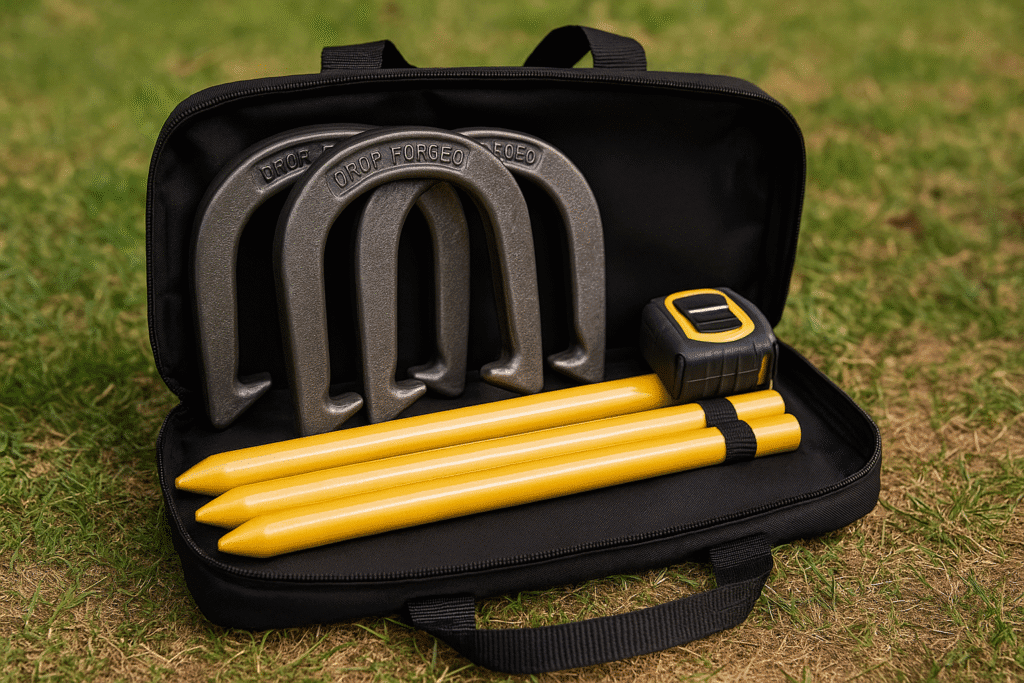
4. Carrying Case or Gear Bag
Horseshoes are heavy, and stakes aren’t exactly easy to transport. A durable carrying case is essential for protecting your gear and making travel more convenient.
What to Look For:
- Padded interior: To protect horseshoes from dents or scratches.
- Shoulder strap or handles: For easy portability.
- Separate stake compartments: Prevent damage from metal-on-metal contact.
Look for canvas or heavy-duty polyester models. Some bags are even waterproof or weather-resistant—great for outdoor storage or rainy tournaments.
5. Measuring Tools
Close calls happen often in horseshoe pitching, and having a reliable way to measure distances is essential for fair scoring and practice precision.
Recommended Tools:
- Measuring Tape: A retractable, regulation-length (at least 60-inch) tape is ideal.
- Ring Measurement Tools: Specifically designed devices help determine whether a horseshoe qualifies as a ringer.
- Stake Distance Markers: Great for setting up courts quickly and consistently.
Don’t let disputes ruin the fun. A good measuring kit keeps everyone honest and confident in their scoring.
6. Scorekeeping System
Whether digital or manual, a scorekeeping system helps track games more easily and improves competitive awareness.
Options Include:
- Manual Scoreboards: Weather-resistant boards with sliding or rotating numbers.
- Magnetic Scorekeepers: Use colored markers to track rounds and scores.
- Mobile Apps: Several horseshoe scoring apps allow you to log games, opponents, and results.
If you’re playing in tournaments, an accurate scoreboard becomes a necessity for organized tracking.
7. Footwear and Apparel
Your footing and posture directly impact your throwing accuracy. Comfortable, stable shoes reduce fatigue and prevent slips or bad landings during your pitch.
Ideal Footwear:
- Flat-soled shoes with good arch support.
- Non-slip grip for firm ground or soft pits.
- Breathable materials to stay cool during long matches.
Apparel should allow for full arm movement without restriction. Lightweight, athletic clothing is ideal—think moisture-wicking shirts and flexible shorts or pants.
8. Gloves or Grip Enhancers
Not all players use gloves, but some prefer them for added control and to reduce sweat or friction.
Benefits of Wearing Gloves:
- Improved grip on painted or powder-coated shoes.
- Reduced hand fatigue during long matches.
- Protection against sharp or worn horseshoe edges.
Alternatives like grip powder or rosin can help maintain traction in hot or humid conditions.
9. Practice Aids and Drills Tools
Want to accelerate your skill development? Use practice tools like:
- Target Mats or Rings: Helps you visualize the scoring zone and practice precision.
- Training Horseshoes: Lighter or heavier versions to build wrist strength and fine-tune form.
- Throwing Mat or Stance Board: Keeps your feet consistent during practice sessions.
Advanced players often incorporate slow-motion video to analyze their throws and make adjustments.
10. Horseshoe Cleaning and Maintenance Kit
Keeping your gear clean isn’t just for looks—it extends the lifespan of your equipment and helps maintain a consistent grip.
Maintenance Must-Haves:
- Wire Brush: Remove sand, dirt, and rust buildup.
- Protective Spray or Oil: Prevents corrosion on steel horseshoes and stakes.
- Towel and Cleaner: For quick post-game cleanup.
After each game, wipe down your gear and store it in a dry location to prevent rust and long-term damage.
11. Safety and Court Accessories
To keep the playing area safe and enjoyable for everyone, consider a few simple accessories:
- Court Boundary Markers: Keep spectators and pets out of the danger zone.
- Rain Covers or Tarps: Protect your pit and stakes between games.
- Shade Canopy or Tent: Especially helpful for summer games or all-day tournaments.
Even a simple pair of sunglasses and sunscreen can make a difference in hot, sunny conditions.
Final Thoughts: Gear Up and Get in the Game
As your passion for horseshoe pitching grows, so does your understanding that great performance comes from more than just natural talent—it comes from preparation. Building the right gear arsenal doesn’t mean buying everything at once. Start with the basics: quality horseshoes, regulation stakes, and a good pit. Then gradually add tools that enhance your accuracy, comfort, and consistency.
Recap – Must-Have Horseshoe Gear:
- NHPA-approved horseshoes
- Regulation steel stakes
- A safe, well-framed pitching pit
- Measuring tape and scoring tools
- Carrying case for portability
- Appropriate clothing and grip gear
- Cleaning and maintenance supplies
Whether you’re prepping for tournament play or just want to beat your buddy next weekend, having the right equipment can give you the edge—and the enjoyment—you’re looking for.
So, how complete is your gear kit? And what’s the next upgrade that could help you take your game to the next level?
Hi there, and thanks for stopping by! My name is Larry, and I’m the voice behind PlayingHorseshoes.com I love the game and have been playing since I was a kid. I started this blog because I am passionate about the sport, and with all the technology, I hope the sport don’t die. I plan to do my part to keep it going for me and my brother’s sake. Thanks for stopping by, feel free to subscribe and comment. Thank You!