Comparing Horseshoe Materials: Which One Is Right for You?
When it comes to horseshoe pitching, many players focus solely on throwing technique, pit setup, and scoring. But there’s another crucial factor that can dramatically affect your performance—the material of the horseshoes you use.
Choosing the right horseshoe material is about more than just weight or durability. It affects how the shoe flies, how it lands, how long it lasts, and how comfortable it feels in your hand. Whether you’re a backyard hobbyist or a serious league competitor, understanding the differences in horseshoe materials can help you make a smarter investment.
In this comprehensive guide, we’ll compare the most common horseshoe materials used today, break down their advantages and drawbacks, and help you decide which is right for your playing style and goals.
Why Horseshoe Material Matters
The material of a horseshoe affects five key aspects of play:
- Weight distribution – Impacts how the shoe spins and lands.
- Durability – Determines how long the horseshoe will last.
- Grip comfort – Influences your control during the throw.
- Balance and feel – Affects consistency and accuracy.
- Usage environment – Some materials are better for casual play, others for competitive tournaments.
Not all horseshoes are created equal, and choosing the wrong material can lead to poor gameplay, wasted money, or even injury.
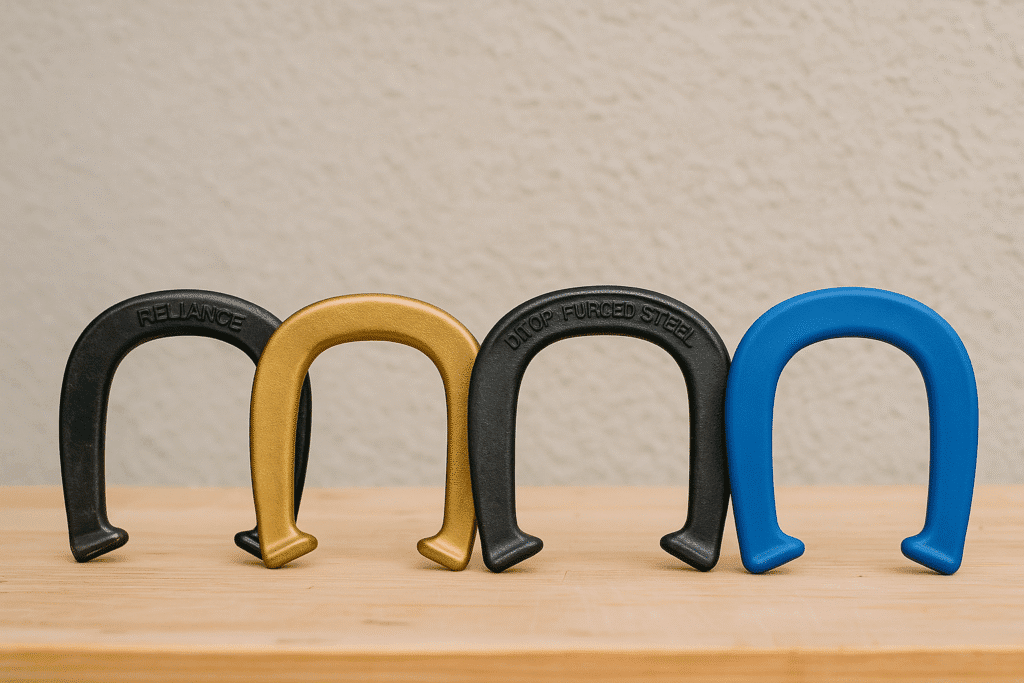
Overview of Common Horseshoe Materials
Let’s break down the primary materials you’ll find when shopping for horseshoes:
1. Drop-Forged Steel
Drop-forged steel is considered the gold standard for competitive and professional-level horseshoe pitching. This method involves shaping the metal while it’s hot, under high pressure, which creates a denser, more durable structure.
Pros:
- Extremely durable—resists chipping, bending, or cracking.
- Excellent balance and weight distribution.
- NHPA-approved and used in tournament play.
- Great for repeated, high-intensity throwing.
Cons:
- Heavier than other materials—can be tiring for new players.
- Higher price point.
- Can cause damage to surfaces if used improperly.
Best for:
Serious hobbyists and competitive players who want long-term value and tournament-level performance.
2. Cast Iron
Cast iron is often used in budget-friendly sets and casual backyard play. It’s made by pouring molten iron into molds, resulting in a cheaper, less dense product than forged steel.
Pros:
- Inexpensive.
- Easy to find in stores and online.
- Lightweight and easy for kids or casual players.
Cons:
- Brittle and prone to cracking or breaking.
- Poor balance and weight consistency.
- Not suitable for regulation play.
Best for:
Beginners and families who want something affordable for occasional use.

3. Alloy Steel
Alloy steel horseshoes blend various metals (often nickel or chromium) for added strength and corrosion resistance. They fall somewhere between cast iron and forged steel in terms of quality.
Pros:
- Lightweight yet durable.
- Smoother surfaces improve grip.
- Less prone to rust compared to basic steel.
Cons:
- Not all alloy blends are NHPA-approved.
- May be more expensive than cast iron without matching the durability of forged steel.
Best for:
Intermediate players who want to upgrade from entry-level gear without going full professional.
4. Aluminum
Aluminum horseshoes are extremely lightweight and are generally used for training, physical therapy, or casual indoor/outdoor use. They are rarely used in serious gameplay.
Pros:
- Very light—great for beginners, children, or seniors.
- Easy to carry and throw repeatedly.
- Won’t rust.
Cons:
- Not suitable for official games.
- Lack of weight impacts throwing control and accuracy.
- Easily dented or deformed.
Best for:
Recreational use in schools, camps, or senior centers.
5. Rubber or Plastic Composite
Some modern horseshoe sets come with rubber or plastic composite shoes, especially those marketed for indoor use or children.
Pros:
- Safe for indoor play and young kids.
- Doesn’t damage floors or walls.
- Inexpensive and colorful.
Cons:
- No real gameplay realism.
- Not legal for any competitive format.
- Not durable for outdoor use.
Best for:
Kids, classrooms, indoor training spaces, and lightweight party games.
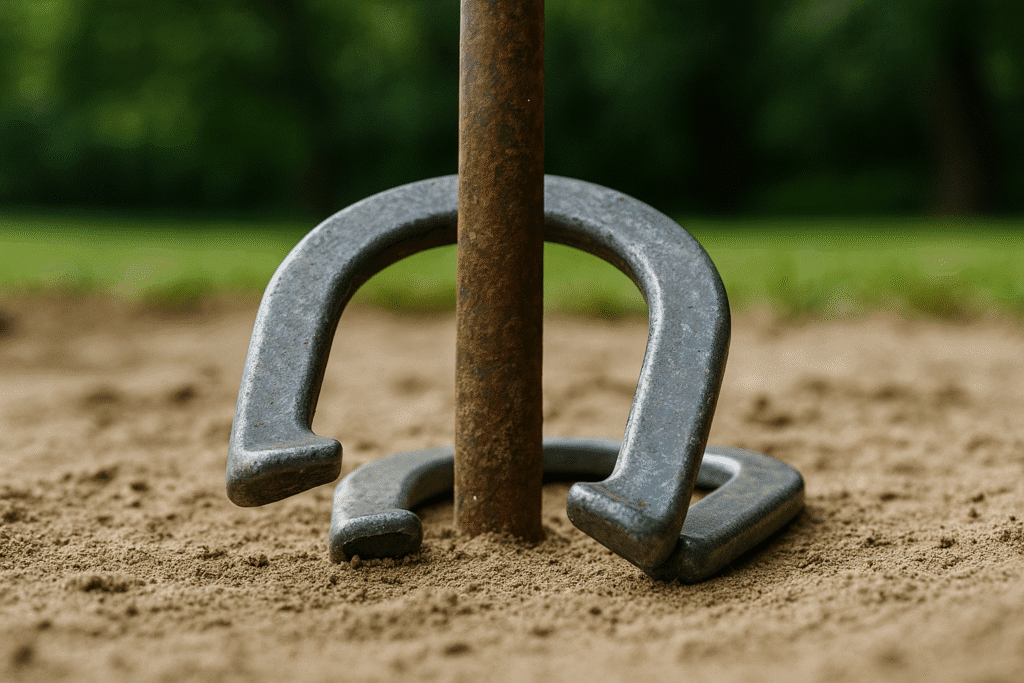
Performance Comparison Chart (Described)
To help you decide, here’s a descriptive comparison:
- Durability: Drop-forged steel > Alloy steel > Cast iron > Aluminum > Rubber
- Balance & Feel: Drop-forged steel and alloy steel offer the best performance.
- Comfort for Beginners: Rubber, aluminum, and cast iron are easier on the hands.
- Regulation Use: Only forged steel and certain alloy steel models are NHPA-approved.
- Affordability: Cast iron and rubber sets are the most affordable.
- Longevity: Forged steel outlasts every other material.
How to Choose the Right Material Based on Your Needs
✅ For Competitive Players:
Choose drop-forged steel. It’s NHPA-approved, long-lasting, and delivers the balance and control required for scoring consistency.
✅ For Intermediate Players:
Go with alloy steel. It provides a good mix of quality and affordability while helping you transition to more competitive gear.
✅ For Casual Backyard Games:
Cast iron is often good enough. It won’t last forever, but it’ll deliver a fun game on the weekend without breaking the bank.
✅ For Kids and Indoor Play:
Stick with rubber or plastic composite. These are safe, lightweight, and easy for anyone to enjoy without risk.
✅ For Senior-Friendly Play or Training:
Try aluminum horseshoes. They’re easy to throw, reduce arm fatigue, and work great for lower-impact sessions.
Other Material Factors to Consider
Beyond just the core material, consider these secondary factors:
🔩 Coatings and Finishes
- Powder-coated finishes add a layer of protection and prevent rust.
- Painted finishes offer aesthetic flair but may chip or wear off.
- Textured grips on steel models can improve handling during throws.
🧲 Magnetism
- Steel horseshoes are magnetic, making them compatible with some scorekeeping and retrieval systems.
- Aluminum and plastic are non-magnetic.
🌧 Weather Resistance
- If you’re leaving your gear outside, look for rust-resistant coatings or materials that won’t corrode, like aluminum or rubber.
Top Horseshoe Brands and Material Choices
Here are a few recommended sets based on material:
- St. Pierre American Professional Series – Drop-forged steel, NHPA-approved, ideal for competitive play.
- Gordon Horseshoes – Balanced, high-grade alloy steel, great for leagues.
- Franklin Sports Rubber Horseshoe Set – Kid-friendly, lightweight, great for indoor or casual outdoor games.
- Champion Sports Cast Iron Set – Solid option for occasional backyard pitching.
When comparing brands, don’t just focus on price—pay attention to reviews, NHPA compliance, and long-term user experiences.
Final Thoughts: Which Material Is Right for You?
Selecting the right horseshoe material depends on your skill level, playing environment, goals, and budget. Just like you wouldn’t bring a plastic bat to a baseball tournament, you shouldn’t use substandard horseshoes in a serious match. By understanding the strengths and weaknesses of each material, you can make a smart purchase that matches how you play.
🔍 Ask yourself:
- Do I want a set for fun or serious improvement?
- Will I play often, or just occasionally?
- Is weight or durability more important to me?
- Will kids or older adults be using this gear?
- Do I need my horseshoes to meet NHPA rules?
Once you answer those questions, your ideal material will become clear.
So… what type of player are you? And which material will help you pitch your way to victory?
Hi there, and thanks for stopping by! My name is Larry, and I’m the voice behind PlayingHorseshoes.com I love the game and have been playing since I was a kid. I started this blog because I am passionate about the sport, and with all the technology, I hope the sport don’t die. I plan to do my part to keep it going for me and my brother’s sake. Thanks for stopping by, feel free to subscribe and comment. Thank You!