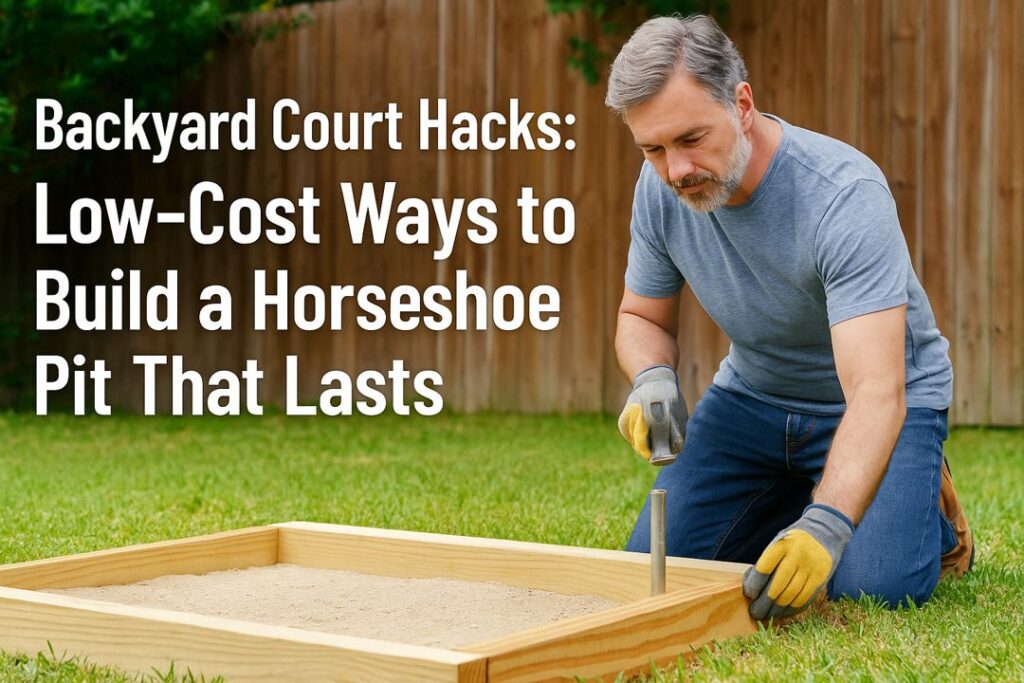
Horseshoe Pitching Strategies: Playing Smart Against Tough Opponents
There’s pitching for fun — and then there’s playing to win. Once you’ve nailed your grip, stance, and rhythm, it’s time to start thinking about the strategy side of horseshoes. Because make no mistake — a smart player can outscore a stronger one with just a few well-timed moves and smart decisions.
If you’ve ever faced a tough opponent who always seems one step ahead, this guide’s for you. Let’s break down the mental, tactical, and positional strategies that turn backyard pitchers into true competitors.

The Mindset Shift: From Casual Tossing to Tactical Pitching
Most players throw each shoe like it’s their first — same approach, same power, same target. But seasoned pitchers know: every throw is a chess move.
Smart horseshoe pitching starts with a mindset shift. You’re not just aiming for the stake — you’re thinking three throws ahead.
1. Play the Person, Not Just the Stake
Watch your opponent. Are they consistent with their arc or all over the place? Do they favor one side of the stake? Use that to your advantage.
- If they lean left, stake your shoes slightly right — force them to adjust.
- If they’re a high-arcer, throw flatter to minimize ricochets.
2. Control the Pace
Some players rush. Others slow things down. You can influence that.
If your opponent thrives on rhythm, take your time before each throw — break their momentum. If they hesitate too long, pitch quickly to keep pressure on.
This isn’t mind games — it’s game flow control.
Know Your Environment: Reading the Pit Like a Pro
Every pit has a personality. A smart pitcher reads it before the first throw.
1. The Surface Game
- Soft pits grab shoes — great for dead drops and ringers.
- Hard pits cause more bounce — adjust your arc higher to stick your landings.
- Wet surfaces slow down bounce but may change your footing; focus on balance.
Keep a mental note after each toss. If your shoes are skidding, you need more loft. If they’re sticking short, reduce your angle slightly.
2. Stake Awareness
Not all stakes are created equal. Loose, wobbly ones won’t hold ringers easily. Aim for dead-on, center hits in those cases.
If the stake is solid, you can afford to play more aggressively — lean into your follow-through and let the shoe spin tight.
Opening Strategy: Setting the Tone Early
The first few throws of the game do more than score — they set psychological tone.
1. Establish Consistency
Forget perfect ringers early on. Just land close. Nothing rattles an opponent faster than watching you park shoes within inches every round. It’s quiet dominance.
2. Play for Position
Your first shoe is your scout. Use it to gauge pit behavior — how it lands, bounces, or slides. Then adjust your second shoe to correct distance and angle.
If you drop your first within 6 inches, you’re already forcing your opponent to pitch under pressure.
Mid-Game Adjustments: Outsmarting the Momentum Shift
Every game has momentum swings. The key is recognizing when to shift gears.
1. Adjust When They Get Hot
If your opponent lands a ringer, don’t try to “one-up” them with power. Stay calm. Focus on your own rhythm — maybe slightly increase arc height or change grip to tighten your spin.
Hot streaks cool fast when you stay steady.
2. Defend the Stake
Yes, defense exists in horseshoes!
If your opponent just landed close, aim your next throw not for the stake, but to block it.
- A well-placed shoe slightly in front can deflect their next toss.
- Even if you miss a ringer, you control the space.
This is called “guard pitching,” and it’s one of the oldest pro strategies in the book.

Strategic Throw Types to Master
You already know basic turns and flips — but strategy changes how and when to use them.
1. The Blocking Throw
A low, flat arc landing just in front of the stake.
Use it: When your opponent consistently scores ringers.
Goal: Disrupt their line of sight and rhythm.
2. The Drop Shot
A higher arc with less forward momentum.
Use it: On soft pits or against blockers.
Goal: Land the shoe softly and deaden the bounce.
3. The Slide
A slightly flatter throw that intentionally glides into position.
Use it: On firm or slightly wet surfaces.
Goal: Let physics work for you — a “lazy ringer” that slides right in.
4. The Precision Pair
Your first shoe scouts, your second scores.
Use it: In almost every end.
Goal: Adjust, correct, and build confidence each round.
When to Play Offense vs. Defense
This is where the real game IQ shows up. Smart pitchers switch between offense and defense seamlessly — depending on score, pit conditions, and opponent rhythm.
Play Offense When:
- You’re pitching first (set the tone).
- Your opponent just missed a few throws.
- You’ve found consistent rhythm.
In this mode, aim directly for the stake every throw. Put pressure on by stacking ringers or close throws.
Play Defense When:
- Your opponent is hot and landing ringers.
- The pit surface favors bounce or ricochet.
- You’re protecting a small lead.
Here, you’re not aiming to outscore — you’re aiming to disrupt.
Land blockers. Force awkward angles. Keep your opponent off rhythm.
Think poker, not bowling.
Body Mechanics and Rhythm Control
You can’t strategize without mechanical consistency. The best pitchers have repeatable motions — smooth, reliable, automatic.
1. Build a Repeatable Pre-Throw Routine
Same stance. Same breathing. Same wind-up.
This builds a muscle memory “baseline” so your brain can focus on strategy instead of mechanics.
2. Stay Grounded
When pressure builds, adrenaline makes you throw harder — don’t fall for it. Instead, focus on foot stability and wrist control.
That’s how you keep throws accurate late in the game.
Studying Opponents: Learn Their Patterns
You can read a pitcher like a poker player reads a tell.
1. Look for Repetition
Does your opponent adjust after misses? If not, they’re stubborn — exploit it.
Keep your shoes slightly offset so they chase correction after correction.
2. Watch Their Landing Zone
Some players have consistent “miss zones.” If their shoes always fall short, use the front zone as your blocker territory.
3. Mental Weak Spots
Missed easy ringers often shake casual players. That’s your cue — stay calm, land a smooth throw, and seize momentum.

Endgame Tactics: Closing Out Tough Matches
You’ve battled through ends and it’s tight. Here’s how to finish strong.
1. Stay Patient
Nerves can make you overthrow. Instead, aim for precision, not power. Landing close is better than flying past the stake.
2. Use “Pressure Positioning”
If you’re leading, pitch first and keep close shoes in play. Force your opponent to chase.
If you’re behind, throw second and study their placement — use their shoe as a backstop to slide in.
3. Finish With Confidence
Your last throws define your reputation. Stick with what you’ve practiced — don’t experiment under pressure.
Advanced Strategy: The Mental Game Inside the Game
At higher levels, horseshoe pitching becomes a battle of focus and nerves as much as form.
1. Use Visualization
Picture your ringer before you throw. Imagine the sound of the clang and the feel of a clean release. Visualization primes your mind and muscles to sync up.
2. Breathe Through Pressure
Before each toss, exhale slowly. It resets your focus and lowers tension. Most missed throws happen from tight muscles, not bad aim.
3. The “Poker Face” Advantage
Never let your opponent read frustration or excitement. Calm, neutral, consistent. The less they know about your confidence level, the harder it is for them to gain a psychological footing.
Gear That Supports Smart Strategy
Playing smart also means playing prepared. The right gear can subtly improve performance.
- Forged steel horseshoes: Balanced, durable, and dependable through long matches.
- Sturdy stakes: Prevents wobble that can ruin tight ringers.
- Portable scoreboard: Keeps you focused and reduces score confusion mid-match.
Recommended pick: The Triumph Forged and Steel Horseshoe Set — strong, balanced, and ideal for players refining accuracy and consistency against competitive opponents.
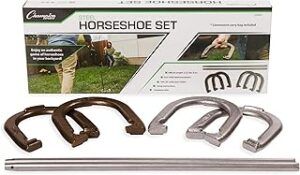
Horseshoe Game Set
Common Mistakes to Avoid Against Strong Players
- Throwing harder after a miss.
That’s the fastest way to lose accuracy. Instead, adjust your angle or spin. - Ignoring pit conditions.
If your shoes bounce, it’s not your throw — it’s your arc. Adapt. - Changing technique mid-match.
Never overhaul your form under pressure. Trust your practiced motion. - Forgetting to play defense.
Blocking shots wins games. - Over-celebrating or showing frustration.
It gives away your mindset. Stay poker-faced and composed.
Final Thoughts: Smart Play Wins the Day
At the end of the day, horseshoe pitching isn’t just about power — it’s about thinking two steps ahead.
The smartest players combine steady mechanics with game awareness and adaptability.
So next time you’re squaring off against that neighbor who “never misses,” remember:
- Read the pit.
- Control the pace.
- Use blockers and positioning.
- Stay calm under pressure.
Play smarter, not harder — and soon, you’ll be the opponent everyone else is strategizing against.
Next Step:
🎯 Want to refine your throw and dominate your next league match? Grab Pitch Like a Pro – A Beginner’s Guide to Horseshoes by Larry McCullough — your ultimate playbook for form, focus, and competitive mindset.