
How to Train for Consistent Ringers Without Overthrowing
If you play horseshoes long enough, you’ll hear the same phrase over and over:
“I almost had that one.”
Most of the time, that “almost” isn’t about aim—it’s about overthrowing.
The shoe flies too hard.
The arc is too flat.
The ringer misses long, clips the stake, or blows past the pit entirely.
Overthrowing is one of the most common problems in horseshoes, and it affects beginners and experienced players alike. The frustrating part? Most players don’t even realize they’re doing it.
This article breaks down why overthrowing happens, how it kills consistency, and—most importantly—how to train for smooth, repeatable ringers without muscling the throw.
Why Overthrowing Is the Silent Accuracy Killer
Overthrowing doesn’t always look like throwing hard. In fact, many players who overthrow swear they’re throwing “easy.”
Here’s what’s really happening.
Overthrowing Usually Comes From:
- Trying to force ringers instead of letting them happen
- Gripping the shoe too tightly
- Rushing the release
- Using arm strength instead of rhythm and timing
- Practicing at full distance before mastering control
When a throw is overpowered, small mistakes get magnified. A slightly late release becomes a long miss. A slight grip error turns into a wild wobble.
Ringers don’t come from power.
They come from repeatable motion.
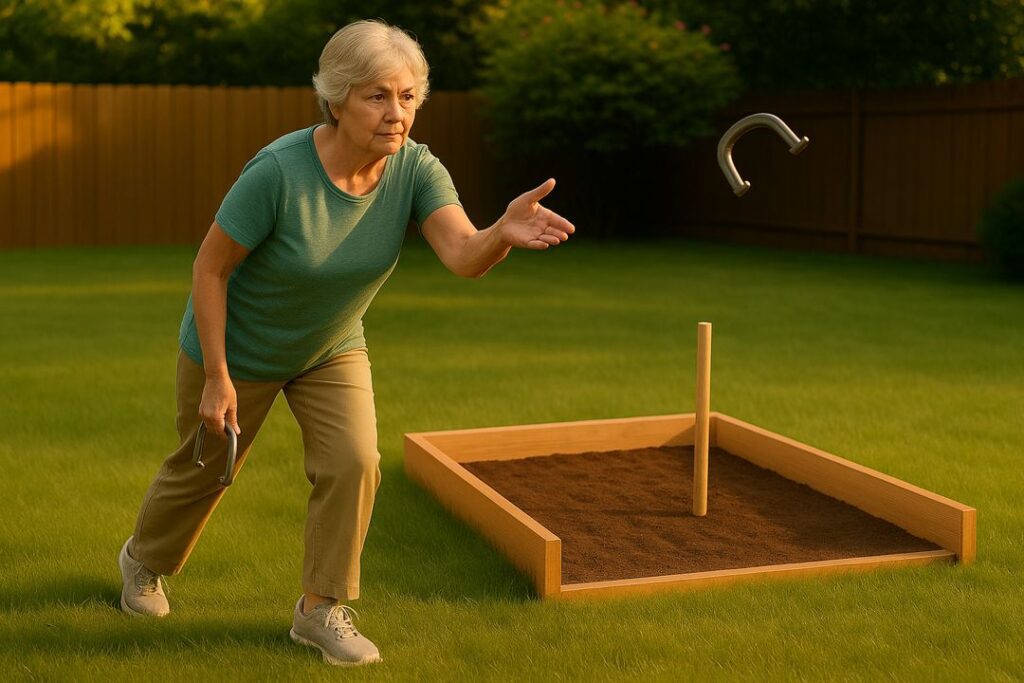
The Truth About Ringers: Power Is Not the Goal
Watch experienced horseshoe players closely. You’ll notice something right away:
They don’t look like they’re throwing hard.
That’s because consistent ringers come from:
- A relaxed arm
- A predictable arc
- A clean, unforced release
- Consistent tempo
Power shows up naturally when those things line up. When you try to add power manually, everything breaks down.
If you remember one thing from this article, make it this:
Accuracy comes first. Power follows automatically.
Step One: Train Control Before Distance
One of the biggest mistakes players make is practicing exclusively at regulation distance while struggling with overthrowing.
That’s backward.
Why Short-Distance Training Works
Training closer to the stake forces you to:
- Reduce arm speed
- Feel the release
- Focus on arc instead of force
- Build confidence without overthrowing
You’re not “cheating.”
You’re building a foundation.
The Half-Distance Drill
- Move halfway between the stake and your normal pitching distance
- Throw at 50–60% effort
- Focus on smooth rotation and clean arc
- Ignore ringers—focus on how the shoe flies
Spend 10–15 minutes on this before every regular session.
Players who do this consistently almost always see overthrowing disappear.
Grip Pressure: The Overthrowing Multiplier
If overthrowing had a best friend, it would be a death grip.
When you grip the shoe too tightly:
- The wrist locks up
- Release timing becomes inconsistent
- The shoe leaves your hand hot and flat
What Proper Grip Pressure Feels Like
- Secure, not squeezed
- Fingers guiding—not clenching
- Wrist loose enough to finish naturally
A good test:
If your forearm feels tense after throwing, your grip is too tight.
Grip Reset Drill
- Hold the shoe
- Relax your hand completely
- Slowly tighten only until the shoe won’t fall
- Throw from that pressure level
This drill alone fixes overthrowing for a surprising number of players.
Slow Down the Throw—Not the Result
Many players hear “slow down” and misunderstand it.
You’re not slowing the shoe down at the stake.
You’re slowing your motion.
Overthrowing Often Comes From Rushing
- Too fast a backswing
- Jerky forward motion
- Snapping the arm instead of flowing
Tempo Training Drill
- Count silently: back… forward… release
- Keep the same rhythm every throw
- Focus on smooth acceleration—not speed
A smooth throw creates a high, forgiving arc.
A rushed throw creates a bullet.
Learn to Love the Arc
Flat throws feel powerful.
High arcs win games.
If you overthrow, chances are your arc is too low.
Why Higher Arcs Fix Overthrowing
- They absorb extra power
- They allow gravity to finish the job
- They reduce long misses
- They make ringers more forgiving
Arc Awareness Drill
- Pick a visual point above the stake (tree branch, roofline, imaginary window)
- Try to send the shoe through that point
- Ignore where it lands—watch the flight
This trains your brain to associate success with arc instead of force.
Practice Ringers Without Chasing Ringers
This sounds strange, but it works.
When players chase ringers in practice, they overthrow more. They push. They muscle. They rush.
Instead, train for good misses.
The “Dead Shoe” Practice Rule
During certain practice rounds:
- Ringers don’t count
- Clean arcs and centered landings do
You’re teaching your body that success isn’t tied to slamming the stake—it’s tied to repeatable motion.
Ironically, ringers start showing up more often when you stop chasing them.
One-Shoe Training: The Overthrowing Cure
Throwing two shoes back-to-back encourages compensation. Players overthrow the second shoe, trying to “fix” the first.
One-Shoe Drill
- Throw one shoe
- Walk it back
- Reset fully
- Repeat
This forces:
- Full focus on every pitch
- Proper tempo
- Reduced urge to overpower
It’s slower—but far more effective.
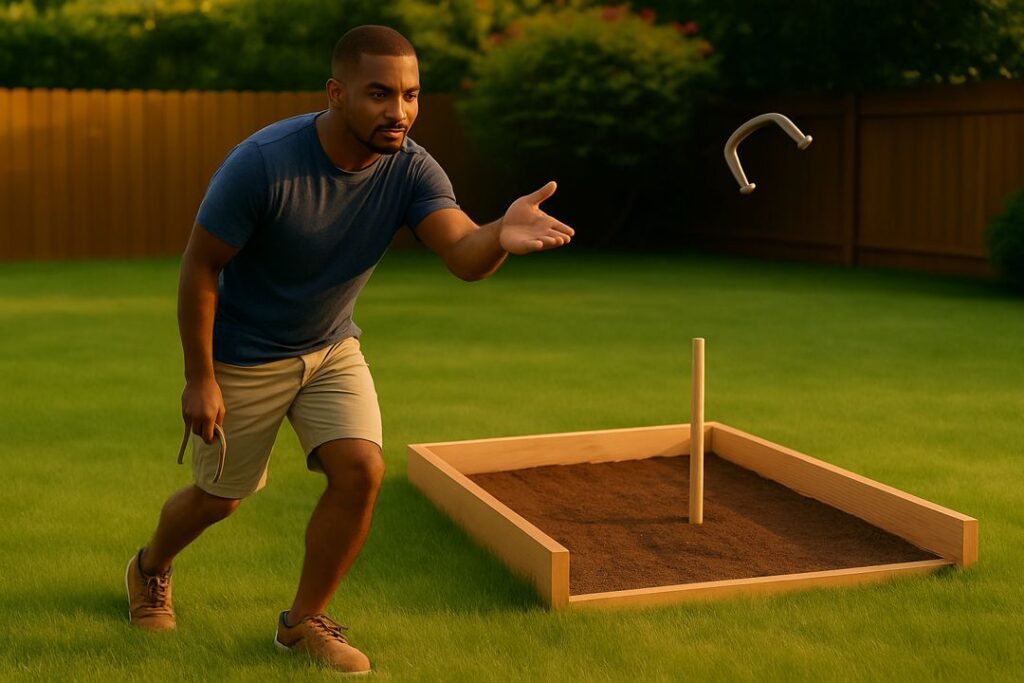
Distance Discipline: Don’t Drift Backward
As players gain confidence, they subconsciously creep farther back. That almost always leads to overthrowing.
Lock In Your Distance
- Mark your pitching spot
- Step to the same place every time
- Don’t “feel it out” each throw
Consistency starts from the ground up.
Fatigue Makes Overthrowing Worse
As your arm tires:
- You lose fine control
- Grip tightens
- Throws get rushed
More practice is not always better practice.
Smart Session Length
- 30–45 minutes is plenty
- Stop when mechanics slip
- End on smooth throws, not forced ones
Training tired teaches bad habits.
Common Overthrowing Myths (That Hurt Players)
“I Just Need More Strength”
No, you need better timing.
“I’ll Dial It Back in Games”
Bad habits don’t magically disappear under pressure.
“Pros Throw Harder”
Pros throw cleaner, not harder.
Putting It All Together: A Simple Anti-Overthrow Routine
Use this structure 2–3 times per week:
- 5 minutes – Half-distance smooth throws
- 5 minutes – Grip pressure reset + tempo focus
- 10 minutes – One-shoe arc-focused pitching
- 10 minutes – Full-distance relaxed throws
No muscling. No forcing. Just clean repetition.
Product Recommendation: Champion Sports Official Horseshoes
If overthrowing is your main issue, training with a balanced, no-frills horseshoe set can help you dial things back and focus on control instead of power. The Champion Sports Official Horseshoes are a solid option for practice because they’re regulation size and weight without the aggressive feel of professional tournament shoes.
They’re especially useful for half-distance drills, one-shoe practice, and arc-focused training where smooth tempo matters more than force. Many players find that when they switch to a straightforward set like this during practice, overthrowing fades and consistency improve naturally.
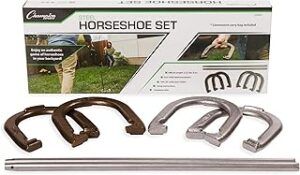
Horseshoe Game Set
Frequently Asked Questions
Should I aim lower to avoid overthrowing?
No. Aim mechanics should stay consistent. Adjust tempo and arc instead.
Can lighter shoes help?
Sometimes, but technique matters more than equipment.
How long does it take to fix overthrowing?
Many players see improvement within a few sessions once they stop forcing power.
Is overthrowing worse for beginners or experienced players?
Both. Beginners lack control; experienced players often chase ringers too hard.
A Better Way to Think About Ringers
Ringers aren’t created by effort.
They’re created by repeatability.
When your grip is relaxed, your tempo is smooth, and your arc is consistent, ringers stop being something you chase—and start being something that just happens.
Train the motion.
Trust the arc.
Let the stake do the rest.
Sustainable improvement is the name of the game. It’s all about patience and allowing this expertise to build over time. By honing your skills little by little, you’ll find that sweet spot where ringers become as natural as the rhythm you’ve gotten to know so well.
Horseshoe Gifts and More!
This shop is my clubhouse for fellow players. You’ll find mugs, shirts, and pit gear to keep games fair, trash talk fun, and ringers flying — whether you’re building your first court or running a league.


