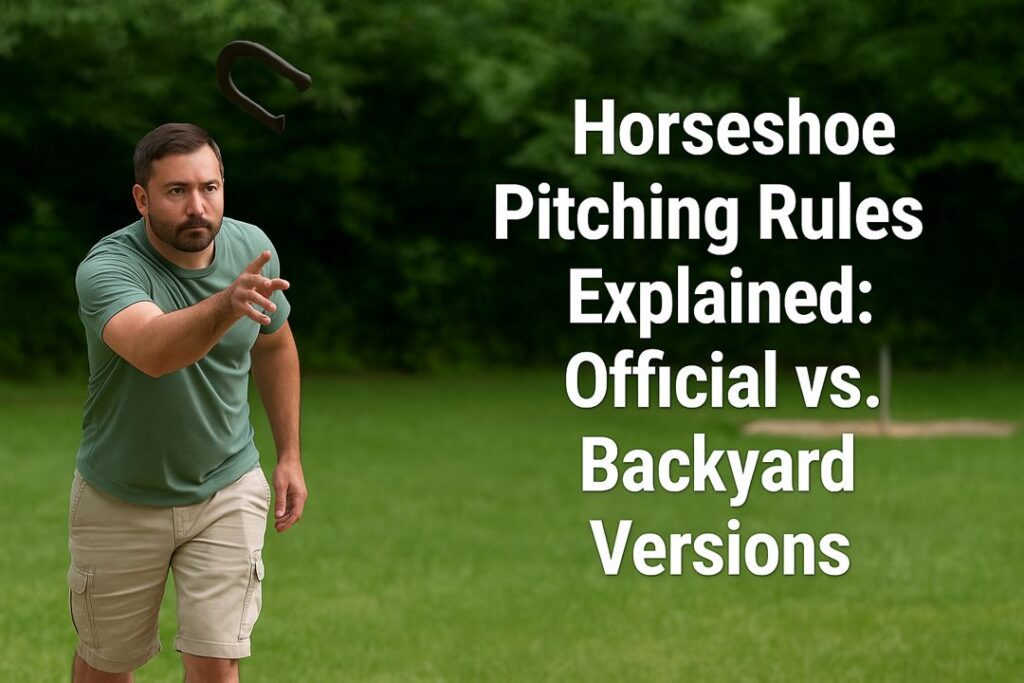
Horseshoe Drills You Can Do in 10 Minutes a Day
Not every horseshoe player has time to spend an hour at the pit every afternoon — and the truth is, you don’t need to. Horseshoes isn’t about brute strength or long sessions; it’s about repeatable mechanics. A consistent grip, smooth rotation, steady release, and reliable arc are what separate casual throwers from true ringers.
That consistency can be built in short, focused bursts, and that’s where 10-minute drills shine. They help you refine the fundamentals without fatigue, without pressure, and without the bad habits that show up during long, distracted throwing sessions.
These drills work because they strengthen muscle memory. Do just one or two daily, and you’ll start to feel the difference in rhythm, control, and accuracy in a matter of days.
Why Short Daily Drills Are So Effective
When it comes to improving your throw, the brain and body respond best to frequent, focused repetition. Ten minutes a day delivers more long-term improvement than one long session once a week.
Here’s why:
- You stay mentally sharp
- You avoid arm fatigue
- You repeat proper mechanics instead of guessing
- Your hand finds the correct grip automatically
- Your release becomes smoother
- Your confidence builds faster
Short practice creates a throw you can trust — and that’s the real secret to more ringers.
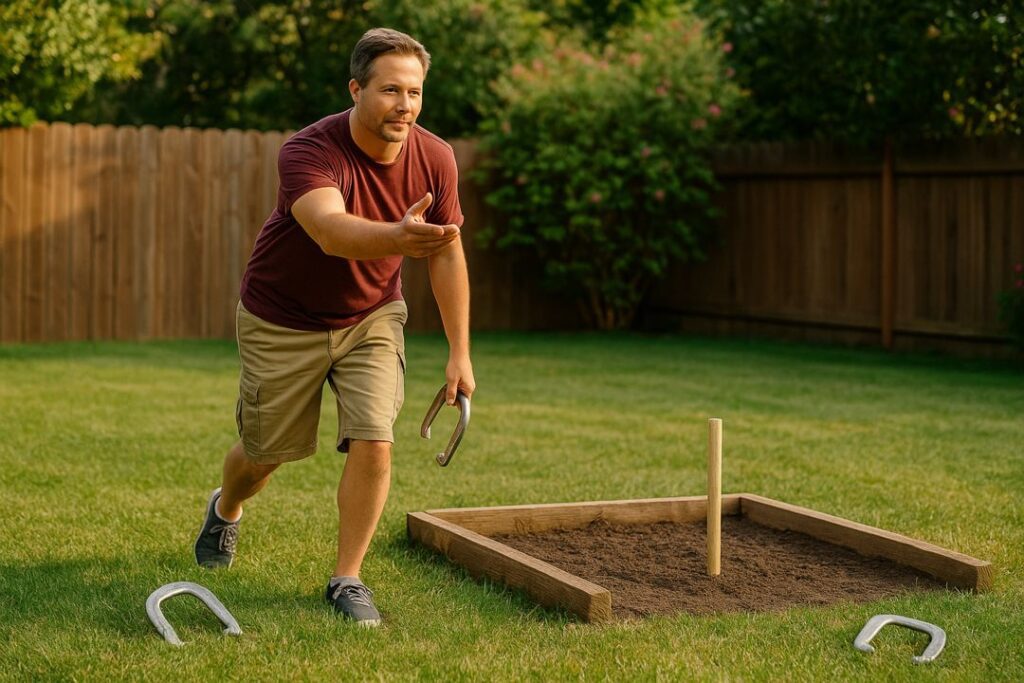
10-Minute Horseshoe Drills That Improve Accuracy and Consistency
Each of these drills can be done alone, with minimal setup, and without throwing dozens of shoes. They target the most common issues players struggle with: rotation, release point, arc height, and control.
1. Short-Distance Control Drill
This drill sharpens accuracy faster than almost anything else.
Setup:
Stand 10–15 feet from the stake — half distance.
Why It Works:
Shortening the distance forces your brain to focus on rotation and release, not power.
How to Do It:
- Throw 10–15 shoes at half distance
- Keep the motion smooth
- Watch for clean, level rotation
- Don’t chase ringers
- Focus only on consistent flight
Once your rotation stabilizes, accuracy at full distance improves immediately.
2. One-Step Rhythm Drill
If your footwork gets sloppy, your mechanics fall apart. This drill stabilizes everything.
How to Do It:
- Stand with feet together
- Take one small step toward the stake
- Throw in rhythm with the step
This isolates the upper body and improves balance. A smoother step creates a smoother throw.
3. Rotation Reset Drill
Wobbling shoes, corkscrews, or unpredictable spins usually come from grip inconsistencies. This drill fixes that.
How to Do It:
- Grip your shoe the way you normally would
- Toss it lightly 8–10 feet (not toward the stake)
- Focus on rotation only
- Adjust grip pressure until the shoe stays level
When the shoe rotates cleanly at a short distance, it rotates cleanly everywhere.
4. Release Timing Finder
Most overshooting or undershooting comes from a release that’s off by milliseconds. This drill dials in accuracy quickly.
How to Do It:
- Throw at half speed
- Pay attention to the exact point where the shoe leaves your hand
- Try to release just in front of your lead foot
- Repeat until your release feels effortless
Once your release is consistent, aiming becomes natural.
5. Landing Spot Drill
Great pitchers don’t aim at the stake — they aim where the shoe needs to land to curl in.
How to Do It:
- Pick a spot 12–18 inches in front of the stake
- Try to land your shoe on that spot
- Observe how the shoe slides, sticks, or curls
This drill teaches strategic control, not blind accuracy.
6. Arc Control Trainer
Arc height determines drop angle. Drop angle determines stick rate.
How to Do It:
- Choose a visual target above the stake (branch, gutter line, etc.)
- Aim your arc at that height every throw
- Adjust height, not power
Dialing in arc height stabilizes your entire throw.
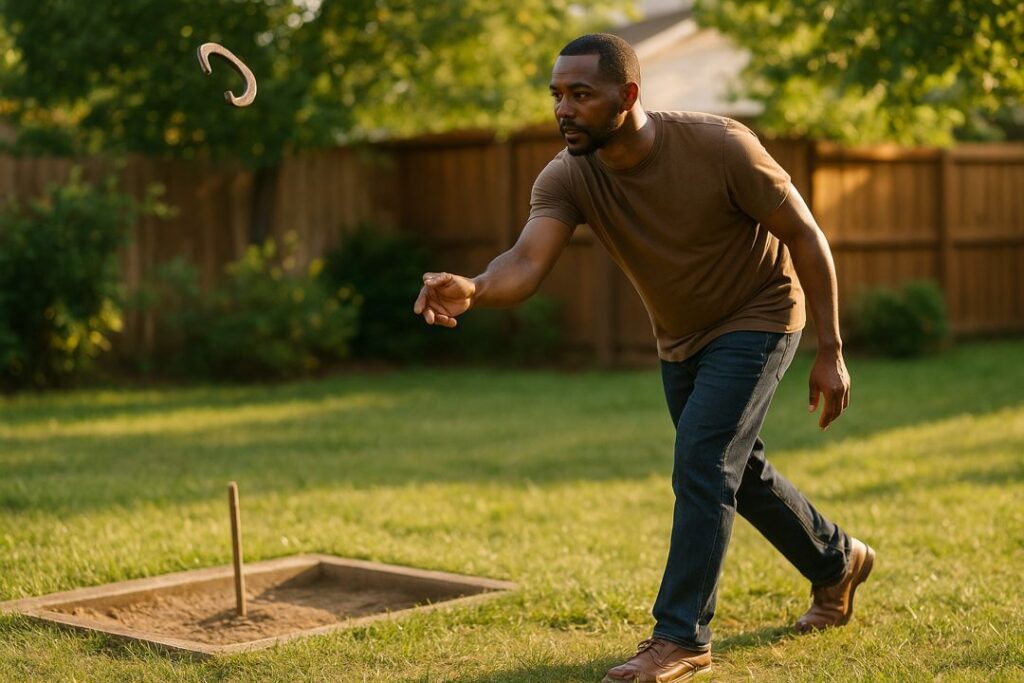
7. Shadow Throw Rhythm Drill
You don’t even need a shoe for this one.
How to Do It:
- Stand naturally
- Move through your throwing motion in slow motion
- Keep your wrist relaxed
- Smooth out your backswing and follow-through
Shadow throwing eliminates jerky movements and builds natural rhythm.
8. Grip Reset Repetition Drill
If your grip isn’t consistent, nothing else will be. This drill builds automatic hand placement.
How to Do It:
- Pick up the shoe
- Set your grip
- Put it down
- Repeat 20–30 times
- Finish with 4–6 real throws
This trains your fingers to set the shoe correctly without conscious effort.
9. Target Correction Drill
If your misses always fall the same direction, this drill fixes your natural drift.
How to Do It:
- Throw 10 shoes
- Notice your most common miss
- Slightly adjust your aim in the opposite direction
- Repeat until the line straightens
This one builds precise directional control.
10. Ringer Pressure Simulation
This sharpens your mental game.
How to Do It:
- Imagine the final pitch of a tight game
- Throw a single, focused shot
- Reset the scenario and repeat
Training your mind to perform under imagined pressure pays off in real matches.
How to Structure a Daily 10-Minute Session
A simple routine that hits every major skill:
Minute 1 — Grip Warm-Up
Swing the shoe lightly, loosen shoulders, settle your stance.
Minutes 2–4 — Rotation Drill
Short tosses or half-speed throws.
Minutes 5–8 — Accuracy Development
Landing spot drill, arc control, or short-distance practice.
Minutes 9–10 — Game Simulation
One or two pressure throws to finish strong.
That’s it — you’re done in 10 minutes.
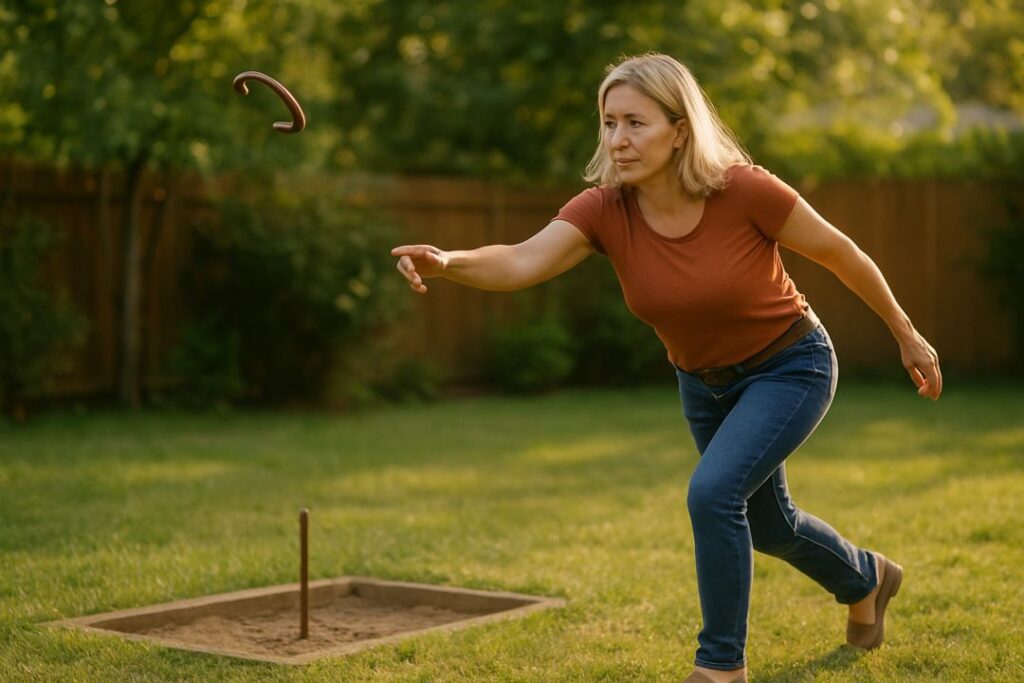
What You Can Expect After a Week
Players who follow these drills daily notice:
- Better rotation
- Smoother release
- Fewer wild throws
- Easier aiming
- More predictable landings
- Improved confidence
Your throw begins to feel natural. Predictable. Repeatable.
That’s the mark of a developing horseshoe pitcher.
Recommended Horseshoe Set for Short Daily Practice
Consistency starts with equipment that responds predictably. A balanced shoe makes daily drills far more effective.
Baden Horseshoe Set
A stable, easy-to-control set with a comfortable feel and reliable weight distribution — ideal for short, focused sessions that build strong fundamentals.
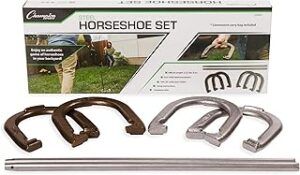
Horseshoe Game Set
Frequently Asked Questions
Do I need a full pit for these drills?
No. Many drills can be done in a yard, garage, or open space.
How long before I see improvement?
Most players notice better accuracy within a week.
Should I practice all drills every day?
No. Pick one or two per day. Consistency beats volume.
What drill helps most with ringers?
Rotation and release timing drills typically move the needle fastest.
Can experienced players benefit from 10-minute sessions?
Absolutely. These drills reinforce the core mechanics that even elite pitchers rely on.
Final Takeaway
You don’t need a long training session to become a sharper, more accurate horseshoe pitcher. Ten minutes a day is enough to build reliable mechanics, develop cleaner rotation, and gain the control needed to land more ringers — whether you’re playing in the backyard or stepping into league competition.
Focused practice beats long practice every time.
Horseshoe Gifts and More!
This shop is my clubhouse for fellow players. You’ll find mugs, shirts, and pit gear to keep games fair, trash talk fun, and ringers flying — whether you’re building your first court or running a league.