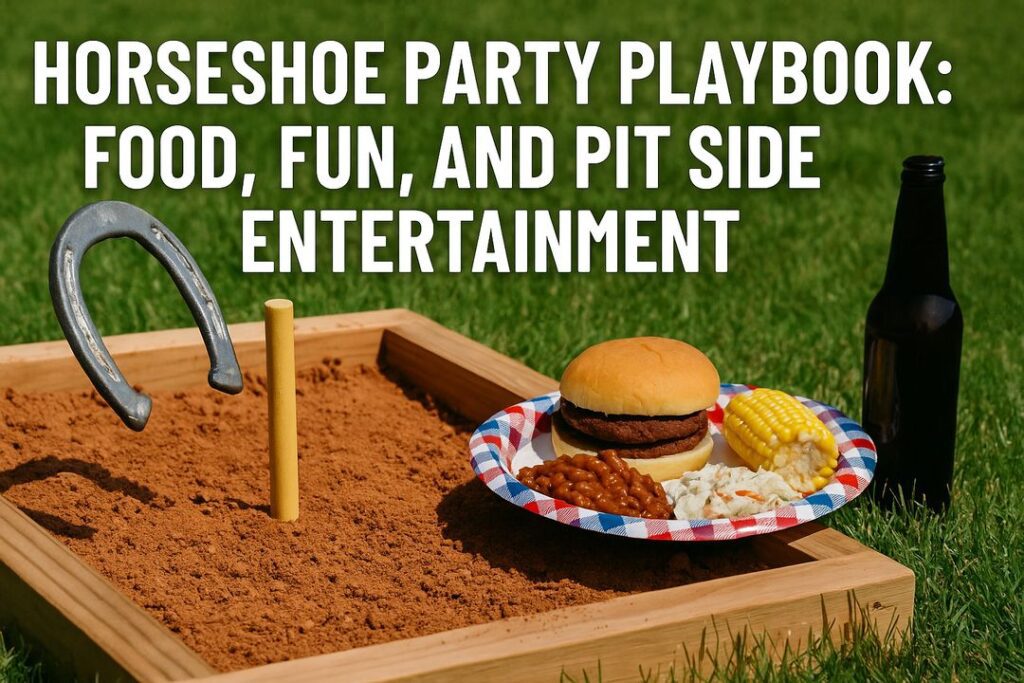
The Horseshoe Diet: Get Fit by Fetching Missed Throws
Introduction: When Fitness Meets the Backyard Pit
Forget treadmills. Forget expensive gym memberships and those 90-day workout challenges that leave you eating kale and regretting every life choice. There’s a new fitness revolution sweeping the neighborhood — and it smells faintly of sunscreen, grilled burgers, and pride.
Welcome to The Horseshoe Diet, the only fitness plan that combines exercise, laughter, competition, and the satisfying clang of metal-on-stake glory. It’s a lifestyle born from the realization that playing backyard horseshoes burns more calories than you think… mostly because half the game is spent chasing your missed throws.
Yes, you can actually turn your weekend hobby into a calorie-burning routine — and all without leaving your backyard.

1. The Surprising Science Behind Horseshoe Fitness
According to absolutely no certified fitness experts but plenty of credible uncles with strong opinions, horseshoes is “basically CrossFit if you count the walking.”
Let’s break it down:
- Walking to retrieve missed throws: 30–50 steps per round
- Bending to pick up horseshoes: 8–12 reps per game
- Celebratory flexing after a ringer: 1–2 per victory
- Arguing over scoring: Raises heart rate by 15%
That’s a full-body workout disguised as a social event. You’re working your arms, legs, back, and ego — often all at once. And because it’s outside, you also get a healthy dose of vitamin D, occasional sunburns, and the cardiovascular thrill of yelling “Did you see that?!” across the yard.
Even better, your body doesn’t know you’re exercising. It thinks you’re having fun. That’s the secret sauce missing from most fitness routines.
2. Calorie Burn: The Pit as Your Outdoor Gym
Most people don’t realize how much exercise goes into an afternoon game. A standard match of 40 shoes can have you walking the equivalent of a small marathon — okay, more like half a mile, but it feels like a marathon in July heat.
Let’s look at the average calorie breakdown:
| Activity | Approx. Calories Burned per Hour | Comparable Gym Exercise |
|---|---|---|
| Pitching horseshoes | 150–200 | Light weight training |
| Fetching missed shoes | 100–150 | Walking lunges |
| Raking and resetting pits | 120 | Yardwork or low-intensity circuit training |
| Trash talk and laughter | 30–50 | Light cardio with ab engagement |
| Grilling afterward | -200 | (You’ll probably gain these back) |
By the end of a two-hour cookout, you can easily burn up to 400–500 calories — roughly the same as jogging two miles, but with 100% more laughter and 0% chance of tripping over your own shoes.
3. The Horseshoe Workout Plan (Yes, This Is Real Now)
Think of it as a structured “Backyard Bootcamp.” No fancy gear required — just your horseshoe set, a friend to heckle you, and maybe a Bluetooth speaker playing classic rock.
Warm-Up (5 minutes):
- Arm circles (pretend you’re aiming for a ringer)
- Gentle squats (you’ll be bending plenty soon)
- Light jog from one stake to the other
Workout Phase (30–45 minutes):
- Round Toss: Throw two shoes, walk briskly to the stake, retrieve, repeat. That’s one set. Do 10–15 sets.
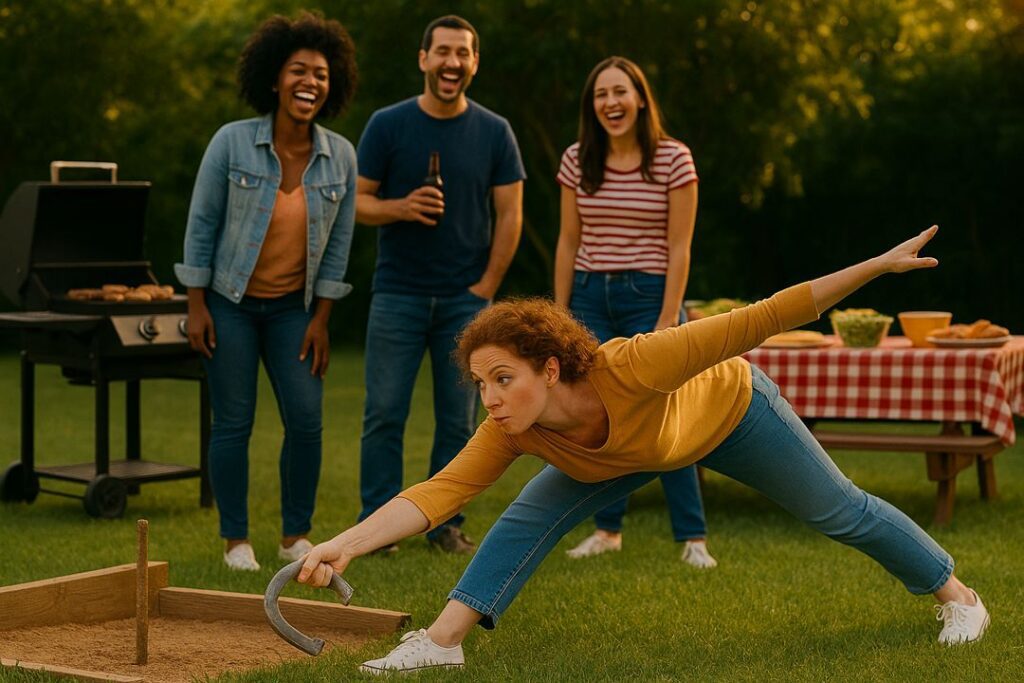
- Fetch Lunges: Each time you pick up a shoe, drop into a full lunge. Feel the burn, ignore the laughter.
- Core Stability: Balance on one foot while waiting your turn. Pretend it’s yoga, even if it’s just showing off.
- Ringer Row: If you get a leaner, pull it off the stake with deliberate form — shoulders back, core tight.
Cool-Down (5 minutes):
- High-five your opponent.
- Stretch your throwing arm.
- Replenish fluids — preferably from a cooler.
Done right, The Horseshoe Diet gives you a complete cardio, strength, and flexibility session while still letting you eat barbecue afterward.
4. Real-World Testimonials (Sort Of)
Earl “Iron Arm” Watkins, 64, Pine Bluff, AR
“I used to jog three miles a day. Then I realized I could just miss 12 throws in a row and walk the same distance. I’ve never looked back — or forward, since I’m always walking to pick up my shoes.”
Martha Jenkins, 58, Boone, NC
“My smartwatch said I hit 8,000 steps before lunch. That was before the finals. My doctor says I’m the healthiest I’ve been in years — though he’s still concerned about my competitive blood pressure.”
Rico Alvarez, 41, Tampa, FL
“I told my wife I was starting a new fitness plan. Now she’s joining me in the pit. We call it ‘couples cardio,’ and it’s saved us both from the gym.”
Whether or not these are real people doesn’t matter. What matters is that the results are believable — because everyone knows horseshoes burns more energy than sitting on a couch.
5. The Mental and Emotional Gains
While most workouts focus on physical transformation, The Horseshoe Diet emphasizes mental fitness. You learn patience, humility, and the ability to laugh at yourself when your perfect throw lands three feet short.
That’s the true power of the pit: character building.
You’ll also develop:
- Focus: Trying to ignore distractions while aiming at the stake.
- Discipline: Continuing to play even when your shoes refuse to cooperate.
- Resilience: Recovering from an off game without throwing your horseshoes into the woods.
This kind of mental endurance can’t be found in gyms. Only in backyards filled with laughter and questionable scorekeeping.
6. Nutrition on the Horseshoe Diet
Here’s where traditional diets go wrong — they tell you what not to eat. The Horseshoe Diet celebrates fuel that keeps you competitive.
Pre-Game Fuel:
- A solid breakfast (eggs, toast, coffee, and mild overconfidence).
- Stay hydrated — beer doesn’t count, but it pairs well with confidence.
Mid-Game Snacks:
- Trail mix, jerky, or fruit slices if you’re serious.
- Hot dogs and chips if you’re realistic.
Post-Game Recovery:
- Burgers or barbecue.
- One celebratory drink per ringer (within reason — or until you stop counting).
Rule of thumb: Calories earned from laughter and walking cancel out any barbecue guilt.
7. Safety Tips for the Backyard Athlete
You might laugh, but horseshoe injuries are real. Every year, dozens of players suffer from what medical professionals call “Pit Ailments.”
Common examples include:
- Ringer’s Elbow: Overuse injury caused by pretending you’re still 25.
- Pit Lunges Gone Wrong: When enthusiasm outpaces balance.
- Cooler Strain: Twisting your back while reaching for another drink.
To avoid these, remember the golden rule: stretch before you pitch, hydrate before you brag.
And if your shoes start curving mid-flight, that’s not a physics problem — it’s your technique.
8. Product Spotlight: The Fitness-Ready Horseshoe Set
If you’re turning your game into a workout, gear up with something that’s built to last. The Champion Sports Elite Horseshoe Set features balanced steel shoes with a perfect grip for repetitive throwing — and yes, they’re tough enough to survive being hurled in frustration.
Pair them with a portable measuring tape and pit mat set to make setup easier, protect your yard, and track those calorie-burning walks more precisely.
Remember: quality gear isn’t just about performance — it’s about making sure your “exercise equipment” looks professional when the neighbors peek over the fence.
Horseshoe Game Set
9. The Psychology of Missing (and Why It’s Good for You)
Every missed throw is a small failure — and that’s exactly why The Horseshoe Diet works. Each miss forces you to move, adapt, and try again.
You’re engaging your mind and body in a feedback loop of trial and error. You learn persistence. You learn focus. And eventually, you learn humility when your opponent nails three ringers in a row.
The irony? The fittest people at the pit aren’t the ones who win the most. They’re the ones who miss often enough to get their steps in.
10. Building a Horseshoe Fitness League
Here’s where things get fun. If you’ve got a regular group of players, turn your games into a weekly fitness challenge.
- Track how many steps you walk per game.
- Use a smartwatch to measure heart rate spikes after close calls.
- Create a leaderboard for “Most Misses Recovered.”
- Award a “Pit Pacer” trophy to whoever burns the most calories per season.
Suddenly, you’re not just pitching shoes — you’re building a community of fitter, funnier, and slightly sweatier friends.
11. The Ultimate Horseshoe Diet Mantra
“Every missed throw is another step toward greatness — and maybe the cooler.”
That’s the heart of The Horseshoe Diet. It’s not about perfection; it’s about participation. You’re staying active, laughing, and proving that a little competition can be the best motivation of all.
So next time someone asks how you stay in shape, just smile and say:
“I play horseshoes.”
And if they laugh, challenge them to a match. You’ll burn calories while teaching them a lesson.
Frequently Asked Questions
Q: Can you really lose weight playing horseshoes?
A: Yes — if you play often enough, and especially if you fetch your own misses instead of sending the kids.
Q: How many calories does one game burn?
A: Roughly 200–500, depending on effort, walking distance, and how animated your celebrations are.
Q: Is it safe for older players?
A: Absolutely. Horseshoes is low-impact and easily paced. Just warm up, stretch, and keep hydrated.
Q: Do ringers count as cardio?
A: Only if you celebrate with a full victory lap around the pit.
Final Thoughts: The Fitness Revolution No One Saw Coming
The Horseshoe Diet isn’t about vanity, numbers, or apps. It’s about rediscovering fitness the way it used to be — social, spontaneous, and full of joy.
It’s the kind of “exercise” that doesn’t feel like exercise. One that keeps you active without ever stepping foot in a gym. One that ends with high-fives, not hashtags.
So go ahead — grab your shoes, step into the pit, and let your fitness journey begin one clang at a time. Because the best kind of workout is the one you don’t realize you’re doing.
And in horseshoes, every miss counts.
Next Step: Want to build a pit that fits both styles? Check out Backyard Horseshoe Fun – Build Courts, Run Mini-Tournaments, and Start a Family League by Larry McCullough — your complete guide to setting up, scoring, and playing like a pro in your own yard.