The Mental Reset Routine Every Consistent Horseshoe Player Uses
Every consistent horseshoe player has one thing in common — and it’s not talent, strength, or even experience. It’s the ability to mentally reset between throws. This article explains the mental reset routine that steady horseshoe players use to stay calm, focused, and consistent, especially after misses, pressure throws, or bad starts.
If you’ve played horseshoes long enough, you’ve seen it happen.
One bad throw turns into two.
Two turns into frustration.
Frustration turns into rushed pitches.
And before you know it, a game that should’ve stayed close gets away from you.
Here’s the truth most players don’t want to admit:
The difference between streaky players and consistent players isn’t form — it’s recovery.
Not physical recovery.
Mental recovery.
Why Consistency Has More to Do With the Mind Than the Arm
Most players focus on mechanics when things go wrong.
Grip.
Arc.
Stance.
Those matter — but they’re rarely the first thing that breaks down.
What usually breaks first is the mind:
- You rush the next throw
- You replay the miss
- You start “trying” instead of throwing
- You aim instead of trusting form
That’s where consistent players separate themselves.
They reset.
1. What a Mental Reset Actually Is (And Isn’t)
A mental reset is not:
- Ignoring mistakes
- Pretending misses don’t matter
- Forcing positivity
A real reset is a deliberate pause that clears the previous throw before the next one begins.
Consistent players don’t carry throws forward — good or bad.
Each pitch stands alone.
2. Why Misses Linger Longer Than They Should
The brain hates unfinished business.
A missed shoe feels unresolved, so your mind:
- Replays it
- Tries to “fix” it mid-motion
- Speeds up to compensate
That mental noise shows up physically — usually as tension.
The reset routine exists to close the loop.
3. The Core Reset Routine (Used Quietly by Good Players)
Most steady players use the same basic routine, even if they’ve never named it.
Here’s what it looks like in real life.
Step 1: Physically Break the Moment
After a throw:
- Take one step back
- Shift weight
- Look away from the pit briefly
This tells your brain that the throw is over.
No analyzing yet.
Step 2: One Breath — No More, No Less
Not deep breathing.
Not dramatic pauses.
Just one slow breath in, one out.
That single breath resets tempo and prevents rushing.
Step 3: One Simple Cue
Consistent players use one word or thought:
- “Smooth”
- “Easy”
- “Finish”
- “Relax”
Not five adjustments.
Not technical breakdowns.
One cue.
Step 4: Step In Fresh
Only after the breath and cue do they step back into position.
At that point, the last throw is gone.
4. Why the Routine Works Under Pressure
Pressure doesn’t ruin mechanics.
It speeds you up.
The reset routine:
- Slows tempo
- Reduces muscle tension
- Restores rhythm
That’s why consistent players look calm even in tight games — they’re not reacting, they’re resetting.
5. The Biggest Reset Mistake Most Players Make
Trying to fix everything at once.
After a miss, players often:
- Adjust grip
- Adjust stance
- Adjust arc
- Adjust speed
That’s panic, not correction.
The reset routine delays adjustments until after the game or session — not during it.
6. Resetting After Good Throws Matters Too
Here’s something many players miss:
Good throws can be just as disruptive as bad ones.
After a ringer, players:
- Speed up
- Get excited
- Change rhythm
Consistent players reset after every throw — especially the good ones.
Same routine. Same tempo. Same mindset.
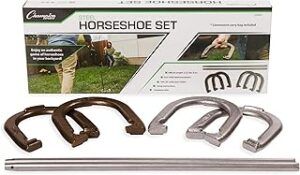
Horseshoe Game Set
7. Backyard Practice Is Where the Routine Is Built
You don’t learn this on league night.
You learn it alone.
Backyard practice is where players:
- Practice stepping back
- Practice the breath
- Practice the cue
- Practice restarting clean
By the time pressure shows up, the routine is automatic.
8. The Routine Becomes a Mental Anchor
Over time, the routine becomes comforting.
When things feel off, the routine:
- Slows the game down
- Restores familiarity
- Rebuilds confidence
It’s not superstition — it’s consistency.
9. How Long Should the Reset Take
Shorter than you think.
Most resets take:
- 5–8 seconds total
Anything longer breaks the flow.
Anything shorter invites rushing.
The goal is balance.
10. Why Watching Great Players Is Misleading
From the outside, great players look like they’re “doing nothing.”
No emotion.
No reaction.
No visible adjustment.
What you’re really seeing is a perfect reset happening quietly between throws.
Equipment That Supports Mental Consistency
When equipment feels unpredictable, the brain compensates — and that adds stress.
A consistent feel matters for mental reset as much as mechanics.
Horseshoe Product Recommendation
The Franklin Sports Competition Horseshoes are a solid option for players working on consistency and rhythm.
They’re often chosen because:
- Weight feels predictable
- Balance supports smooth releases
- Shoes feel consistent from hand to hand
- Good for backyard and league play
When the equipment feels familiar, the mind stays quieter.
11. Resetting After a Bad Game (Not Just a Bad Throw)
The routine doesn’t stop at the pit.
Consistent players:
- Leave the game at the court
- Don’t replay it all night
- Reset mentally before the next session
That habit keeps slumps short.
12. Signs Your Reset Routine Is Working
You’ll notice:
- Fewer rushed throws
- Less visible frustration
- More consistent tempo
- Smaller misses
- Faster recovery after errors
Those are real gains.
Frequently Asked Questions
Do beginners need a reset routine?
Yes. Building it early prevents bad habits later.
Should I change my routine if it stops working?
Only if it becomes rushed or inconsistent.
Is this the same as pre-shot routines in other sports?
Very similar — but simpler and quieter.
Can this help with nerves during league play?
Absolutely. That’s where it matters most.
How long does it take to feel natural?
Usually, it takes a few weeks of intentional practice.
The Quiet Advantage
Consistent horseshoe players don’t look different because they’re better.
They look different because they don’t carry the past into the next throw.
They reset.
They breathe.
They trust their routine.
And throw by throw, that’s what keeps their game steady while others unravel.
This shop is my clubhouse for fellow players. You’ll find mugs, shirts, and pit gear to keep games fair, trash talk fun, and ringers flying — whether you’re building your first court or running a league.