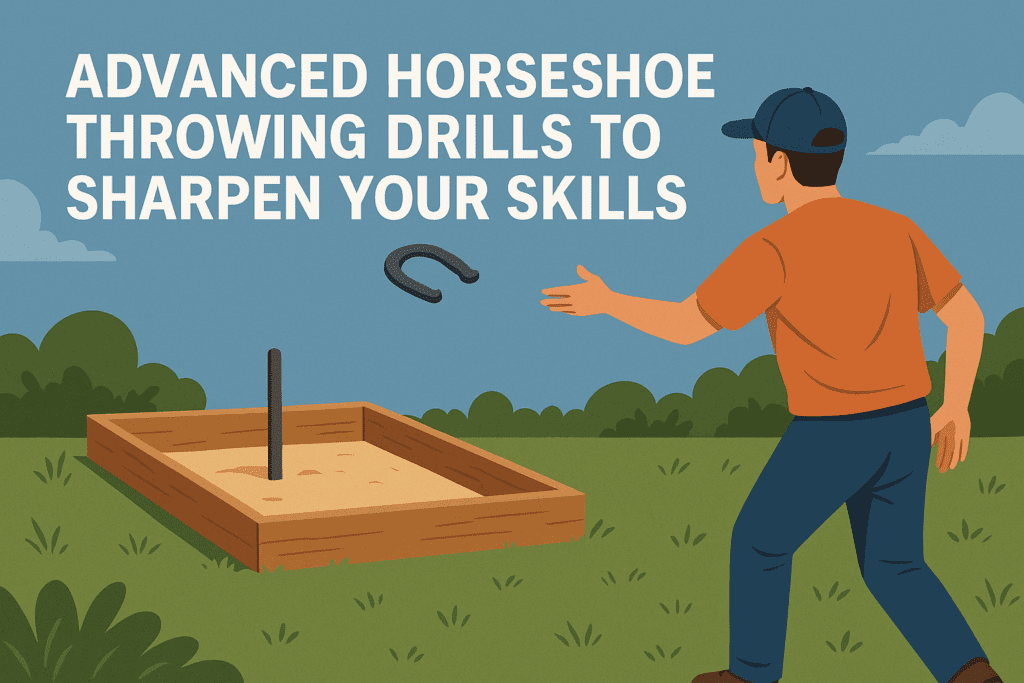
Improve Your Aim with Visualization: Mental Picturing for More Ringers
If you’ve played enough horseshoes, you know there’s a difference between simply tossing a shoe and truly connecting with the throw. Every pitcher—backyard weekend player or tournament regular—has that one perfect moment burned into memory: a smooth backswing, a relaxed release, a clean rotation, and a ringer that felt effortless the instant the shoe left the hand. What most players don’t realize is that these moments are rarely luck. They usually happen because the mind was dialed in before the throw ever began.
That’s where visualization comes in.
Visualization—mental picturing of the shot before taking it—is one of the most underrated tools in a horseshoe player’s arsenal. It sharpens accuracy, steadies nerves, builds consistency, and reinforces a smooth, confident throwing motion. Whether you’ve been pitching for decades or you’re still working on getting your arc right, visualization can elevate your game faster than most physical drills.
Let’s dig into how it works, why it matters, and how to start using it for more ringers every time you step into the pit.
Why Visualization Works in Horseshoes
Horseshoes demands a unique combination of mechanics and calm focus. The stance, grip, arm swing, release point, and rotation all have to line up. But once you get the basics down, the biggest improvements don’t come from muscling the shoe or throwing harder. They come from clarity and confidence—two things visualization directly supports.
The brain treats vivid mental imagery almost the same as physical repetition. When you picture a perfect throw—arc, rotation, landing, everything—you’re reinforcing the same neural pathways used during the real motion. You’re training without throwing a single shoe.
Visualization helps:
- Lock in your aim
- Reduce overthinking
- Smooth out your timing
- Build consistency
- Settle nerves in pressure situations
- Prepare your body to follow the mental blueprint
When a horseshoe pitcher feels “in the zone,” it’s often because their mind is giving the body clear instructions. Visualization trains that clarity.

Building a Strong Visualization Routine
A lot of players think visualization means casually “thinking about the stake.” That’s not enough. Powerful visualization is vivid, detailed, and controlled. The more clearly you picture each part of the throw, the more effectively your body follows it.
Here’s how to build a routine that actually improves your accuracy.
See the Target in Detail
Before every pitch, take half a second to picture the stake clearly. Not a fuzzy memory—an accurate mental snapshot. Notice:
- The angle
- The height
- The shine or texture
- Clay, sand, or dirt around it
- How the pit is shaped at that moment
The more specific the visual, the better your aim will be anchored.
Visualize the Arc and Rotation
Don’t just picture the result. See the entire path.
Imagine the shoe lifting off your hand.
Imagine the gentle rise of the arc.
Imagine the rotation—half-turn, one-and-a-quarter, whatever you throw.
Imagine the drop angle.
Imagine the landing spot.
Imagine the shoe curling toward the stake.
When your mind feeds your body a clear arc, your arm naturally falls into that rhythm.
Slow It Down
Speed kills accuracy.
Visualization works best when the mental “video” is slowed down.
Picture a calm, smooth motion:
- Slow backswing
- Slow, deliberate release
- Slow rotation
- Smooth descent
If your mind is calm, your throw becomes calmer too. Players who rush mentally almost always rush physically.
Feel the Throw While You Visualize
Visualization should include sensation—not just images.
Feel the weight of the shoe in your fingers.
Feel the tension leaving your shoulders.
Feel the point of release.
Feel the follow-through brushing past your hip.
When you visualize with both sight and sensation, your muscle memory locks in deeper.
Use Your Breathing
Good pitchers breathe well.
Tight breathing creates tight throws.
A simple breathing cycle helps:
- Inhale through the nose
- Hold briefly
- Visualize the arc
- Exhale as you release the mental image
This keeps the body loose and the mind steady.
How to Practice Visualization Anywhere
Visualization is powerful because it works even when you’re nowhere near a court. Whether you’re traveling, sitting in your den, or just don’t have time for a full practice, you can still improve your game with a few minutes of mental training.
Chair Visualization Drill
Sit with both feet on the floor.
Relax your shoulders.
Hold an imaginary horseshoe.
Mentally walk yourself through:
- The stance
- The grip
- The arm motion
- The arc
- The landing
- The ringer
No actual movement is needed. Just clear imagery.
Five minutes a day builds remarkable consistency.
Slow-Motion Shadow Throw
Stand and move through your throwing motion without a shoe.
Go half speed.
Imagine the arc and feel the rhythm.
This is great for players who snap their wrist too hard or rush their backswing.
Stake Memory Technique
Take a picture of your backyard stake and use it for visualization when you’re not outside.
The more familiar your mental target, the more powerful the practice.

Where Visualization Helps the Most
Visualization is helpful in almost any situation, but it especially shines in three moments.
During Slumps
A slump can happen to any player.
Your arc feels off, your timing disappears, or your shoes start turning more than you want. Visualization is a quick way to reset your mechanics.
Under Pressure
Backyard bragging rights, family rivalries, or tournament matches can tighten you up. Visualization brings your focus back to one thing: the next pitch.
When You Can’t Practice Physically
Life gets busy.
If you can’t get out to the pit, visualization keeps your rhythm sharp until you can.
Common Visualization Mistakes
Even well-meaning players sometimes sabotage their own mental practice without realizing it. Here’s what to avoid:
- Vague images
If the image is weak, the results will be too. - Rushing through the visualization
Slow imagery builds calm mechanics. - Visualizing only after a bad throw
Use visualization proactively, not just to fix mistakes. - Focusing on what you don’t want
The brain doesn’t understand “don’t flip” or “don’t miss.”
Focus on ringers, smooth rotation, and clean landings. - Ignoring the feel
Visualization should include sensation, timing, rhythm, and breath.
How to Add Visualization to Real Throwing Sessions
Visualization becomes even more effective when it’s paired with actual pitching. Here’s how to blend the two naturally.
Before Each Pitch
Take a breath.
Picture the arc.
See the shoe land.
Then throw.
Fast, clean, simple.
Between Innings
If your mind starts wandering, use a quick mental reset.
Picture a calm, smooth ringer.
When Making a Comeback
If you’re behind and the pressure is rising, visualization helps steady your hands and slow your timing.
Visualization isn’t just a bonus tool—it’s part of the throwing routine of every consistent player.
Beginner-Friendly Equipment That Supports Visualization
Visualization is easiest when your equipment responds predictably. A shoe that’s balanced, comfortable, and easy to control helps reinforce the mental picture with consistent physical feedback.
A strong option for players working on accuracy and repetition is:
Franklin Sports Classic Horseshoe Set
A smooth, well-balanced choice that offers a reliable rotation and a comfortable grip. It’s ideal for players focusing on rhythm, arc control, and consistent landings without needing pro-level technique.
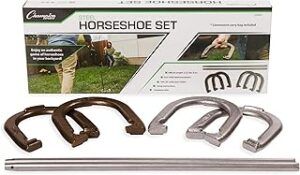
Horseshoe Game Set
FAQ:
How does visualization help improve accuracy in horseshoes?
Visualization strengthens the mind-to-muscle connection by reinforcing the throwing motion before it actually happens. When you picture a clear arc, rotation, and landing, the brain sends more precise signals to the body, leading to smoother mechanics and better aim.
Can beginners benefit from visualization, or is it more for advanced players?
Beginners benefit the most. Visualization helps newer players build consistency and reduce overthinking. Advanced players use visualization for fine-tuning, but beginners often see the quickest jumps in accuracy and confidence.
How long should visualization take before each pitch?
Half a second to two seconds is enough. Visualization shouldn’t slow your rhythm down. A quick image of the arc and landing point can dramatically improve accuracy without disrupting flow.
Should I visualize every throw, or only when I’m struggling?
Visualization works best when you use it consistently. If you only visualize after a bad throw, you’re playing catch-up. Making it part of your routine helps stabilize rhythm and reduce variability.
Does visualization replace physical practice?
No—visualization enhances practice. It’s especially useful when you can’t pitch physically, but it works best when paired with real throws. Think of it as doubling your reps without extra strain on your arm.
What should I visualize if my rotation is inconsistent?
Picture the shoe leaving your hand smoothly with the exact amount of spin you want. See the rotation clearly in slow motion. Adding the sensation—how the grip feels at release—helps build reliable spin mechanics.
Can visualization help with nerves or pressure during games?
Absolutely. Visualization calms the mind and slows down your internal tempo. When you picture the throw clearly, tension drops and the mechanics become more natural. It’s one of the best tools for backyard rivalries, league play, and high-pressure innings.
Is there a best time of day to practice visualization?
Any time works, but many players like using it in the morning or right before practice. Short sessions—one to three minutes—help prepare your mind for smoother mechanics later in the day.

Bringing It All Together
Visualization isn’t complicated. It’s not mystical. And it doesn’t require hours of meditation. It’s simply the practice of giving your mind the instructions your body needs to execute a clean, confident throw.
When you build a clear picture of the arc…
When you feel the motion before you make it…
When you breathe with intention…
Your accuracy climbs. Your nerves disappear. Your rhythm sharpens. And the ringer count begins to rise.
Great pitching isn’t just physical.
It’s mental clarity paired with muscle memory.
And visualization is how you fuse the two.
Before your next pitch, take a moment to visualize the arc, the rotation, and the landing. Give your mind a clear target—and let your body bring it home.