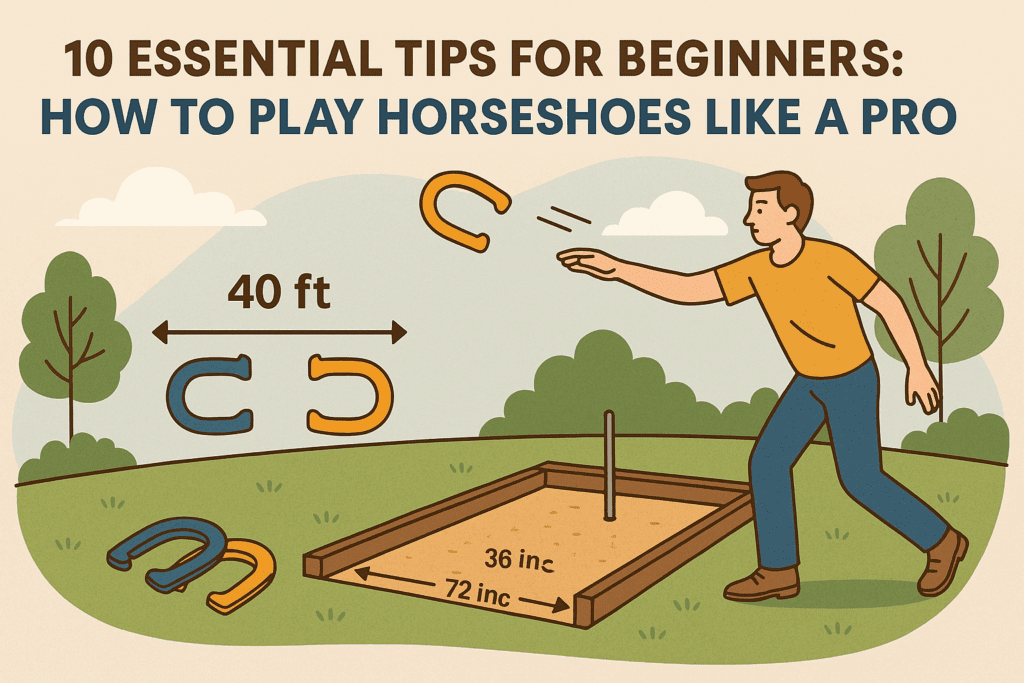
We Tried 5 Weird Horseshoe Practice Drills
If you’ve been pitching horseshoes long enough, you’ve probably hit that frustrating point where your game just stalls. Your ringers plateau, your accuracy feels inconsistent, and no matter how many shoes you throw, your performance doesn’t seem to improve.
That’s when most players either throw more shoes or start experimenting.
And sometimes those experiments get… a little weird.
Over the years, players have come up with all kinds of unusual practice drills. Some sound ridiculous. Others look like something you’d see in a sports science lab. But every once in a while, one of those odd drills reveals something useful about mechanics, focus, or muscle memory.
So we decided to test a few.
We tried five unusual horseshoe practice drills that players occasionally mention in leagues, backyard games, and online forums. Some were surprisingly helpful. Others were just plain strange.
Here’s what happened.
1. The One-Shoe Drill
What it is
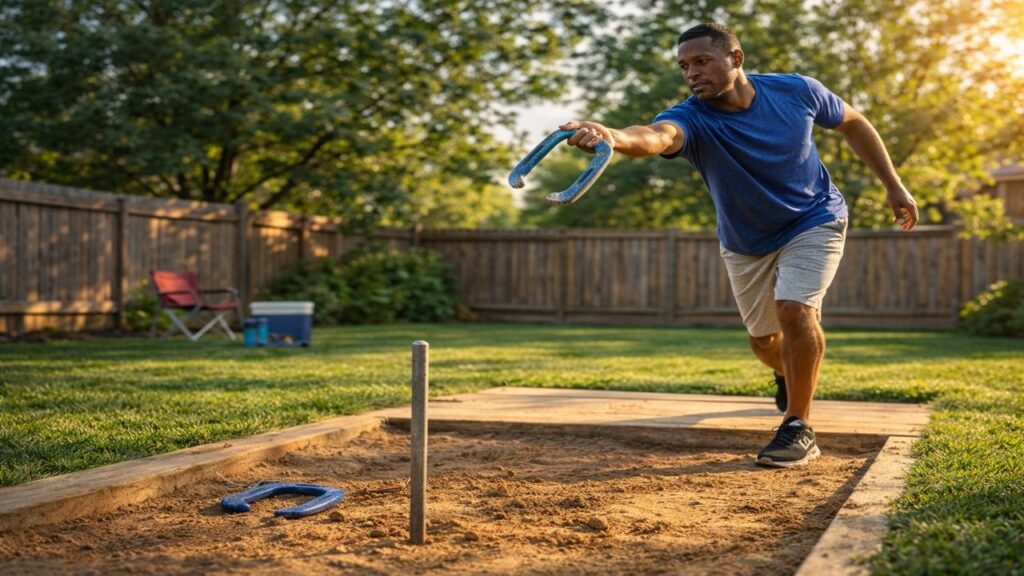
Instead of throwing the normal two shoes per turn, you throw only one shoe, then walk down and retrieve it before throwing again.
It sounds inefficient, but there’s a reason some players swear by it.
Why do players try it
When you throw two shoes back-to-back, the second throw often becomes a reaction to the first.
If the first one misses, players rush the second throw, trying to “fix” it.
The one-shoe drill eliminates that.
Every throw becomes a fresh, focused attempt.
What happened
This drill slowed everything down.
Without a second shoe waiting in your hand, every pitch forces you to:
- Reset your stance
- Rebuild your grip
- Re-focus on the stake
After about 20 throws, something interesting happens.
Your mechanics become more deliberate.
The result
Surprisingly effective.
It’s not a drill you’d use for long practice sessions, but it’s excellent for improving mental reset and focus between throws.
2. The Eyes-Closed Release Drill
What it is
Stand in your normal pitching position, aim at the stake, start your throwing motion…
…but close your eyes just before the release.
You’re not trying to hit ringers. The goal is to feel your mechanics.
Why do players try it
Many athletes train by removing one sense so the body learns to rely on others.
Pitching with your eyes closed forces you to focus on:
- Your swing path
- Your release timing
- Your grip pressure
- Your follow-through
What happened
At first, the results were terrible.
Shoes landed all over the pit.
But after about 15–20 throws, something became noticeable.
The throws started landing more consistently in the same area, even though the eyes were closed.
The result
This drill isn’t about accuracy.
It’s about learning what a clean release feels like.
Once you open your eyes again, that muscle memory starts to carry over.
3. The Slow Motion Throw
What it is
Pitch the horseshoe in extreme slow motion.
Instead of your normal swing speed, move your arm slowly from start to finish, focusing on every part of the motion.
Why do players try it
Fast movements hide mistakes.
Slow motion exposes them.
When you slow your swing down, you start noticing:
- Shoulder tension
- Wrist angle
- Grip pressure
- Release timing
What happened
This drill revealed things immediately.
Small mechanical flaws that normally go unnoticed suddenly become obvious.
For example:
- A slightly early wrist turn
- Too much grip pressure
- A crooked swing path
The result
One of the most useful drills we tested.
Even five minutes of slow-motion throwing can help clean up mechanics quickly.
4. The “No Stake” Drill
What it is
Remove the stake from the pit entirely.
Now you’re throwing at nothing but the dirt or clay surface.
Why do players try it
The stake is both a target and a distraction.
Players sometimes get so focused on the stake that they over-aim, which creates tension in the throw.
Without the stake, you focus on:
- Smooth release
- Consistent arc
- Natural swing
What happened
This drill felt strange at first.
Without the stake, the brain feels like it has no clear target.
But after a few throws, the focus shifts from aiming to throwing smoothly.
The result
The throws became noticeably more relaxed.
When the stake was put back in place, the pitching motion felt more natural.
5. The Distance Variation Drill
What it is
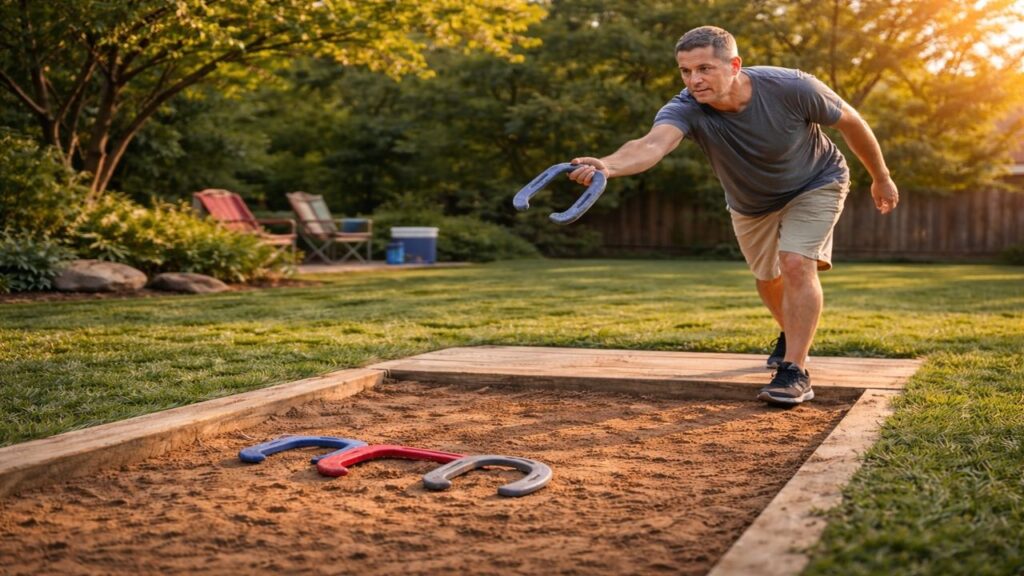
Instead of throwing from the standard pitching distance, move forward or backward a few feet.
Examples:
- 30 feet instead of 40
- 45 feet instead of 40
Then return to the regulation distance.
Why do players try it
This drill changes your perception of distance and timing.
Pitching from farther away forces a higher arc and smoother release.
Pitching closer emphasizes accuracy.
What happened
After pitching from 45 feet for a few rounds, returning to the normal distance made the stake feel closer and easier to hit.
It’s similar to baseball players swinging with a weighted bat before stepping to the plate.
The result
This drill helped recalibrate distance perception and improved confidence.
What We Learned From These Drills
Not every strange practice idea works.
But sometimes stepping outside your normal routine reveals something valuable.
Across all five drills, a few common lessons stood out:
1. Slowing down improves mechanics.
Fast throws hide flaws.
2. Focus matters more than repetition.
Throwing 50 thoughtful shoes beats 200 careless ones.
3. Variety helps break plateaus.
Different drills challenge your brain and muscles in new ways.
Even experienced players can benefit from mixing unusual drills into practice sessions.
A Reliable Horseshoe Set Makes Practice Better
If you’re working on new drills or training routines, using a consistent set of horseshoes makes a big difference.
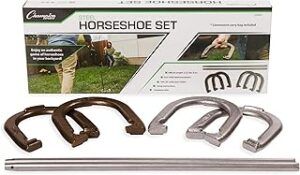
Many serious players prefer the St. Pierre American Professional Series Horseshoe Set because the weight and balance stay consistent over time. That consistency makes it easier to notice improvements in your throw rather than fighting inconsistent equipment.
Good practice equipment doesn’t automatically make you better — but it does remove variables that can interfere with training.
Horseshoe Game Sets
FAQ
1. How often should you practice horseshoe drills?
Two or three focused practice sessions per week are usually enough to see improvement. Quality practice is more important than throwing hundreds of random shoes.
2. Are unusual practice drills actually helpful?
Some are surprisingly effective. Drills that improve mechanics, focus, or muscle memory can reveal problems you might not notice during normal play.
3. How many shoes should you throw in a practice session?
Many players find that 50–100 controlled throws are ideal. After that, fatigue can start affecting mechanics.
4. Should beginners use practice drills?
Absolutely. Drills can help beginners develop good habits early, before bad mechanics become ingrained.
5. What’s the most important part of horseshoe practice?
Consistency.
Practicing the same stance, grip, swing path, and release timing over and over is what builds muscle memory.
Try Something Different at Your Next Practice
Most horseshoe players fall into the same routine: step up, throw two shoes, walk down, repeat. There’s nothing wrong with that, but when improvement starts to stall, a little experimentation can wake things up again.
The drills we tested may look unusual at first, yet each one highlights a different part of the game — focus, release timing, swing path, or distance control.
You don’t have to overhaul your entire practice routine. Just mix one or two of these drills into a regular session and see how your throw responds. Sometimes a small change in how you practice is exactly what it takes to get your rhythm back and start seeing more shoes settle around the stake.
Horseshoes may look like a simple backyard game, but anyone who plays regularly knows there’s a lot more going on beneath the surface.
The best players aren’t just throwing shoes — they’re constantly experimenting, adjusting, and refining their mechanics.
And sometimes the drills that sound the strangest end up teaching the most.
So the next time your game feels stuck, try something different.
You might just discover a new practice routine that unlocks your next level of consistency.