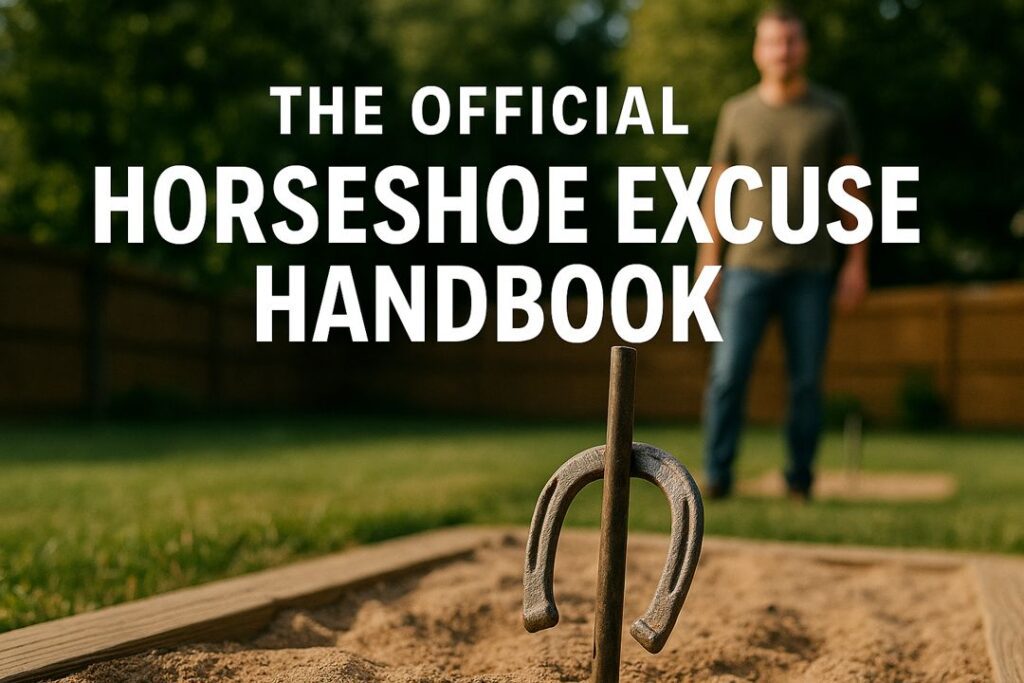
10 Essential Tips for Beginners: How to Play Horseshoes Like a Pro
Horseshoes, a pastime as old as the hills, has roots that dig deep into history. It’s simple, competitive, and just plain fun—whether you’re at a family BBQ, camping, or jumping into a league. But like any sport worth playing, there’s more to horseshoes than meets the eye.
If you’re a beginner and want to avoid bouncing shoes, wild throws, and rule confusion, this guide is for you. These 10 essential tips will help you go from total rookie to confident player, ready to land ringers and maybe even earn bragging rights at your next game.
Let’s get started.

🎯 Tip #1: Understand the Basics of the Game
Before you pick up a horseshoe, it’s important to understand how the game is played.
🧾 The Goal:
Pitch (toss) horseshoes toward a metal stake, trying to land the shoe as close as possible—or better yet, get it to circle the stake (a “ringer”).
🏆 Scoring:
- Ringer (encircles stake): 3 points
- Closest shoe (within 6 inches): 1 point
- Two closest from the same player: 2 points
- Leaners (leaning on stake): typically 1 point if closest
Games are usually played to 21 or 40 points, depending on the format.
Understanding how the points work and how cancellation scoring works (where opposing ringers cancel out) will help you strategize smarter.
🛠 Tip #2: Get the Right Equipment
Not all horseshoes are created equal. Picking the right gear gives you a major edge.
🧲 What to Look For:
- Weight: Around 2.5 lbs is standard; go lighter if you’re just starting out.
- Material: Forged steel is the professional standard, but composite or rubber is great for family games.
- Shape: Tournament horseshoes have well-defined hooks and balanced bodies.
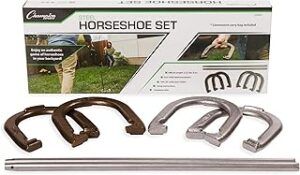
Horseshoe Game Set
🛒 Starter Tip:
Grab a recreational horseshoe set from brands like St. Pierre or Franklin Sports. They usually include stakes and two pairs of shoes—perfect for beginners.
A balanced, comfortable horseshoe reduces strain and improves your grip. Try a few before committing!
📏 Tip #3: Set Up Your Court Correctly
Whether you’re playing at a campground or building a home court, proper setup makes all the difference.
🧭 Official Horseshoe Layout:
- Distance between stakes: 40 feet
- Stake height: 15 inches above ground
- Stake tilt: Leaned back at 12–15 degrees
- Pit fill: Sand, clay, or soft dirt to reduce bounce
🪵 Backyard Adjustments:
- Shorten distance to 30 feet for casual games or kids
- Use boundary markers, landscaping timbers, or even chalk lines to define your court
- Make sure the surface is level and safe
Remember: the game isn’t as fun if the pitch is uneven or the stake is wobbling.
✋ Tip #4: Learn the Language of Horseshoes
Just like any sport, horseshoes has its own lingo. Knowing the terms helps you understand and enjoy the game more.
Common Horseshoe Terms:
- Ringer: A horseshoe that completely encircles the stake
- Leaner: A shoe leaning against the stake, but not encircling
- Pitch: A single throw of a horseshoe
- Inning: One complete round of pitching by both players or teams
- Foul Line: The line players must stay behind while throwing
Learn the terms, and you’ll start sounding like a pro before you even land your first ringer.
🧍 Tip #5: Perfect Your Stance and Grip
Getting the fundamentals of how you stand and hold the horseshoe right will set the foundation for consistent, accurate throws.
✅ Stance:
- Stand square with your shoulders facing the stake
- Place feet shoulder-width apart
- If you’re right-handed, your left foot should be slightly ahead (and vice versa)
✋ Grip:
- Hold the shoe in the middle, with fingers under and thumb over
- Make sure it feels balanced—not too tight, not too loose
Think of it like holding a paintbrush or a softball—comfortable but controlled.
🔄 Tip #6: Choose a Throwing Style That Feels Natural
There are a few common ways to throw a horseshoe, and choosing the right one for your style is key.

🎯 Throwing Styles:
- Flip: The horseshoe rotates end over end
- Turn: The horseshoe spins like a wheel (1¼ turn is common in competition)
Start with the flip if you’re a beginner—it’s easier to learn and control. Once you’re comfortable, you can experiment with spins and advanced techniques.
Whatever style you choose, consistency is your best friend.
🎯 Tip #7: Focus on Aiming and Targeting Techniques
Aiming isn’t just about looking at the stake and hoping for the best. Sharpening your targeting technique makes your throws more consistent.
🧠 Aim Like a Pro:
- Visualize a path to the stake before each throw
- Use a reference point behind or near the stake (tree, bush, fence post)
- Keep your eyes focused on the stake, not your hand
Some players imagine a “lane” from their hand to the stake—it helps train your mind and body to follow the same path each time.
🧘 Tip #8: Practice with Purpose
Practicing randomly won’t help much if you’re not learning from it. Set goals, track your progress, and challenge yourself.
🧪 Smart Practice Ideas:
- Warm up with 10 short throws before each session
- Keep a log of your ringers, leaners, and overall score
- Alternate practice with dominant and non-dominant hands
- Try aiming for specific sides of the stake (left or right)
Practicing 10–15 minutes a few times a week beats one long session per month.
🧠 Tip #9: Watch and Learn from Other Players
If you’re lucky enough to watch seasoned players in person or online, take notes! Observing others is one of the fastest ways to learn.
🔍 What to Look For:
- How they grip and release the shoe
- Their pre-throw routine or rituals
- How they adjust for wind, distance, or bad throws
- How they maintain composure during tight matches
Ask questions. Most horseshoe players love to share tips with beginners!
🤝 Tip #10: Join a Horseshoe Club or League
Once you’ve got a few games under your belt, joining a local group can speed up your improvement and connect you with fellow enthusiasts.
Benefits of Joining:
- Get feedback from more experienced players
- Play in organized tournaments and events
- Make friends who’ll challenge and support your progress
Not sure where to start? Check with your local community center, VFW, or use online platforms like Facebook Groups or Meetup to find horseshoe clubs near you.
Being part of a horseshoe community turns a casual game into a hobby—and maybe even a passion.
🏁 Final Thoughts: Keep It Fun, Safe, and Consistent
Horseshoes is more than a game—it’s a tradition. With roots going back to ancient Greece and a stronghold in American backyards, it’s a simple, satisfying way to connect, compete, and have a blast.
Getting started doesn’t require fancy gear or professional lessons. It just takes a solid setup, the right mindset, and a willingness to learn. And as you play more, the little improvements—your stance, your spin, your aim—start adding up.
Here’s a quick recap of your path to horseshoe greatness:
- Understand the rules and court layout
- Choose the right horseshoes
- Practice a consistent stance and grip
- Develop your throwing style
- Learn from practice and others
- Stay safe and have fun
So whether you’re playing casually with family or training to dominate the neighborhood league, remember this: every great ringer starts with a good toss.
🔜 What’s Next?
In our next article, we’ll cover Common Horseshoe Mistakes Beginners Make—and How to Fix Them, giving you the inside scoop on what to avoid and how to keep leveling up your game.
💬 Got a tip, story, or question about your first horseshoe game? Drop it in the comments—we’d love to hear from you and help more players pitch like pros.
Hi there, and thanks for stopping by! My name is Larry, and I’m the voice behind PlayingHorseshoes.com I love the game and have been playing since I was a kid. I started this blog because I am passionate about the sport, and with all the technology, I hope the sport don’t die. I plan to do my part to keep it going for me and my brother’s sake. Thanks for stopping by, feel free to subscribe and comment. Thank You!