Horseshoe Training Drills: Daily Practice Routines to Sharpen Your Throw
Horseshoes is one of those timeless games that looks simple until you start chasing ringers consistently. Anyone can toss a shoe, but getting deadly accurate throw after throw? That takes practice — the right kind of practice.
Too many players just walk out, throw a few shoes, and call it training. That’s not practice; that’s passing time. If you want to sharpen your throw, build muscle memory, and turn those near misses into solid ringers, you need structured daily drills.
This article is your roadmap. Let’s break down warm-ups, accuracy routines, scoring challenges, and fun variations you can use to improve faster than just “pitching for fun.”
Why Structured Training Matters in Horseshoes
Think of it this way: every missed shoe is feedback. If you’re not paying attention to why you missed, you’ll keep repeating the same mistake. Structured drills help you:
- Lock in consistent stance and grip
- Train muscle memory so every throw feels natural
- Work on accuracy in smaller increments
- Build confidence under pressure
Just like baseball players take batting practice or golfers spend hours at the range, horseshoe pitchers need repetition with intention.

Step 1: Warm Up Before Throwing
Pitching is deceptively physical. You’re twisting, lunging, and putting stress on shoulders, hips, and knees. A short warm-up keeps you loose and reduces injury.
5-Minute Warm-Up Routine
- Arm circles (forward and backward) – 30 seconds
- Side lunges – 10 each leg
- Light torso twists – 20 reps
- Wrist rotations – 30 seconds each hand
- A couple of easy underhand tosses (no target, just loosen up)
👉 Recommended gear: resistance bands are perfect for warming up your shoulders and arms before a session.
Step 2: Drill #1 – The 10-10 Accuracy Challenge
This drill focuses on hitting the stake consistently.
How it works:
- Throw 10 shoes aiming just to “touch” the stake (don’t worry about ringers).
- Score how many end within 6 inches.
- Do 10 more throws, aiming for actual ringers.
Track your score daily. Improvement comes when those first 10 “touch shots” turn into automatic hits.
Step 3: Drill #2 – The Progressive Distance Drill
This trains consistency across distances.
How it works:
- Start at 20 feet. Throw 10 shoes.
- Move back to 30 feet. Throw 10 shoes.
- End at regulation 40 feet.
The goal is consistent release mechanics no matter the distance. Beginners often throw too hard when stepping back — this drill forces smoothness.
👉 Pro tip: Use a measuring tape with distance markers so you’re not eyeballing it.
Step 4: Drill #3 – One-Shoe Repetition
Most players pitch in pairs, but drilling with just one shoe trains your endurance and focus.
How it works:
- Use a single horseshoe. Walk to the stake, pitch, pick it up, and repeat.
- Do this 20–30 times in a row.
This repetition builds muscle memory fast. It’s the same logic basketball players use when shooting free throws.
Step 5: Drill #4 – Focus Drill: Throw to a Target Zone
Instead of just aiming at the stake, create smaller targets:
- Place a towel, cone, or chalk circle 6–8 inches around the stake.
- Pitch shoes into that zone only.
This shrinks your “acceptable margin of error” and makes the stake feel bigger when you go back to normal play.
👉 Recommended: A set of training markers (cones or rubber discs) makes this drill easy.
Step 6: Drill #5 – Game Simulation (Pressure Practice)
Even if you’re a backyard player, pressure situations pop up — last shoe, tie score, people watching. This drill simulates game nerves.
How it works:
- Give yourself 20 shoes.
- Score as if you’re in a real game.
- If you miss two in a row, add a “penalty lap” (walk around the court or do push-ups).
The trick is to feel the pressure of “needing points.”
Step 7: Tracking Progress
You’ll never know if you’re improving without keeping a record. A practice journal is a game changer.
Record:
- Date
- Drills completed
- Percentage of shoes within 6 inches
- Ringers made
Over weeks, you’ll spot patterns: maybe your left-side misses shrink, or your ringers climb by 5–10%. That’s real progress.
Extra: Fun Variations to Keep Practice Fresh
Even the best drills can feel repetitive. Spice things up with:
- Trick shot practice – try behind-the-back or over-the-shoulder for fun (and laughs).
- Partner challenges – compete on who gets closest in 5 throws.
- Timed drills – how many shoes can you land within 6 inches in 2 minutes?
These break the monotony and keep practice fun.
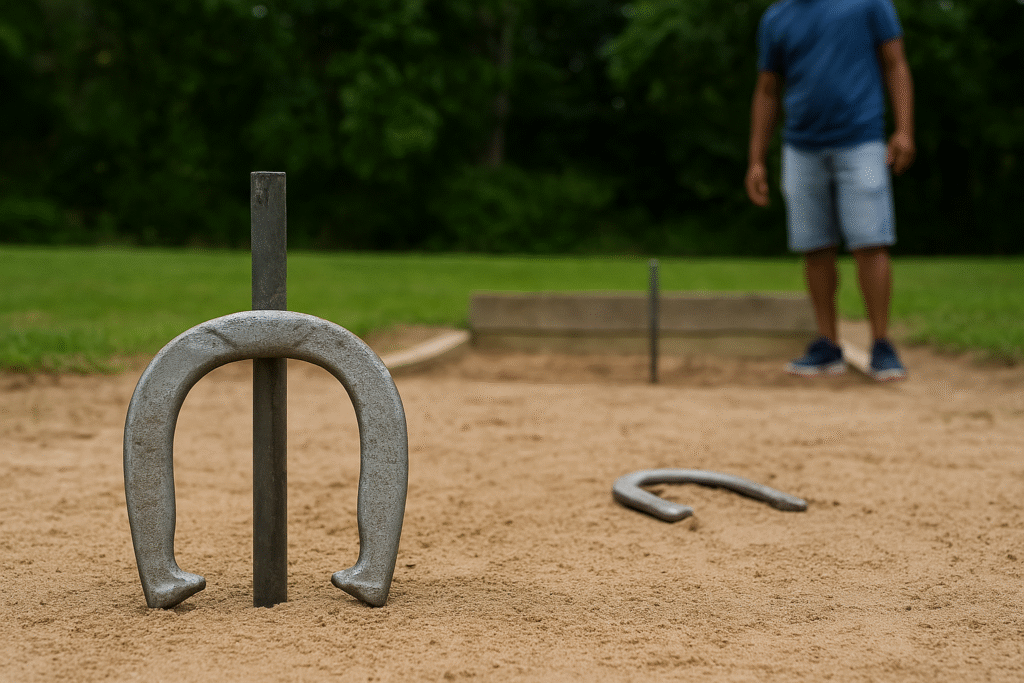
Recommended Gear for Training Sessions
Here are a few items that make practice more effective:
- Franklin Sports Starter Horseshoe Set – Great for repetition drills.
- Champion Sports Training Cones – Mark target zones and distances.
- Fit Simplify Resistance Bands – Perfect warm-up tool.
- Rocketbook Smart Notebook – Track practice progress and erase/reuse.
👉 Adding the right tools keeps training structured and fun.
Call to Action
If you want to sharpen your throw, boost your ringer count, and finally beat your backyard rivals, start using these drills today. Don’t just toss for fun — practice with purpose. Set a goal, track it, and watch your accuracy skyrocket.
💡 Your next step: grab a quality training set, set up your practice routine, and commit to 15–20 minutes daily. That’s how average pitchers turn into consistent players.
FAQ
Q: How long should a training session last?
A: 20–30 minutes of focused drills is plenty. Any longer and fatigue affects form.
Q: Should I practice daily?
A: Yes, but keep sessions short. Daily reps build consistency faster than once-a-week marathons.
Q: Do I need regulation horseshoes to train?
A: If you’re aiming to compete, yes. But for casual backyard sharpening, any decent set works.
Q: What’s the #1 drill for beginners?
A: The 10-10 Accuracy Challenge. It builds confidence quickly without overwhelming new players.
Final Thoughts
Horseshoe pitching isn’t just about luck — it’s about repetition, rhythm, and resilience. These drills transform random throws into intentional practice. Over time, your shoes will start landing closer, your confidence will grow, and those ringers won’t feel rare anymore — they’ll feel routine.
The key is consistency. Fifteen minutes a day is enough to separate casual throwers from players who always seem to find the stake. So grab your shoes, set up a routine, and let’s sharpen that throw. 🎯
Hi there, and thanks for stopping by! My name is Larry, and I’m the voice behind PlayingHorseshoes.com. I love the game and have been playing since I was a kid. I started this blog because I am passionate about the sport, and with all the technology, I hope the sport doesn’t die. I plan to do my part to keep it going for my brother and my sake. Thank you for stopping by. Feel free to subscribe and comment. Thank You!