Mastering the Ringer: How to Develop Accuracy in Horseshoe Pitching
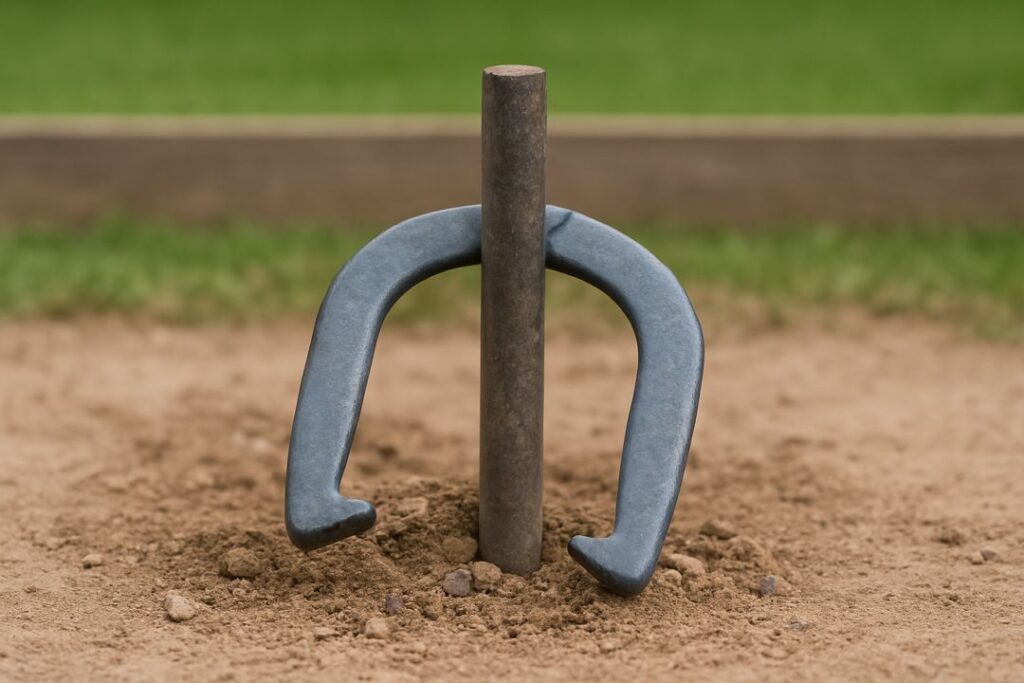
Every horseshoe player knows that sound — the clean, sharp clang of a perfect ringer. It’s the moment every thrower chases, whether you’re pitching with your buddies in the backyard or competing in a weekend league. But consistency is what separates the casual players from the pros.
If you’ve ever wondered why your throws sometimes feel “on” and other times fly off course, this guide is for you. Let’s break down how to develop pinpoint accuracy, build muscle memory, and train your mind and body to land more ringers, more often.
🎯 What Makes a Ringer? Understanding the Mechanics
Before you can master ringers, you’ve got to understand what actually makes them happen. A ringer is all about alignment, release, and rotation — three ingredients that need to work together in perfect sync.
- Alignment: Your stance and aim must line up perfectly with the stake. Even a one-degree misalignment can send your shoe wide.
- Release: The point at which the shoe leaves your hand controls trajectory and spin.
- Rotation: A clean half-turn or one-and-a-quarter rotation ensures the horseshoe opens around the stake at just the right moment.
In short, it’s not luck — it’s physics and repetition.
Pro Insight: Watch how top pitchers release the shoe. The angle of release often mirrors a firm handshake — smooth, straight, and confident.
🦶 Step One: Build a Consistent Stance
Accuracy starts from the ground up. Your stance is your foundation — your launching pad for every throw.
1. Choose Your Stance
There are two main types:
- Open Stance: Feet shoulder-width apart, front foot angled slightly toward the stake. Great for beginners and controlled throws.
- Closed Stance: Feet nearly parallel to the pitching line. This requires more balance but rewards you with tighter accuracy once mastered.
2. Balance and Weight Transfer
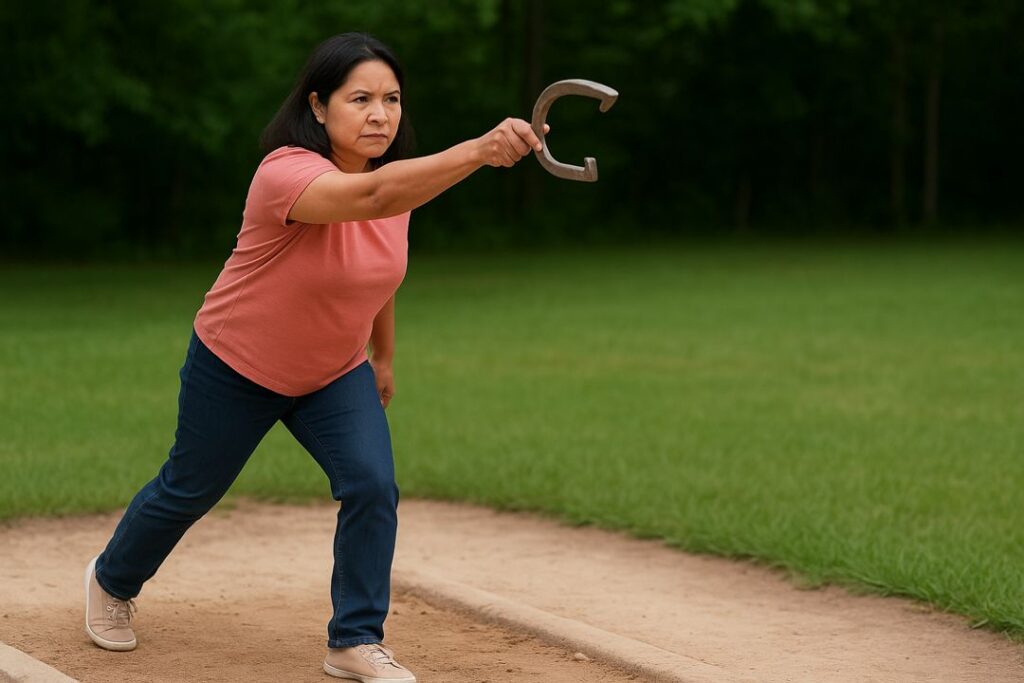
Keep your weight evenly distributed, with a slight forward lean. As you swing, shift your weight from your back foot to your front foot — just like a golfer or baseball pitcher.
Avoid overreaching or lunging forward; that’s how control goes out the window.
3. Practice the Setup
Before each throw, take a breath and position your body the same way. Consistency in stance leads to consistency in throws.
✋ Step Two: Refine Your Grip and Release
Your grip controls your throw. It’s where accuracy either begins or dies.
1. The Grip
Hold the shoe firmly but not tightly — imagine holding a bird: secure enough that it doesn’t fly away, but gentle enough not to crush it.
Keep the horseshoe flat and balanced in your hand, with the open end facing your target stake.
2. The Release
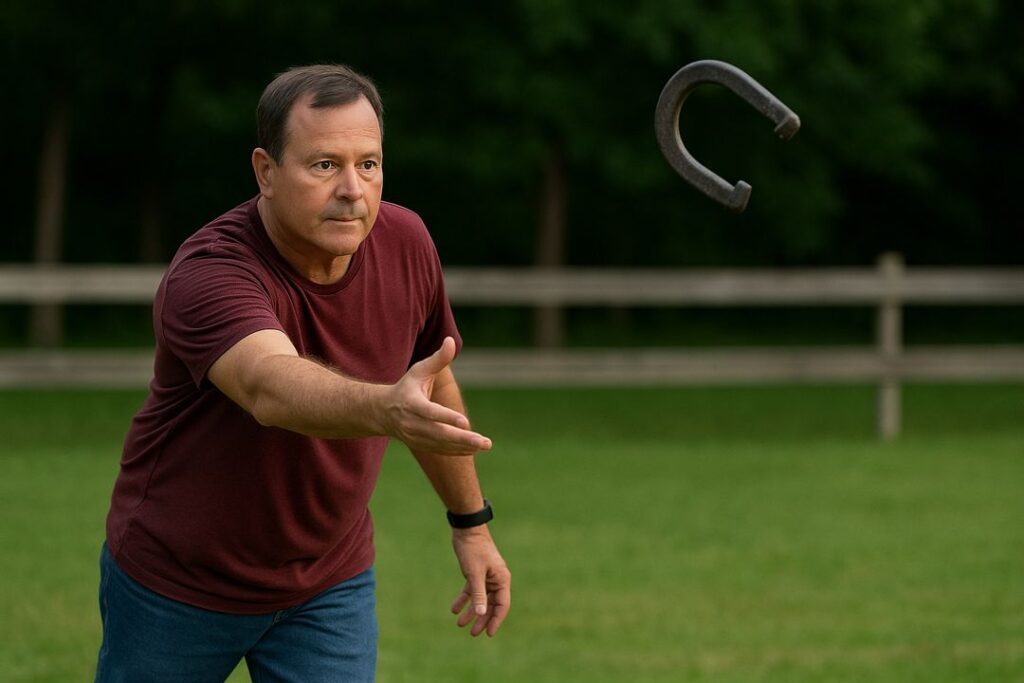
The sweet spot is just before the shoe passes your front leg.
- Too early? The shoe sails high and wide.
- Too late? It hits short or drags to one side.
Practice that moment of release until it feels automatic. The goal is to make every throw look — and feel — identical.
3. Spin Control
The horseshoe should rotate smoothly, typically one and a quarter turns before reaching the stake.
For accuracy, focus on keeping your wrist straight and your follow-through natural — no jerks, no overcorrections.
🔄 Step Three: Perfect Your Rhythm
Rhythm is what brings it all together. You want your stance, swing, and release to form a single, fluid motion.
Try this sequence:
- Step into your throw.
- Swing back evenly.
- Swing forward smoothly.
- Release naturally at your peak comfort point.
Count out your rhythm if it helps: one-back, two-forward, release.
Over time, your body learns to repeat that timing perfectly — even under pressure.
🧠 Step Four: The Mental Game of Accuracy
Physical skill can only take you so far. The top pitchers all say the same thing: horseshoe accuracy is just as much mental discipline as it is mechanical skill.
1. Visualization
Before you throw, picture the flight path. Imagine the horseshoe arcing toward the stake and wrapping around with that satisfying clang. This primes your focus and calms nerves.
2. Eliminate Overthinking
Thinking too much mid-throw destroys your rhythm. Focus on your breathing and let your muscle memory do its job.
3. Reset After Every Miss
Even pros miss. The trick is not to let one bad throw snowball into five.
Take a breath, reset your stance, and throw the next one like it’s the first of the game.
💪 Step Five: Accuracy Drills That Build Precision
Want more ringers? Practice deliberately. These drills will lock in consistency and improve your aim fast.
Drill 1: The Distance Challenge
Set up markers at 10, 20, 30, and 40 feet.
- Throw 10 shoes at each distance.
- Focus on identical mechanics each time.
This builds distance awareness and trains your brain to adapt to various game setups.
Drill 2: Target Practice
Instead of always aiming for the stake, aim for a small area near it (e.g., 2 inches to the right).
This fine-tunes micro-adjustments in your arm and grip, improving accuracy tenfold.
Drill 3: One-Shoe Focus
Pitch only one shoe at a time, then walk to retrieve it.
It’s slower but forces mental resets and focus on every single throw — perfect for building consistency.
Drill 4: 20 Ringer Challenge
Keep score. Aim for 20 ringers total — count how many throws it takes you to reach it.
Track your progress weekly to see measurable improvement.
⚙️ Step Six: Tune Your Equipment
A poorly balanced horseshoe can throw off your accuracy just like a dull golf club or warped bat.
- Choose quality steel or forged horseshoes for consistent weight and spin.
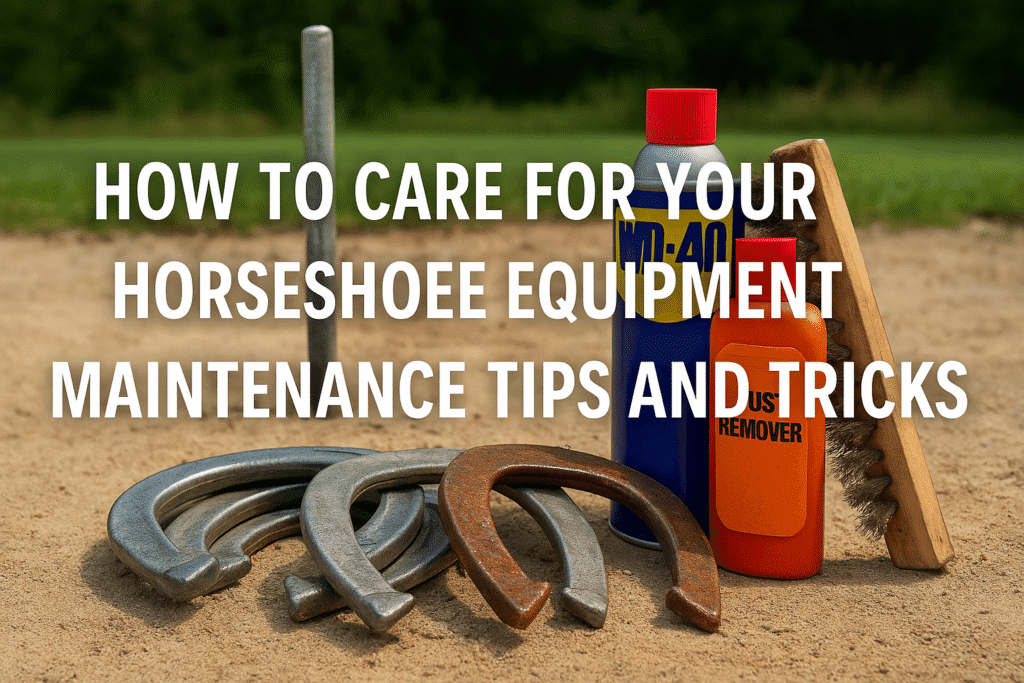
- Keep them clean and rust-free — surface irregularities can affect flight.
- Inspect stakes regularly — wobbly or bent ones ruin accuracy feedback.
Pro Tip: The St. Pierre American Professional Horseshoe Set offers a perfect balance for training accuracy, with consistent rotation and pro-grade weight.
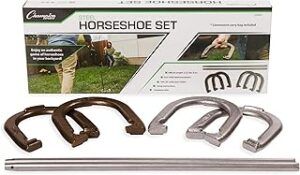
Horseshoe Game Set
🌦️ Step Seven: Adapt to Conditions
Even the best technique falters if you don’t adjust for conditions.
- Wind: Pitch lower and flatter to reduce drift.
- Wet ground: Expect less bounce — throw slightly shorter.
- Sun glare: Adjust your stance for visibility, not just alignment.
Every outdoor condition changes the game, and adaptability is a sign of a seasoned player.
🧩 Troubleshooting Common Accuracy Mistakes
| Mistake | What’s Happening | Quick Fix |
|---|---|---|
| Shoes landing short | Releasing too late | Step slightly forward and release earlier |
| Shoes going wide | Arm swinging across body | Keep swing straight toward the stake |
| Over-rotation | Wrist flicking at release | Relax wrist and follow through naturally |
| Under-rotation | Weak wrist or early release | Strengthen grip and extend follow-through |
| Inconsistent aim | Poor stance or mental rush | Slow down, realign feet, and breathe before throwing |
Keep notes on your own throws — noticing patterns is how you improve fastest.
🧘 Advanced Strategies for Consistency
Once you’re landing close throws regularly, start tightening your groupings.
1. Use Marker Placement
Place a small marker where your best shoe lands — aim to repeat that exact landing point every throw.
2. Record Yourself
Video your throws in slow motion. You’ll spot subtle flaws in your stance or release you’d never notice otherwise.
3. Progressive Pressure Training
Simulate tournament stress.
- Set a target score.
- Give yourself a limited number of throws to reach it.
This teaches focus under pressure — the ultimate skill in accuracy.
🧤 Helpful Gear for Accuracy Training
You don’t need fancy equipment, but the right gear can enhance performance and confidence.
- Grip-enhancing gloves: Improve hold and consistency.
- Weighted training horseshoes: Strengthen arm and wrist stability.
- Portable scoreboards: Track drills and progress.
- Training mats: Help identify stance drift over repeated throws.
Recommended Gear: The Franklin Sports Horseshoe Set — well-balanced, durable, and ideal for players refining their aim and rotation control.
💭 Final Thoughts: Accuracy Comes from Confidence
Accuracy in horseshoe pitching isn’t magic — it’s built on routine, repetition, and reflection.
The players who hit the most ringers aren’t necessarily stronger or faster — they’re the ones who focus, adjust, and practice with intent.
Keep your stance steady, your grip relaxed, and your mind clear. Track your progress, tweak what’s off, and celebrate the little victories — because every close toss is a step closer to that satisfying clang around the stake.