How To Improve Your Horseshoe Pitching Technique
If you’ve ever watched a seasoned horseshoe pitcher land ringer after ringer, you probably thought, “They make it look easy.” The reality? Great pitching isn’t luck — it’s technique, consistency, and practice.
Whether you’re playing casual backyard games or gearing up for league competition, refining your horseshoe pitching technique is the surest way to improve accuracy and confidence. This guide covers everything: stance, grip, swing, release, advanced methods, practice drills, and the mental game that separates casual players from competitors.

Why Technique Beats Power
Horseshoe pitching isn’t about brute strength. A well-timed, smooth release matters far more than throwing hard. Like golf or bowling, the best players repeat the same controlled motion consistently.
If you want to boost your ringer percentage, focus on precision over power. A shoe that lands softly but predictably is worth more than a wild throw that occasionally rings true.
Step 1: Understand the Playing Field
Before you even pick up a horseshoe, know your court. A regulation setup isn’t just tradition — it’s built for fair, repeatable play.
- Court size: 50 feet long by 10 feet wide. Stakes stand 40 feet apart (30 feet for juniors, women, and seniors).
- Stakes: 1 inch in diameter, angled 12 degrees toward each other, and extend 14–15 inches above the pit.
- Pit surface: Clay is the gold standard for competitive play, but sand and synthetic blends are common in backyards. Each surface affects how the shoe sticks or slides.
👉 Tip: Practice on the same surface you’ll compete on whenever possible. Shoes behave differently in sand versus clay, and adapting early builds consistency.
Step 2: Choosing the Right Horseshoe
Your horseshoe is your tool. The wrong one can sabotage your progress.
- Weight: Lighter shoes (around 2.5 lbs) are easier for beginners and seniors. Heavier shoes (closer to 2.9 lbs) give more stability and impact for stronger arms.
- Balance: Well-balanced shoes spin evenly, making your throws more predictable.
- Material: Forged steel lasts longest and feels consistent throw after throw. Softer alloys may grip the stake better but wear faster.
✅ Recommended product: St. Pierre American Professional Horseshoe Set — a reliable, tournament-grade option many pros trust.
Step 3: Stance — The Foundation of Accuracy
A solid stance sets the tone for the entire throw.
- Feet placement: Shoulder-width apart, planted firmly but comfortably.
- Alignment: Square shoulders and hips toward the stake.
- Balance: Knees relaxed, weight evenly distributed, ready for fluid motion.
👉 If your stance feels rigid or unbalanced, reset. A natural, repeatable stance is key to consistency.
Step 4: Grip — Control Starts Here
A poor grip guarantees a poor throw.
- Too tight: Over-muscles the throw, limiting finesse.
- Too loose: Shoe slips or wobbles mid-air.
- Sweet spot: Firm, comfortable, feels like an extension of your arm.
Common Grip Styles
- 1 1/4 Turn Grip: The most popular among pros. The shoe makes one and a quarter turns in flight.
- Flip Grip: Simpler for beginners — the shoe flips end over end. Less accurate at high levels but easy to learn.
👉 Experiment with grips and stick with the one that delivers consistency, not just occasional ringers.
Step 5: The Arm Swing
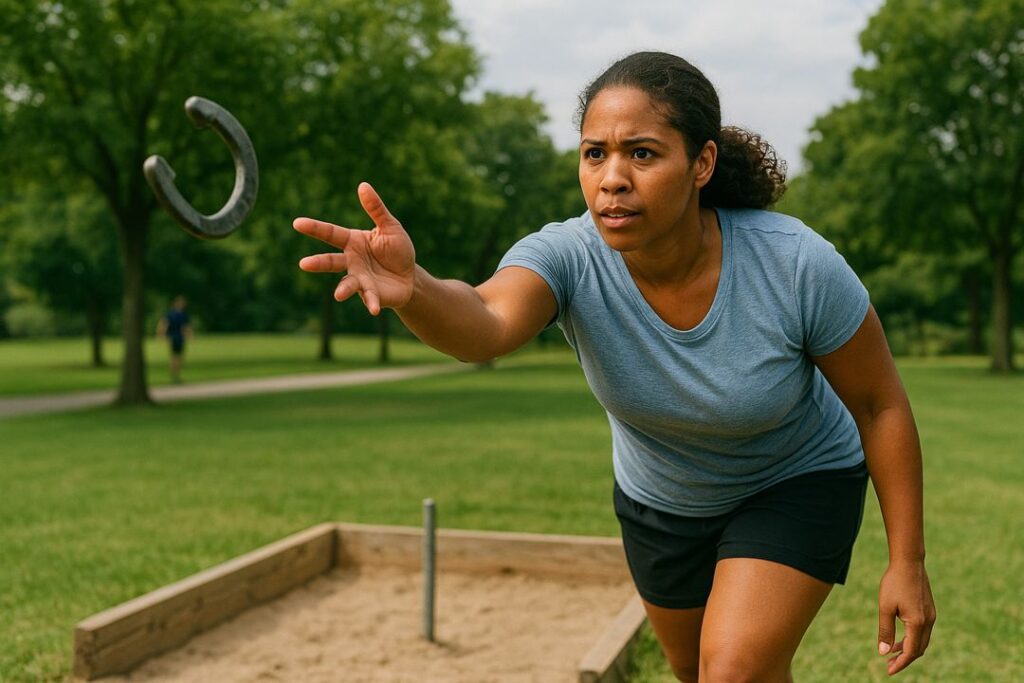
Your swing is your throw’s engine. Think pendulum, not hammer strike.
- Start with a smooth backswing.
- As you step forward, let momentum carry your arm naturally.
- Release at the low point for an even trajectory.
👉 If your swing feels jerky or forced, slow down. Smooth and repeatable always beats powerful but inconsistent.
Step 6: Visual Technique
Your eyes control your body more than you realize.
- Lock eyes on the stake, not your hand.
- Visualize the perfect arc before releasing.
- Imagine the ringer — see it, then throw it.
Professional players often say the game is won in the mind first, then in the pit.
Advanced Techniques: Beyond the Basics
Once you’ve got fundamentals down, push your skills further.
Add Spin
A subtle wrist flick stabilizes the shoe in flight, reducing wobble and improving landings.
Adjust Trajectory
- High arc: Soft landings, helpful on sticky clay or in wind.
- Low arc: Direct, fast, and difficult for opponents to block.
Switch Pitching Styles
Adapt to court conditions. A windy day may call for lower throws, while damp pits reward higher arcs.
Perfect Release Timing
This separates decent players from great ones. Release too early or late, and you miss. That fraction of a second makes the difference.
Building Consistency: Practice That Counts
Technique without practice won’t hold up under pressure.
Make a Schedule
Two to three focused sessions a week is enough. Mix light form work with heavier throwing days.
Hand-Eye Coordination Drills
Tennis ball tosses, smaller target practice, or agility drills sharpen accuracy.
Solo Practice
Work on weak spots without distraction. Grip too tight? Spend 20 throws just focusing on loosening it up.
Group Practice
Pitching with others builds competition readiness and provides feedback. You’ll notice habits you’d miss alone.
Track Results
Log ringer percentage, closest shoes, and misses. Watching numbers improve boosts confidence and gives you clear goals.
Build Muscle Memory
Repetition locks proper mechanics into your body. Under game pressure, muscle memory does the work.
The Mental Game
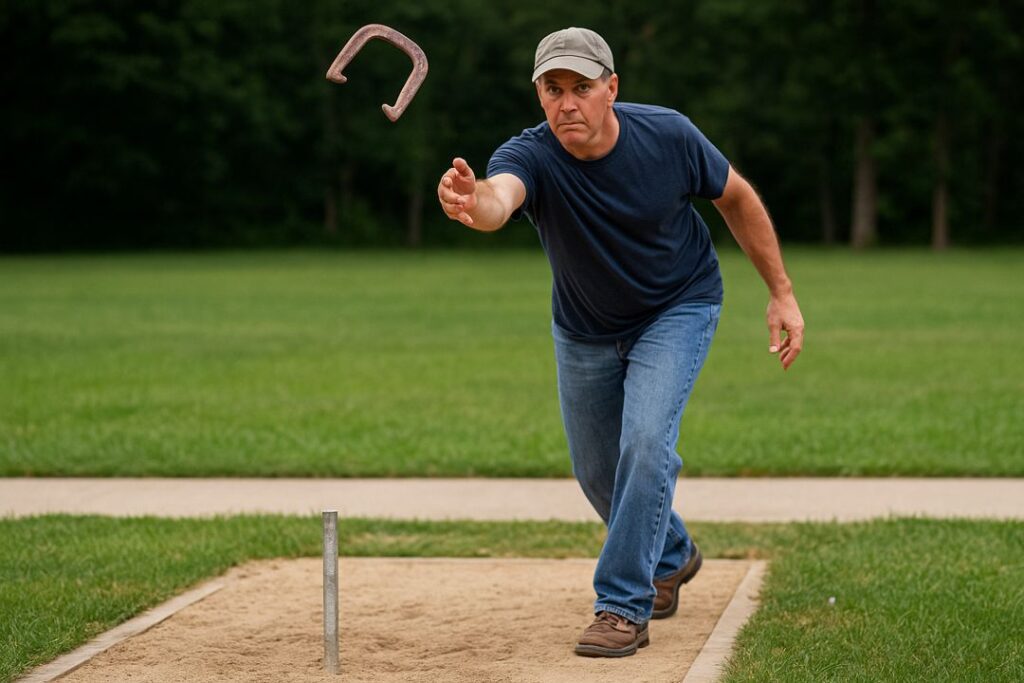
Horseshoe pitching is as much about mindset as mechanics.
- Stay composed: Don’t let misses shake you. Reset and focus.
- Block distractions: Opponent chatter, music, or crowds — none of it matters if you build mental focus.
- Routine: Create a pre-throw ritual (breath, stance, aim) and repeat it every time.
👉 The calmest, most consistent player often beats the flashier one.
Gear That Supports Better Technique
Horseshoe Game Set
The right equipment enhances practice and sharpens your technique. Here are some other proven products to consider:
- St. Pierre American Professional Horseshoe Set — tournament-grade, durable, and well-balanced. Ideal for players serious about improving accuracy.
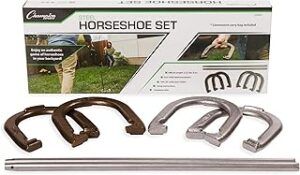
- Champion Sports Deluxe Horseshoe Tournament Set — sturdy steel set built for heavy use and competitive play.
- Trademark Innovations Pro Horseshoe Steel Game Set — powder-coated steel with a carry case, making it portable and backyard-friendly.
- 👉 Investing in quality shoes and sets pays off. Cheap, poorly balanced equipment will sabotage your technique.
FAQ: Improving Horseshoe Pitching Technique
Q: How long before I see improvement?
A: With consistent practice, many players notice progress in 4–6 weeks.
Q: Is flip or turn pitching better?
A: Flip is easier to learn, but most competitive players rely on the 1 1/4 turn for higher accuracy.
Q: How much should I practice weekly?
A: Two to three 45-minute focused sessions often deliver noticeable gains.
Q: What’s the quickest way to increase ringer percentage?
A: Focus on stance and release timing. Those two areas account for most errors.
Q: Should I practice alone or with others?
A: Both. Solo practice refines technique; group practice builds game-day resilience.
Final Thoughts
Improving your horseshoe pitching technique isn’t about tossing endlessly and hoping for better results. It’s about building solid fundamentals, layering advanced techniques, and creating repeatable routines.
Focus on:
- Knowing your court and equipment.
- Developing a consistent stance, grip, and swing.
- Adding spin and trajectory control as you improve.
- Practicing smart, with logs and muscle memory in mind.
- Staying calm and focused in every match.
With the right mix of fundamentals, advanced methods, and real practice, your ringer percentage will climb — and so will your confidence.
👉 Ready to sharpen your game? Grab a professional set, commit to a practice routine, and start pitching smarter. Your next ringer is waiting.
Hi there, and thanks for stopping by! My name is Larry, and I’m the voice behind PlayingHorseshoes.com. I love the game and have been playing since I was a kid. I started this blog because I am passionate about the sport, and with all the technology, I hope the sport doesn’t die. I plan to do my part to keep it going for my brother and my sake. Thank you for stopping by. Feel free to subscribe and comment. Thank You!