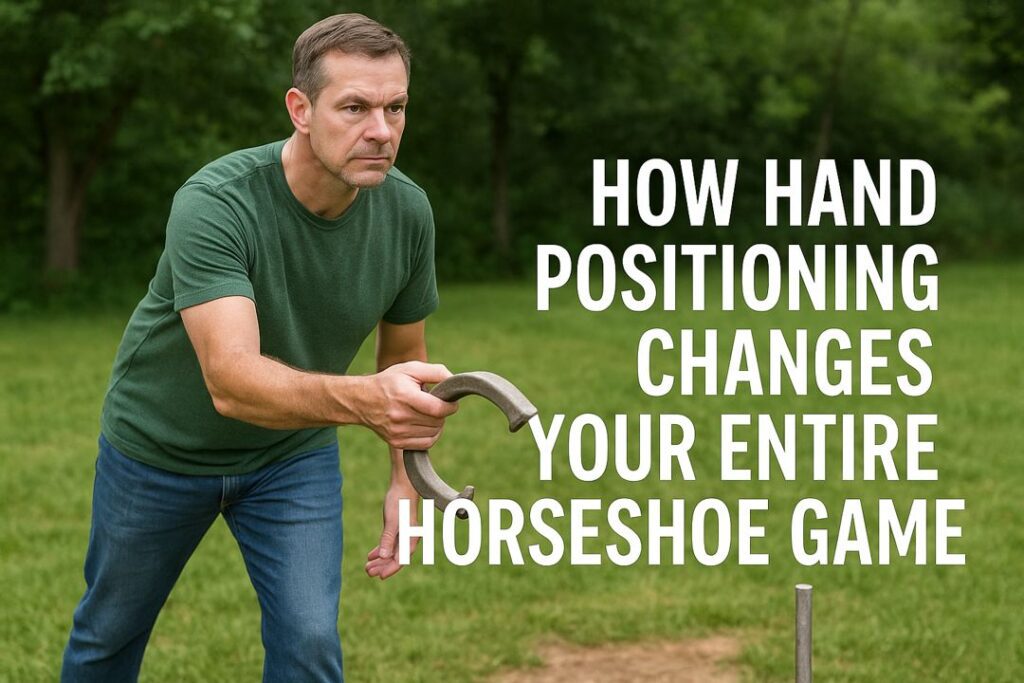
Horseshoe pitching might seem like a relaxed backyard activity, but don’t let the simplicity fool you—those steel horseshoes are heavy, hard, and fast-moving. Without the proper precautions, what starts as a friendly game can quickly result in sprains, cuts, bruises, or worse.
Whether you’re a beginner learning the ropes, a seasoned player gearing up for league play, or a family setting up a backyard game, safety should always come first. In this complete guide, we’ll break down everything you need to know to use horseshoe equipment safely—covering court setup, gear handling, best practices, and injury prevention tips.
Let’s get into it. 🧤
⚠️ Why Horseshoe Safety Should Never Be Overlooked
A regulation horseshoe weighs approximately 2.5 pounds and is thrown toward a metal stake 40 feet away. Now imagine that weight sailing off course and hitting someone’s ankle, foot—or worse, their head.
Unfortunately, many casual players skip safety considerations entirely. But safety isn’t just about avoiding injury—it’s about protecting your gear, your court, and ensuring everyone enjoys the game confidently.
Common Horseshoe Hazards Include:
- Improper throwing technique
- Faulty or unstable court installations
- Standing in the wrong place
- Using worn-out or rusted equipment
- Children or pets entering the court area mid-game

🧱 Safe Court Setup: Your First Line of Defense
Your safety foundation starts with proper court construction. Follow these steps to minimize risk before the first shoe is thrown:
✅ Ensure Adequate Space
- Regulation court = 40 feet between stakes
- Allow at least 10 feet of side clearance on each side
- Ensure no walkways, windows, vehicles, or people are in the throwing path
✅ Anchor Stakes Securely
- Use concrete or tightly packed soil
- Stakes should not wobble or tilt unintentionally
- Exposed height should be 15 inches, tilted forward 12 degrees
✅ Maintain the Pit Area
- Use clay, sand, or loose dirt to soften landings
- Rake after each game to prevent hard-packed or uneven areas
- Clear debris that could cause bouncing or tripping
👷♂️ Must-Have Safety Gear & Accessories
While the sport is mostly played casually, serious players know that the right accessories reduce injury risk and improve the experience.
🔹 Horseshoe Gloves
Protects hands from friction burns and repetitive strain, especially during long games or tournaments.
🔹 Non-slip Footwear
Avoid sandals or open-toed shoes. Use sneakers or boots with good grip, especially on damp or uneven turf.
🔹 Eye Protection (Optional)
For tight backyard spaces, a flying shoe ricochet is no joke. Safety glasses are rarely used, but in kid or practice zones, they’re worth considering.
🔹 Portable Boundary Markers
Use cones, chalk, or rope to define the throw zone and keep guests, pets, and kids safely outside the danger area.
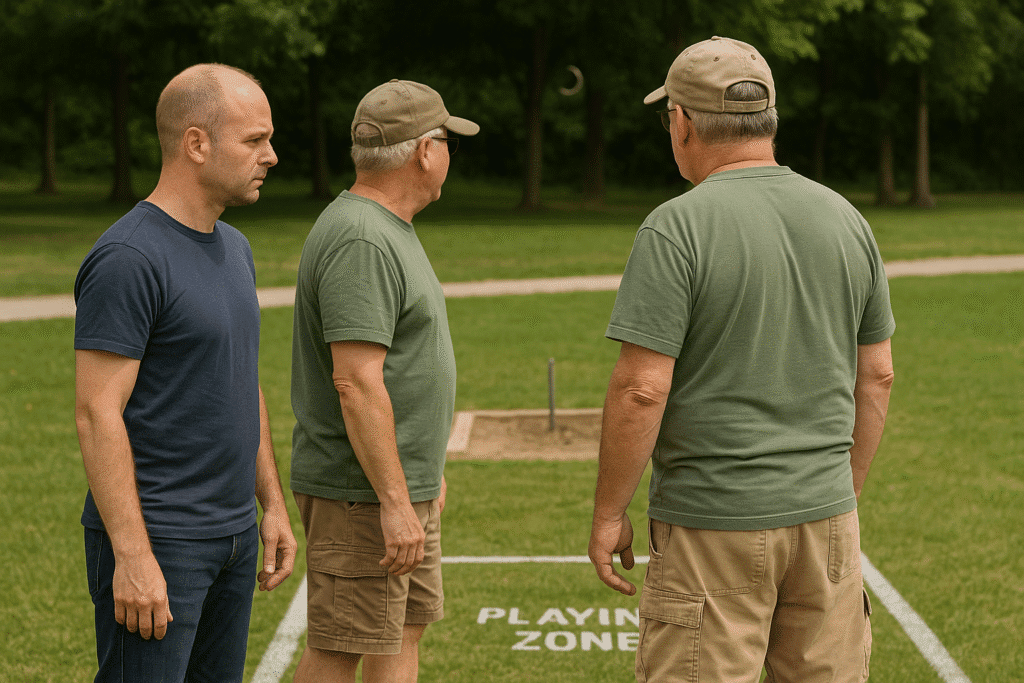
🧍 Proper Positioning & Court Etiquette
One of the easiest ways to avoid injury is to know where to stand and when to move.
🚫 Never:
- Stand behind or directly in line with the thrower
- Retrieve horseshoes before both players finish their turns
- Walk across the court while a game is in progress
- Let young children play unattended near the court
✅ Always:
- Stand at least 5 feet behind the pitcher
- Wait until all throws are complete before entering the pit
- Keep an eye on surroundings (especially during warm-ups or practice)
📢 Teach new players etiquette upfront. It avoids confusion and promotes a safer playing environment for everyone.
🤕 Common Horseshoe Injuries (And How to Avoid Them)
Let’s look at a few injuries you might encounter—and how to prevent them.
| Injury Type | Cause | Prevention Tips |
|---|---|---|
| Foot bruising | Stepping on or dropping a shoe | Wear proper shoes; store horseshoes safely |
| Wrist/hand strain | Repetitive, improper throwing motion | Warm up, rest, use lighter shoes if needed |
| Cuts or scratches | Rusty or damaged horseshoes | Maintain and inspect gear regularly |
| Back strain | Overextending or twisting poorly | Use proper form and stretch before playing |
| Impact injuries | Misthrown horseshoes hitting people | Define court boundaries and keep guests at a safe distance |
💡 If you’re ever in doubt—stop, check the court, and take a short break.
👨👩👧👦 Horseshoe Safety for Families & Kids
Backyard horseshoes can be a fantastic family activity—but it’s not always kid-friendly without the right precautions.
🧒 Kid-Friendly Alternatives:
- Use rubber horseshoe sets for younger children
- Reduce throwing distance to 20 or 30 feet
- Create visual safety zones with cones or painted lines
- Always supervise children during play
🔍 Look for brightly colored equipment that’s easier to track mid-air. And remember—steel horseshoes and small feet don’t mix!
🧰 Safe Equipment Storage & Maintenance
Storing your gear properly not only extends its life—it keeps people safe between games.
🛑 Never:
- Leave horseshoes lying on the grass or patio
- Stack them loosely on benches or walkways
- Leave stakes exposed in high-traffic areas
✅ Instead:
- Use a horseshoe carrying case with padding
- Store horseshoes in a dry area to avoid rust
- Keep maintenance tools like wire brushes and gloves handy
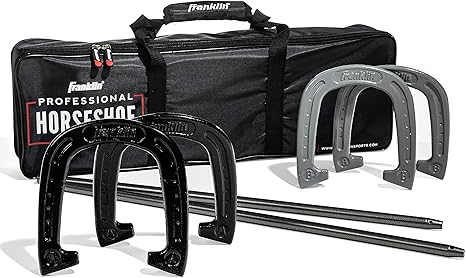
📦 Recommended Product:
Franklin Sports Horseshoe Carry Bag Set
Features durable padded compartments, room for stakes, and a heavy-duty zipper—perfect for staying organized and injury-free between games.
🧼 Court Maintenance = Long-Term Safety
Regular court maintenance prevents unexpected hazards like slippery spots, uneven ground, or damaged gear.
Weekly Tasks:
- Rake and level the pit material
- Inspect and re-tamp stakes
- Check wood frames for rot or protruding nails
Monthly Tasks:
- Remove weeds and debris
- Clean and oil horseshoes to prevent rust
- Tighten frame bolts or re-secure anchors
Rainy or humid climates? Add tarp covers to your pit or build small overhangs to protect the surface.
💡 Safety Tips for Competitive & League Play
In official matches, where crowds, pressure, and pace increase, safety becomes even more critical.
Tournament Safety Guidelines:
- Arrive early to inspect the court layout
- Always warm up before your match
- Use gloves and protective sleeves if playing multiple rounds
- Hydrate often and pace your rounds to avoid fatigue
- Report any unsafe court conditions to the host
🎯 Pro Tip: Competitive courts often use clay. Be aware of slippery conditions during or after rain.
🚨 Emergency Preparedness on the Court
While rare, accidents do happen. Being prepared minimizes stress and ensures quick response.
Always Have On-Hand:
- Small first aid kit
- Ice pack or cold compress
- Contact information for nearby medical services
- Cell phone nearby (but safely out of the throwing zone)
If an injury occurs:
- Stop the game immediately
- Clear the area
- Apply first aid
- Assess whether medical help is needed

✅ Summary: Top 10 Horseshoe Safety Rules
| Safety Rule | Description |
|---|---|
| 1. Inspect Equipment | Check horseshoes, stakes, and pit materials before every game to ensure they’re in good condition. |
| 2. Wear Proper Footwear | Avoid flip-flops or bare feet—closed-toe shoes offer better grip and protection. |
| 3. Maintain a Safe Throwing Zone | Keep spectators, pets, and non-players out of the area between and behind the stakes. |
| 4. Don’t Retrieve Too Early | Never walk toward the stake until all players have finished throwing. |
| 5. Use Protective Gear if Needed | Gloves and knee supports can help during long games or tournament play. |
| 6. Secure the Stakes Properly | Stakes should be anchored firmly to prevent wobbling or collapse during impact. |
| 7. Mark Pitching Boxes Clearly | Use paint, turf, or mats to define safe throwing zones and avoid confusion. |
| 8. Store Gear Safely | Keep horseshoes and other heavy objects off the ground and out of reach when not in use. |
| 9. Maintain the Pits | Rake and level pits regularly to reduce bounce-outs and tripping hazards. |
| 10. Supervise Young Players | Always oversee games involving children and consider rubber horseshoes for added safety. |
Final Thoughts: Play Smart, Play Safe 🛡️
Horseshoe pitching is timeless, fun, and full of tradition—but just like any game, safety comes first. Whether you’re hosting weekend games in the backyard or competing in an NHPA-sanctioned event, taking a few simple steps can prevent accidents, protect your gear, and keep the game enjoyable for everyone.
🏆 Safety builds confidence, and confidence improves performance. When you’re not worrying about accidents, you play better, have more fun, and stay in the game longer.
👉 Ready to upgrade your horseshoe setup? Start by securing your court, cleaning your gear, and laying out a clear safety plan today.
Hi there, and thanks for stopping by! My name is Larry, and I’m the voice behind PlayingHorseshoes.com I love the game and have been playing since I was a kid. I started this blog because I am passionate about the sport, and with all the technology, I hope the sport don’t die. I plan to do my part to keep it going for me and my brother’s sake. Thanks for stopping by, feel free to subscribe and comment. Thank You!