The Pit Philosopher: Life Lessons You Learn Playing Horseshoes
Spend enough time around a horseshoe pit, and you start to realize something — you’re not just throwing steel at a stake. You’re throwing your worries, your frustrations, your hopes, and sometimes your pride.
It’s funny how a game so simple can teach you so much. Pitch after pitch, ringer after ringer (or miss after miss), the horseshoe pit starts to feel less like a game and more like a classroom — a dusty, sun-baked classroom that hands out life lessons with every clang of steel.
Let’s walk through a few of those lessons — straight from the dirt, the sand, and the folks who know how to laugh through it all.
Lesson 1: You Can’t Control the Bounce
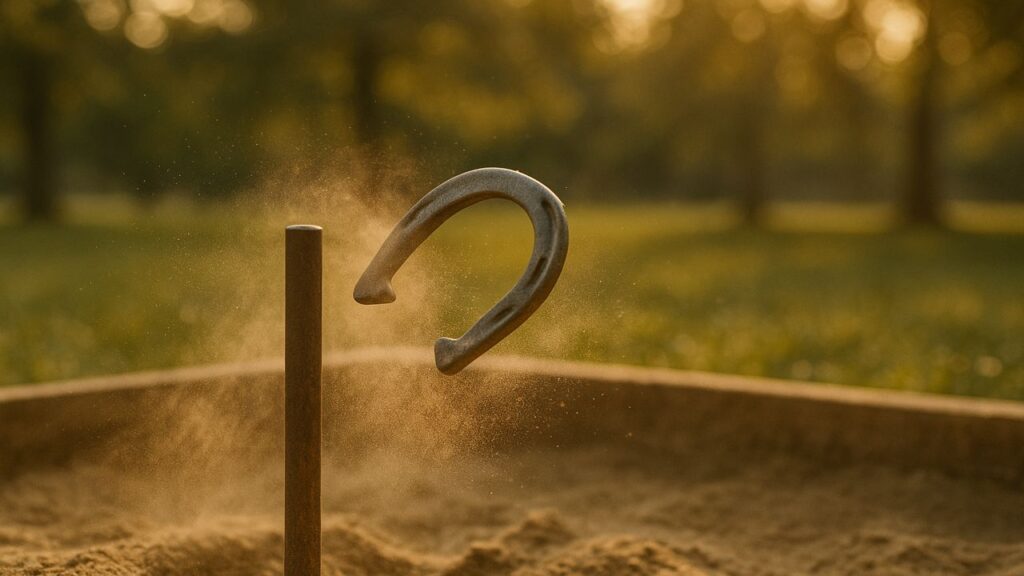
You can have the perfect stance, the smoothest throw, the cleanest release — and still, that shoe can hit wrong and bounce off like it had a mind of its own.
That’s life, right there. You do everything right, and sometimes things still don’t land the way you hoped.
The seasoned pitcher doesn’t get mad. They nod, they take a breath, and they throw again.
Because you can’t control the bounce — only the effort you put behind the next throw.
Lesson 2: Small Adjustments Make Big Differences
Ever tweak your grip or your release and suddenly start hitting closer to the stake?
That’s not luck — that’s awareness.
Horseshoes reward the players who pay attention. Just a half-inch change in stance, or a softer wrist, can turn a frustrating afternoon into a winning streak.
Life works the same way. It’s not about massive overhauls — it’s about fine-tuning. Tiny shifts in attitude, patience, or perspective can change everything.
Lesson 3: Practice Doesn’t Just Make Perfect — It Makes Peace
Spend an hour pitching alone, and your brain starts to quiet down. You find your rhythm. The world shrinks to one throw at a time.
You start to breathe slower, think clearly, and remember that progress isn’t about speed — it’s about repetition with purpose.
The horseshoe pit becomes a kind of meditation zone — just you, the sound of metal meeting sand, and that sweet silence between throws.
It’s a reminder that peace doesn’t come from the outside world — it comes from showing up, focusing, and trying again.
Lesson 4: Trash Talk Builds Character (If You Handle It Right)
Let’s face it: the horseshoe pit is not exactly a monastery. There’s a little ribbing, a few friendly jabs, and maybe some laughter at your expense when your throw goes sideways.
But that’s part of the fun. You learn how to take it — and how to give it back with a grin.
It’s not about ego; it’s about camaraderie. The best players can laugh at themselves, shake hands afterward, and leave the pit as friends.
If you can handle a little trash talk without losing your cool, you’re probably handling life pretty well, too.
Lesson 5: Focus Beats Force Every Time
Beginners always try to muscle the shoe. They throw hard, hoping power equals accuracy.
But the veterans know better — it’s finesse that wins games.
It’s the calm, controlled swing. The release you barely notice. The kind of focus that makes the throw look effortless.
The same goes for life. The loudest effort isn’t always the most effective. Quiet confidence gets results that brute force never will.
Lesson 6: Learn to Let Go (Literally and Figuratively)
If you grip too tight, you ruin the throw. The shoe won’t spin right. It’ll wobble, crash, and miss the mark.
You’ve got to let go smoothly, naturally — not fight it.
Funny how that applies to just about everything.
People. Problems. The past.
Hold on too tight, and you lose your rhythm. But when you finally loosen your grip, life flies straighter than ever.

Lesson 7: Everyone Misses Sometimes
Ask any seasoned player — they’ve all had off days. Games where they couldn’t hit a barn, let alone the stake.
But they show up anyway.
That’s the secret. Showing up when you’re not feeling it. Laughing when your shoe lands sideways. Knowing that even the best players toss a few bad ones before finding their groove again.
Because in horseshoes, like in life, failure isn’t final — it’s just feedback.
Lesson 8: Measure Honestly
You know the drill — a close call, two shoes hugging the stake, and someone pulls out the measuring stick.
That’s the moment of truth. You’ve got to call it fair, even when you wish it had gone your way.
Honesty at the pit reveals a great deal about a person. There’s no scoreboard big enough to outweigh integrity.
The same goes beyond the pit — measure life honestly, treat people fairly, and you’ll always come out ahead, no matter what the score says.
Lesson 9: Enjoy the Sound of a Ringer
That clang — that’s music. Doesn’t matter how long you’ve been playing; it never gets old.
That sound reminds you that effort pays off. That patience, practice, and persistence still mean something in a world that wants instant results.
In life, your “ringer moments” might not be loud, but they’re there — that quiet satisfaction when hard work finally hits home.
Learn to savor them. They’re the reason you keep stepping up to the stake.
Lesson 10: Keep It Fun
Some folks take the game way too seriously. You can see it on their face — every miss looks like a tragedy.
But the real pit philosophers? They’re smiling. They’re laughing between throws. They’re here for the people as much as the points.
That’s the biggest lesson of all: don’t let the game — or life — lose its joy.
Because if you can keep it light, even when you’re behind, you’re already winning.
Wisdom from the Pit
Hang around a horseshoe pit long enough, and you’ll hear sayings that sound half like jokes and half like gospel:
- “Close only counts in horseshoes and hand grenades.”
- “If you can’t beat ‘em, make ‘em laugh.”
- “Every bad throw is just practice for the good one.”
There’s something beautifully human about this game — simple tools, simple rules, but endless ways to learn from it.
You don’t need a scoreboard to find meaning. Sometimes all you need is a handful of horseshoes, a quiet backyard, and a couple of friends who understand that every throw’s a new chance.
Recommended Gear
If you’re ready to start your own “pit philosophy sessions,” you’ll want a set that feels good in your hands.
The Gordon Professional Horseshoe Set offers perfect weight balance for both casual and competitive players.
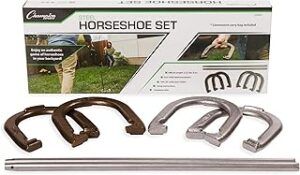
Horseshoe Game Set
FAQ
Q: Is horseshoes really that reflective of life, or are you stretching it?
Spend a weekend pitching and see for yourself. The lessons sneak up on you — one throw at a time.
Q: What’s the best way to practice mindfulness while pitching?
Focus on breathing, form, and release. Every throw becomes its own small meditation.
Q: Do I need to play often to learn from it?
Nope. Even a few games a year can remind you of patience, rhythm, and the art of letting go.
Q: How do you stay calm after a bad throw?
Same way you handle a bad day — take a breath, reset, and throw again.
Finally
Every horseshoe pit is a little slice of life — some joy, some frustration, and a whole lot of learning if you’re paying attention.
The best players aren’t just good at landing ringers — they’re good at reading what each throw teaches them.
So next time you grab your shoes, don’t just aim for the stake.
Listen to the dirt, the clang, and your own heartbeat.
You might just walk away with a little more than points — you might walk away a pit philosopher yourself.