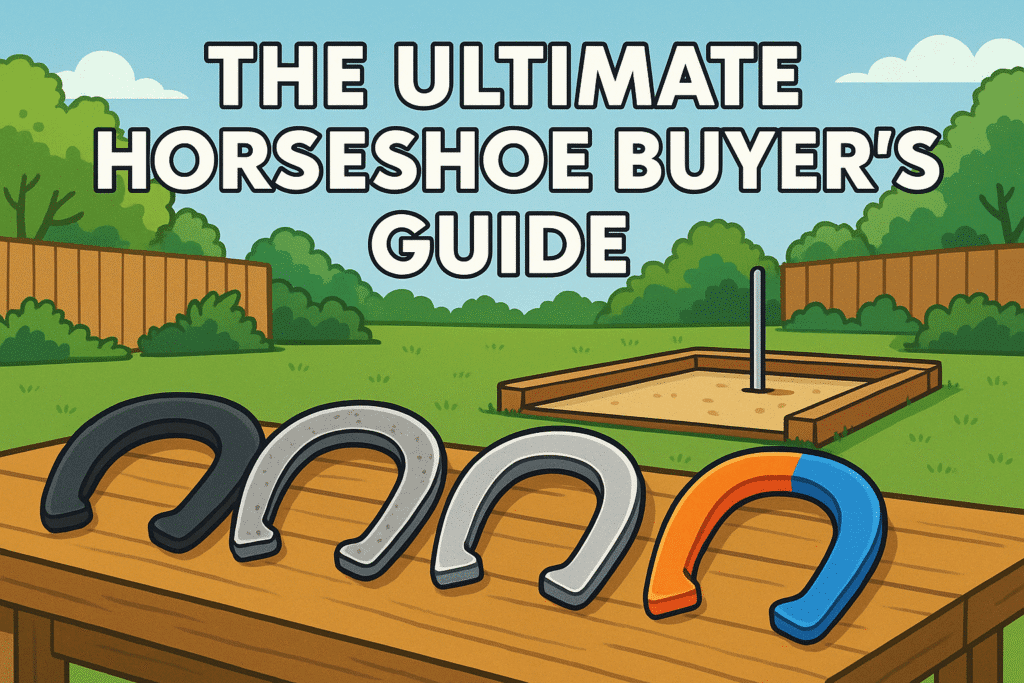
How to Teach Someone Horseshoes in 10 Minutes or Less (Beginner-Friendly Guide That Actually Works)
Teaching someone how to play horseshoes shouldn’t feel like a lecture. The problem is, most beginners get overwhelmed before they ever get comfortable, and once that happens, they lose interest fast. Too many rules, too much technique, and not enough actual throwing is what kills the experience.
The truth is simple. You don’t need an hour to teach horseshoes. You don’t need perfect mechanics or official scoring right away. What you need is a fast, confidence-building introduction that gets someone throwing, improving, and enjoying the game within minutes.
That’s exactly what this guide delivers.
If you follow this step-by-step system, you can take a complete beginner and have them playing a real game in under 10 minutes—and actually wanting to keep going.
Why Most People Fail at Teaching Horseshoes
Before we jump into the process, it’s worth understanding why teaching horseshoes often goes wrong. Most people approach it like they’re training a competitive player instead of introducing a fun backyard game.
They explain too much too soon. They correct every mistake. They focus on technique before the person even understands the feel of a throw. And worst of all, they delay the one thing that actually matters—letting the beginner throw.
That’s the mistake.
Learning horseshoes is not about information. It’s about repetition and feel.
Less talking. More throwing.
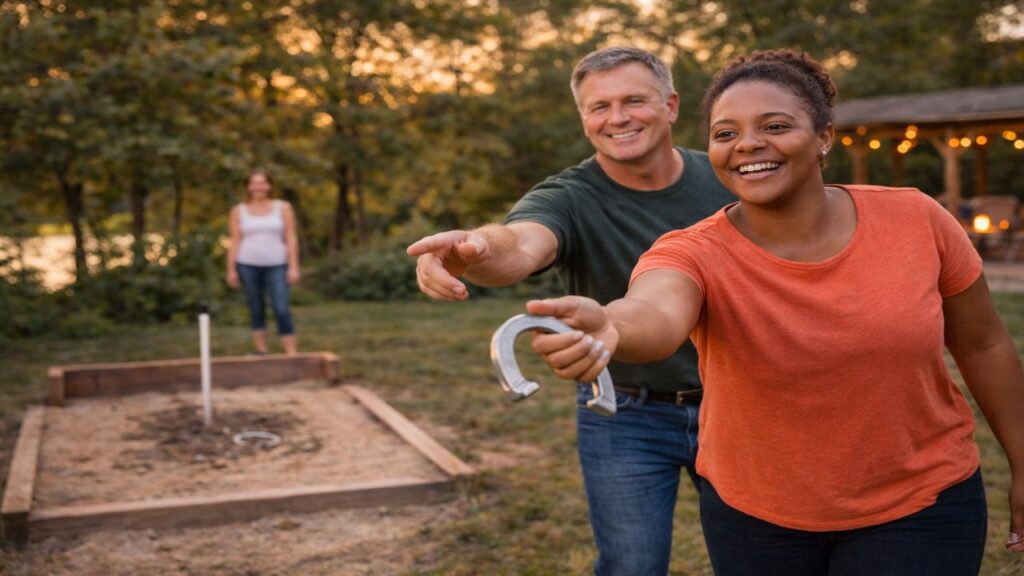
The 10-Minute Teaching Breakdown (Simple and Effective)
The key to teaching quickly is structure. Each minute has a purpose, and each step builds on the last without overwhelming the beginner.
Minutes 1–2: Show the Objective
Start by pointing out the stake and explaining the goal in the simplest way possible. Tell them they’re trying to land the horseshoe as close to the stake as possible, with a perfect throw wrapping around it.
That’s all they need to know right now.
Do not explain scoring systems, official rules, or distances yet. Those details matter later, but right now they only slow things down and create confusion.
Clarity first. Details later.
Minute 2–4: Teach the Grip the Right Way
The grip is the single most important part of a beginner’s success. If they hold the horseshoe incorrectly, every throw becomes harder to control and more frustrating.
Have them hold the horseshoe with their fingers along the side, not squeezing the tip. The grip should feel natural and relaxed, not tight. The open end of the horseshoe should face forward so it can rotate properly in the air.
Keep your explanation short and let them feel it in their hand.
A clean grip builds confidence fast.
Minute 4–6: Demonstrate a Simple Throw
Now show them a basic throw. Don’t complicate it with advanced technique or talk about rotations.
Step forward slightly, swing your arm smoothly, and release the horseshoe toward the stake. Keep your motion relaxed and controlled.
Then say one key thing.
Smooth beats strong.
Beginners almost always try to throw too hard. That’s where accuracy disappears. When they focus on smooth movement instead of power, everything improves.
Show it once or twice, then move on quickly.
Minute 6–8: Let Them Throw Immediately
This is where the real learning begins. Hand them the horseshoe and let them throw.
Expect misses. Expect awkward motion. That’s normal.
After a few throws, give one simple piece of feedback at a time. Maybe they need to loosen their grip, aim slightly higher, or slow down their motion. Avoid stacking multiple corrections.
Too much feedback creates hesitation.
One adjustment at a time builds progress.
Let them throw at least 4 to 6 shoes before saying much. They need to feel the motion more than they need to hear instructions.
Minute 8–9: Introduce Basic Strategy
Now that they’ve thrown a few times, you can introduce just enough strategy to make the game feel meaningful.
Explain that getting close to the stake still scores points, and that consistency often matters more than trying to hit perfect ringers every time.
This helps shift their mindset from frustration to achievable progress.
Close is good. Consistency is better.
Minutes 9–10: Start a Simple Game
Now you turn practice into a game. Keep scoring simple and easy to follow.
You can explain that the closest horseshoe scores a point and that a ringer scores more, but don’t get caught up in official scoring details. The goal is to create a fun, competitive environment right away.
The moment it feels like a game, engagement goes up.
And that’s what keeps them coming back.
The Right Equipment for Beginners (This Matters More Than You Think)
This is where a lot of people get it wrong.
Beginners should not start with professional-level horseshoes. Those are designed for experienced players who already have control and consistency. For a new player, they can feel heavy, unforgiving, and harder to manage.
What you want instead is a balanced, beginner-friendly set that’s easy to handle and consistent in flight.
A solid option is the Franklin Sports Horseshoes Set. This set is widely used for casual and beginner play because it’s approachable, durable, and easier to control than pro-grade equipment. It gives new players a fair chance to develop their throw without fighting the equipment.
Another good choice is the Champion Sports Rubber Horseshoe Set, especially for families or absolute beginners. It’s safer, lighter, and less intimidating, making it perfect for first-time players or mixed-skill groups.
The goal at this stage isn’t realism—it’s comfort and control.
Once a player develops consistency, then it makes sense to transition into heavier, professional-style horseshoes.
Start easy. Build up.
Horseshoe Game Sets
Adjusting for Different Skill Levels
Not every beginner learns at the same pace, and a good teacher knows how to adjust on the fly.
If someone is struggling, move them closer to the stake. Shortening the distance helps them experience success sooner, which builds confidence and encourages better throws. As they improve, you can gradually move them back.
If someone is picking it up quickly, challenge them slightly by focusing on consistency instead of distance. Have them aim for repeated close throws rather than chasing ringers.
Meet them where they are.
Progress feels better than pressure.
Common Mistakes That Slow Down Learning
Even with a solid system, there are a few mistakes that can derail the process quickly.
Over-instructing is the biggest one. When beginners hear too many corrections, they start thinking instead of throwing, and that breaks their rhythm. Keep feedback simple and spaced out.
Another mistake is focusing too much on perfect technique early on. Perfection is not the goal in the first 10 minutes. Comfort and confidence are.
Finally, don’t rush into official rules or scoring debates. That can come later once the player is already enjoying the game.
Let the game teach them.
Building Confidence That Lasts
The first 10 minutes of learning horseshoes sets the tone for everything that comes after. If a beginner feels awkward and confused, they’re less likely to keep playing. If they feel capable and see small improvements, they’re hooked.
Confidence comes from simple wins—getting closer to the stake, throwing smoother, and feeling more control with each toss. Those small wins build momentum, and momentum builds skill.
Confidence first. Skill follows.
FAQ: Teaching Horseshoes Quickly
1. How long does it take to learn horseshoes?
Most beginners can start playing comfortably within 10 to 15 minutes. Developing accuracy and consistency takes more time, but the basics come quickly with the right approach.
2. Should beginners try to throw ringers right away?
No. Focusing on landing close to the stake is more important in the beginning. Ringers come naturally as control improves.
3. What’s the easiest throwing style for beginners?
A simple, smooth flip-style throw is the easiest to learn. It allows for better control and consistency compared to more advanced techniques.
4. Can beginners stand closer than the regulation distance?
Yes. Starting closer helps build confidence and improve accuracy. Distance can be increased gradually as skill improves.
5. What kind of horseshoes are best for beginners?
Balanced, standard-weight horseshoes are best because they provide predictable flight and better control. Avoid overly light or poorly made sets that make learning harder.
Get Them Hooked, Not Perfect
Teaching horseshoes isn’t about creating a perfect player in 10 minutes. It’s about creating someone who enjoys the game enough to keep playing.
If you keep your instructions simple, focus on early success, and let them throw as much as possible, you’ll turn a complete beginner into a confident player faster than most people think.
And once they start enjoying it, the improvement takes care of itself.
Hi there, and thanks for stopping by! My name is Larry, and I’m the voice behind PlayingHorseshoes.com. I love the game and have been playing since I was a kid. I started this blog because I am passionate about the sport, and with all the technology, I hope the sport doesn’t die. I plan to do my part to keep it going for me and my brother’s sake. Thanks for stopping by. Thank You!