Top 5 Expert Tips for Selecting the Best Horseshoes for Competitive Play
Discover the top 5 expert tips for choosing the best horseshoes for competitive play. Learn what pros look for in weight, material, design, and performance to gain the winning edge.
Competing in horseshoe tournaments isn’t just about having a steady hand and sharp aim. It’s about preparation—from mastering your throw to selecting the perfect pair of horseshoes. 🧲 The right gear can give you a serious advantage on the pitch, especially when tournament rules, terrain conditions, and shoe specifications come into play.
Whether you’re eyeing your first local competition or gearing up for a national horseshoe event, these five expert-backed tips will help you choose the best horseshoes for competitive play—and set you up for victory.
✅ 1. Understand Tournament Rules and Regulations
Before you even start shopping, read the rulebook. Every serious tournament—whether it’s governed by the NHPA (National Horseshoe Pitchers Association) or another organization—has strict guidelines regarding horseshoe specifications.
Key Regulations to Know:
- Weight must usually fall between 2 lbs. and 2 lbs. 10 oz.
- Dimensions such as length and width must meet NHPA standards.
- Open toe vs closed toe: Some events only allow certain styles.
🔍 Why it matters: Showing up with the wrong horseshoes could disqualify you—or worse, ruin your rhythm before the first pitch.
💡 Pro Tip: Double-check if your shoes are NHPA-sanctioned. Look for markings or certifications on the product page or packaging.
✅ 2. Choose the Right Weight for Your Playing Style
One of the most debated topics in competitive horseshoes? Weight preference.
Consider This:
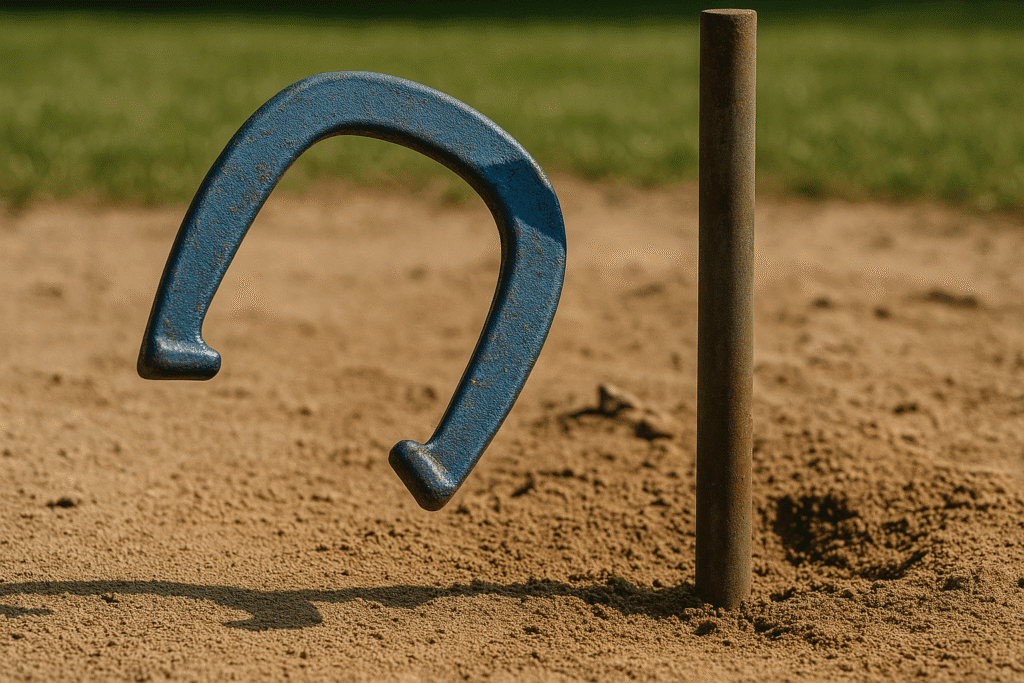
- Lighter horseshoes (2–2.5 lbs.) offer better control and are easier on the arm—especially useful in long games.
- Heavier horseshoes (2.6–2.8 lbs.) generate more momentum and can “stick” better in sand or clay but require stronger throws.
🎯 Example: If you play indoors with hard-packed clay, lighter horseshoes may be more forgiving. But in outdoor sandy pits, a heavier shoe may help you land ringers more consistently.
🧪 Test it out: Don’t just go with what the pros use. Visit a sporting goods store or borrow from teammates to try different weights before investing.
✅ 3. Evaluate Material and Build Quality
What your horseshoe is made of affects everything from flight control to long-term durability.
Top Materials to Consider:
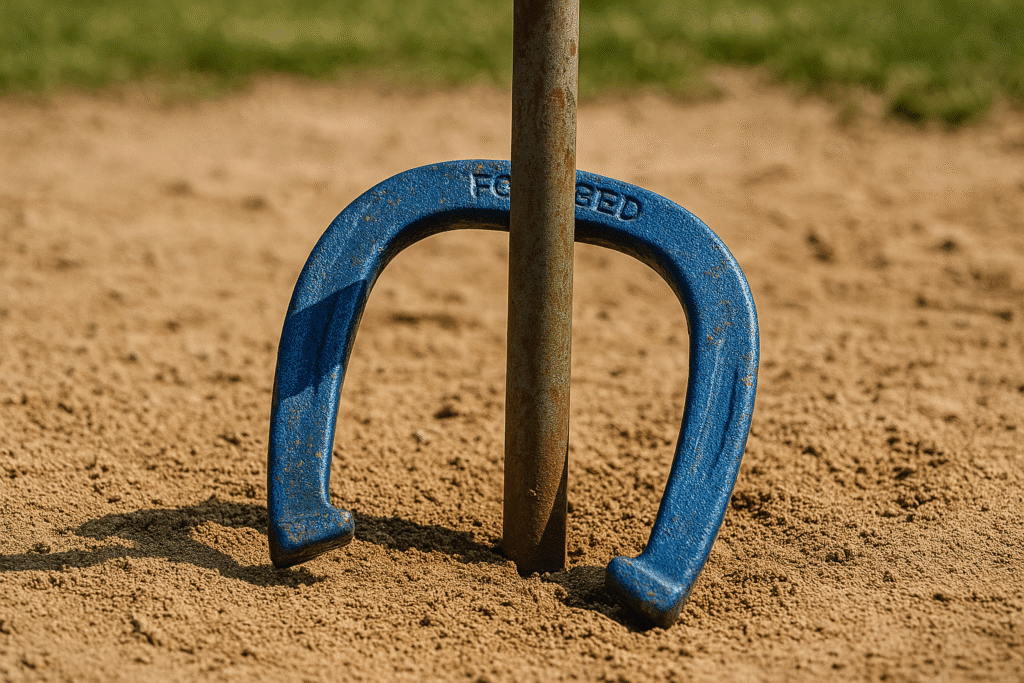
- Drop-forged steel – Extremely durable, ideal for high-impact games.
- Aluminum – Lightweight, perfect for beginners or players who need to reduce strain.
- Ductile iron – Common in pro-grade shoes due to its strength and ability to absorb shock.
🔥 Advanced tip: Check for balance—competitive players often look for evenly weighted shoes to ensure consistent rotation and accurate flight.
🛠️ Also consider edge beveling and finish:
- A textured surface adds grip for wet or dusty conditions.
- A smooth coating helps reduce rust and prolongs the shoe’s lifespan.
✅ 4. Pay Attention to Design and Shape
There’s more to a horseshoe than a U-shape. Pro-grade horseshoes are carefully engineered to enhance performance.
Look for:
- Large ringer break – Increases your chances of scoring ringers.
- Well-defined hooks – Helps the horseshoe grip the stake.
- Symmetrical design – Ensures consistent flips regardless of orientation.
👋 Grip zones matter too! Some horseshoes have slight grooves where your fingers rest, enhancing control during release.
🎮 Think of it like a gaming controller—design impacts your input and accuracy!
✅ 5. Practice with Your Competitive Shoes Before Game Day
Don’t make the mistake of saving your new shoes for the tournament. Break them in with real practice.
Why It’s Crucial:
- Get used to weight distribution and feel.
- Adjust your grip and throwing arc.
- Build muscle memory for consistency.
🏋️♂️ Set up mock games under similar conditions to your upcoming tournament—replicate outdoor clay courts, indoor lighting, or whatever you’ll face.
🔒 Pro Tip: Label your shoes or carry a backup set. Some competitors bring a spare pair in case conditions change or equipment fails.
💡 Bonus Considerations: Competitive Play Environments
Different environments call for different gear. Here’s how to adapt:
Indoor Tournaments:
- Controlled terrain
- Lower wind interference
- Use lighter shoes with smoother finishes for faster, more responsive play.
Outdoor Tournaments:
- Sand, dirt, or grass pits
- Unpredictable weather
- Choose shoes with deeper hooks and textured surfaces for better traction and accuracy.
🏆 Recommended Products for Competitive Players
After evaluating hundreds of options and testing what works best for tournament play, here are top-tier horseshoes trusted by competitors:
✅ Recommended Product: Gordon Horseshoes Professional Pitching Horseshoes
📌 Why we like it: Drop-forged steel construction, excellent balance, and NHPA-sanctioned for official competitions. Its ringer break and tapered blade edge provide superior grip and control.
✅ Recommended Product: St. Pierre American Pro Series
📌 Why we like it: Ductile iron durability, professional-grade build, and comfortable finger grooves. Ideal for long tournament days with consistent throws.
✅ Recommended Product: E-Z Flip II Professional Pitching Horseshoes
📌 Why we like it: Symmetrical design, strong hooks, and textured finish for better grip in outdoor courts.
🛒 Each of these can be found online with fast shipping—just make sure to verify NHPA approval when applicable.
🤔 Frequently Asked Questions
🔹 What is the best technique for horseshoes?
Focus on a smooth, pendulum-like motion. Keep your eyes on the stake, maintain a firm grip, and follow through with your throw. Practice both flip and turn styles to see what suits you best.
🔹 What is the professional horseshoe setup?
A regulation court is 40 feet long with a 15-inch-high steel stake angled toward the thrower. Clay pits are common in pro play, and shoes must meet NHPA specs.
🔹 How do you win at horseshoes?
Consistency, focus, and the right gear. Scoring is based on ringers and shoes closest to the stake. Aim for precision over power and adjust based on court conditions.
🔹 What is the best grip for horseshoes?
Most players use a two-finger grip along the inside edge of the shoe, while others favor a turn grip for spin control. Experiment and choose what feels most natural.
📣 Final Thoughts: Set Yourself Up for Success
Selecting the best horseshoes for competitive play isn’t just about picking the flashiest set. It’s about aligning your gear with your playing style, the rules of the game, and the challenges of the competition environment.
✅ Do your research
✅ Test multiple weights
✅ Choose quality materials
✅ Practice like you’re already at the tournament
🎯 Whether you’re chasing your first podium finish or trying to level up your game, the right horseshoes can make all the difference.
So—what’s your go-to brand or setup for competitive play? Drop a comment and let’s help each other win more games!
Stay tuned for more expert tips and gear reviews. And if you found this guide helpful, don’t forget to share it with your fellow horseshoe pitchers! 🎯
Hi there, and thanks for stopping by! My name is Larry, and I’m the voice behind PlayingHorseshoes.com I love the game and have been playing since I was a kid. I started this blog because I am passionate about the sport, and with all the technology, I hope the sport don’t die. I plan to do my part to keep it going for me and my brother’s sake. Thanks for stopping by, feel free to subscribe and comment. Thank You!