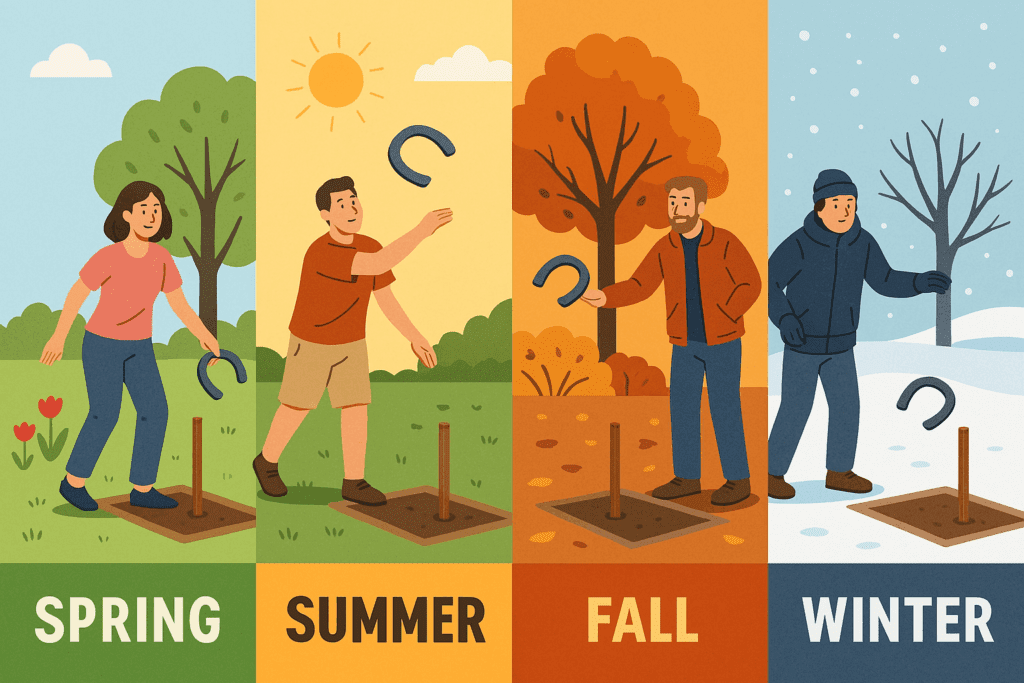
What Horseshoes Teaches About Patience and Control
Horseshoes teaches patience and control through deliberate pacing, repeatable mechanics, emotional discipline, and quiet focus, making it one of the few backyard games where slowing down consistently produces better results than strength, speed, or aggression.
At first glance, horseshoes look almost too simple to be meaningful. A steel shoe. A stake in the ground. An underhand toss. No running. No clock. No chaos.
But the longer you play, the more you realize something important: horseshoes have a way of slowing people down, whether they want it to or not. It exposes impatience quickly, humbles the ego, and rewards players who learn how to control both their body and their emotions.
That’s why horseshoes quietly teaches lessons that stick — not just about the game, but about how you handle pressure, frustration, and focus.
1. Horseshoes Is Slow by Design — and That’s the Point
Horseshoes don’t rush anyone.
There’s no game clock forcing decisions. No constant movement masking mistakes. Each pitch happens in isolation, with space between throws that feels almost uncomfortable to people used to fast-paced games.
That space matters.
It gives you time to think — sometimes more time than you want. You can’t immediately “make up” for a bad throw. You have to wait, watch the shoe land, and live with the result until it’s your turn again.
That pause trains patience naturally. You start learning how to reset mentally instead of reacting emotionally. The game doesn’t let you stack actions on top of each other. It forces reflection.
Over time, players realize that Horseshoes isn’t slow because it’s casual. It’s slow because the game is teaching something.
2. Control Beats Strength Every Single Time
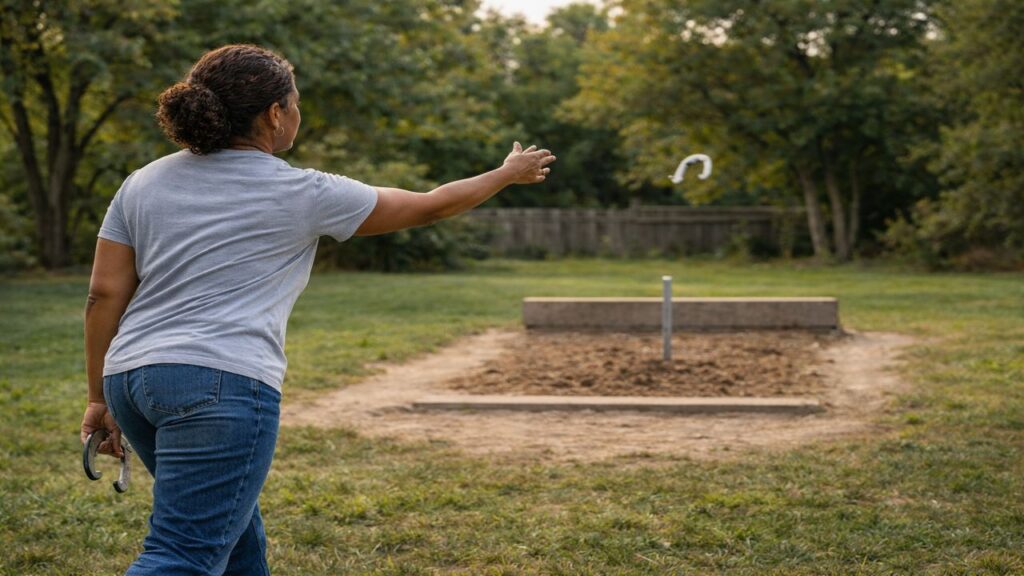
Almost everyone makes the same mistake early on: when they miss, they throw harder.
Horseshoes shut that idea down fast.
A harder throw doesn’t fix a rushed release, bad alignment, or poor balance. In fact, extra force usually magnifies those problems. Shoes sail long, kick sideways, or clang off the stake unpredictably.
Consistent players understand that control lives in smooth motion, not effort. A relaxed arm swing, stable stance, and clean release do far more than brute force ever will.
This is one of the earliest lessons horseshoes teaches about control: trying harder often makes things worse.
When players finally ease up, their accuracy improves — not because they added something, but because they removed tension.
3. Impatience Gets Punished Immediately
Few games offer feedback as honest as horseshoes.
Rush your setup? Miss.
Skip your routine? Miss.
Throw angry after a bad pitch? Miss again.
There’s no delay between cause and effect. The pit responds instantly.
What makes this powerful is that the game doesn’t care why you rushed. Bad day. Distraction. Ego. Frustration. None of it matters. The shoe still lands where you sent it.
That immediate feedback loop teaches players to recognize impatience quickly. You don’t need a coach or video replay to see when your mindset slips. The evidence is right there in the dirt.
Over time, players learn that impatience isn’t just a feeling — it’s something that shows up physically in how they throw.
4. Waiting Your Turn Is Part of the Training
In horseshoes, you spend a lot of time not throwing.
That waiting isn’t wasted time. It’s training.
You watch how shoes land. You notice patterns. You observe how pressure affects you and your opponent. You learn when to reset mentally and when to stay locked in.
This builds a kind of patience that’s active, not passive. You’re not zoning out. You’re staying present without interfering.
Many players improve simply by learning how to wait well — staying engaged without rushing ahead mentally.
That ability carries over into real life more than most people realize.
5. Control Starts Before the Shoe Leaves Your Hand
Most misses don’t begin at release. They start earlier.
Foot placement is slightly off.
Grip rushed instead of set.
Eyes drifting away from the stake.
Breathing shallow or held too tightly.
Experienced players understand this, which is why routines matter so much in horseshoes. Not because they look professional — but because they slow the mind.
Step in.
Set your feet.
Lock your eyes.
Breathe.
Throw.
That structure creates control before movement begins. It reduces decision-making and keeps emotions from hijacking the throw.
Over time, the routine becomes automatic, acting like a mental anchor under pressure.
6. Emotional Control Is the Real Separator
Technique matters. But emotional control decides games.
Misses happen to everyone. What separates players is how they respond.
Some rush the next throw.
Some overcorrect.
Some mentally spiral.
Horseshoes expose emotional reactions because there’s nowhere to hide them. There’s no fast break, no defense to lean on, no teammate to bail you out.
Players who improve long-term learn to keep everything neutral. Same pace. Same routine. Same body language — whether they’re ahead or behind.
Horseshoes teaches that emotional restraint isn’t suppression. It’s discipline.
7. Practice Builds Patience When No One Is Watching
Solo practice is where patience gets tested the most.
There’s no competition. No scoreboard pressure. No one to impress. Just repetition.
Throwing the same drill over and over can feel boring, especially when progress is slow. But horseshoes reward those who stay with it.
The patience required to practice without immediate payoff builds something deeper than skill. It builds trust in the process.
Players who stick with practice learn how to stay focused even when results lag behind effort — a skill that applies far beyond the court.
8. Why Horseshoes Rewards Experience Over Speed
As players age, raw speed often declines — but patience improves.
Horseshoes favor that tradeoff.
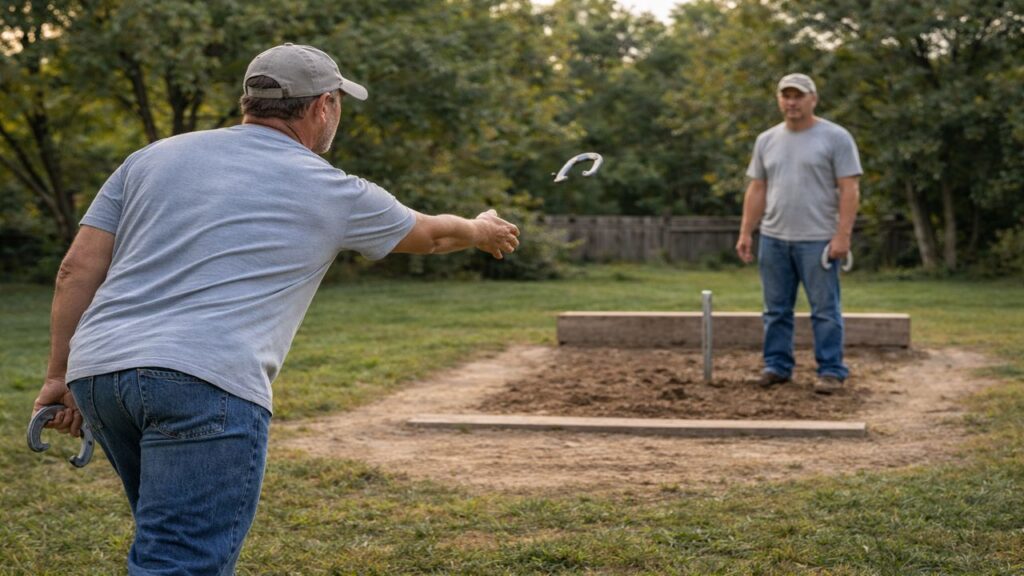
The game doesn’t punish slower movement. It rewards better decisions, steadier mechanics, and emotional control. Experienced players often outperform younger, stronger players simply by throwing smarter.
That’s why horseshoes remain playable for decades. It evolves with the player instead of leaving them behind.
Slowing down isn’t a weakness here. It’s an advantage.
9. A Gear Choice That Reinforces Patience and Control
Practicing with a regulation-weight steel set like the Champion Sports Official Steel Horseshoe Set reinforces patience and control because the weight demands a smooth swing and clean release. Rushed throws and sloppy mechanics show up immediately, while consistent form gets rewarded. Steel shoes provide honest feedback on misses, bounces, and dead drops, making them ideal for players focused on building calm, repeatable technique rather than forcing results.
Horseshoe Game Set
10. Quiet Confidence Grows Over Time
Horseshoes builds a specific kind of confidence — not loud or showy, but steady.
You trust your routine.
You accept misses without unraveling.
You don’t rush to prove anything.
That calm confidence becomes noticeable. Opponents feel it. Teammates rely on it. And players carry it with them off the court as well.
It’s confidence rooted in control, not ego.
Frequently Asked Questions
Does playing horseshoes really improve patience?
Yes. The deliberate pace, built-in pauses, and immediate feedback force players to slow down and reflect between throws.
Why do calm players usually perform better?
Relaxed muscles and focused attention lead to smoother releases. Tension and rushing reduce accuracy.
Can beginners learn patience through horseshoes?
Absolutely. Focusing on routine instead of results early helps beginners develop patience quickly.
Are horseshoes good for stress relief?
For many players, yes. The rhythm and simplicity help quiet mental noise.
Why don’t experienced players react strongly to misses?
They’ve learned that emotional reactions often make the next throw worse. Staying neutral improves recovery.
What the Game Leaves You With
Horseshoes doesn’t lecture players about patience or control. It teaches through experience.
Over time, players learn to slow their reactions, trust their process, and focus on the present throw instead of the last one. That mindset doesn’t disappear when the game ends.
Patience isn’t waiting.
Control isn’t force.
And the calmest throw often travels the farthest.
That’s why people keep coming back to the pit — even when the score no longer matters.
Horseshoe Gifts and More!
This shop is my clubhouse for fellow players. You’ll find mugs, shirts, and pit gear to keep games fair, trash talk fun, and ringers flying — whether you’re building your first court or running a league.