Singles vs Doubles Strategy: What Changes and Why
Singles and doubles horseshoes may look identical from the outside, but once strategy enters the picture, they become very different games. Shot selection, tempo, pressure, communication, and decision-making all change the moment another player steps into the pit. Many strong singles players struggle in doubles, not because their throw disappears, but because their approach never adjusts.
Winning consistently requires understanding how responsibility shifts between singles and doubles and learning when to attack, when to defend, and when to simply stay out of the way.
1. Singles Is a Rhythm Game
Singles Horseshoes is built around rhythm.
You throw, see the result, and immediately get another chance to correct it. That repetition builds confidence and encourages aggression. Misses are personal and short-lived, which allows players to stay loose and keep firing.
In singles:
- Tempo stays consistent
- Confidence comes from repetition
- Aggressive ringer attempts are rewarded
- Mistakes rarely snowball
Singles favors players who trust their motion and let volume work in their favor.
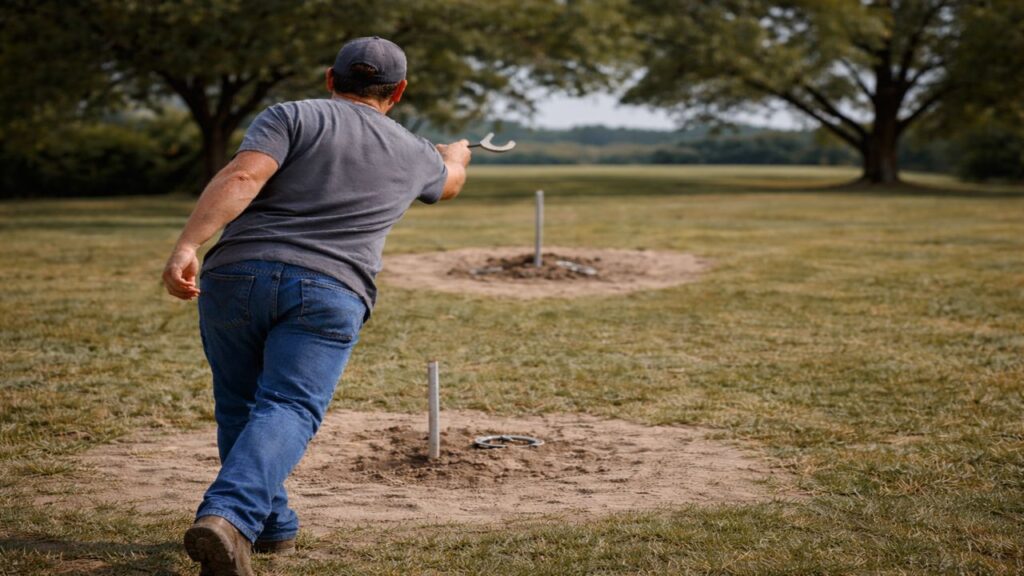
2. Doubles Is an Awareness Game
Doubles removes the safety net.
Every throw now affects:
- Your partner’s next shot
- The layout of the pit
- Momentum for both teams
A careless miss can erase a great setup by your partner. Awareness replaces rhythm as the most important skill. Good doubles players constantly read the pit and adjust before they throw.
Doubles rewards judgment more than raw ability.
3. Shot Selection Changes Immediately
Singles Shot Selection
In singles, aggressive pitching makes sense.
- Chase ringers
- Trust repetition
- Accept misses as part of the process
A missed ringer usually costs little more than an inning.
Doubles Shot Selection
In doubles, reckless aggression is punished.
- Placement often beats power
- One miss can open the pit
- Defensive shoes gain value
In doubles, the smartest shoe is often the one that limits options rather than scores.
4. Scoring Becomes Situational in Doubles
Singles scoring is direct:
- Make ringers
- Cancel opponent ringers
- Accumulate points
Doubles scoring is layered:
- Protect your partner’s setup
- Reduce opponent opportunities
- Avoid opening the pit
There are many innings in doubles where scoring zero points is the correct outcome.
5. Tempo Control Separates Winning Teams
Singles players often benefit from a steady or fast tempo.
Doubles demands flexibility.
- Slow down after a partner miss
- Reset after momentum swings
- Avoid rushing throws to “fix” mistakes
Teams that rush throws usually compound errors. Calm pacing stabilizes doubles games.
6. Communication Without Interference
Doubles require communication, but timing matters.
Effective communication happens:
- Between innings
- While retrieving shoes
- After a completed frame
Poor communication happens mid-throw and destroys confidence. Doubles is not the place for mechanical advice during motion.
Sometimes silence is the strongest form of trust.
7. Defense Plays a Larger Role in Doubles
Defense exists in singles, but it thrives in doubles.
Common defensive approaches include:
- Blocking entry angles
- Crowding scoring space
- Forcing uncomfortable arcs
In singles, defense is optional.
In doubles, defense controls the game.
A defensive shoe does not need to score—it needs to disrupt rhythm.
8. Handling Pressure When a Partner Misses
Singles pressure is internal. Doubles pressure is shared.
After a partner misses:
- The urge to “make it up” appears
- Overthrowing becomes tempting
- Rhythm often breaks down
Strong doubles players stabilize the inning instead of chasing redemption shots. Calm play restores balance faster than aggression.
9. Knowing When to Be Aggressive in Doubles
Aggression still matters in doubles, but it must be earned.
Good moments to attack include:
- A wide-open pit
- A solid setup by your partner
- Late-game situations requiring momentum
Blind aggression usually leads to big innings—for the other team.

10. Understanding Informal Team Roles
Successful doubles teams often develop natural roles:
- One player focuses on placement and defense
- The other takes calculated scoring shots
These roles shift based on the inning, but recognizing strengths prevents confusion. Teams that ignore roles often throw against each other instead of together.
11. Common Singles Habits That Hurt Doubles Teams
Strong singles players often struggle in doubles because they do not adjust.
Common mistakes include:
- Throwing too hard
- Ignoring the pit layout
- Overcorrecting after misses
- Talking during throws
- Treating doubles like singles with company
Doubles expose ego faster than singles ever will.
12. The Mental Game Shifts in Doubles
Singles reward self-trust.
Doubles require shared trust.
You must trust:
- Your partner’s recovery
- Defensive placement to work
- Patience over flash
Teams that trust each other win close games even without perfect throws.
13. Practicing Specifically for Doubles
Singles practice builds mechanics.
Doubles practice builds judgment.
Effective doubles practice includes:
- Placement-only innings
- Scenarios after a missed partner shot
- Limiting ringer attempts per frame
If all practice mirrors singles play, doubles performance will lag.
14. Adjusting Strategy When Ahead or Behind
When Ahead
- Protect the pit
- Force difficult throws
- Let opponents take risks
When Behind
- Limit big innings
- Apply defensive pressure
- Wait for openings
Doubles strategy changes with the scoreboard more than singles ever does.
15. Equipment Consistency Across Formats
Switching between singles and doubles is easier when equipment behaves predictably.
A balanced, regulation set like the Triumph Competition Horseshoe Set provides consistent weight and response, making it easier to move between aggressive singles pitching and controlled doubles placement without changing gear. Predictable equipment allows players to focus on decisions instead of constant adjustments.

Horseshoe Game Set
16. Why Doubles Punish Mistakes Faster
Singles offers recovery.
Doubles magnifies errors.
A bad throw in singles may cost a point.
A bad throw in doubles can cost an entire inning.
That reality is why doubles rewards restraint, awareness, and teamwork.
Frequently Asked Questions
Is singles harder than doubles?
Singles test consistency. Doubles test judgment. Many players find doubles harder mentally.
Should beginners start with singles or doubles?
Doubles teach patience, placement, and awareness earlier.
Do experienced players really change strategy in doubles?
Yes. Even strong ringer hitters play more conservatively in doubles.
Can a great singles player struggle in doubles?
Absolutely, especially without restraint.
Is communication more important than skill in doubles?
Skill matters, but poor communication can undo it quickly.
Why Adjusting Strategy Wins More Games
Singles sharpens your throw.
Doubles sharpen your judgment.
Players who learn to adjust between the two stop relying on talent alone and start winning through awareness, patience, and control. Understanding what changes—and why—turns horseshoes from a casual pastime into a strategic game.