Why Most Horseshoe Players Plateau (And Exactly How to Break Through It)
Many horseshoe players reach a point where improvement seems to stall despite regular practice. Misses feel repetitive, progress slows, and confidence dips even though effort hasn’t changed. This article explains why horseshoe players plateau, how practice habits quietly limit progress, and what specific adjustments can reignite consistency, accuracy, and confidence at any skill level.
If you’ve been pitching horseshoes for a while, you probably recognize the pattern.
You’re past the beginner stage.
You know the rules.
You’ve hit plenty of ringers.
You don’t embarrass yourself on league night.
But you’re not getting better.
Not worse either — just stuck.
That middle ground is where most players live, and it’s also where frustration starts creeping in. You practice. You play. You care. Yet your game looks the same month after month.
This isn’t bad luck. It isn’t age. And it definitely isn’t because you’ve “maxed out” your ability.
It’s because most horseshoe players unknowingly practice in ways that maintain their current skill instead of improving it.
The Real Reason Horseshoe Players Stop Improving
Plateaus don’t happen because players stop trying.
They happen because players stop challenging the right things.
Once you reach basic competence, casual repetition no longer creates improvement. Tossing shoes the same way, from the same spot, with the same habits only reinforces whatever level you’re already at.
In other words, your practice becomes maintenance.
That’s fine if you’re happy where you are. But if you want cleaner throws, tighter misses, and more reliable scoring, maintenance won’t cut it.
Comfortable Practice Is the Enemy of Progress
Most players practice in the most comfortable way possible:
- Same stance every session without checking alignment
- Same grip, even if it slips or tightens under pressure
- Same distance, no variation
- Same speed, even when timing feels off
- Same full games, start to finish
Comfort feels productive, but it rarely leads to improvement.
Real improvement starts when practice feels slightly uncomfortable — slower, more deliberate, more focused.
Why Playing More Games Doesn’t Fix a Plateau
Games are great for competition, rhythm, and pressure management.
They are not great for fixing mechanics.
When you only practice by playing games:
- You rush throws to keep pace
- You repeat mistakes without correcting them
- You focus on score instead of execution
- You adapt to bad throws instead of fixing them
Games reveal your skill level. They don’t raise it.
That’s why players can play for years without noticeable improvement.
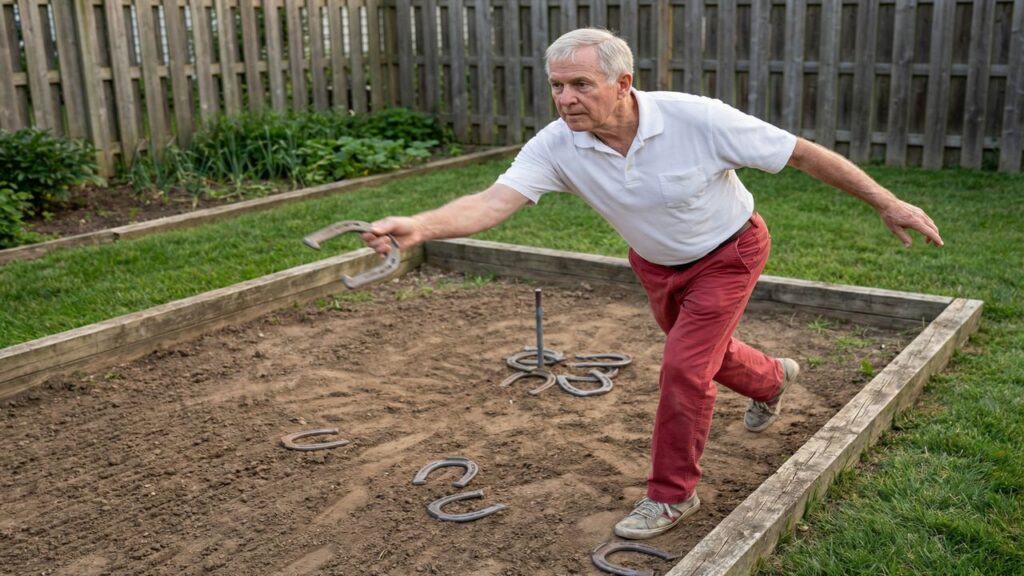
The Shift That Unlocks Progress
The turning point for most players is simple:
Stop practicing to play games better.
Start practicing to throw better.
That means separating skill development from competition.
Every practice session should have one clear purpose, not ten vague goals.
Examples:
- Today I’m working on release timing
- Today I’m stabilizing my stance
- Today I’m controlling arc height
- Today I’m finishing my follow-through
When your focus narrows, progress accelerates.
The Four Skills That Actually Break Plateaus
If your game feels stuck, one or more of these areas is almost always the culprit.
Grip Consistency
Grip inconsistency shows up as unpredictable misses.
Common issues include:
- Switching grips mid-session
- Squeezing too tightly when trying to “aim”
- Adjusting fingers during the swing
A grip should feel repeatable, not forced.
Practice slow, controlled releases with the same grip every time. Don’t worry about the score. Focus on feel.
Stance Discipline
Your feet create the foundation for everything else.
Problems often include:
- Standing too open or too closed
- Inconsistent toe placement
- Shifting weight during the swing
Mark your stance position during practice. Same feet, same alignment, same setup every throw.
Consistency starts from the ground up.
Release Timing
Most misses aren’t caused by bad aim.
They’re caused by timing.
Late releases sail long. Early releases fall short. Side misses often come from rushed or delayed wrist action.
Slow-motion pitching is one of the fastest ways to fix timing issues. It forces awareness and builds repeatability.
Follow-Through Discipline
Follow-through is where many good throws die.
Common mistakes:
- Stopping the arm early
- Flicking the wrist instead of letting it flow
- Decelerating after release
A relaxed, complete follow-through keeps throws smooth and predictable.
Finish the motion every time, even on bad throws.
Horseshoe Game Sets
How to Practice Without Overthinking It
You don’t need complicated drills or endless sessions.
A short, focused structure works best.
Simple 30-minute practice format:
- 5 minutes of loose warm-up throws
- 10 minutes focused on one skill
- 10 minutes controlled pitching
- 5 minutes to reset and reflect
Short, intentional sessions beat long, unfocused ones every time.
Why Backyard Practice Is Where Improvement Happens
Backyard practice removes pressure.
No scoreboards. No spectators. No rushing.
It allows you to:
- Stop and reset mid-session
- Repeat the same shot intentionally
- Work on weaknesses privately
- Build confidence without distractions
League nights expose flaws. Backyard practice fixes them.
Equipment Matters — Just Not the Way Most People Think
Equipment won’t compensate for poor mechanics.
But inconsistent equipment will amplify mistakes.
Using a balanced, regulation-weight horseshoe set removes variables and allows you to focus on form instead of adjustment.
Horseshoe Product Recommendation
For players moving beyond the beginner stage, the St. Pierre American Professional Horseshoes are a solid choice.
They offer:
- Regulation weight and balance
- Reliable feel for controlled releases
- Durability for frequent backyard practice
- Familiarity with league and tournament play
Good equipment supports consistency. It doesn’t replace it.
Tracking Improvement Without Obsessing
You don’t need score sheets or stats.
After each session, ask yourself:
- What improved today?
- What felt off?
- What should I focus on next time?
Small observations guide big progress over time.
The Mental Side Most Players Ignore
Your mindset shows up in your throw.
Rushing, frustration, or tension almost always translate into sloppy execution.
Consistent players:
- Take their time
- Breathe before pitching
- Reset after misses
- Stay emotionally steady
Confidence isn’t aggressive. It’s calm.
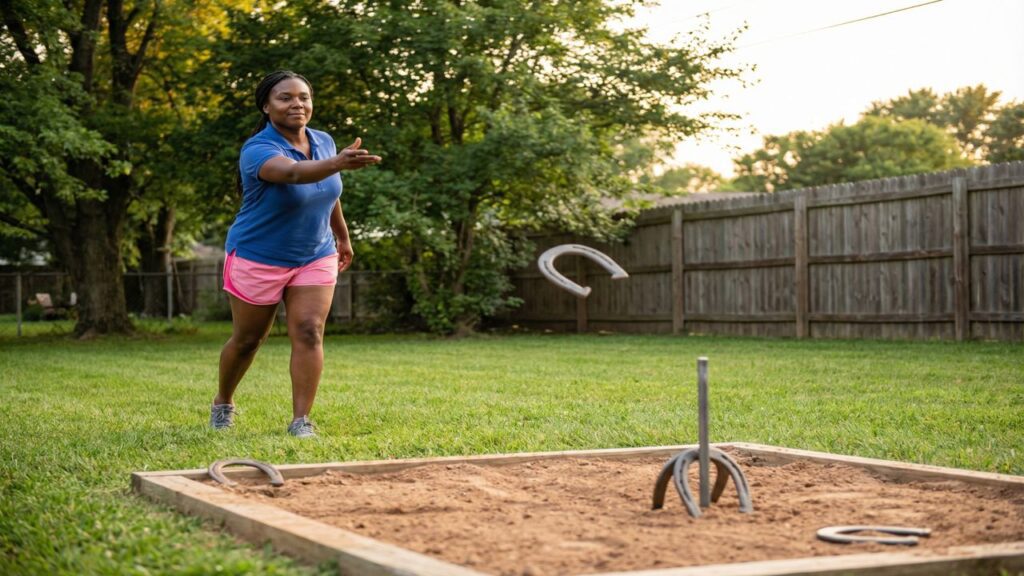
Signs You’re Finally Breaking Through
You’ll notice changes before the scores jump:
- Misses get tighter
- Good throws feel repeatable
- Your tempo slows naturally
- You stop forcing results
That’s real improvement taking hold.
Frequently Asked Questions
How often should I practice horseshoes?
Two to four focused sessions per week are more effective than daily casual tossing.
Why do I pitch worse in games than in practice?
Pressure speeds you up. Slow your routine and trust your form.
Can older players still improve?
Yes. Consistency and control improve at any age.
Should beginners practice differently from experienced players?
Beginners need fundamentals. Intermediate players need refinement and discipline.
Is backyard practice enough to get good?
Yes, if it’s structured and intentional.
Where to Go From Here
If any part of this article sounded familiar, the next step is simple.
The next time you step up to the pit, don’t “just play.”
Pick one thing.
Work on it deliberately.
Then stop.
That’s how plateaus break.
That’s how consistency builds.
And that’s how horseshoe players quietly level up while everyone else stays the same.