
Winter Horseshoes: How to Keep Playing When It’s Freezing Outside
Horseshoes isn’t just a backyard summer pastime — it’s a game with roots that stretch back to ancient Greece. Soldiers once pitched iron rings at stakes for fun, and centuries later, that same clang of steel on steel keeps players coming back.
Picture this: crisp winter air, your breath puffing little clouds, your boots crunching over snow, and that glorious sound of a ringer echoing across the frosty yard. It’s a whole different vibe than summer play — and one you’ve got to experience at least once.
Winter horseshoes might not be the first thing that comes to mind when the temperatures drop, but it’s a tradition that keeps your skills sharp, your body moving, and your social life alive during the coldest months of the year.
Let’s dive into everything you need to know to make winter pitching a reality — from court prep to clothing tips, mental focus to indoor alternatives. By the end, you’ll be itching to grab your shoes, clear your pit, and keep the game going until spring.

The Case for Winter Horseshoes
Why bother playing in winter when you could just wait for warmer weather?
- Skill Retention: Taking a few months off can make you rusty come spring. Playing through the winter keeps your release and aim sharp.
- Physical Activity: Most of us slow down in winter — horseshoes gets you outside, moving, and soaking up much-needed daylight.
- Social Connection: Regular matches with friends can help beat the winter blues.
- Challenge Factor: Icy pits and frozen ground force you to adapt — making you a more versatile player.
Winter play isn’t just a way to pass the time; it can turn into its own tradition, with fire pits, hot cocoa, and friendly rivalries that warm you from the inside out.
The Challenges of Cold-Weather Play
Playing horseshoes in January is a whole different animal than tossing in July. Here’s what you’ll face — and why those challenges actually make you a better player:
- Frozen Ground: Shoes may bounce or slide farther than usual.
- Snow Buildup: Missed shoes can vanish in fresh powder.
- Grip Problems: Cold, stiff fingers make a smooth release tricky.
- Layered Clothing: Bulky coats can restrict your natural swing.
- Shorter Days: You may need lighting for late-afternoon games.
Instead of seeing these as obstacles, treat them like skill-building exercises. Learning to control your release on a slick surface or with gloved hands makes you sharper when conditions are ideal.
Step 1: Winter-Proof Your Court
Clear the Surface
Before snow becomes an issue, rake and level your pit. Once snow hits, clear it after each storm — a quick shovel job after a light snowfall is far easier than digging out a frozen, compacted mess later.
Keep Borders Healthy
Your pit’s wooden borders take a beating in wet, cold months. Apply a water sealant to prevent rot and warping.
Create Traction Zones
Sprinkle sand or use anti-slip mats where players stand. Stable footing prevents slips and makes for a more confident throw.
Add Lighting
Winter means early sunsets. Install solar-powered or LED floodlights to keep the court playable past 4 PM. Bonus: it makes the court look amazing on a snowy night.
Step 2: Dress for Success (and Movement)
The key to winter gear is warmth without sacrificing motion.
- Base Layer: Moisture-wicking thermal shirt and leggings to keep sweat off your skin.
- Mid Layer: Fleece or hoodie for insulation.
- Outer Layer: Windproof jacket that still lets you swing freely.
- Hands: Thin, insulated throwing gloves — neoprene or leather with a tacky grip.
- Feet: Waterproof boots with good traction.
Pro Tip: Keep a thermos of coffee, tea, or cocoa courtside. Warm hands and warm core temperature = better throws.

Step 3: Warm Up Before You Throw
Cold muscles are more likely to cramp or strain. Do this quick warm-up routine before your first pitch:
- Arm Circles: 10 forward, 10 backward
- Torso Twists: 15 each side
- Bodyweight Squats: 10 slow and controlled
- Practice Swings: 5 without shoes, focusing on smooth motion
You’ll notice a big difference in power and accuracy once your body’s loose.
Step 4: Adjust Your Technique for Winter
Shorter Strides
Bulky boots and slick ground call for a slightly shorter stride to maintain balance.
A Little More Arc
Frozen ground means shoes will slide more. Adding a touch of arc helps them stick near the stake.
Grip Adjustments
Gloves may change how you hold the shoe. Experiment until you find a release that feels natural with your winter gear.
Step 5: Build an Indoor Practice Setup
When it’s truly brutal outside, take the game indoors — at least for practice.
- Rubber Horseshoes: Perfect for garages or basements, safe for walls and floors.
- Portable Pit Box: Build a small frame filled with play sand to catch shoes.
- Shorten the Distance: Even a 15–20 foot setup helps you work on release consistency.
This is a game-changer for keeping your form dialed in through the worst weather.
Step 6: Embrace the Social Side
Winter horseshoes is the perfect excuse to bring people together:
- Host a “Snow Pitch” Event: Keep score, play music, hand out silly prizes.
- Hot Drink Station: Coffee, cider, or cocoa keeps everyone warm.
- Fire Pit or Heater: Creates a cozy hangout spot between innings.
Idea: Make it a league tradition. First weekend after New Year = Winter Throwdown.
Step 7: Safety First
- Shovel and Salt: Keep paths to the pit clear and slip-free.
- Know Your Limits: Take breaks to warm up if your hands get too cold.
- Visibility: Use bright foul line markers or paint to keep the game fair even in low light.
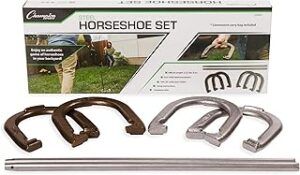
Horseshoe Game Set
Essential Winter Gear Checklist
Here’s your quick shopping list to stay safe and competitive:
- Franklin Sports Horseshoe Set (durable for winter conditions)
- Thermal Throwing Gloves (thin but warm)
- Insulated, Waterproof Boots
- Windproof Outer Layer
- Portable LED Floodlights
- Thermos & Hand Warmers
Having the right gear transforms winter play from miserable to magical.
The Mindset Advantage
Winter pitching isn’t just physical — it’s mental. The cold tests your focus, patience, and grit. Players who thrive in winter tend to dominate in spring because they’ve built both resilience and consistency.
Call to Action
This winter, don’t let your horseshoes collect dust. Take control of your game:
- Prep your court now.
- Gear up with the right clothing and gloves.
- Play at least once a week, even if it’s just a short set.
The first time you land a ringer with snow falling around you, you’ll know exactly why winter horseshoes is worth it.
FAQs About Winter Horseshoe Play
Q: Can I play in deep snow?
A: Yes — just clear a landing zone or pack the snow down so shoes don’t vanish completely.
Q: Do I need different horseshoes for winter?
A: Not required, but some players prefer shoes with a rougher grip surface in cold weather.
Q: How do I keep score in the snow?
A: Use a freestanding scoreboard or even a chalkboard on a nearby wall — and mark foul lines with bright paint or flags.
Q: Is indoor practice really worth it?
A: Absolutely. Even if you can’t go full distance, you can keep your release consistent and work on your mental game.

Final Thoughts
Horseshoes isn’t just a summer hobby — it’s a year-round passion if you want it to be. Winter play offers a whole new set of challenges and rewards: sharper skills, stronger friendships, and memories that warm you up even on the coldest nights.
So grab your gloves, light up your court, and make winter your secret training season. When spring rolls around, you won’t just be ready to play — you’ll be the player to beat.
Hi there, and thanks for stopping by! My name is Larry, and I’m the voice behind PlayingHorseshoes.com. I love the game and have been playing since I was a kid. I started this blog because I am passionate about the sport, and with all the technology, I hope the sport doesn’t die. I plan to do my part to keep it going for my brother and my sake. Thank you for stopping by. Feel free to subscribe and comment. Thank You!


