Playing the Score: Strategy Beyond the Ringer
Most people step into the pit, grab a shoe, and throw — hoping for a ringer. And while that’s fun, if you really want to start winning games, you need to think beyond just “ringers or bust.”
In horseshoes, strategy matters. Knowing when to go for points, when to block, and how to force your opponent into bad throws can completely change the outcome. This guide is going to walk you through how to play the score — not just the stake.

Why Scoring Strategy Matters
You can be a great pitcher and still lose if you’re playing without a plan.
- Points Add Up: Even a single point per inning puts pressure on your opponent.
- Defense is Underrated: Sometimes it’s smarter to block than to shoot for the ringer.
- Momentum Is Real: A well-timed three-point inning can flip the whole game.
Bottom Line: Strategy lets you win games you might otherwise lose — even against a stronger shooter.
Step 1: Understand the Scoring System (Inside and Out)
You can’t play the score if you don’t fully understand how scoring works.
- 1 Point: Closest shoe within 6 inches of the stake.
- 2 Points: Both of your shoes are closer than any of your opponent’s.
- 3 Points: A single ringer (shoe encircles stake).
- 6 Points: Double ringer (both shoes encircle stake).
Knowing these rules cold allows you to make smarter decisions when choosing your shots.
Step 2: Play for Points Early
Early in the game, don’t stress about ringers. Your first goal should be to get on the board:
- Aim for a “closer” shoe to force your opponent to respond.
- A single point early builds confidence and puts pressure on the other player.
- Remember: many games are decided by just a few points — bank what you can.
Pro Tip: Aiming just in front of the stake for a “leaner” can give you a guaranteed point without over-rotating.
Step 3: Learn the Blocker Pitch
Sometimes offense is defense. A well-placed blocker can cut off your opponent’s perfect shot.
How to Throw a Blocker
- Aim for 6–12 inches in front of the stake.
- Focus on a soft landing with minimal slide.
- Ideally, the shoe should end up directly between the stake and your opponent’s throwing line.
Blocking is especially useful when:
- Your opponent already has one close shoe.
- You’re protecting a one-point lead.
- You want to force a tough angle for their ringer attempt.

Step 4: Manage Risk When You’re Ahead
If you’re up by 5+ points, you don’t need to go for ringers every pitch.
- Play conservatively — just keep your shoes close and force your opponent to take risks.
- Avoid big misses that give them easy points.
- Keep track of the inning count — if you’re ahead late, focus on keeping every pitch safe and close.
Step 5: Comeback Strategy When You’re Behind
When you’re down, you need to manufacture momentum:
- Go aggressive — aim for ringers, not just points.
- Try to throw first and put pressure on your opponent.
- Take advantage of double ringer opportunities — they can flip the score in a single inning.
Step 6: Partner Strategy (Doubles Play)
Doubles play adds another layer of fun — and strategy.
- Communication is Key: Call your shots so your partner knows your plan.
- Play Off Each Other: If your partner is already in for a point, you can go riskier for a ringer.
- Protect Leads Together: If you’re ahead, both players should focus on safe, close shoes.
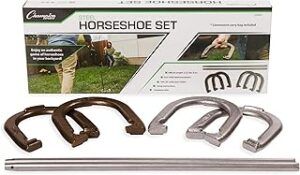
Horseshoe Game Set
Step 7: Know Your Opponent
Just like poker, you can read your opponent’s habits:
- Do they tend to throw left/right?
- Are they rattled by blockers?
- Do they get frustrated and overthrow when they’re behind?
Use this info to choose when to block, when to play safe, and when to press.
Step 8: Track Your Stats
If you want to get serious, track your own scoring tendencies:
- Average points per inning
- Ringer percentage
- How often you score after your opponent scores
This will show you where you’re strong and where you’re giving away points.
Recommended Gear for Score-Tracking
I recommend a free-standing score tower with flip numbers. One excellent option is the Sports Score Tower, which includes drink holders and large, visible numbers. Keeping score visible for everyone makes games more competitive and helps you learn to play situationally.
Pair it with a score sheet or simple notebook to log games and watch your improvement over time.

Call to Action
Next time you step onto the court, challenge yourself to play the score game — not just the ringer game.
- Use blockers when you’re ahead.
- Play conservative when you have the lead.
- Take big swings when you’re behind.
Strategy is what makes the difference between casual tossing and real competition.
FAQs About Horseshoe Scoring Strategy
Q: Is blocking legal in horseshoes?
A: Yes — there’s no rule against intentionally landing in front of the stake. It’s part of strategy.
Q: What’s a safe lead in horseshoes?
A: No lead is completely safe, but if you’re up by 10+ points with only a few innings left, focus on staying consistent rather than risky throws.
Q: Should I always throw for points first?
A: Not always — early in the game, points are key, but if you’re behind late, you may need to go for ringers.
Q: How do I score if both my opponent and I have ringers?
A: They cancel out — no points are awarded unless you have more ringers than they do in that inning.
Final Thoughts
Playing the score is what separates casual backyard pitchers from competitive players. It’s about making smart decisions inning after inning — not just throwing as hard as you can.
When you combine skill, strategy, and consistency, you’ll find yourself not just hitting more ringers — but actually winning more games.
So grab your shoes, set up a scoreboard, and practice with a purpose. The next time someone says, “Best two out of three?” — you’ll be ready to dominate.
Hi there, and thanks for stopping by! My name is Larry, and I’m the voice behind PlayingHorseshoes.com. I love the game and have been playing since I was a kid. I started this blog because I am passionate about the sport, and with all the technology, I hope the sport doesn’t die. I plan to do my part to keep it going for me and my brother’s sake. Thanks for stopping by, feel free to subscribe and comment. Thank You!