Can Kids Compete With Adults in Horseshoes? (What Actually Happens on the Court)
If you’ve ever had kids step up to a horseshoe pit with adults watching, you’ve probably seen the same reaction—half curiosity, half doubt. Most people assume adults will dominate every time, simply because of strength and experience.
But here’s the truth.
That assumption doesn’t always hold up.
Horseshoes is one of those rare backyard games where kids can absolutely compete with adults under the right conditions. It’s not about power. It’s about control, consistency, and confidence—and those are skills kids can develop faster than most people expect.
The real question isn’t whether kids can compete.
It’s how to set the game up so they actually have a fair shot.
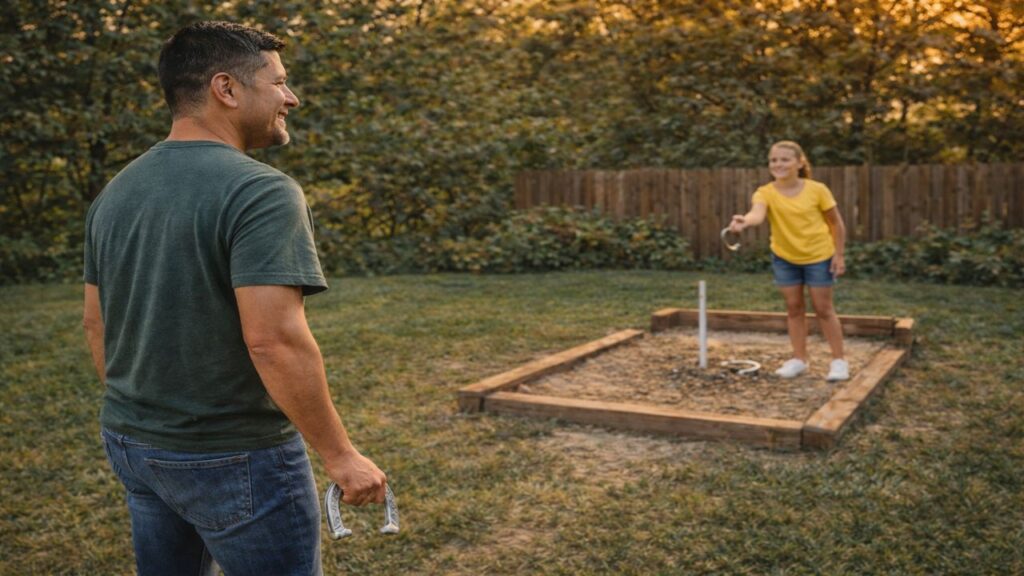
Why Horseshoes Isn’t Just an Adult Game
At first glance, it looks like an adult-dominated game. The distance is longer, the horseshoes are heavier, and experienced players tend to have more control. That alone makes people assume kids are at a disadvantage.
But horseshoes don’t reward brute strength.
It rewards repeatable motion and touch.
A smooth, controlled throw beats a powerful, inconsistent one every time. That’s where kids can level the playing field. They tend to learn rhythm quickly, and once they get comfortable, they often surprise adults with how close they can land consistently.
Accuracy beats strength.
That’s what makes this game different.
Where Adults Usually Have the Advantage
Let’s be real—adults still have some built-in advantages, especially at regulation play.
Distance is the biggest factor. A full-length court can be tough for younger players to reach consistently, which affects both accuracy and confidence. Adults also tend to have more patience and experience, which helps them stay steady over multiple rounds.
Then there’s grip strength and control. Standard horseshoes can feel heavy for smaller hands, especially during longer games.
Those factors matter.
But they don’t make competition impossible—they just mean the setup needs to be adjusted.
How to Level the Playing Field
If you want kids to compete with adults and actually enjoy it, the game has to be fair. That doesn’t mean easier—it means balanced.
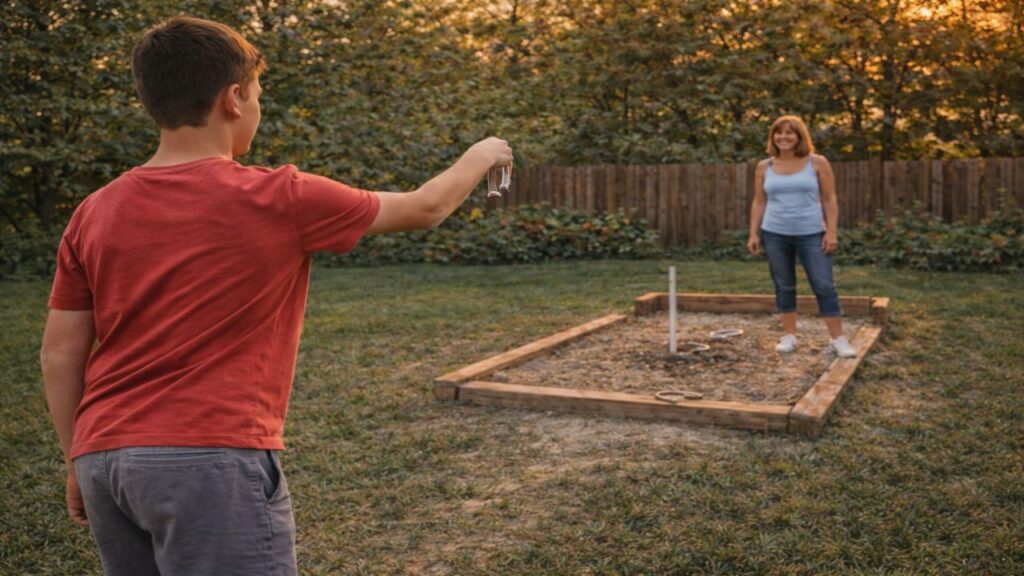
The simplest adjustment is distance. Let kids throw from a shorter range while adults stay at full or near-full distance. This gives younger players a realistic chance to land close without struggling just to reach the pit.
Another option is using lighter horseshoes or beginner-friendly sets. These are easier to control and help kids develop a smoother throw without forcing power.
You can also adjust scoring slightly, giving kids a small advantage for close throws or consistent placement.
A fair setup creates real competition.
And real competition keeps everyone engaged.
The Mental Game: Where Kids Can Surprise You
One of the most overlooked factors is mindset.
Kids don’t overthink the way adults do. They step up, throw, and move on. That simplicity can actually work in their favor, especially against adults who start chasing perfect throws or get frustrated after a few misses.
Confidence matters more than experience in short games.
If a kid starts landing close early, you’ll often see the momentum shift quickly. Adults tighten up, kids loosen up, and suddenly the game is closer than expected.
That’s when it gets fun.
Best Game Formats for Kids vs Adults
Not every format works well when mixing ages and skill levels. The key is choosing setups that keep things competitive without dragging the game down.
Shorter games to 15 or 21 points work better than long matches. They keep attention high and give kids more chances to win without getting worn out.
Doubles play is another great option. Pair a kid with an adult and let them work as a team. This builds confidence, keeps the game social, and removes pressure from individual performance.
You can also rotate partners each round to keep things fresh.
Keep it moving. Keep it fun.
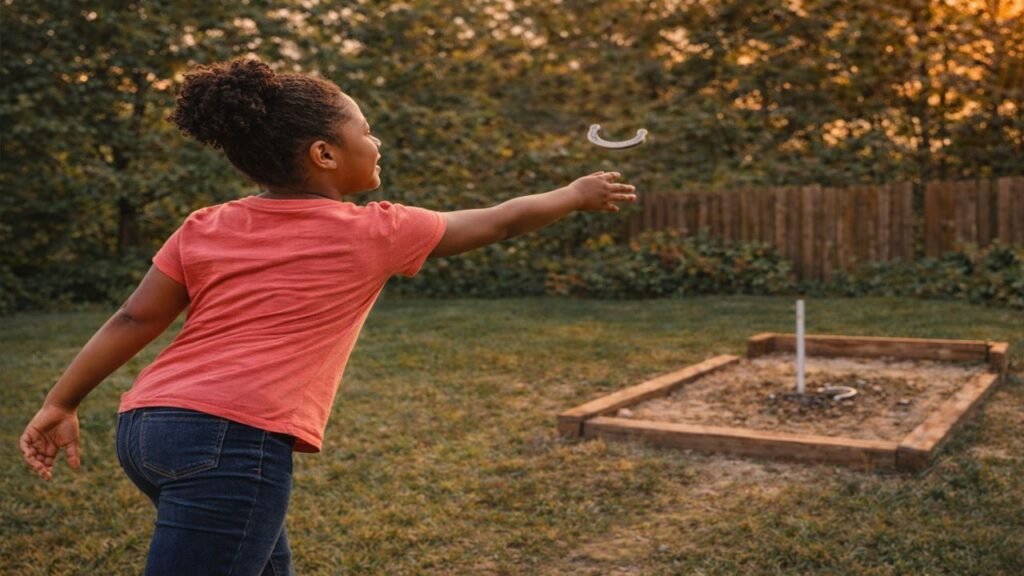
Equipment That Helps Kids Compete
The right equipment makes a bigger difference than most people think.
Heavy, professional-grade horseshoes can be frustrating for kids. They’re harder to control and require more strength than necessary for learning. Starting with a more beginner-friendly set allows kids to focus on technique instead of fighting the weight.
A solid option is the Franklin Sports Horseshoes Set, which offers a balanced feel that’s easier for younger players to handle. It provides enough weight for a realistic throw without being overwhelming.
For younger kids or casual family play, the Champion Sports Rubber Horseshoe Set is a great alternative. It’s lighter, safer, and ideal for building confidence early.
The goal isn’t to make it easy.
It’s to make it playable.
Horseshoe Game Sets
Teaching Kids to Compete, Not Just Play
There’s a difference between letting kids play and teaching them how to compete.
Start by focusing on simple consistency. Landing near the stake is more important than chasing ringers. Once they understand that, their confidence grows quickly.
Encourage a smooth throwing motion instead of power. Kids naturally want to throw hard, but control is what wins games. Show them how to slow down and aim instead of forcing distance.
Most importantly, keep feedback simple. One adjustment at a time works far better than constant correction.
Confidence builds competitors.
Not pressure.
Common Mistakes Adults Make When Playing with Kids
This is where things can go sideways.
Some adults take it too easy, which actually removes the competitive feel and makes the game less interesting. Others go the opposite direction and play full intensity without adjusting anything, which can frustrate younger players.
The balance is in creating a fair challenge.
Play to win—but play smart. Adjust the setup, not the effort.
Another mistake is over-coaching during the game. Let kids play. Let them figure things out. That’s where real improvement happens.
When Kids Start Winning
It happens more often than people expect.
Once kids get comfortable with distance and develop a repeatable throw, they start landing consistently. And consistency is what wins horseshoe games, not occasional perfect shots.
At that point, adults who rely on experience alone can get caught off guard.
That’s when the game flips.
And that’s when kids really get hooked.
FAQ: Kids vs Adults in Horseshoes
1. Can kids really beat adults in horseshoes?
Yes, especially with adjusted distance and beginner-friendly equipment. Consistency can level the playing field quickly.
2. At what age can kids start playing horseshoes?
Kids as young as 6–8 can start with lighter sets or shorter distances. Older kids can transition to standard play over time.
3. Should kids use the same horseshoes as adults?
Not at first. Lighter or beginner-friendly sets help build control and confidence before moving to standard horseshoes.
4. What’s the best way to make games fair?
Adjust distance, use appropriate equipment, and keep scoring simple. These changes create balanced competition.
5. Are horseshoes safe for kids?
Yes, with proper supervision and spacing. Using rubber or lighter sets adds an extra layer of safety for younger players.
Let Them Compete
Here’s the bottom line.
Kids don’t need a watered-down version of horseshoes—they need a fair chance to compete. When the setup is right and the pressure is low, they can hold their own and even win.
And when that happens, something important clicks.
They stop seeing it as a game adults play.
They start seeing it as their game too.
That’s how you build the next generation of players—and keep the backyard competition alive.
Hi there, and thanks for stopping by! My name is Larry, and I’m the voice behind PlayingHorseshoes.com. I love the game and have been playing since I was a kid. I started this blog because I am passionate about the sport, and with all the technology, I hope the sport doesn’t die. I plan to do my part to keep it going for me and my brother’s sake. Thanks for stopping by. Thank You!