Choosing the Right Gear: A Comprehensive Guide to Horseshoes and Stakes
Let’s be honest—there’s more to horseshoe pitching than just chucking some metal at a stake. The gear you choose can seriously shape how fun, fair, and competitive your games are. Whether you’re setting up a backyard pit or gearing up for league play, having the right horseshoes and stakes sets the stage for success.
In this in-depth guide, we’ll walk you through everything you need to know about choosing the right gear for horseshoe pitching—from picking the perfect pair of shoes to installing sturdy stakes that won’t budge an inch. Let’s get into it.
🎯 Why Choosing the Right Gear Matters
You wouldn’t bring a wiffle ball to a baseball game, right? The same idea applies here. Using mismatched or low-quality horseshoes and stakes can throw off your rhythm, mess up scoring accuracy, and even cause injuries.
Great gear ensures:
- A smoother, more predictable throw
- Fewer game interruptions from loose or bent stakes
- More accurate scoring from well-balanced horseshoes
- An overall better playing experience for all skill levels
Whether you’re just starting out or aiming for tournament gold, choosing the right equipment is where it all begins.
🐎 Types of Horseshoes: Which Style Suits Your Game?
Regulation Horseshoes
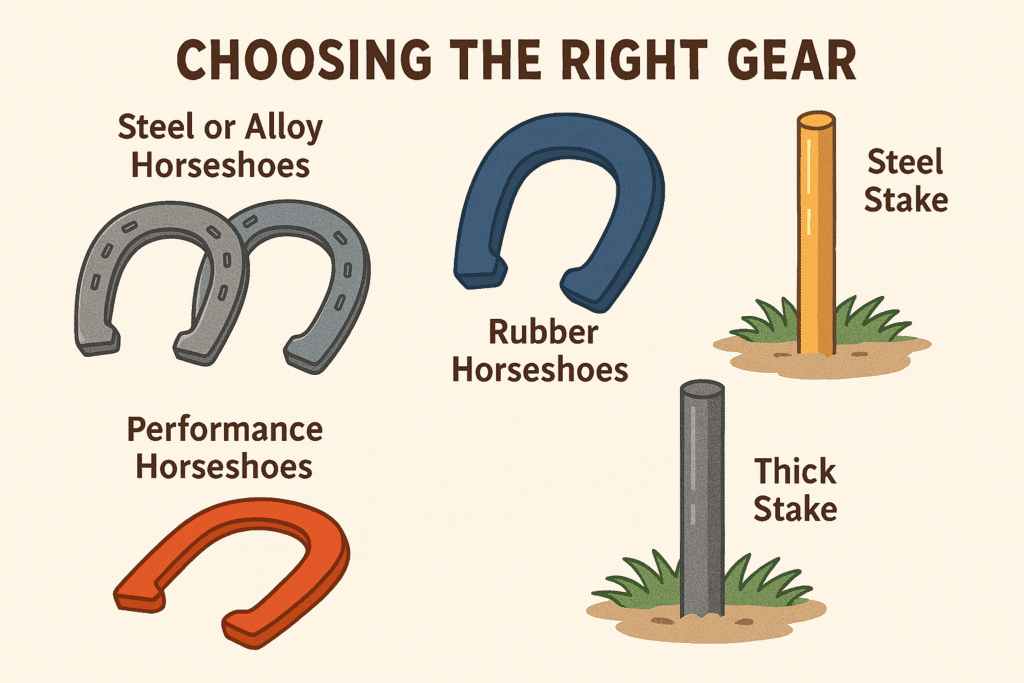
These are designed for competitive play and must meet National Horseshoe Pitchers Association (NHPA) standards. They’re made from forged steel or ductile iron, weighing between 2.5 to 2.8 pounds. Built for balance and durability, these shoes offer consistent performance with well-defined ringer hooks and excellent weight distribution.
Best for: Competitive players, tournaments, and league matches.
Recreational Horseshoes
Recreational shoes are less strict in design and typically come in boxed sets with stakes included. They’re perfect for weekend games and backyard fun. You might find them made from lighter alloys or painted cast iron. They’re not NHPA-approved, but they get the job done for casual play.
Best for: Families, beginners, and backyard players.
Rubber Horseshoes
These are lightweight, colorful, and safe. Rubber horseshoes are ideal for kids, seniors, or indoor settings where safety and noise reduction are a priority. They don’t offer the same play dynamics as metal horseshoes, but they’re perfect for introductory games or relaxed environments.
Best for: Indoor games, young children, or soft-surface play areas.
🔍 What to Look for When Choosing Horseshoes
When browsing your options, keep these key considerations in mind:
1. Material
Go with forged steel or ductile iron if you want durability and regulation-level quality. Alloy metals are lighter and still good for casual play, while rubber offers the safest option for low-impact environments.
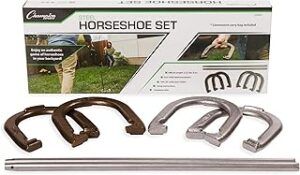
Horseshoe Game Set
2. Weight
Heavier horseshoes (closer to 2.8 pounds) offer more throwing momentum but can be tough on the arm over long sessions. Lighter shoes are easier to toss and great for players who rely more on finesse than power.
3. Grip
Look for shoes with grip-friendly surfaces, thumb indentations, or textured finishes. These features help reduce slippage during release and improve accuracy.
4. Design Details
Advanced models often feature slim-line edges, hooked ends for better ringer chances, or precise weighting for controlled spins. If you’re serious about your throw, these small details can make a big difference.
🧠 Best Horseshoe Brands to Know
If you’re looking to buy your first set or upgrade your current gear, here are some of the most trusted names in the game:
- St. Pierre American Professional Set – A top-tier choice for league players and serious hobbyists.
- Gordon Professional Horseshoes – Known for their balance, grip, and tournament-ready durability.
- Franklin Sports – Affordable and easy to find, perfect for casual play.
- Champion Sports Rubber Set – Great for families and safe play environments.
🔩 All About Stakes: What to Look for and How to Set Them Up
While horseshoes tend to get all the glory, the stakes play just as important a role. If your stake is too thin, unstable, or poorly installed, even a perfect throw won’t result in a satisfying “clink.”
Ideal Specs for Horseshoe Stakes
A proper stake should be made from cold-rolled or galvanized steel, 36 inches long, and about 1 inch in diameter. When installed, 15 inches should remain above ground, tilted back at a 12–15 degree angle toward the thrower.
Steel is hands-down the best choice. It handles weather, impact, and long-term use like a champ.
⚙ Installing Your Horseshoe Stakes Correctly
If you want consistent gameplay, the installation matters as much as the gear.
- Measure and mark your layout – Regulation distance is 40 feet between stakes, measured front-to-front. For backyard games, anything from 30 to 40 feet works, depending on space and player ability.
- Dig your pit area – Make sure the playing surface is level, and the pit is deep enough for your preferred material (usually 6–8 inches of clay or sand).
- Install stakes – Drive stakes 21 inches into the ground, leaving 15 inches visible. Ensure a slight backward lean for ideal deflection and bounce.
- Reinforce if needed – Use gravel, concrete, or a PVC sleeve to stabilize the stake and prevent wobbles or movement during play.
Check for stability before every game. A loose stake can cause game delays or injury.
🎯 Matching Horseshoes with the Right Stakes
Your horseshoes and stakes should complement each other. Here’s how to know you’ve made a solid match:
If you’re using heavier, steel regulation horseshoes, make sure your stakes are thick and firmly planted. This setup is built for performance and accuracy.
If you prefer lightweight or rubber shoes, especially in indoor or family settings, opt for softer landing surfaces and shorter stakes that don’t require deep installation.
Backyard players who use casual cast iron or alloy horseshoes can use standard steel stakes, but installation doesn’t have to be as precise as tournament setups—just make sure they’re sturdy enough to handle play.
🧪 Performance Horseshoes: For Players Who Want the Edge
Once you’ve got a feel for the game and you’re tossing consistent ringers, it might be time to step up your gear. Performance horseshoes are designed with serious throwers in mind.
What sets them apart?
- Precision weight distribution – Balanced for the exact rotation and release control.
- Slim-profile edges – Minimize bounce and maximize landing accuracy.
- Enhanced hook angles – Improve your ringer chances.
- High-quality steel – Withstands thousands of throws with minimal wear.
These shoes often have added grip textures or thumb cleats, helping you lock in your release. If you play in leagues or compete regularly, upgrading to performance horseshoes is worth the investment.
🤲 Find Your Fit: Grip, Weight, and Feel
Not every horseshoe fits every hand the same way. Personal comfort plays a big role in consistent, confident throws.
Ask yourself:
- Do the shoes feel balanced in your hand?
- Is the grip too slick or too rough?
- Do you feel confident controlling spin and direction?
Try different weights and grips until you find what feels natural. Some players swear by heavier shoes for their power, while others rely on lighter weights for finesse and fast rotation.
If you get the chance, try out a few brands before buying. Many tournaments or leagues allow you to handle or test gear on-site.
🧰 Don’t Forget These Essential Extras
Great gear isn’t just horseshoes and stakes. Consider adding these accessories to complete your setup:
- Carrying case or tote bag to keep your gear organized
- Scoreboards (chalkboard, dry-erase, or magnetic flip cards)
- Foul line markers to keep games official
- Sand or clay refill kits to maintain the perfect pit surface
- Stake caps to reduce wear and tear from repeated hits
🧠 Real-World Gear Scenarios: Which Setup Is Right for You?
Let’s paint a few common player profiles to help guide your selection:
If you’re a casual backyard player, alloy or recreational horseshoes paired with steel stakes in a grass pit is a perfect combo. You get durability without overcomplicating the game.
If you’re a serious league or tournament competitor, regulation horseshoes (like St. Pierre or Gordon) and deeply set, regulation-length steel stakes in a well-maintained clay pit will give you pro-level performance.
If you’re playing with kids or seniors, a rubber horseshoe set with low-profile, portable stakes makes the game safe, quiet, and easy to enjoy indoors or on patios.
For those playing in tight or temporary spaces, portable horseshoe sets with anchors or weighted bases are perfect. They’re easy to set up, pack down, and store away.
🏁 Final Thoughts: Your Game Deserves the Right Gear
Picking the right horseshoes is a big deal for boosting your game, whether you’re a laid-back player or a tough competitor on the circuit. Horseshoes aren’t just about flinging a ring toward a stake; they’re about leveraging balance, weight, and grip to land that satisfying ringer.
There’s a whole world of horseshoes out there, each made for different players and play styles. You’ve got your classic steel or alloy horseshoes, and then there are rubber options for a softer throw. Go for steel if you’re after serious games—heavy and durable, perfect for smashing out those perfect ringers. But if portability and safety are more your speed, especially for indoor play, rubber’s the way to go.
Your environment plays a huge role, too. Backyard grass, hard soil, or a dedicated pit all require different setups. Indoor play or on smooth surfaces might steer you toward options with gripping finishes or unique shapes to add that extra stick.
Performance horseshoes bring in tech and precision with slim-line designs and weight calibration. If consistency and precision are your goals, experimenting with a design that complements your throwing style could be the key.
And don’t forget the stakes—steel is your best bet, and how you install them makes or breaks the entire game experience. Take your time getting the angle, distance, and depth just right.
📣 Ready to Level Up?
Got a favorite brand of horseshoes or a go-to stake installation trick? Share it in the comments below—we’re building a community of throwers who want to toss better, learn faster, and keep this classic game alive.
And if you’re ready to move from backyard champ to tournament-level pitcher, keep an eye out for our next article on advanced throwing techniques, game strategies, and scoring mastery.
Hi there, and thanks for stopping by! My name is Larry, and I’m the voice behind PlayingHorseshoes.com. I love the game and have been playing since I was a kid. I started this blog because I am passionate about the sport, and with all the technology, I hope the sport doesn’t die. I plan to do my part to keep it going for me and my brother’s sake. Thanks for stopping by. Feel free to subscribe and comment. Thank You!