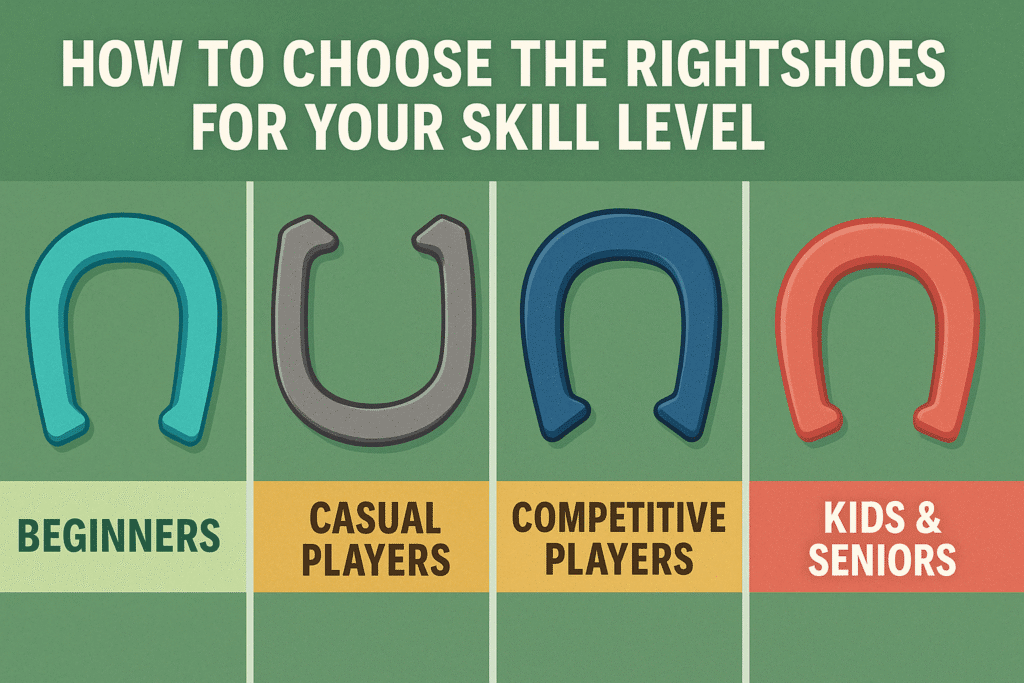
From Backyard Hobby to Competitive Edge: Leveling Up Your Horseshoe Game
Ready to elevate your horseshoe skills? Learn how to upgrade from backyard hobbyist to serious competitor with expert strategy, gear tips, and focused practice routines.
Tossing horseshoes with friends and family in the backyard is a timeless tradition—simple, social, and full of fun. But for those who fall in love with the clink of steel on steel and the thrill of landing a perfect ringer, the casual game often becomes something more.
If you’ve ever wondered how to turn that backyard hobby into serious skill—or even enter local tournaments—this guide is for you. From upgrading your gear to training with intention, we’ll walk you through the steps to go from occasional player to confident competitor.
Let’s take your horseshoe game to the next level.

🧠 Step 1: Shift Your Mindset from Casual to Competitive
The biggest leap from backyard player to serious contender doesn’t start in the pit—it starts in your head. Transitioning from hobbyist to competitor means treating every game as an opportunity to improve, not just pass time.
Competitive players think differently:
- They reflect on each throw to see what went right—or wrong
- They track progress, even in casual games
- They focus on consistency, not just ringers
- They prepare mentally to handle pressure
The first step in leveling up is to stop treating horseshoes as random fun and start treating it like a skill you’re developing.
🛠 Step 2: Upgrade to Competitive-Level Gear
If you’re still tossing around budget or novelty horseshoes from a box store, it’s time for an upgrade. Casual sets are fine for backyard barbecues, but they won’t help you pitch with accuracy or confidence.
Look for NHPA-approved forged steel horseshoes. These are balanced, regulation weight, and designed for both turn and flip styles. The best sets are built for thousands of throws and will feel far more consistent in your hand.
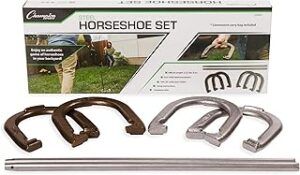
Horseshoe Game Set
Also consider upgrading your:
- Stakes to regulation height and angle (15 inches above surface, leaning 12 degrees forward)
- Pit surface to clay or fine sand with proper framing
- Throwing platform to ensure stable footing and consistent delivery
When your setup mimics tournament conditions, you develop better habits and more dependable mechanics.
🎯 Step 3: Master the Fundamentals of Form and Grip
Before you dive into complex strategies, get your basics airtight. Your grip, stance, release, and follow-through are the foundation of every good pitch.
Grip Styles:
- Flip Grip: The horseshoe spins end over end; easier to learn, common in backyard games
- Turn Grip: Horseshoe spins sideways (1/4 or 1 3/4 turn); used by many competitive players for accuracy
Pick one that feels natural and practice it religiously. Don’t switch styles too often—it disrupts muscle memory.
Key Elements of Proper Form:
- Eyes locked on the stake
- Shoulders square, lead foot slightly forward
- Smooth swing from shoulder or elbow, not the wrist
- Consistent release point every time
- Controlled follow-through toward the target
Film yourself occasionally to evaluate your form. Little adjustments can make big differences in accuracy.
🧪 Step 4: Create a Practice Routine That Builds Skill
Repetition builds mastery. To move beyond casual play, commit to a regular practice schedule—even just 2–3 sessions per week. Focused drills develop muscle memory, mental resilience, and throw precision.
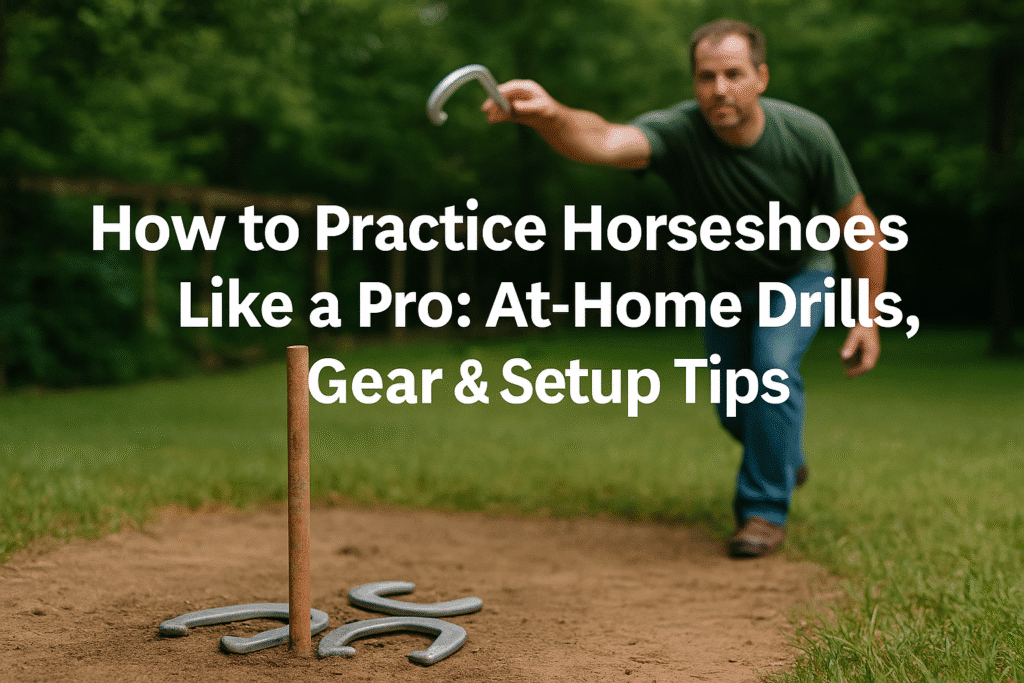
Try these practice strategies:
- Warm-Up Routines: Start with 10–15 low-pressure throws to loosen up
- Target Drills: Place a ring around the stake or aim for zones within a few inches
- Scoring Sessions: Play solo games and keep score as if you’re competing
- Challenge Routines: Set goals like “5 ringers in 20 throws” and push yourself
Keep a log of your scores, ringer percentage, and progress. This helps spot patterns and improve over time.
🧩 Step 5: Understand Strategy and Game Flow
Horseshoes isn’t just about accuracy—it’s also about strategy. Especially in competitive games, every throw should be part of a plan.
Here’s what advanced players consider:
- When to go for a ringer vs. block an opponent
- Whether to risk a tight shot or play it safe
- What angle gives the best chance for a slide-in
- How the surface conditions affect bounce and roll
As your skill increases, learn to read the pit, understand your opponent’s habits, and adapt your tactics.
Playing smart often beats playing hard.
🧠 Step 6: Develop a Pre-Throw Routine
Consistency doesn’t come from the throw alone—it comes from everything you do before it.
Develop a ritual you perform before each pitch. This might include:
- Adjusting your grip the same way every time
- Taking a deep breath before you step up
- Visualizing the horseshoe’s path
- Tapping your shoe or stake for focus
Pre-throw routines help calm nerves, center your focus, and reinforce rhythm. When pressure rises, this routine becomes your anchor.
🧠 Step 7: Play Against Better Players
One of the fastest ways to improve? Step into the pit with people who are better than you.
Seek out:
- Local horseshoe leagues
- Meetup groups at parks or recreation centers
- Competitive events or casual tournaments
You’ll quickly spot differences in form, accuracy, and focus. Watch closely, ask questions, and don’t be afraid to lose—every loss teaches you something.
Better competition pushes your limits and shows you what’s possible.
🛡 Step 8: Invest in Support Gear for Long-Term Play
Serious players don’t just upgrade their shoes—they invest in accessories that improve gameplay and reduce strain.
Recommended gear includes:
- Gloves to protect your hand and improve grip
- Carrying case for horseshoes and accessories
- Scorekeeper for solo or two-player tracking
- Practice mat with marked foot placement zones
- Portable backstop to prevent missed shoes from damaging property
These additions improve the overall experience and help you train smarter, not harder.
🗓 Step 9: Train Like You Compete
The saying is true: you play like you practice. So if you want to compete with confidence, replicate game-day conditions when you train.
Practice with:
- Distractions in the background (music, conversation)
- Time limits or throw clocks
- Real scoring pressure (even against yourself)
Create mini-tournaments with friends or family, or host your own backyard league. The more competitive energy you inject into training, the more composed you’ll be under real match pressure.
🏁 Step 10: Be Patient and Keep Learning
The best horseshoe players weren’t born pitching ringers—they practiced, failed, adjusted, and improved over time.
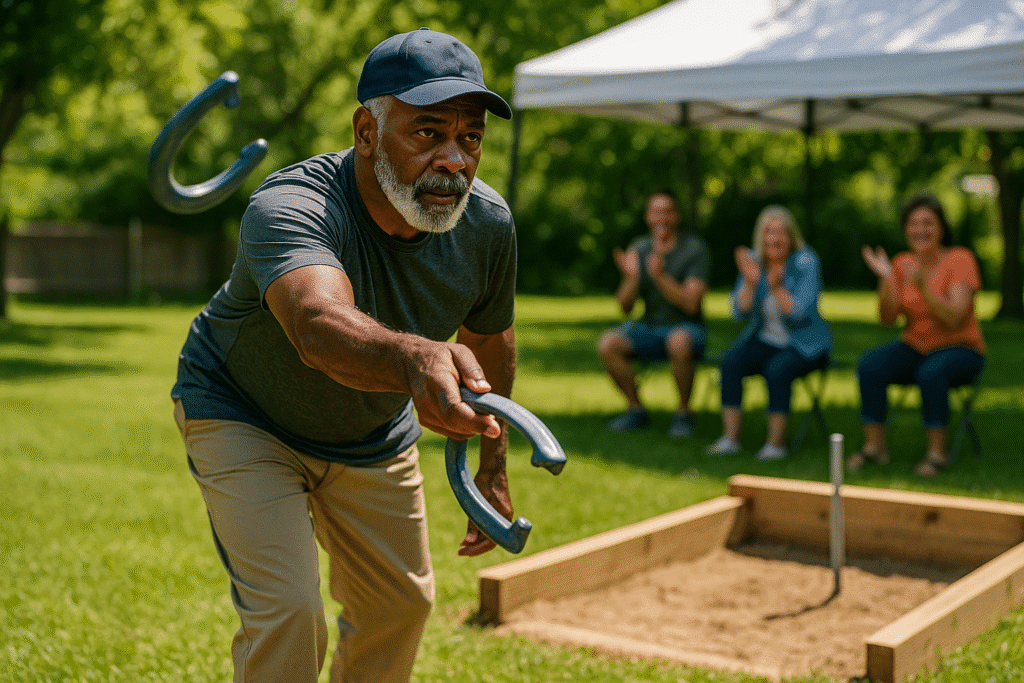
Here’s how to keep progressing:
- Watch tournament videos online and study top players
- Read rulebooks or join NHPA-sanctioned groups
- Learn from every match—even when you lose
- Keep a progress journal or track stats over time
Mastery is a journey, not a sprint. And horseshoes, with its unique mix of precision and pacing, rewards players who are willing to grow gradually.
🎉 Final Thoughts: Elevate the Way You Play
Transforming from a backyard pitcher into a skilled, strategic horseshoe competitor is completely possible—and it starts with small, focused changes. Upgrade your gear. Train with purpose. Compete regularly. And most of all, treat the game with the respect it deserves.
Whether you’re playing for trophies, rankings, or the thrill of the clang, remember this: Every great player was once just a casual thrower who decided to get better.
🎯 Now it’s your turn to take the next step—and turn your backyard game into a competitive edge.
Hi there, and thanks for stopping by! My name is Larry, and I’m the voice behind PlayingHorseshoes.com I love the game and have been playing since I was a kid. I started this blog because I am passionate about the sport, and with all the technology, I hope the sport don’t die. I plan to do my part to keep it going for me and my brother’s sake. Thanks for stopping by, feel free to subscribe and comment. Thank You!