Mastering the Backyard Horseshoe Game: From Setup to Winning Strategy
There’s something timeless about a backyard horseshoe game. The sound of a horseshoe ringing on steel, the laughter of friends, and the satisfaction of a perfect throw—it’s classic Americana. But what separates a casual toss from a memorable, skillful match? The answer lies in how you set up, what gear you use, and the strategy you bring to the pit.
In this guide, you’ll learn how to master backyard horseshoes—from setting up the perfect court, to selecting the right gear, to understanding the rules and strategy that win games.
Whether you’re new to the game or looking to take your backyard matches up a notch, let’s dig in.
🏡 Step 1: Building a Proper Backyard Horseshoe Court
A successful game starts with the right environment. While professional courts follow strict NHPA guidelines, you can create an enjoyable, effective setup in your own backyard with just a few essentials.
Location is Everything
Choose a level spot in your yard that’s:
- At least 40 feet long
- Clear of obstructions (trees, rocks, fencing)
- Safe from windows, patios, or foot traffic
If space is limited, you can scale down to 30 feet for casual games, especially when playing with kids or beginners.
Install the Stakes
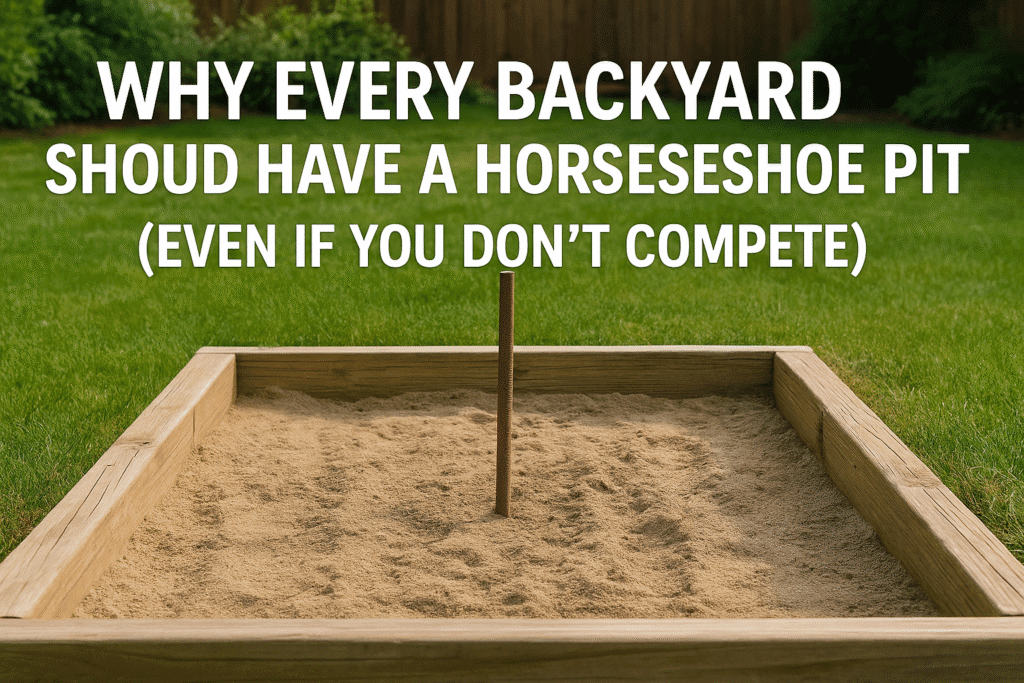
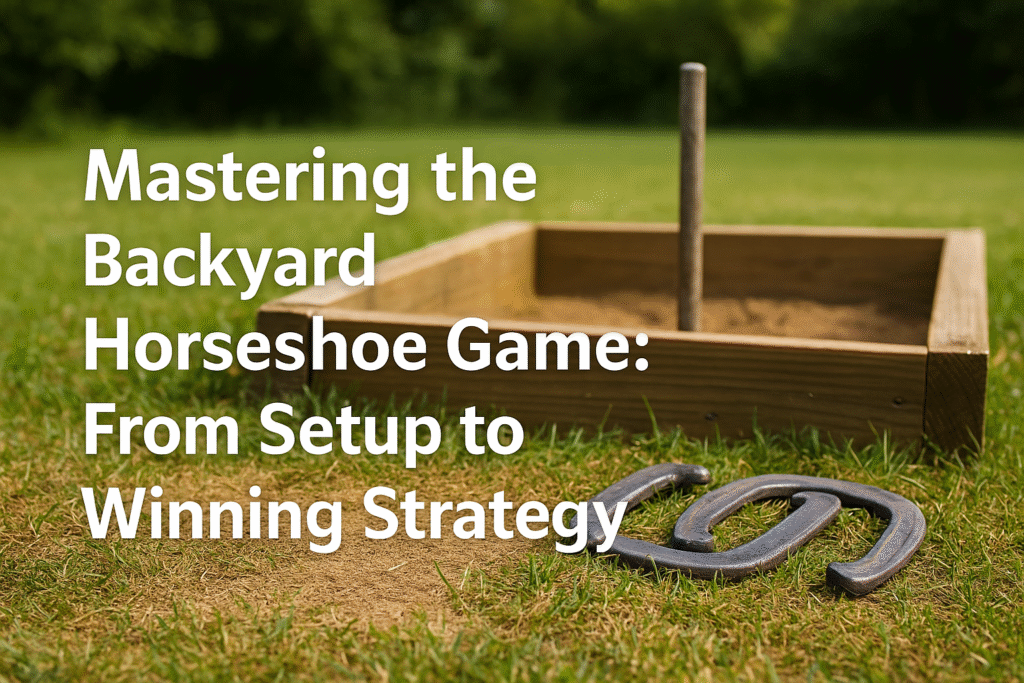
Each end of the court should have a steel stake, 1 inch in diameter and 36 inches long. Drive them into the ground so 15 inches remain above the surface. The stakes should lean 12 degrees forward, tilted slightly toward each other.
Space them 40 feet apart, measured from inside edge to inside edge. Use a level or a 12-degree angle finder to set them correctly.
Choose Your Pit Surface
Great options include:
- Clay (best for competitive players)
- Sand (easy to maintain and safer for bounce control)
- Fine dirt or gravel (works in dry climates but less predictable)
Frame the pit area with wooden boards or landscape timbers to keep material contained.
🧲 Step 2: Choose the Right Horseshoe Set
Your gear can make or break the game. Don’t just grab the cheapest option—quality horseshoes throw better, last longer, and feel more satisfying to play with.
Materials Matter
- Forged Steel: Best for serious play—durable and balanced
- Cast Iron: Budget-friendly, but prone to breaking or chipping
- Rubber: Ideal for indoor play, children, or close-quarter setups
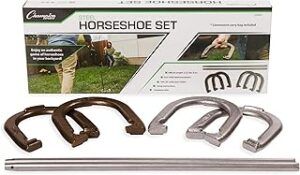
Horseshoe Game Set
Regulation Weight
Go for horseshoes that weigh between 2 and 2.5 pounds. Heavier shoes give more control and better landing. Check for NHPA approval if you want to train for league play.
Some reliable brands to consider:
- St. Pierre
- Gordon
- Challenger
- Triumph
Each includes two pairs (four horseshoes), plus stakes and sometimes a carrying case.
📚 Step 3: Understand the Basic Rules (and Common House Rules)
Even casual games run smoother when everyone agrees on the rules. Here’s a breakdown of the standard (and backyard-friendly) rules to follow.
Pitching Order
Decide who pitches first with a coin toss. After that, the person who scored last usually throws first.
Players take turns pitching two horseshoes at the opposite stake from a designated pitcher’s box (usually a 3×6 foot area).
Scoring Simplified
- Ringer (wraps around the stake): 3 points
- Closest to the stake: 1 point (if no ringers are thrown)
- Leaners (touching the stake): Often counted as 2 points in backyard play
Only one player can score per round unless you’re playing cancellation scoring (more common in tournaments). Play to 21, 25, or 40 points—your group decides.
House Rule Options
- “First to 15 wins”
- Leaners = 2 points
- Skunk rule (automatic win if leading 11–0 or more)
Backyard games are all about fun—agree on rules beforehand to keep things friendly.
💡 Step 4: Strategy and Throwing Tips to Win More Games
Good horseshoe players aren’t just lucky—they’re consistent, strategic, and focused on technique. Here’s how to throw better and score more.
Master Your Grip
There are two primary grips:
- Flip Grip: Horseshoe rotates end-over-end in the air
- Turn Grip: Horseshoe rotates in a circular motion (used by most pros)
Pick one and stick with it during practice. Consistency matters more than style.
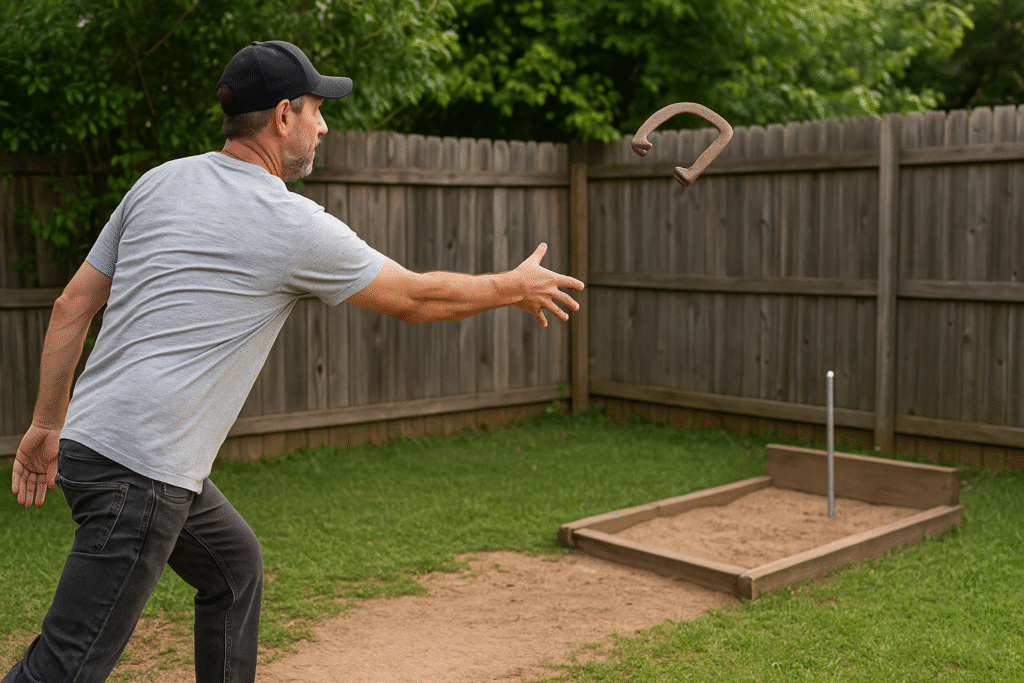
Perfect Your Stance
- Feet shoulder-width apart
- Lead foot slightly ahead of your throwing hand
- Hold the horseshoe firmly but relaxed
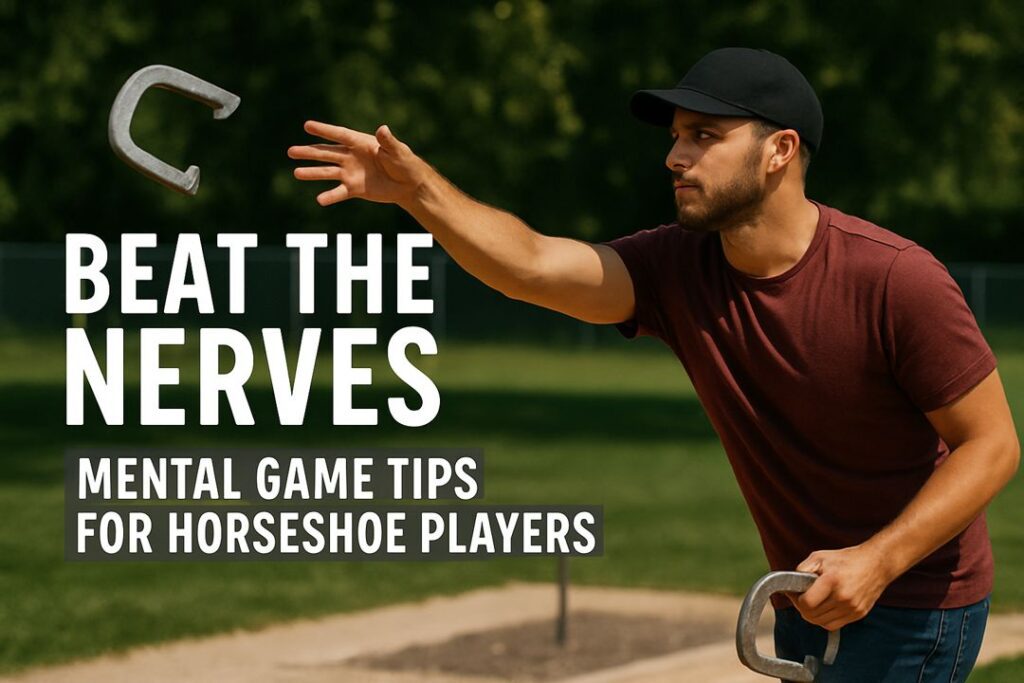
- Eyes on the stake, not the horseshoe
Practice a smooth, repeatable motion with a solid follow-through.
Read the Pit
- Soft sand? Focus on flat landings
- Clay or hard surfaces? Aim for a slide into the stake
- Stake leaning too much? Adjust your angle to counter it
Use the conditions to your advantage and experiment with different landing styles.
🧰 Bonus Gear to Improve Your Backyard Game
Most players overlook the little things that can dramatically boost performance and enjoyment. Here are some affordable add-ons that improve your setup:
- Backboard or backstop to catch missed throws
- Carrying case to store and transport your set
- Pit rake or shovel for maintaining level ground
- Scoreboard so everyone knows who’s winning
- Measuring tape for resolving close calls
Even something simple like a dry-erase board can upgrade your experience from basic to pro-level.
🧠 Practice Makes the Pro
Want to become the best player in your neighborhood? Set up regular practice sessions. Just 20–30 throws a few times a week can significantly improve your aim, muscle memory, and confidence.
Practice Drills You Can Try:
- 10 Ringers in a Row: Aim for consistency, not just luck
- Walk-back Drill: Start close and move back as accuracy improves
- Stance Reps: Work on form without throwing
- Ringer Percentage Tracking: Keep stats to see progress
Improvement happens in inches, not miles. Track your results, and celebrate small wins.

🎉 Hosting Your Own Backyard Horseshoe Tournament
Once your court is dialed in and your skills sharpened, why not share the fun? Hosting a small horseshoe tournament adds energy to summer gatherings, birthday parties, or family reunions.
How to Host:
- Invite 4–16 players or teams
- Create a simple bracket (single or double elimination)
- Choose a consistent scoring system (21 or 25 points)
- Offer small prizes—gift cards, trophies, bragging rights
Make it festive with music, snacks, seating, and signage. You’ll build memories while turning your yard into the most popular game zone on the block.
🏁 Final Thoughts: From Tossing to Triumph
Backyard horseshoes isn’t just a pastime—it’s a tradition, a workout, and a lesson in focus all wrapped into one. Whether you’re tossing for fun or chasing ringer perfection, it’s a game that rewards patience, practice, and preparation.
So if you’re ready to move beyond casual tossing, set up your court the right way, grab gear that lasts, and focus on improving your form. The next time someone challenges you in the yard, you’ll be more than ready.
🎯 Every game is a chance to sharpen your skills, connect with others, and maybe—just maybe—hear that perfect clang of a ringer hitting home.
Hi there, and thanks for stopping by! My name is Larry, and I’m the voice behind PlayingHorseshoes.com I love the game and have been playing since I was a kid. I started this blog because I am passionate about the sport, and with all the technology, I hope the sport don’t die. I plan to do my part to keep it going for me and my brother’s sake. Thanks for stopping by, feel free to subscribe and comment. Thank You!