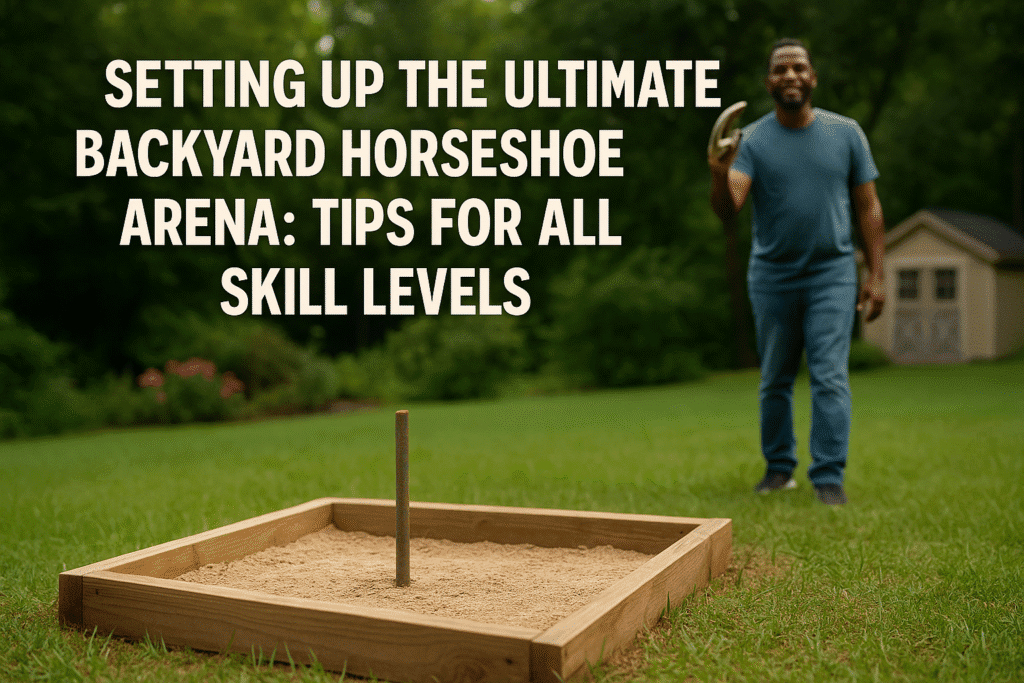
Kids on Board: Fun Drills and Games to Teach Young Pitchers
Horseshoes isn’t just a game for the grown-ups hanging around at family reunions. It’s one of the most versatile and accessible backyard sports — and it can be a fantastic way to get kids outdoors, building coordination, and sharing laughs with friends and family.
The beauty of teaching horseshoes to kids is that it can be as casual or as structured as you want. With the right drills and mini-games, you can keep them engaged for hours while quietly improving their skills. And when done right, you’re not just teaching them a pastime — you’re passing down a tradition.
Whether you’re a parent, grandparent, community rec leader, or just a neighbor looking to spice up the block party, this guide will walk you through how to get kids excited about horseshoes from day one.
Why Horseshoes is Perfect for Young Players
Before we jump into drills, it’s worth understanding why horseshoes is such a great fit for kids.
- Affordable – You don’t need a membership, fancy uniforms, or big equipment investments. A single set and a clear space are enough to start.
- Simple Learning Curve – Most kids can grasp the basic motion within minutes.
- Low-Impact – It’s gentle on the body and less risky than high-contact sports.
- Inclusive – Different ages and skill levels can play together.
- Builds Core Skills – Improves hand-eye coordination, focus, patience, and sportsmanship.
And here’s the big one — it’s a gateway sport. Once kids learn the basics, they can grow into league play, friendly competition, or just use it as a fun social game for the rest of their lives.
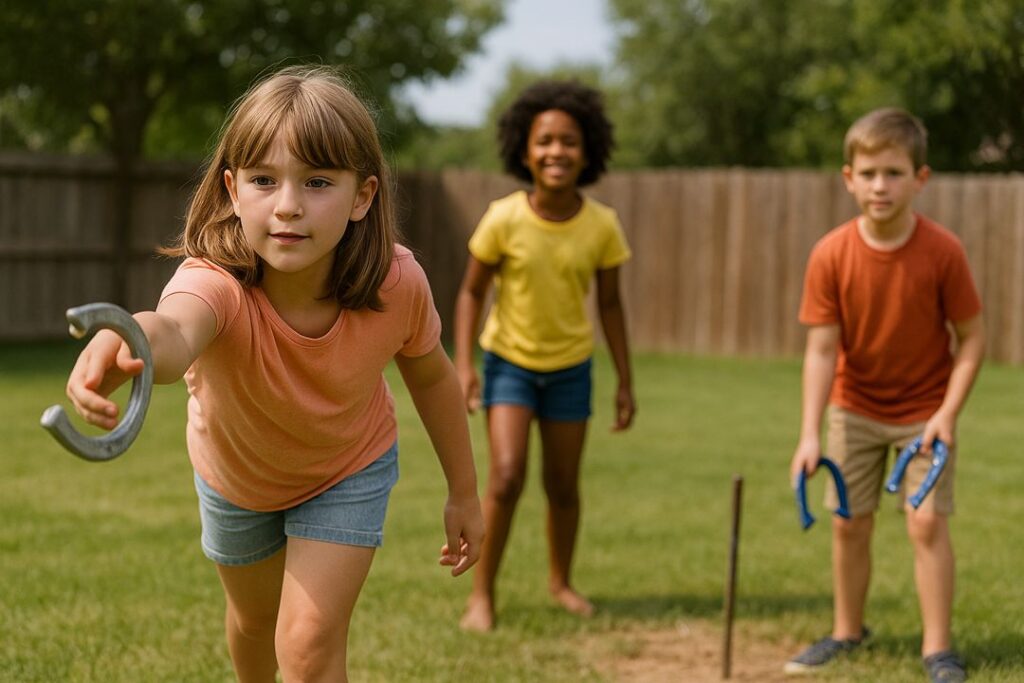
Setting the Stage for Success 🏕️
If kids are going to enjoy the game, you have to set them up for a win from the very start. That means adjusting the game to fit their size, strength, and attention span.
- Shorten the distance – Instead of the official 40 feet, set stakes 20–25 feet apart for younger players. Even shorter for kids under 8.
- Use kid-friendly equipment – Lightweight plastic or rubber horseshoes make it easier to throw without frustration.
- Bright targets – Wrap stakes in colorful tape or paint them so kids can aim more easily.
- Clear the space – Make sure no one is standing near the stakes when it’s someone’s turn to throw.
Tip: When teaching very young kids, you can even use cones or buckets as targets before introducing the stakes.
Core Drills to Teach Pitching Skills
The key to teaching kids is to make practice feel like a game. Here’s how to turn “drills” into something they actually want to do.
1. Target Toss Challenge 🎯
Purpose: Improves aim and teaches control.
- Place a large hula hoop around the stake.
- Award points for landing a shoe inside the hoop, with bonus points for leaning against or ringing the stake.
- As kids improve, switch to a smaller hoop or draw a chalk circle for a tighter target.
Variation: Color-code different scoring zones for extra fun (like a mini bullseye).
2. Step-and-Throw Drill
Purpose: Builds throwing strength gradually.
- Have players start just 5 feet from the stake.
- After every successful toss (inside a defined target zone), they step back one foot.
- Continue until they reach their maximum comfortable distance.
This drill works wonders because kids see progress in real time — and that keeps them motivated.
3. Ringer Relay
Purpose: Combines teamwork with accuracy.
- Divide players into teams of two or three.
- One player throws until they get a ringer, then passes the turn to the next teammate.
- First team to complete the cycle wins.
Tip: Use small teams so no one waits too long between turns — that’s key to keeping energy up.
4. Around the World
Purpose: Builds adaptability and creative thinking.
- Mark 4–6 spots around the stake in a half-circle.
- Players pitch from each spot, adjusting their throw for different angles.
This drill is great for kids who get bored easily — the constant movement keeps it interesting.
5. Time Trial Toss
Purpose: Builds quick decision-making and consistency.
- Give each player 60 seconds to score as many points as possible.
- This adds a bit of adrenaline and competition without making it stressful.
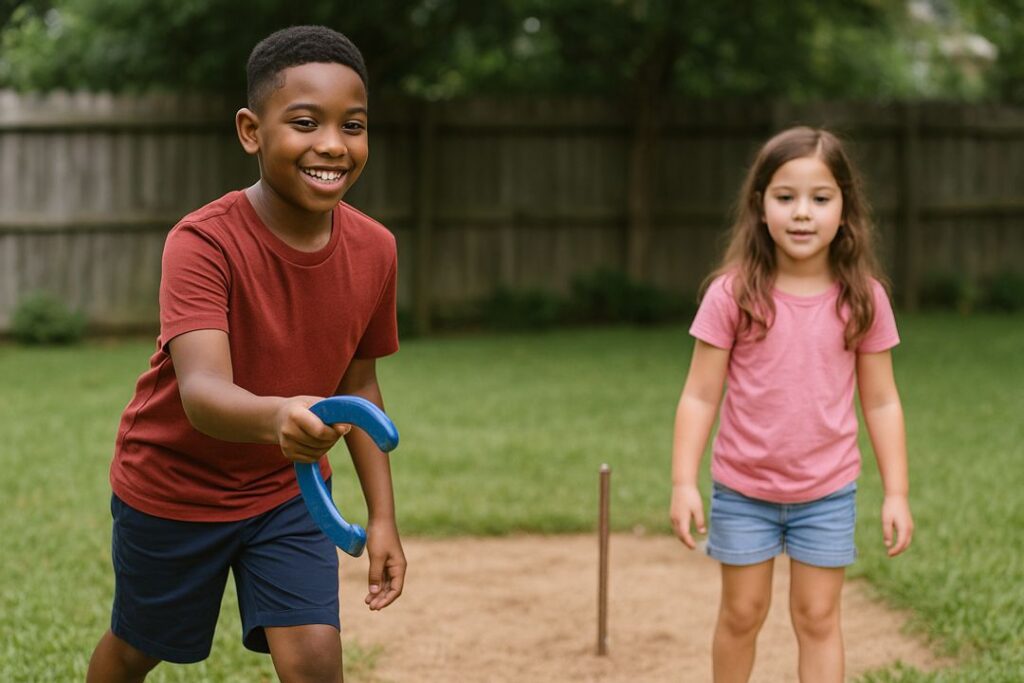
Mini-Games to Keep the Energy High
Drills are good for skill-building, but mini-games are what keep kids coming back.
Horse and Pony – Similar to the basketball game “Horse.” Players spell out HORSE when they miss. For shorter games with younger kids, use “PONY.”
Hot Streak – Players try to land three ringers in a row. If they miss, their streak resets.
Stake Tag – After each throw, kids run to tag the stake and back before the next player pitches.
One-Hand Challenge – Everyone throws with their non-dominant hand. This usually ends with a lot of giggles.
Obstacle Toss – Place small objects (like cones) between the throwing line and the stake. Kids have to arc their toss over the obstacle.
Tips for Teaching Kids Without Losing Their Interest
- Cheer effort, not just results – Praise good form, even if the shoe misses.
- Keep games short – 10–15 minutes is plenty for younger players.
- Rotate activities – Switch between drills and games to prevent boredom.
- Mix ages – Older siblings or friends can mentor the younger ones.
- Use rewards – Stickers, snacks, or a “Backyard Champion” ribbon can work wonders. 🏆
Progression: From Backyard Fun to Real Competition
Once kids are hooked, you can gradually introduce league-style elements:
- Keep score using official rules.
- Introduce proper grips and turns (like the flip or 1 ¾ turn).
- Teach them the etiquette of waiting behind the throwing line until both players finish their turn.
By moving slowly, you avoid overwhelming them while still keeping the game exciting.
Adapting the Game for Different Needs
One of the best parts of horseshoes is how easily it can be adapted:
- For younger children – Use oversized stakes or bucket targets.
- For kids with mobility challenges – Let them pitch from a comfortable distance or seated position.
- For mixed skill levels – Give newer players a head start in scoring or distance.
Product Spotlight: Champion Sports Indoor/Outdoor Horseshoe Set
For teaching kids, the Champion Sports Indoor/Outdoor Horseshoe Set is a perfect fit.
- Lightweight and kid-friendly – Safe for younger players and easier to handle.
- Durable plastic design – Stands up to repeated indoor or outdoor play.
- Bright red color – Makes it easy for kids to track in the air.
- Complete set – Includes stakes and four horseshoes so you can set up anywhere.
It’s an ideal starter set for introducing the basics before moving up to heavier, steel models.
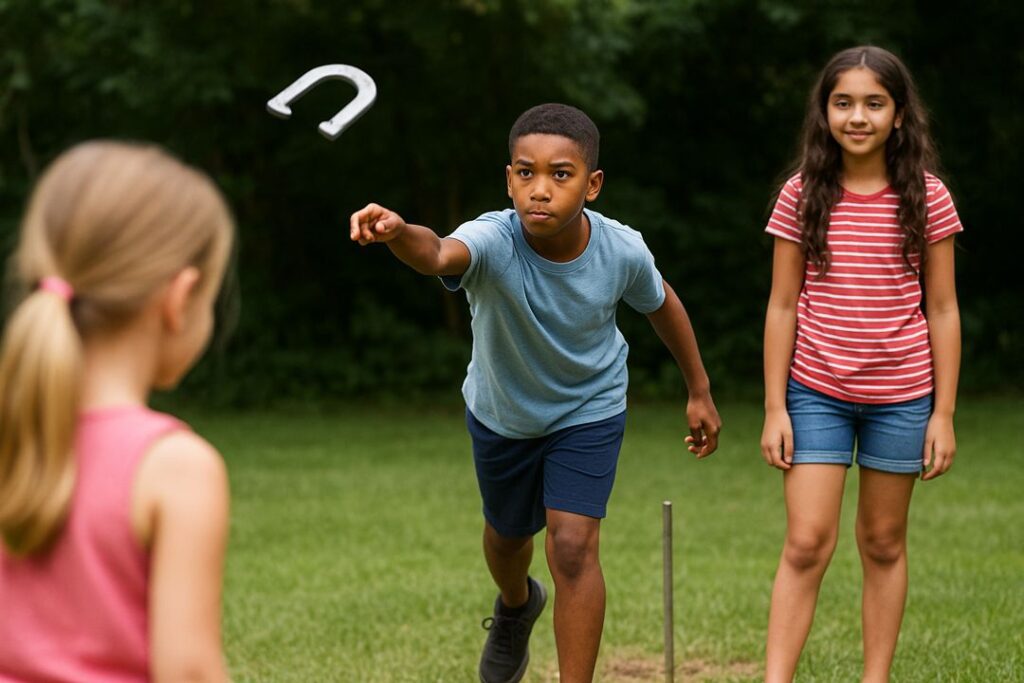
Call to Action
If you want kids to truly enjoy horseshoes, make fun the focus. Set up the court, try a few drills, and mix in mini-games. Watch how quickly their throws improve when they’re smiling and laughing the whole time. The earlier you make the game feel exciting, the more likely they’ll stick with it for years to come. 🙌
FAQs
Q: What’s the best age to start kids in horseshoes?
A: Ages 6–7 are a great starting point with lightweight shoes, though younger kids can play with modified gear.
Q: How long should a kids’ horseshoe game last?
A: Aim for 10–15 minutes for younger players; older kids can handle 20–30 minute games.
Q: Can kids play on a full-size court?
A: Yes, but shorten the distance to match their ability.
Q: How can I make horseshoes safe for kids?
A: Use plastic shoes, supervise play, and ensure no one stands near the stake while someone is pitching.
Final Thoughts
Horseshoes isn’t just a throwback backyard game — it’s a low-cost, low-barrier way to teach kids sportsmanship, patience, and coordination. With the right mix of fun drills, creative mini-games, and encouraging coaching, you can hook them for life. Equip them with gear that suits their size and skill, celebrate the little wins, and you’ll be amazed at how quickly they improve — and how much they love the game. 🎯
Hi there, and thanks for stopping by! My name is Larry, and I’m the voice behind PlayingHorseshoes.com. I love the game and have been playing since I was a kid. I started this blog because I am passionate about the sport, and with all the technology, I hope the sport doesn’t die. I plan to do my part to keep it going for my brother and my sake. Thank you for stopping by. Feel free to subscribe and comment. Thank You!