
How to Adjust Your Pitch for Uneven Backyard Terrain
Let’s be real—most of us don’t have the luxury of perfectly level horseshoe courts in our backyards. And that’s fine! Dealing with a little bump or slope here and there could make you a more adaptable player in the long run.
When the terrain decides to throw a curveball, be ready to catch it. Uneven surfaces can teach you a lot about adapting your techniques and strategies. Learning to play in these conditions expands your skill set and helps you handle almost any situation, whether in competitions or friendly backyard games.
If you’ve played horseshoes in a real backyard, you already know the truth:
Almost no backyard court is perfectly level.
Grass shifts.
Dirt settles.
Sand washes out.
One side slopes.
The other feels off.
Yet some players still pitch consistently on uneven ground — while others struggle badly.
The difference isn’t strength or luck.
It’s an adjustment.
This article explains how uneven terrain affects your pitch, how to identify the problem you’re facing, and how to make small, effective adjustments that protect accuracy without rebuilding your court.
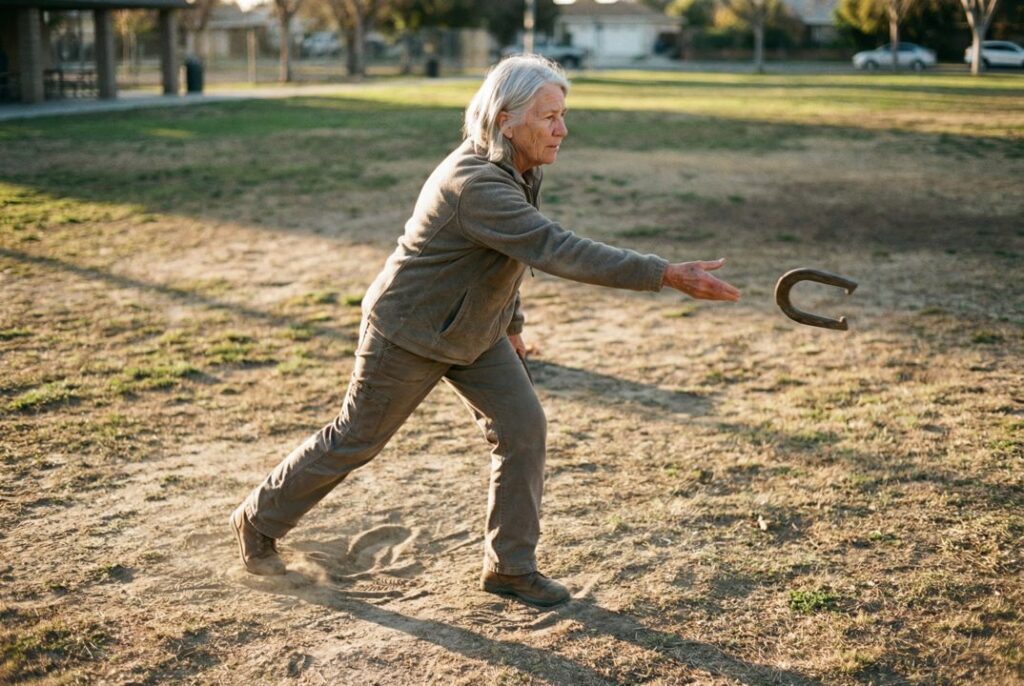
1. Why Uneven Terrain Affects Accuracy
Uneven ground doesn’t just affect your feet — it affects your entire throwing chain.
Even slight slopes can change:
- Balance at release
- Shoulder alignment
- Arc height
- Distance control
- Follow-through consistency
Most misses on uneven terrain aren’t caused by bad aim. They come from unconscious body compensation. Your body senses instability and tries to correct, and those corrections show up as misses.
2. Identify the Type of Uneven Terrain
Before adjusting your throw, figure out what kind of unevenness you’re dealing with.
Side-to-Side Slope
One foot sits higher than the other.
Common results:
- Shoes drifting left or right
- Inconsistent leaner attempts
- Shoulder tilt during release
Front-to-Back Slope
You’re pitching uphill or downhill.
Common results:
- Long or short misses
- Flat throws downhill
- Overthrowing uphill
Soft or Shifting Ground
Grass, dirt, or sand that moves under pressure.
Common results:
- Unstable footing
- Late releases
- Loss of confidence mid-throw
Each type creates different problems — and requires different adjustments.
3. First Rule: Don’t Fight the Ground
The biggest mistake players make on uneven terrain is forcing normal mechanics onto abnormal conditions.
That usually leads to:
- Muscling the throw
- Overcompensating
- Chasing misses instead of fixing causes
Your goal is to stabilize first, then allow your normal throw to work.
4. Adjust Foot Placement on Side-to-Side Slopes
When one foot is higher than the other, balance becomes the priority.
Avoid:
- Leaning aggressively uphill
- Widening your stance too much
- Rushing the release
What works:
- Slightly narrowing your stance
- Shifting a bit of weight toward the downhill foot
- Keeping your shoulders level, even if your feet aren’t
A simple cue to remember:
Level shoulders matter more than level feet.

5. Pitching Uphill vs Pitching Downhill
Pitching Uphill
Uphill throws feel harder, which causes many players to overthrow.
Adjustments:
- Slow your tempo slightly
- Allow a higher arc
- Lift smoothly instead of adding force
Overthrowing uphill is usually panic, not a strength issue.
Pitching Downhill
Downhill throws feel easy and often rushed.
Adjustments:
- Increase arc slightly
- Soften grip pressure
- Let gravity finish the throw
Flat downhill throws miss long more than almost anything else.
6. Handling Soft or Shifting Ground
Soft footing changes during the throw, which kills consistency.
Best adjustments:
- Shorten your stride
- Reduce forward momentum
- Prioritize balance over power
If your lead foot slides or sinks, aggressive motion will destroy accuracy.
7. Why Arc Becomes Your Safety Net
On uneven ground, the arc protects you.
Higher arcs:
- Absorb balance errors
- Reduce timing sensitivity
- Land more predictably near the stake
Flat throws magnify every problem uneven terrain creates.
If accuracy drops, don’t aim harder — aim higher.
8. Grip Pressure Tightens on Uneven Ground
Uneven footing almost always causes grip tension.
That leads to:
- Late releases
- Hot shoes
- Inconsistent rotation
Fix it by:
- Loosening grip slightly
- Focusing on clean release
- Letting rotation happen naturally
Grip tension is one of the fastest accuracy killers on uneven terrain.
9. Make One Adjustment at a Time
Uneven terrain tempts players to change everything at once.
That guarantees inconsistency.
Follow the one-change rule:
- Adjust foot placement or
- Adjust tempo or
- Adjust arc
Evaluate results before changing anything else.
10. Read Your Miss Patterns
Uneven terrain creates predictable misses:
- Short misses usually mean uphill + rushed release
- Long misses usually mean downhill + flat arc
- Side misses usually mean balance or shoulder tilt
Misses aren’t random — they’re feedback.
11. Adjust Yourself vs Adjust the Court
Adjust yourself when:
- The slope is minor
- Conditions change seasonally
- You want adaptable skills
Adjust the court when:
- Stakes lean severely
- Footing is unsafe
- Balance cannot be maintained
Adaptable players perform better everywhere.
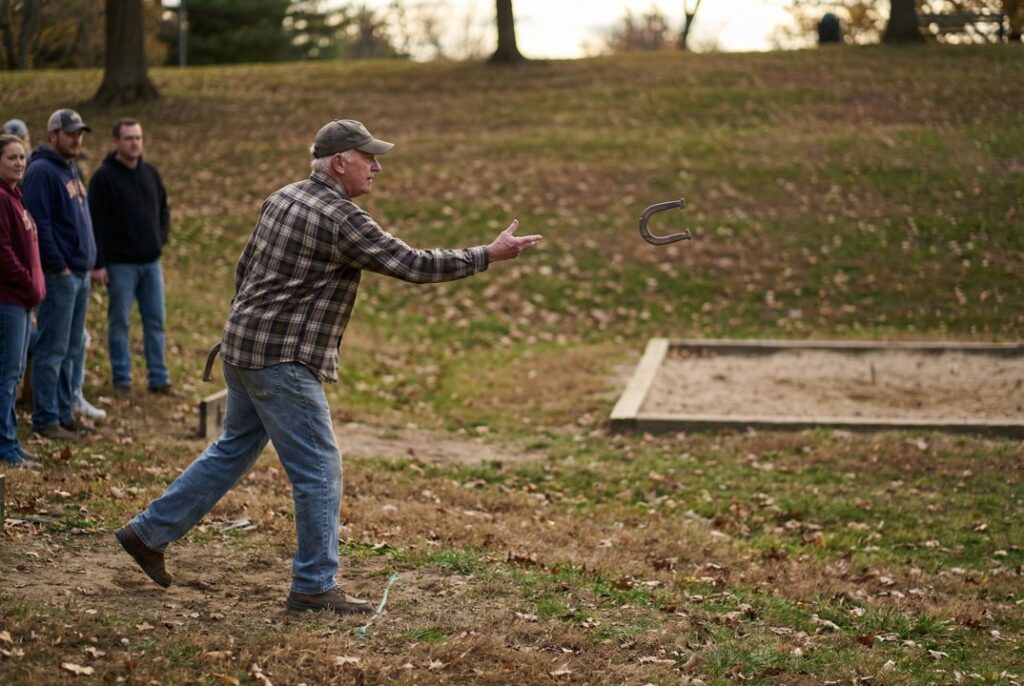
12. Why Uneven Backyard Practice Helps Long-Term
Uneven backyard courts often create better players by building:
- Balance awareness
- Tempo control
- Arc discipline
- Mental flexibility
Players who only practice on perfect courts struggle when conditions change.
Product Recommendation: Franklin Sports Horseshoes Set
When practicing on uneven terrain, it helps to use a balanced, regulation-style horseshoe set that doesn’t encourage forcing the throw.
The Franklin Sports Horseshoes Set offers a neutral feel that makes it easier to focus on balance, arc, and tempo instead of fighting aggressive shoe behavior — especially useful for backyard practice where conditions vary.
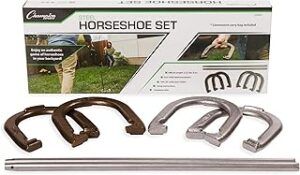
Horseshoe Game Set
Frequently Asked Questions
Does uneven backyard terrain really affect horseshoe accuracy?
Yes. Even small slopes or soft ground can change balance, shoulder alignment, release timing, and arc.
Should I change my throwing style on uneven ground?
No. Keep your core style and make small adjustments to foot placement, tempo, or arc.
How do I know if the ground or my technique is the problem?
Watch your miss pattern. Side misses usually point to balance; long or short misses usually point to slope-related issues.
Is it better to rebuild the pit or learn to adjust?
Rebuild only if the court is unsafe. Otherwise, learning to adjust makes you a stronger player.
Does uphill pitching require more power?
No. It requires a higher arc and smoother tempo, not more force.
Why do downhill throws miss long so often?
Because players flatten the arc and rush the release.
Can uneven terrain practice improve my game?
Yes. It builds adaptability that transfers to any court.
Should beginners practice on uneven terrain?
Beginners should start on stable ground, but mild unevenness is useful once basics are established.
Thoughts
Embracing these quirks and learning how to work with them could be your secret weapon on the court. So next time you step onto your less-than-perfect patch of earth, remember: mastering it can give you a tactical edge over those who are used to pristine surfaces.
Backyard horseshoes were never meant to be perfect.
When you stop fighting uneven terrain and start adjusting to it, your accuracy becomes more reliable, your confidence grows, and your skills travel with you.
Level ground is convenient.
Adaptable skill wins everywhere.
Horseshoe Gifts and More!
This shop is my clubhouse for fellow players. You’ll find mugs, shirts, and pit gear to keep games fair, trash talk fun, and ringers flying — whether you’re building your first court or running a league.


