Rust, Sand, and Memories: The Oldest Horseshoe Pit in America
Walk into any old American town — the kind with a single blinking stoplight, a diner that never updated its menu, and families who’ve lived there since the day after forever — and you’ll usually find three things: a church, a gas station, and a horseshoe pit. Sometimes it’s behind a VFW. Sometimes it’s tucked beside a ballfield. Sometimes it sits right behind city hall, sun-baked and worn, but somehow still alive.
Horseshoe pits age differently from everything else. They don’t rust like cars or crumble like old stone buildings. They weather. They soften. They settle into the ground like they’ve been waiting for generations of footsteps — and laughter — to press them into place.
So when someone asks, “What’s the oldest horseshoe pit in America?” the honest answer is simple:
There’s no definitive winner.
But there are contenders — places where the game has been played so long, and so faithfully, that the pits might as well be registered historical landmarks. The stories behind them are part of what makes horseshoes more than a backyard pastime. They’re pieces of American culture, preserved one ringer at a time.
Today, we’re heading to four of the strongest contenders for “America’s Oldest Pit,” each with its own legacy of rust, sand, memories, and loyal players who kept the tradition alive.
Anna Maria, Florida: The 109-Year Horseshoe Tradition
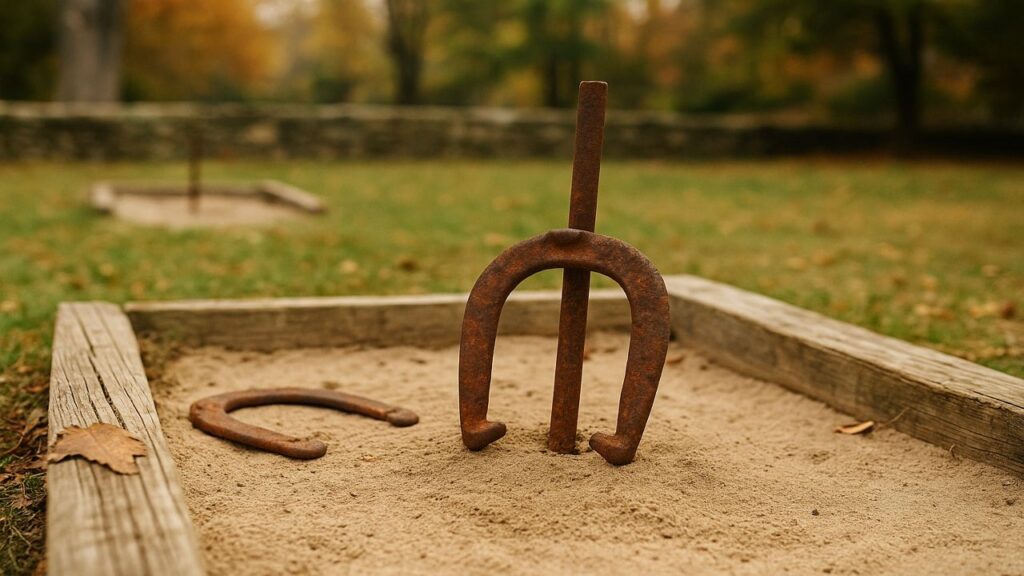
If any location deserves the unofficial crown, it’s the quiet coastal town of Anna Maria, Florida, where a modest little patch of dirt behind city hall tells a story that’s older than many baseball stadiums.
The site has hosted an active, continuous horseshoe tradition since at least 1915 — over 109 years of shoes clanking against stakes, players gathering on warm mornings, and retirees turning the game into a social institution.
Back in February 2024, the local horseshoe club reenacted a photograph from 1915 in the same spot. Over a century apart, the two groups of players stood shoulder to shoulder in nearly identical fashion — same stance, same smiles, same community spirit. The backdrop had changed a bit, but the heart of the place hadn’t.
It’s not fancy. No grandstands. No sponsorship banners. Just sand, sun, and shoes. And that’s what makes it remarkable.
The Anna Maria pits represent something nearly every horseshoe player understands deeply:
The best pits in America aren’t always the biggest — they’re the ones that never stopped being used.
Why Anna Maria Has a Legit Claim
- Documented continuous play since 1915
- Located in the same general area for over a century
- Community involvement spanning multiple generations
- A still-active weekly schedule of games, just like it’s always been
If “the oldest pit” means “the longest-running tradition,” Anna Maria is tough to beat.
The White House Horseshoe Pit: Presidential Ringers on the South Lawn
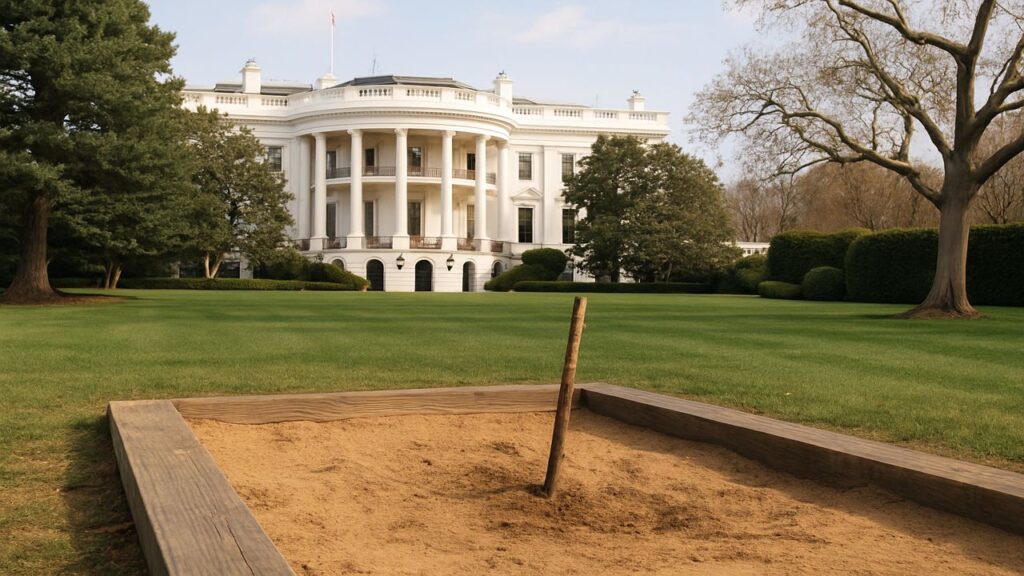
Believe it or not, horseshoes also have a home at 1600 Pennsylvania Avenue.
President Harry Truman installed the first White House horseshoe court in the late 1940s, bringing small-town competition into the most powerful backyard in the nation.
Truman pitched often — he loved the simplicity of the game, the camaraderie, and the chance to unwind without ceremony. Presidents get fancy sports facilities today, but Truman? He wanted a stake, a pit, and enough daylight to throw a couple dozen shoes before dinner.
Decades later, President George H.W. Bush revived the tradition, building a new 40-foot regulation pit on the South Lawn. Bush played so often — and so competitively — that it became a signature part of his presidency. He even hosted high-profile matches with staff, athletes, and visiting dignitaries.
Imagine being invited to the White House only to get thrashed by the Commander-in-Chief in a friendly game of horseshoes. That’s a uniquely American memory.
Why It Matters
- Not the oldest pit, but certainly one of the most iconic
- Played by two U.S. presidents who genuinely enjoyed the game
- Kept the national spotlight on horseshoes during their administrations
- Reinforced horseshoes as a distinctly American pastime — informal, friendly, and open to anyone
The White House pit isn’t ancient, but its legacy is unmatched in prestige.
Hart Park, Orange, California: The WPA Builds a Horseshoe Legacy
Head west to Orange, California, and you’ll find another contender for historical significance: the Hart Park horseshoe pits, constructed in the 1930s by the Works Progress Administration (WPA).
The WPA built bridges, roads, parks, and public works across America during the Great Depression, and tucked among those thousands of projects were recreational spaces — including horseshoe pits.
Hart Park’s pits were part of a movement that believed Americans needed not only jobs, but also community. Recreational areas were a deliberate part of rebuilding morale, giving people a place to gather, laugh, and reconnect during hard times.
These pits have hosted generations of local players, league nights, weekend tournaments, and casual family games. They’re not the oldest site, but they are one of the few still standing from a major chapter of American history.
Why Hart Park Matters
- Built as part of the New Deal’s WPA program
- Has operated as a community horseshoe venue for nearly 90 years
- Deep ties to American history and recreation culture
- Represents the era when horseshoes were the local pastime across small towns
If you want a pit with a historical backbone, Hart Park belongs on the list.
Pigtown, Baltimore, Maryland: The Community Pit That Never Quit
Finally, there’s Pigtown — a neighborhood in Baltimore known for barbecue smoke, street festivals, and a fiercely protective community spirit. About 30 years ago, locals built a horseshoe pit, and what started as a casual gathering place transformed into a neighborhood tradition.
The Pigtown pit hosts:
- Community tournaments
- Cookouts
- Fundraisers
- Friendly weekend challenges
- Multigenerational games that bring the neighborhood together
It’s living proof that a pit doesn’t need to be old to be important. What matters is the community that gathers around it.
In Pigtown, the pit is a place where neighbors become friends — where the smell of grilled ribs mixes with the clang of a ringer, and where tradition isn’t inherited but created.
Why Pigtown Belongs Here
- 30 years of continuous community play
- Known for lively tournaments and neighborhood pride
- Shows how new traditions can become just as meaningful as old ones
If Anna Maria is the past, Pigtown is the present — and together they show how horseshoes thrive across generations.
What Makes a Pit “Historic,” Anyway?
Age alone doesn’t tell the whole story.
A horseshoe pit becomes historic when:
- Generations of players have stood over the same sand
- Traditions outlast the people who started them
- Local stories become part of the location
- Photos, memories, and community events tie the pit to the identity of the place
Some pits lasted decades but were eventually removed. Others lasted centuries in spirit if not in literal structure. And some, like Anna Maria, just kept going and going and going, quietly building an invisible monument to American leisure.
Horseshoes isn’t a sport that needs stadiums or million-dollar budgets.
Its history grows by footsteps, laughter, and the slow settling of sand around a stake.
The Common Thread: People Keep These Pits Alive
Look at all four locations — Anna Maria, the White House, Hart Park, and Pigtown — and you’ll see a clear pattern:
The pits survived because people showed up.
Not for money.
Not for trophies.
Not for fame.
But for the simple joy of tossing steel and spending time with friends.
A horseshoe pit without players is just a rectangle of dirt.
A horseshoe pit with loyal throwers becomes a piece of living history.
Want to Build a Backyard Pit That Lasts?
If reading about these historic pits has you thinking about your own family legacy, here’s a little starter recommendation:
Product Pick:
St. Pierre American Professional Series Horseshoe Set — a classic, regulation-weight set with durable forged steel and excellent balance. It’s built to last decades if you treat it right.
A hundred years from now, your grandkids could be reenacting your first family game photo, too.
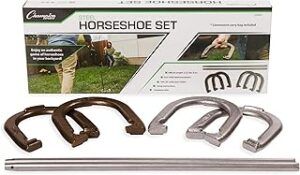
Horseshoe Game Set
Thoughts
There may never be a unanimous answer to “Which is the oldest horseshoe pit in America?” — and honestly, that’s part of the charm.
Horseshoe pits aren’t monuments. They’re not polished or preserved behind velvet ropes. They’re worn into the earth by ordinary people doing something extraordinary — gathering, playing, laughing, and passing down a tradition that refuses to fade.
From Florida’s century-old city hall pit to California’s WPA landmark, from Truman’s White House court to Baltimore’s community-built corner pit, the real story isn’t about a single oldest place.
It’s about a country full of them.
Hundreds of pits.
Thousands of players.
Millions of memories.
Rust, sand, and people — that’s the true history of horseshoes in America.
But Wait….
This shop is my clubhouse for fellow players. You’ll find mugs, shirts, and pit gear to keep games fair, trash talk fun, and ringers flying — whether you’re building your first court or running a league.