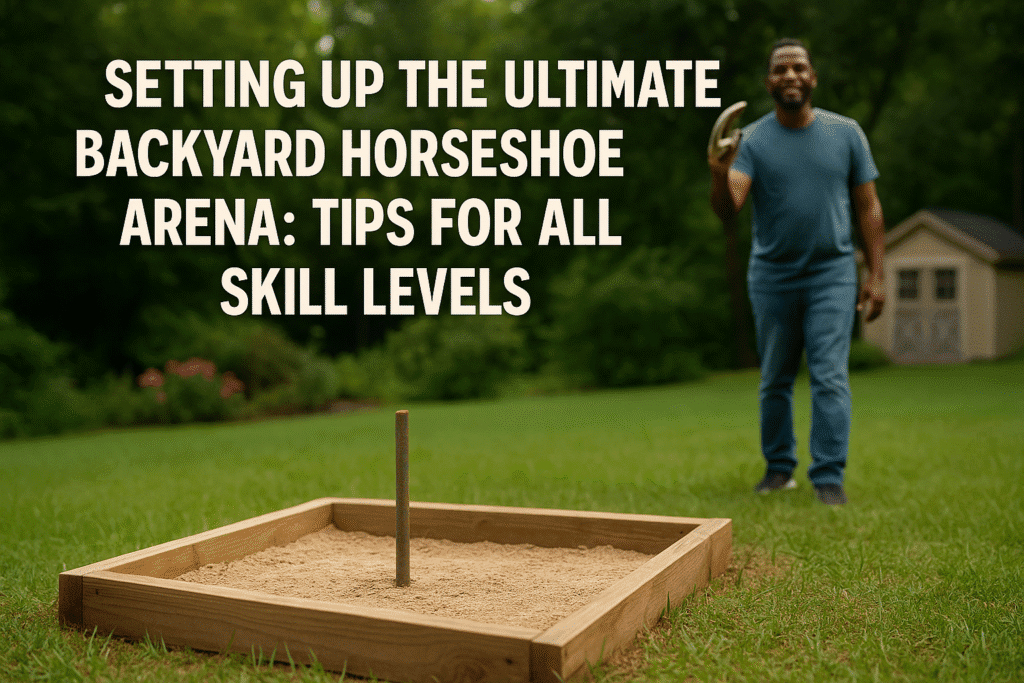
How to Develop a Repeatable Horseshoe Routine Before Every Pitch
A repeatable horseshoe routine helps players improve accuracy, maintain control under pressure, and eliminate unnecessary mistakes by giving every pitch the same physical and mental starting point.
Why the Moments Before the Pitch Matter So Much
Most horseshoe players focus almost entirely on the throw itself. They think about arc, release point, grip pressure, or how hard to swing. What often gets overlooked is the fact that the throw is only the final step in a longer sequence.
If the setup changes from pitch to pitch, the outcome will change too.
One throw might feel smooth, the next rushed. One pitch might float perfectly, the next dive flat or drift wide. These inconsistencies are rarely caused by a sudden loss of skill. More often, they come from starting each pitch in a different mental and physical state.
A repeatable routine removes that randomness. It gives your body and mind a familiar path to follow before every throw, making good results easier to repeat and bad stretches easier to stop.
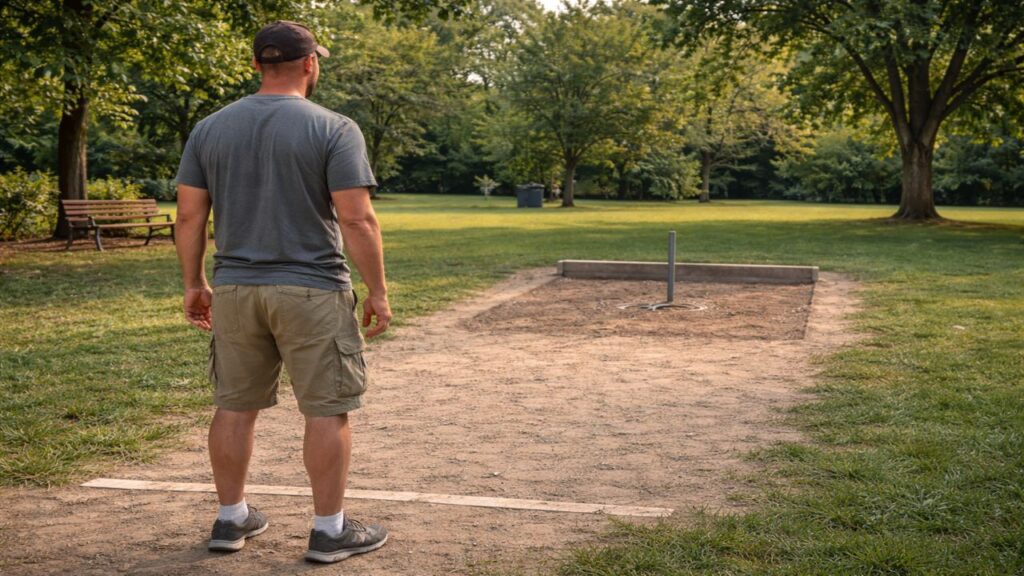
What a Pre-Pitch Routine Really Is
A horseshoe routine is a short, deliberate sequence of actions that prepares you to throw the same way every time. It is not about superstition, luck, or copying another player’s habits. It is about consistency.
A good routine does three important things:
- It slows the game down
- It clears mental clutter
- It prepares the body for a repeatable motion
When done correctly, the routine becomes automatic. You are no longer thinking about each step. You are simply moving through a familiar process that puts you in the right place to throw.
What a Routine Is Not
Before building a routine, it’s important to understand what it should not be.
A routine is not:
- A long checklist of mechanical thoughts
- Something that changes based on the last throw
- A dramatic or distracting ritual
- A way to force a good result
If your routine gets longer when you are nervous or disappears when you are confident, it isn’t doing its job. A routine should look the same whether you just threw a ringer or missed badly.
The Core Elements of a Repeatable Horseshoe Routine
While individual routines vary, every effective routine is built from the same core elements. The details may change, but the structure stays consistent.
1. The Mental Reset
Every pitch begins with a reset.
This is the moment where the previous throw is finished, regardless of how it turned out. A good reset might be a slow breath, a brief pause, or a small physical cue like relaxing the shoulders.
The reset prevents emotional carryover. Without it, frustration from a miss or excitement from a good throw sneaks into the next pitch. That emotional baggage almost always leads to rushed timing or forced motion.
The reset clears the slate.
2. Consistent Foot Placement
Your feet are the foundation of the throw. If they land differently every time, the rest of the body has to compensate.
A repeatable routine includes stepping into roughly the same spot before every pitch. This doesn’t require exact measurements, but it should feel familiar. Over time, your body learns what “balanced” feels like.
When the feet are stable, everything above them becomes easier to control.
3. Setting the Grip the Same Way Every Time
Grip consistency is one of the most overlooked aspects of horseshoe pitching.
A strong routine includes a brief moment to:
- Pick up the shoe the same way
- Place the fingers in the same positions
- Feel the balance of the shoe before moving
This step reinforces muscle memory. It also gives you a chance to notice when something feels off before the throw begins.
Rushing the grip almost always leads to rushed releases.
4. Visual Focus on the Target
Your eyes guide your body. Where you look influences how you throw.
Most players focus on the stake, but the routine determines how that focus happens. A calm, steady look helps the brain map the throw before the arm moves. This visual lock-in should feel relaxed, not forced.
Once your eyes settle, the rest of the motion can follow naturally.
5. The Trigger That Starts the Throw
Every routine ends with a trigger — the signal that begins the motion.
This might be:
- A breath out
- A slight forward lean
- A quiet internal word like “smooth”
The trigger prevents rushed throws. It ensures that the arm doesn’t move until the body is fully prepared. Without a trigger, many players start the swing too early, especially under pressure.
Why Short Routines Work Best
One of the most common mistakes players make is building routines that are too long.
Long routines tend to:
- Break down under pressure
- Get rushed during competition
- Increase overthinking
A good horseshoe routine should take no more than three to five seconds from start to finish. Short routines are easier to repeat and easier to protect when distractions appear.
Practicing the Routine Without Throwing
The fastest way to build a reliable routine is to practice it without releasing a shoe.
This simple drill helps:
- Step into position
- Go through the full routine
- Stop before the throw
- Step back and reset
- Repeat
This trains the routine itself, not just the throw. Once the routine feels automatic, add the pitch back in. Many players are surprised by how much smoother their throws feel after doing this.
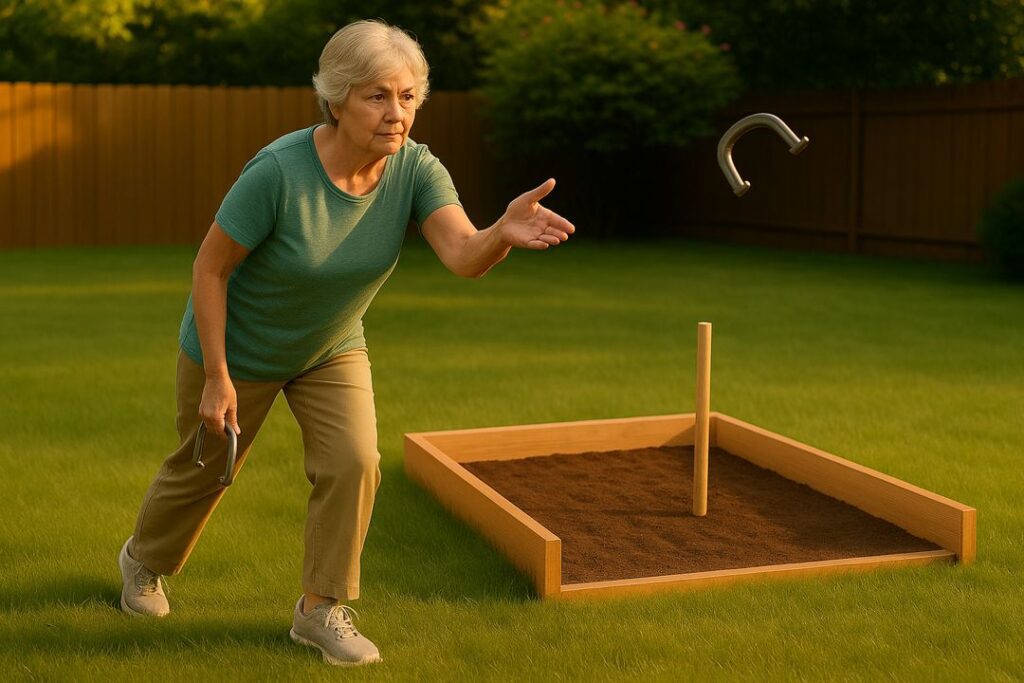
How a Routine Controls Emotions During a Game
One of the biggest benefits of a repeatable routine is emotional control.
Without a routine:
- Misses feel personal
- Good throws create pressure to repeat
- Bad stretches spiral quickly
With a routine:
- Every pitch is treated the same
- Emotions stay neutral
- Adjustments happen calmly
This is why experienced players often look unfazed by misses. They trust the process, not the last result.
Product Recommendation: Familiar Equipment Supports Consistency
A repeatable routine is easier to maintain when your equipment feels the same every time you pick it up. Regulation-weight horseshoes with consistent balance and comfortable edges help reinforce grip placement and release timing. Many players prefer St. Pierre regulation horseshoes because their uniform weight, predictable feel, and durable construction support consistent practice and reliable routines.
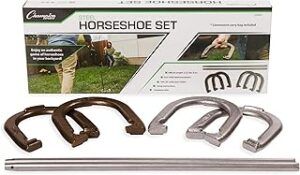
Horseshoe Game Set
Common Mistakes That Disrupt a Routine
Even players who understand routines sometimes undermine them without realizing it.
Changing the Routine After a Miss
Altering your steps after a bad throw creates doubt and inconsistency.
Rushing When Others Are Watching
Speeding up the routine under attention leads to sloppy timing.
Adding Extra Steps Mid-Game
A routine should not grow or shrink based on conditions.
Skipping the Reset
Failing to reset allows frustration to build from pitch to pitch.
How a Routine Improves Accuracy Over Time
A routine does not make every throw perfect. What it does is reduce variation.
Over time, a repeatable routine:
- Stabilizes timing
- Improves release consistency
- Reduces tension
- Limits long bad stretches
Small improvements repeated across dozens of games add up to meaningful progress.
When to Adjust the Routine
A routine should never change during a game.
Adjustments should only happen:
- During practice
- After identifying long-term issues
- When something feels consistently uncomfortable
Chasing results by changing the routine throw-to-throw almost always leads backward.

Frequently Asked Questions
Do beginners really need a routine?
Yes. Building a routine early prevents bad habits from forming.
Should the routine stay the same in competition?
Absolutely. Competition is when consistency matters most.
Is a routine the same as a warm-up?
No. Warm-ups prepare the body. Routines prepare each pitch.
How long does it take to build a routine?
Most players feel improvement within a few practice sessions if they stay consistent.
Where Consistency Really Comes From
A repeatable horseshoe routine does not guarantee ringers, but it removes chaos from the game. When every pitch begins the same way, timing becomes steadier, confidence grows, and emotional swings lose their power. Over time, the routine becomes something you trust not because it feels special, but because it quietly works. That consistency, built one pitch at a time, is what moves a player forward long after individual throws are forgotten.
Next Step:
Ready to sharpen your throwing precision even more? Check out Pitch Like a Pro – A Beginner’s Guide to Horseshoes by Larry McCullough — a complete playbook for grip, stance, and mental mastery that’ll help you pitch like the pros.