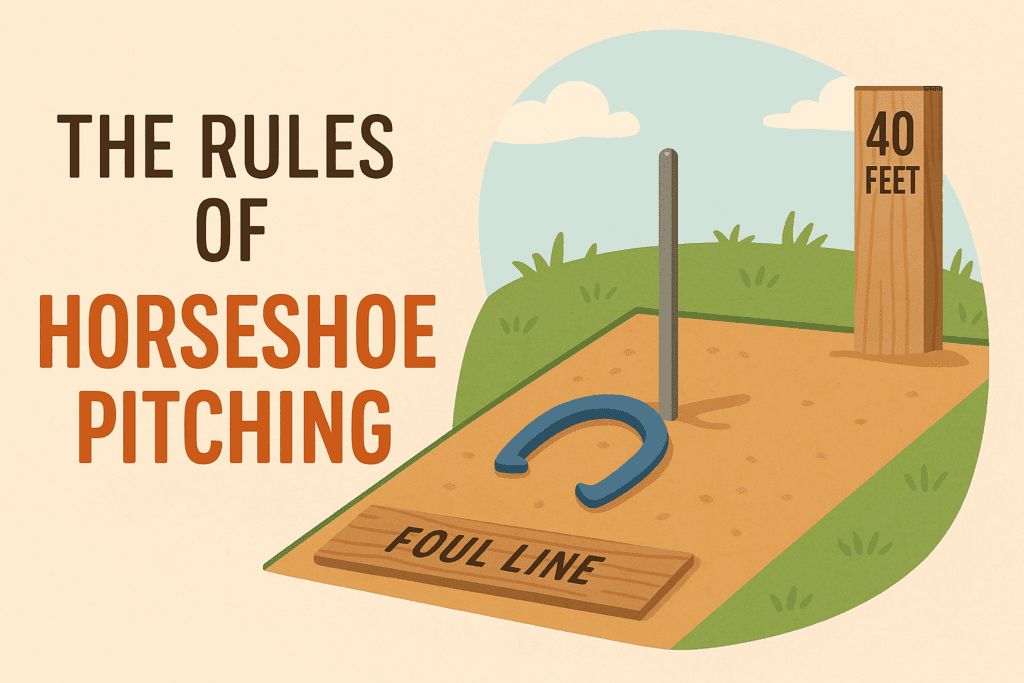
How to Build a Competitive Horseshoe Strategy: Outsmarting Your Opponent
Want to win more horseshoe matches? Learn how to build a competitive horseshoe strategy with expert tactics, smart adjustments, and ways to outplay any opponent.
If you think horseshoes is all about brute strength or a lucky toss, think again. Competitive play is a mental game just as much as a physical one. Winning consistently means understanding not only how to pitch—but how to think. The best players don’t just throw well. They throw smart.
Whether you’re aiming for local league dominance or just want to take your backyard game to a new level, this guide breaks down the essential elements of strategic horseshoe play. From reading your opponent to adjusting your tactics mid-game, we’ll help you get the edge that separates winners from everyone else.
🎯 1. Know the Rules—And Use Them to Your Advantage
It sounds simple, but many players overlook the fine print of the game. Mastering the official rules allows you to recognize scoring opportunities and leverage the game’s structure to your benefit.
Key Competitive Rules to Know:
- Only ringers and the closest shoes to the stake score points.
- Players alternate pitching two shoes per inning.
- You can cancel out an opponent’s ringer by landing one of your own.
- Ties go to the player with the last scoring ringer.
💡 Strategic Tip: If your opponent lands a ringer first, you can neutralize their points. This gives you options: aim to cancel, or strategically play for position and go on defense.
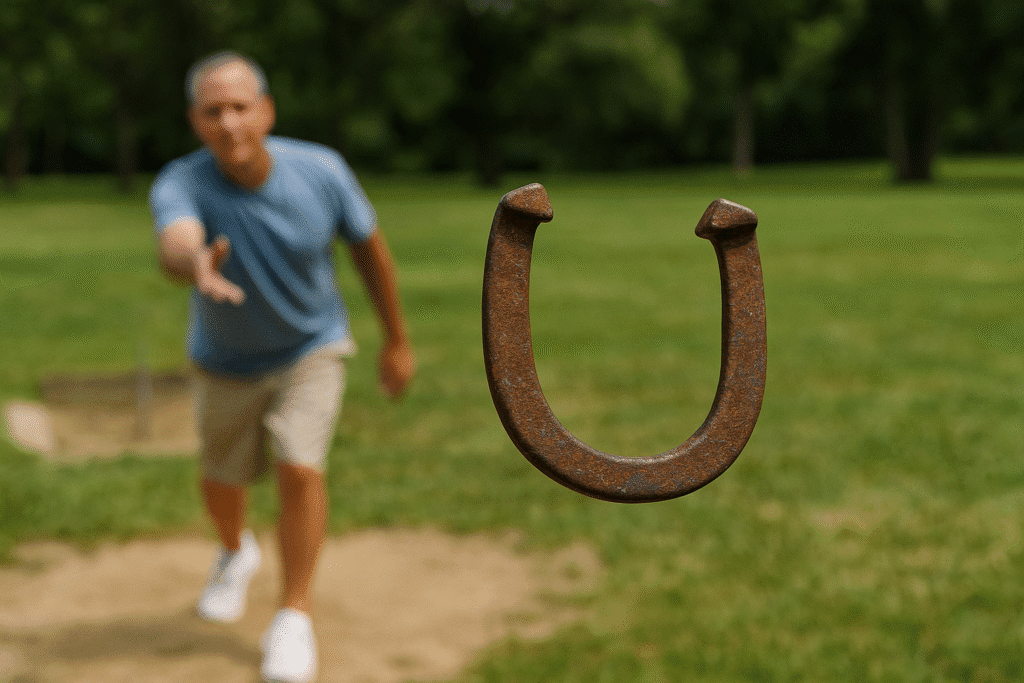
🧠 2. Scout Your Opponent’s Strengths and Weaknesses
The best way to win isn’t just by playing well—it’s by playing better than the person across from you. Keep your eyes open for tells and tendencies.
Watch for:
- Preferred throw type (flip or turn)
- Consistency in spin and aim
- Miss patterns (left, short, wide)
- Body language after a miss or a hit
👁️ Advanced Tip: Players who miss consistently in the same direction often have a mechanical flaw you can exploit. For example, if your opponent always misses left, aim to position your shoe to block their left-side landing path.
🕹️ 3. Play Offense and Defense
Yes, you’re trying to score. But in competitive horseshoes, defensive pitching can be just as critical.
Offensive Strategies:
- Go for the ringer.
- Score high early to apply pressure.
- Take calculated risks when trailing.
Defensive Strategies:
- Block the stake with a well-placed shoe.
- Knock off your opponent’s scoring horseshoe.
- Pitch off-angle when necessary to disrupt their rhythm.
🧱 Smart Defense: If you’re ahead in points, landing a shoe directly in front of the stake may force your opponent to overcompensate or miss a potential ringer.
🔄 4. Control the Tempo of the Match
Controlling the pace can shift momentum in your favor. Quick players may rush throws after scoring. Calm players take their time, reset their focus, and make better decisions.
How to Control Tempo:
- Stick to a consistent pre-throw routine.
- Don’t let an opponent’s fast pace throw you off.
- Slow things down if you’re rattled—breathe and reset.
🎵 Tip: Think of your match like a rhythm—you want to maintain your own beat, not dance to your opponent’s.
🏁 5. Set the Tone Early
The first few throws often dictate the flow of the entire game. By establishing dominance or consistency early, you increase your opponent’s pressure and force errors.

Game-Opening Tactics:
- Start with a strong ringer or a tight blocker.
- Use confident body language—show you came to compete.
- Observe their reaction—do they flinch, smile, or frown?
🧠 Psychological Edge: Some players struggle under pressure. Show poise early, and you might break their confidence by the third inning.
🔁 6. Adjust Your Strategy Based on the Court
Not all courts are created equal. From grass to sand to clay, the surface impacts bounce, landing angle, and shoe behavior.
Surface Strategy:
- Sand: Use heavier shoes and aim for dead-center.
- Clay: Lighter shoes with smooth landings tend to score better.
- Hard Dirt/Grass: Use turn-style throws for greater control.
💡 Tip: If you notice bounce or drift, adjust your arc and release. Precision over power wins every time on unpredictable surfaces.
👣 7. Read the Weather and Make It Work for You
Outdoor matches add an extra variable: the weather. Wind, moisture, and sunlight can affect performance if you’re not prepared.
Weather Factors to Consider:
- Wind: Adjust aim to compensate. Use a tighter spin.
- Heat: Stay hydrated and maintain focus.
- Sunlight: Use a hat and face the sun with intention when needed.
🎯 Mindful Strategy: If you struggle in certain conditions, practice in them. The more you normalize adversity, the less it affects your competitive focus.
💪 8. Make High-Percentage Throws
Sometimes going for the ringer isn’t the right move. Smart players know when to play for position rather than risk a wild shot.
High-Percentage Thinking:
- If you’re ahead, block the stake.
- If it’s a close match, focus on landing within scoring distance.
- If the opponent just missed, play it safe.
📊 Stat Tip: Winning isn’t about ringers alone—it’s about cumulative points. Ringers cancel each other out. Consistency wins.
🛠️ 9. Equip Yourself Like a Competitor
Having the right tools matters in competitive play. You wouldn’t play basketball in dress shoes—same idea here.
Horseshoe Game Set
Recommended Gear for Competitive Strategy:
✅ Challenger Pitching Horseshoe Set
💬 Balanced for precision. Great for strategic players who use blockers or mid-range defense.
✅ EZ Flip Horseshoe Set
💬 Lighter and perfect for soft landings. Ideal for high-percentage pitchers with controlled arcs.
✅ American Professional Horseshoes (St. Pierre Series)
💬 Built for both offense and defense. Durable and regulation-approved, with excellent grip zones.
🎒 Bonus Accessories:
- Grip gloves for consistent control
- Tape measure for close scoring calls
- Carrying case to protect your gear during travel
🧘 10. Maintain a Strategic Mindset
When frustration sets in, strategy flies out the window. Stay level-headed and confident, even if you’re behind.
Mental Playbook:
- Treat each pitch like a fresh opportunity.
- Don’t let past misses predict your next throw.
- Visualize your ideal outcome before every toss.
🧠 Mantra: “I don’t have to be perfect—just better than them this round.”
📋 Sample In-Game Strategy Flow
Let’s say you’re facing an opponent who throws first:
- They land a ringer.
- Your play: Go for a cancel ringer.
- They miss wide.
- Your play: Play safe. Land close and gain the lead.
- They block the stake.
- Your play: Pitch higher or with spin to curve around.
This thought process, repeated every round, keeps you in control—even when you’re not winning yet.

❓ Frequently Asked Questions
🔹 Is strategy more important than skill?
Both matter—but strategy wins when skill is even. It’s what separates good players from great ones.
🔹 How can I tell if my strategy is working?
If your opponent starts changing their throw style, rhythm, or focus, your strategy is in their head—and that’s a win.
🔹 Should I change strategies mid-game?
Absolutely. If your current plan isn’t working, adapt. That’s what pros do.
🏁 Final Thoughts: Think Like a Winner, Play Like a Pro
You don’t need the fastest arm or fanciest throw to dominate in horseshoes. You need a plan.
✅ Observe your opponent
✅ Control the court
✅ Make smart decisions
✅ Stay composed under pressure
🎯 When you combine technique with a smart competitive strategy, you’re no longer just playing—you’re outplaying.
👉 What’s your go-to game plan when you’re behind in points? Drop a comment and share your strategy!
Hi there, and thanks for stopping by! My name is Larry, and I’m the voice behind PlayingHorseshoes.com I love the game and have been playing since I was a kid. I started this blog because I am passionate about the sport, and with all the technology, I hope the sport don’t die. I plan to do my part to keep it going for me and my brother’s sake. Thanks for stopping by, feel free to subscribe and comment. Thank You!