Playing Against Better Players: How to Compete Without Getting Destroyed
Playing horseshoes against someone better than you can feel rough fast.
One minute you’re stepping up thinking it’ll be a friendly game, and the next thing you know, they’re landing close, controlling the pit, and making your throws feel worse than they really are. It can get frustrating, especially when every miss feels bigger because your opponent keeps applying pressure.
But here’s the important part.
Playing against better players is one of the fastest ways to improve, as long as you don’t approach the game the wrong way. If you try to beat them by forcing ringers, throwing harder, or changing your entire technique mid-game, you’ll probably get buried. Better players usually don’t win because they do flashy things every round. They win because they stay consistent, control mistakes, and make you feel like you have to be perfect.
You don’t have to be perfect to compete.
You need to play smarter, stay patient, and focus on keeping the game close long enough for opportunities to show up.
Why Better Players Feel So Hard to Beat
A better horseshoe player usually has one major advantage over you: consistency. They may not throw ringers every time, but they tend to miss more than casual players. Their bad throws still land close enough to create pressure, while less experienced players often miss wide, short, or long.
That difference adds up quickly.
When you play someone better, the game can start to feel one-sided because they don’t give away many easy points. They force you to earn everything. That pressure can make you rush, overthink, or try to make up the difference with one perfect throw.
That’s exactly what they want.
The key is understanding that you are not just playing their skill. You are playing against the pressure their skill creates. Once you recognize that, you can stop reacting emotionally and start building a better plan.
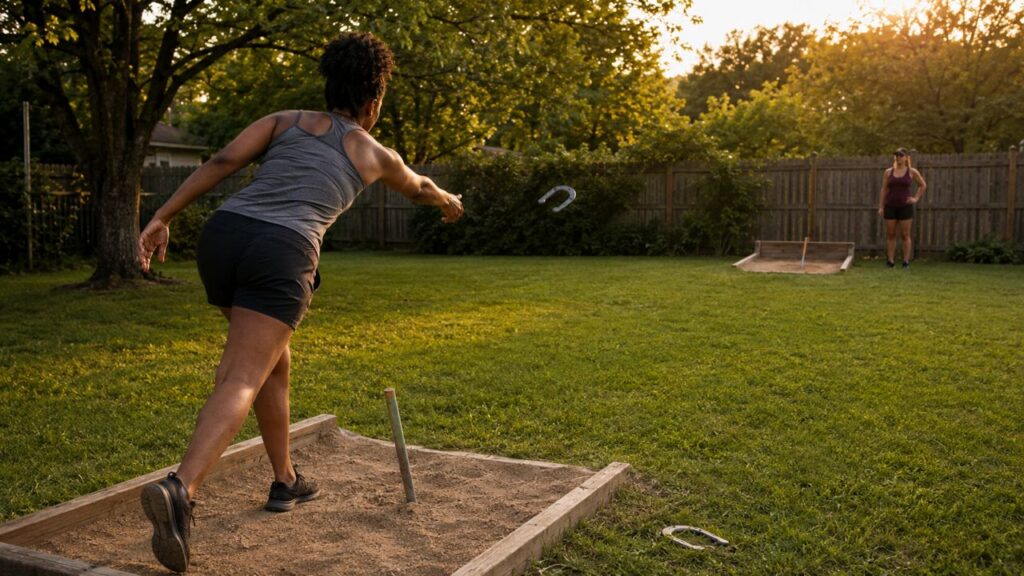
Stop Trying to Match Their Best Throws
One of the worst mistakes you can make against a better player is trying to match their best throw every time.
If they land a strong ringer or a shoe tight to the stake, your instinct may be to answer with something equally impressive. That sounds competitive, but it usually causes problems. You start forcing your motion, speeding up your release, and throwing outside your normal rhythm.
Instead of raising your level, you usually lower your consistency.
A smarter approach is to stay inside your own game. If your best chance is a controlled close throw, play for that. If your strength is steady placement, lean into it. You don’t have to respond to every great throw with a miracle shot.
Better players win when you abandon your own game.
Make them beat the version of you that stays steady.
Focus on Reducing Mistakes First
When you’re facing a stronger opponent, your first goal should not be domination. It should be survival.
That doesn’t sound exciting, but it works.
The fastest way to get destroyed is to give away easy points through rushed throws, poor decisions, and emotional reactions. Better players are already hard enough to beat. You don’t need to help them by handing them extra chances.
Start by reducing damage.
That means getting your horseshoes near the stake more often, avoiding wild misses, and making your opponent keep earning points. Even if you’re not scoring big, you are making the game tighter. And when the game stays tighter, pressure starts to shift.
A better player may still be ahead, but they’ll notice when you stop giving them easy openings.
That’s where competition begins.
Play for Position Instead of Chasing Ringers
Ringers are great, but they can become a trap when you’re playing someone better.
If you chase ringers too aggressively, your misses may end up too far away to matter. A better player will take advantage of that. They don’t need you to miss badly many times before the score starts sliding away from you.
Positioning is often the better weapon.
A horseshoe that lands close to the stake still creates pressure. It forces your opponent to respond. It may block their scoring angle, challenge their next throw, or make them think twice about playing too casually.
This is especially important when you are behind.
You don’t need every throw to be a highlight. You need more throws that keep you alive in the round. A strong close shot can be just as valuable as a risky ringer attempt if it prevents your opponent from running away with the game.
Smart placement keeps you in the fight.
Slow Down When the Game Starts Moving Too Fast
Better players can make the game feel faster than it is.
They step up, throw smoothly, and keep pressure on you. If you let their pace control you, you may start rushing your own routine. That’s when your mechanics begin to break down.
You need to slow the game down mentally.
Take your normal setup. Check your grip. Settle your stance. Make sure your body is aimed where you want the horseshoe to go. None of this has to take forever, but it does need to be deliberate.
A steady routine gives you something to return to when the score is going against you.
Better players usually have routines. That’s part of why they are better. If you want to compete, you need one too. Your routine becomes your anchor when the match starts getting uncomfortable.
Watch How They Miss
Most players watch better opponents only when they make great shots.
That’s a mistake.
You can learn more by watching how they miss. Do they usually miss short? Do they drift left or right? Do they recover quickly after a poor throw? Do they change their pace when the game gets close?
Those details matter.
A better player’s misses show you their tendencies. Once you spot those tendencies, you can make smarter decisions. For example, if they occasionally leave a shoe short, you may not need to force a ringer. A solid close throw may be enough to steal the round.
Pay attention to patterns.
Good players are not unbeatable. They just make fewer careless mistakes. If you stay observant, you’ll eventually find moments where they give you room to compete.
Don’t Let the Score Break Your Focus
The scoreboard can become your enemy if you stare at it too much.
When you’re behind a better player, the gap can feel bigger than it really is. You may start thinking about how far you have to come back instead of focusing on the next throw. That mental shift can wreck your rhythm.
The better approach is to shrink the game.
Don’t think about winning the whole match. Think about winning the next throw. Then the next round. Then the next small opportunity. Comebacks against better players rarely happen all at once. They happen because you keep stacking better decisions.
If you can cut down mistakes and win a few small moments, the game starts to feel different.
Your opponent may still be better, but now they have to stay sharp. That changes the pressure.
Make Them Earn Every Point
This is one of the most important ideas in the entire article.
When playing someone better, your job is to make them earn everything.
That means no lazy throws. No emotional tosses. No giving up after a bad round. No throwing just to get it over with because the game feels out of reach.
Better players often feast on opponents who mentally quit before the game is over. Once they sense frustration, they relax. Once they relax, they get even harder to beat.
Don’t give them that comfort.
Even if you’re behind, keep landing competitive shoes. Keep making them respond. Keep forcing them to throw well. The longer you make them work, the more chances you create for pressure to sneak back onto their side.
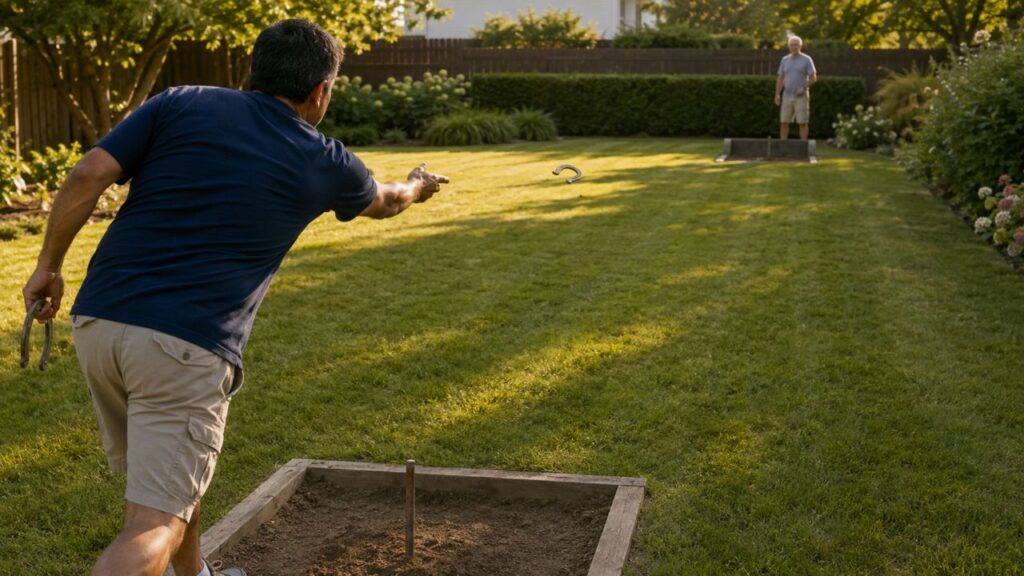
Use Simple Goals During the Match
Playing against a stronger player becomes easier when you stop judging every throw as good or bad based only on the score.
Set smaller goals.
Try to land two out of four shoes near the stake. Try to avoid short throws for one full round. Try to keep your release smooth for the next five throws. These small goals give your brain something useful to focus on instead of panicking.
That matters because panic leads to random changes.
Small goals keep your practice mindset alive during competition. You may still lose the game, but you’ll leave with something valuable: a better understanding of what holds up under pressure and what falls apart.
That is how you improve.
Learn Without Turning the Game Into a Lesson
There’s nothing wrong with learning from better players, but don’t spend the entire game asking questions or analyzing every throw. That can break your focus and turn the match into a clinic instead of a competition.
Compete first. Ask later.
During the game, pay attention quietly. Notice their rhythm, stance, release, and patience. Afterward, ask one or two specific questions. You might ask how they handle pressure, how they aim, or what they focus on when they’re ahead.
Most better players will give better advice when you ask something specific.
Instead of saying, “How do I get better?” ask, “What did you notice about my release?” That kind of question usually gets a more useful answer.
Don’t Copy Everything They Do
Better players can teach you a lot, but copying them exactly is not always smart.
Their grip, stance, or throwing rhythm may work for their body, experience level, and playing style. That doesn’t automatically mean it will work for you. If you copy everything too quickly, you may lose the parts of your own game that were already working.
Use better players as examples, not blueprints.
Look for principles instead of exact movements. Are they relaxed? Are they consistent? Do they repeat the same setup every time? Do they stay calm after a bad throw?
Those are the things worth copying.
Your throw still needs to become your throw.
Equipment That Helps You Compete More Consistently
When you’re playing against better players, consistency matters more than flash. You want equipment that feels steady in your hand and gives you repeatable feedback from throw to throw.
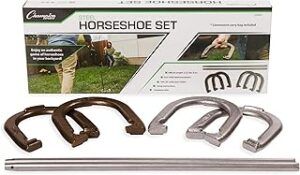
For this, the Hathaway Heavy Duty Steel Horseshoe Set is a good fit because it is built for regular backyard competition and has a solid, balanced feel. It is not a novelty set or a soft beginner toy. It gives casual and improving players something dependable to practice with while they work on accuracy, control, and consistency.
If you’re trying to close the gap against stronger opponents, that matters. You don’t want to wonder whether the horseshoe feels different from one throw to the next. You want to focus on your release, your rhythm, and your decision-making.
Better equipment won’t beat a better player for you.
But consistent equipment gives you a fairer chance to develop the kind of game that can compete.
Horseshoe Game Sets
What Success Really Looks Like Against Better Players
You may not beat a stronger player right away.
That’s fine.
Success might look like keeping the score closer than last time. It might mean avoiding wild misses. It might mean staying calm after falling behind. It might mean winning a few rounds you would have lost before.
Those are real improvements.
Too many players judge progress only by winning or losing. But when you’re playing someone better, progress shows up in smaller ways first. You become harder to beat. You make fewer mistakes. You recover faster after bad throws. You stop getting rattled so easily.
Eventually, those small improvements turn into real competition.
And one day, the player who used to destroy you has to start taking you seriously.
FAQ: Playing Horseshoes Against Better Players
1. How do you compete against someone better at horseshoes?
The best way to compete is to reduce mistakes, stay patient, and focus on controlled placement instead of trying to match every great throw. Better players punish sloppy mistakes, so your first job is to make them earn their points.
2. Should I aim for more ringers against better players?
Not always. Chasing ringers can lead to bigger misses if your control is not steady. A close, well-placed shoe can keep pressure on your opponent and help you stay in the game.
3. Why do I play worse against better players?
Better players create pressure. Their consistency can make you rush, overthink, or change your throw too much. The key is sticking to your routine and not letting their rhythm control yours.
4. Can playing better players actually improve my game?
Yes. Playing stronger opponents exposes weaknesses that casual games may hide. You learn how your throw holds up under pressure, where your mistakes happen, and what parts of your game need more work.
5. What should I focus on during the game?
Focus on release, rhythm, and positioning. Keep your goals simple. Instead of worrying about the final score, try to win the next throw or make the next round more competitive.
Make Them Work for the Win
Playing against better players can be frustrating, but it is also one of the best ways to sharpen your game.
The goal is not to suddenly become perfect. The goal is to stop giving the game away. When you slow down, play for position, trust your routine, and make your opponent earn every point, you become a much tougher player to beat.
That’s how improvement starts.
Not with one miracle throw, but with better decisions, steadier rhythm, and the patience to stay in the game when things get uncomfortable.
Because if a better player has to work harder to beat you today than they did last time, you’re already moving in the right direction.
Hi there, and thanks for stopping by! My name is Larry, and I’m the voice behind PlayingHorseshoes.com. I love the game and have been playing since I was a kid. I started this blog because I am passionate about the sport, and with all the technology, I hope the sport doesn’t die. I plan to do my part to keep it going for me and my brother’s sake. Thanks for stopping by. Thank You!