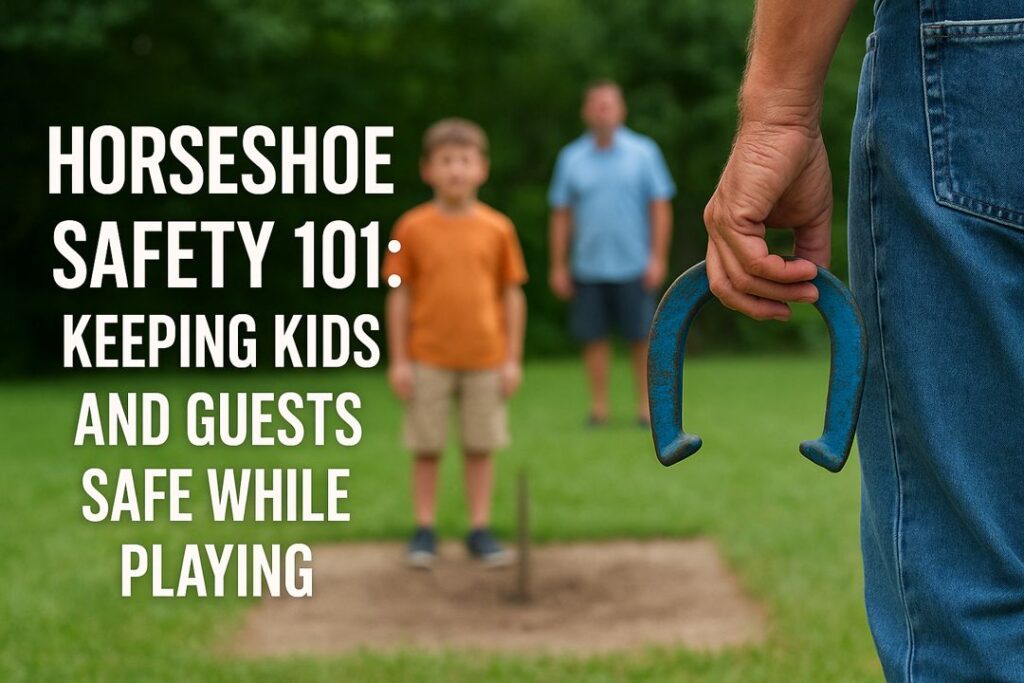
How to Turn Horseshoes Into a Weekly League With Friends (Step-by-Step Guide)
Most backyard horseshoe games start the same way—someone brings out the set, a few rounds get played, everyone has a good time… and then it fades out until the next random get-together.
That’s the problem.
There’s no structure. No consistency. No reason to keep it going.
But when you turn casual games into a weekly league, everything changes. Suddenly, there’s competition, anticipation, and a reason for everyone to show up week after week. It becomes less of a one-time activity and more of a standing tradition.
And the best part is, you don’t need anything complicated to make it work.
You just need a simple system that keeps people engaged.
Why a Weekly Horseshoe League Actually Works
People love routine when it’s tied to something enjoyable. A weekly league gives your group a set time to get together, compete, and unwind without having to plan something new every time.
It also creates natural momentum.
Players start tracking their progress, rivalries develop, and even casual participants begin to care about results. That shift—from random play to structured competition—is what keeps a league alive.
Consistency builds commitment.
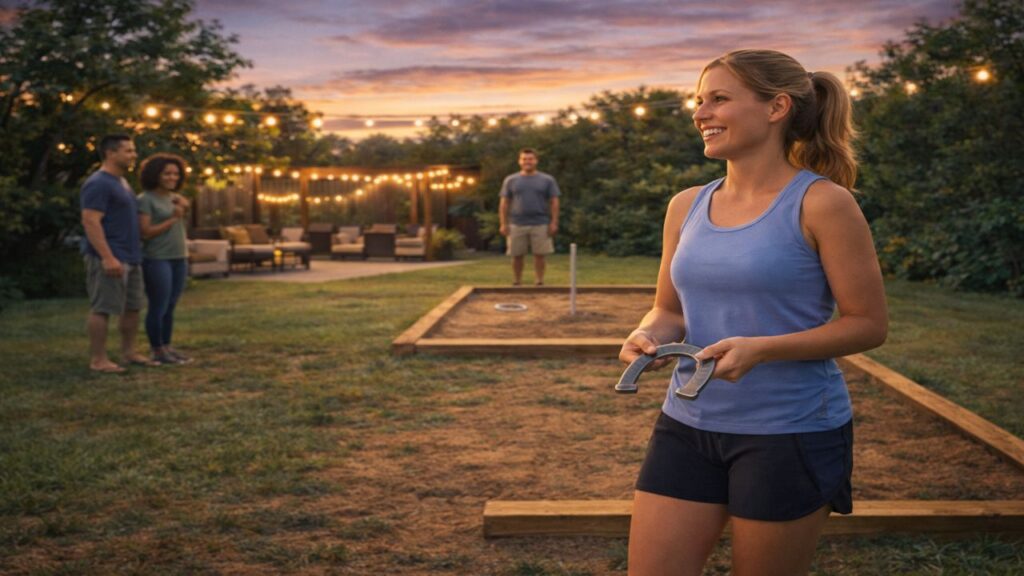
Step 1: Keep the Group Small and Reliable
You don’t need a huge group to start a league. In fact, smaller is better in the beginning.
Aim for 4 to 8 players who are actually willing to show up consistently. It’s better to have a small, dependable group than a large, inconsistent one that falls apart after two weeks.
Once the core group is solid, you can always expand later.
Reliability matters more than size.
Step 2: Pick a Set Day and Stick to It
The biggest mistake new leagues make is constantly changing the schedule. That kills momentum fast.
Pick one day—like Thursday evenings or Saturday afternoons—and lock it in. When people know exactly when games happen, it becomes part of their routine.
No guessing. No rescheduling.
Consistency keeps people coming back.
Step 3: Set Simple Rules (Don’t Overcomplicate It)
You don’t need official tournament rules to run a successful league. In fact, simpler is better.
Decide on:
- Game length (first to 21 points works well)
- Singles or doubles format
- Basic scoring rules
That’s enough to get started.
You can always refine things later, but if you start too complicated, you’ll lose people before the league even gets going.
Simple rules. Smooth games.
Step 4: Rotate Matches to Keep It Interesting
Playing the same opponent every week gets old fast. Mix things up by rotating matchups.
You can:
- Randomly assign opponents each week
- Rotate partners in doubles play
- Use a simple round-robin format
This keeps games fresh and prevents skill gaps from becoming repetitive.
Variety keeps energy high.
Step 5: Track Scores (But Keep It Light)
Tracking results adds just enough competition to keep people engaged, but it shouldn’t feel like work.
A simple notebook, whiteboard, or shared note is all you need. Record wins, losses, and maybe total points if you want a deeper ranking system.
You don’t need spreadsheets or complicated stats unless your group wants them.
Keep it visible. Keep it simple.
Step 6: Create a Leaderboard
Once scores are tracked, turn them into a leaderboard.
This is where things get interesting.
Even casual players start paying attention when they see their name moving up—or down—the list. It creates friendly pressure and gives everyone something to play for each week.
Competition doesn’t need to be intense to be effective.
It just needs to exist.
Step 7: Add Small Incentives
You don’t need big prizes to make a league exciting. Small rewards go a long way.
Ideas include:
- Winner picks the next week’s teams
- Loser brings drinks or snacks
- Monthly “champion” recognition
These little incentives create stakes without making things overly serious.
Fun incentives beat big prizes.
Step 8: Use the Right Equipment for Consistency
If your league is going to run every week, consistency matters—and that starts with your setup. When players are showing up regularly, they begin to adjust their throw based on how the horseshoes feel, how they land, and how the pit plays.
If your equipment changes every week, it throws everything off.
For a reliable weekly setup, a forged steel option like the Triumph Patriotic Forged Horseshoe Set works well because it’s built to handle repeated use and maintains a consistent feel over time. This is the kind of set you can use week after week without worrying about wear affecting gameplay.
If you’re just getting your league started or working with a mixed group of casual players, something more accessible like the Franklin Sports Recreational Horseshoe Set is a solid choice. It’s easy to set up, easy to play with, and doesn’t intimidate beginners while still holding up for regular use.
For leagues that include kids or newer players, having a second setup like the Hey! Play! Rubber Horseshoe Set can help keep things safe and approachable. It lowers the barrier to entry without removing the competitive side of the game.
And if your group starts getting more competitive over time, upgrading to a higher-end option like the Baden Champions Horseshoe Set can elevate the experience with better balance and a more polished feel.
The goal isn’t to chase the most expensive gear.
It’s to keep your setup consistent so players can actually improve—and compete—week after week.
Horseshoe Game Sets
Step 9: Keep It Social First, Competitive Second
This is where a lot of leagues fail.
If things get too competitive too fast, people stop showing up. The goal is to create an environment where competition adds to the fun—not replaces it.
Encourage conversation, laughter, and a relaxed atmosphere. Let the competition happen naturally without forcing it.
People come for the experience.
The game is just part of it.
Step 10: Build Toward a Season Finale
Once your league has been running for a few weeks, give it a clear ending point.
A simple “championship week” or mini-tournament at the end of the month or season gives everything a purpose. Players have something to build toward, and it creates a natural reset point for the next season.
It doesn’t need to be elaborate.
It just needs to feel like a finish line.

Common Mistakes to Avoid
Even simple leagues can fall apart if a few key mistakes aren’t avoided.
Overcomplicating rules is one of the biggest issues. Keep things easy to follow so games move quickly.
Inconsistent scheduling is another problem. If people don’t know when games are happening, attendance drops.
And finally, taking things too seriously can kill the vibe. Remember, this started as a backyard game.
Keep it fun.
Why Weekly Leagues Keep People Coming Back
There’s something different about a weekly league compared to casual play.
It creates rhythm. It builds relationships. It gives people something to look forward to.
Over time, it becomes less about the game itself and more about the experience surrounding it.
That’s when you know it’s working.
FAQ: Starting a Horseshoe League
1. How many people do you need for a horseshoe league?
You can start with as few as 4 players. A group of 6 to 8 works best for variety and consistency.
2. How long should each league session last?
Most sessions last 1 to 2 hours, depending on the number of players and games played.
3. Should you play singles or doubles?
Both work well. Doubles is more social, while singles is more competitive. Many leagues rotate between the two.
4. Do you need official rules?
No. Start with simple rules and adjust as your group becomes more experienced.
5. What’s the best way to keep people engaged?
Consistency, simple competition, and a fun atmosphere are the keys to keeping players coming back.
Turn a Game Into a Tradition
Here’s the real payoff.
When you turn horseshoes into a weekly league, you’re not just organizing games—you’re creating a routine people look forward to. Something that becomes part of the week instead of an afterthought.
And once that happens, it sticks.
Because it’s not just about throwing horseshoes anymore.
It’s about showing up. Competing. Laughing. And doing it all over again next week.
Hi there, and thanks for stopping by! My name is Larry, and I’m the voice behind PlayingHorseshoes.com. I love the game and have been playing since I was a kid. I started this blog because I am passionate about the sport, and with all the technology, I hope the sport doesn’t die. I plan to do my part to keep it going for me and my brother’s sake. Thanks for stopping by. Thank You!